The Beehive & Bee Equipment Patent Archive

The patented pursuit of the perfect hive

All 170 patents

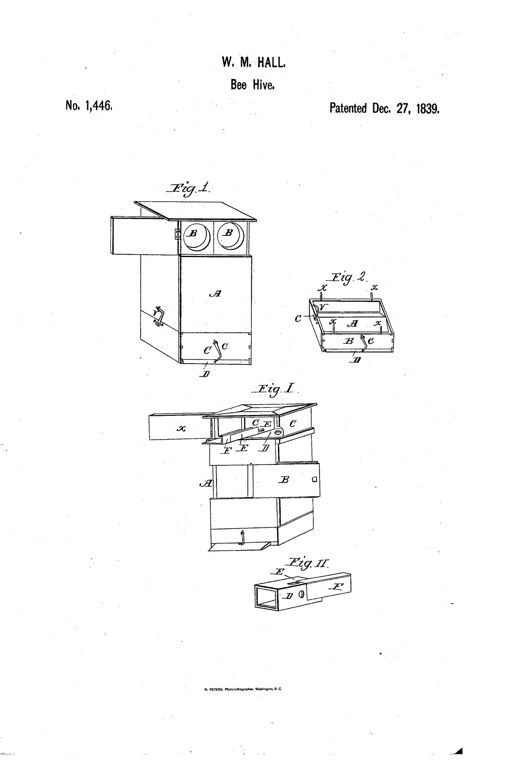
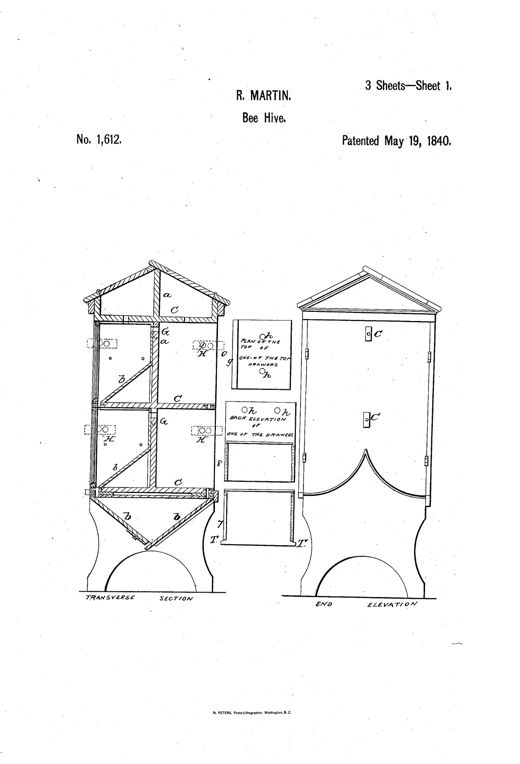
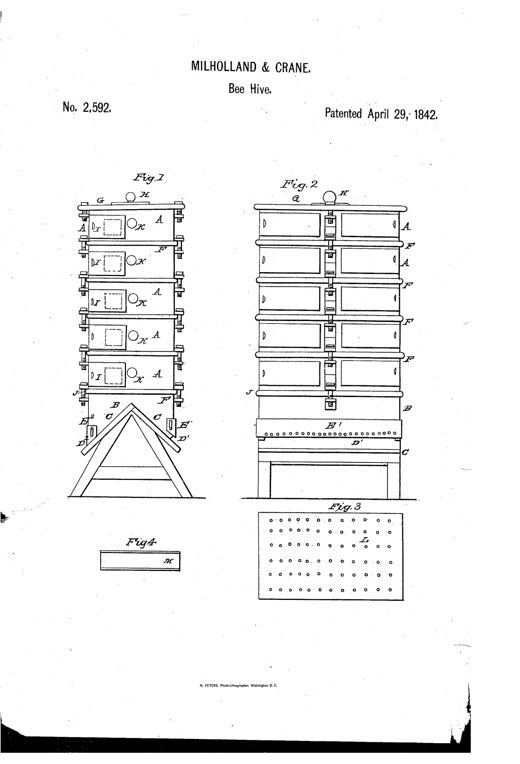
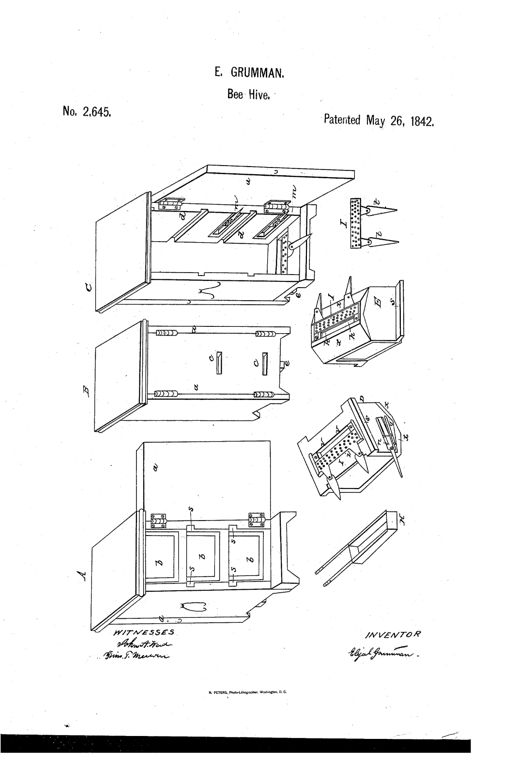
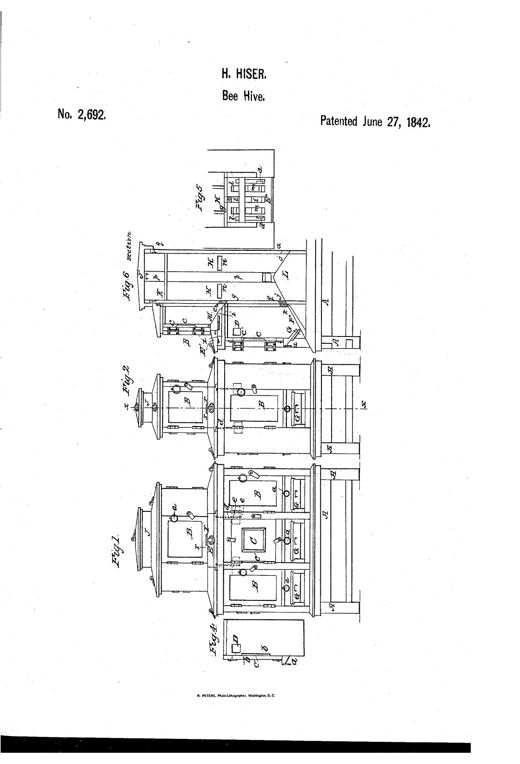
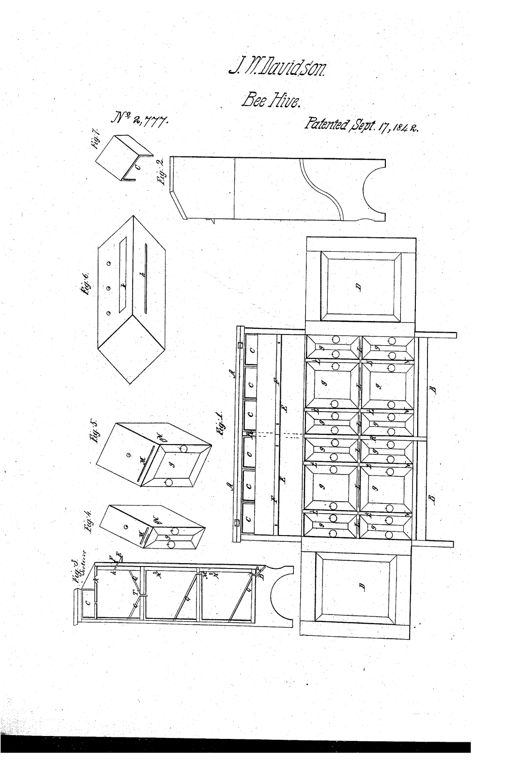
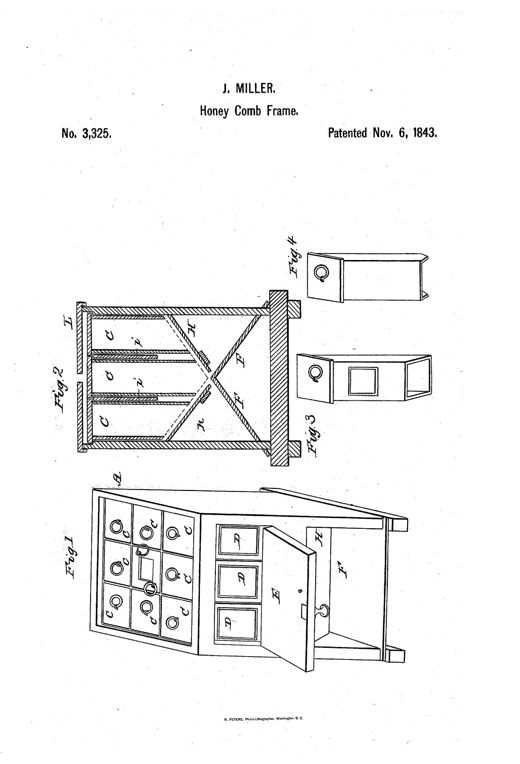
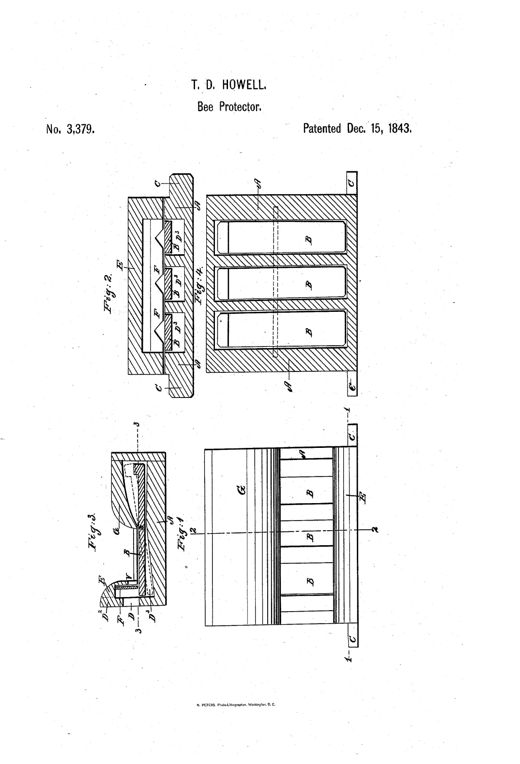
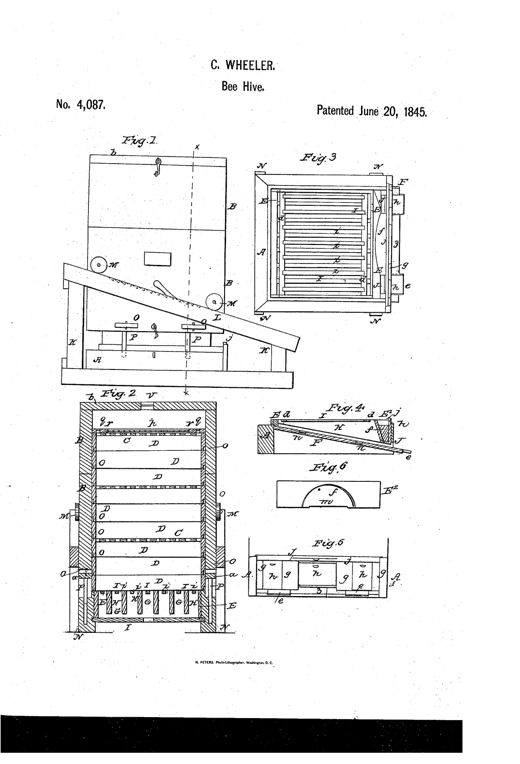
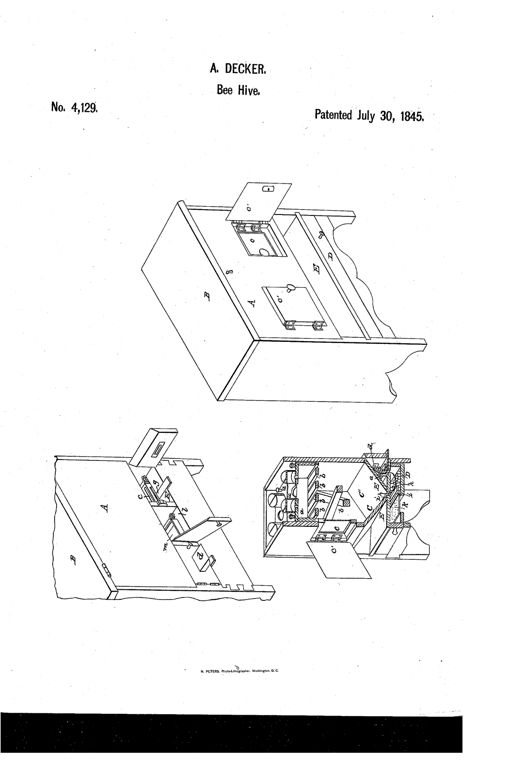
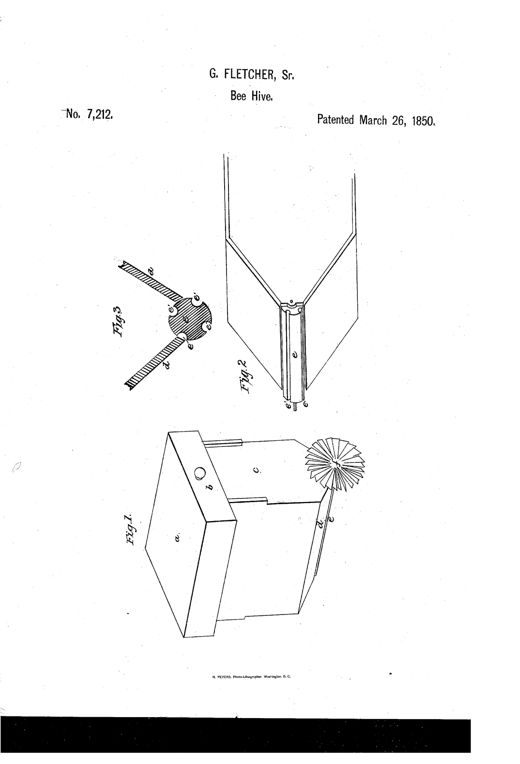
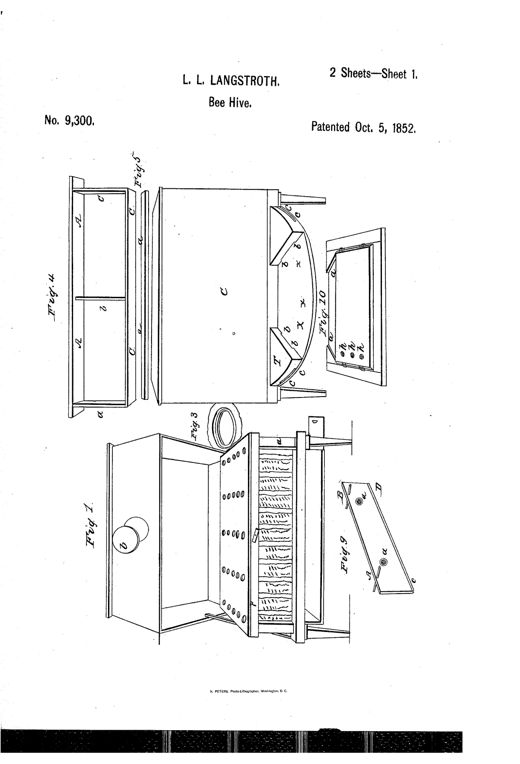
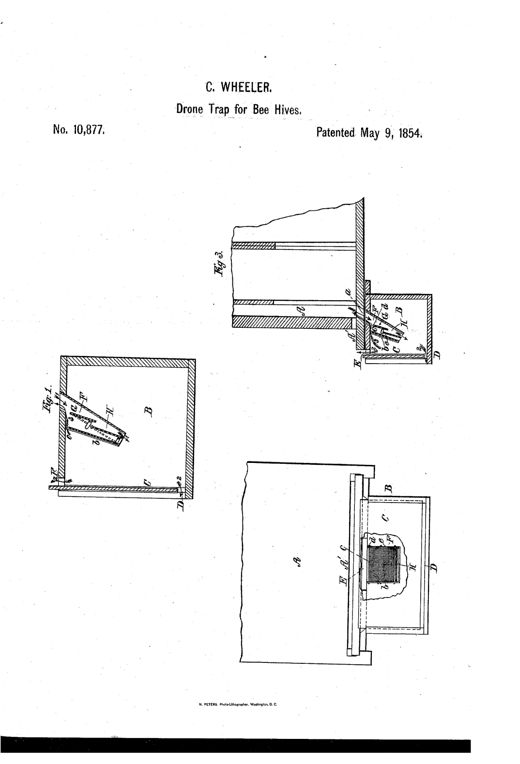
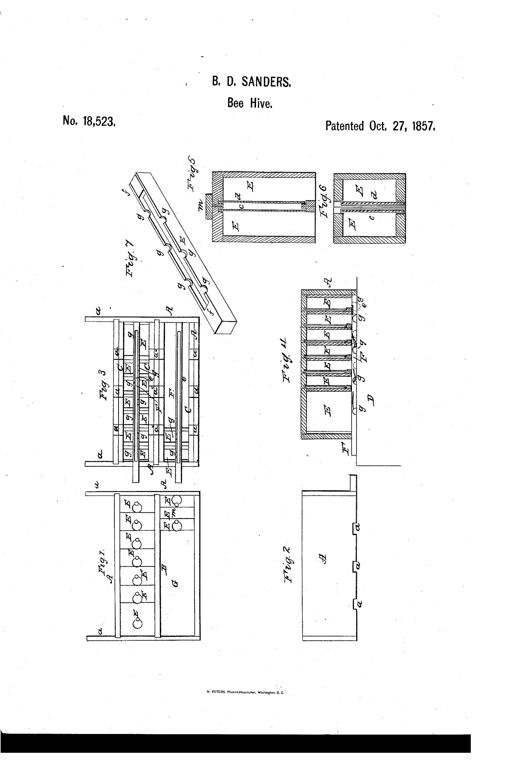
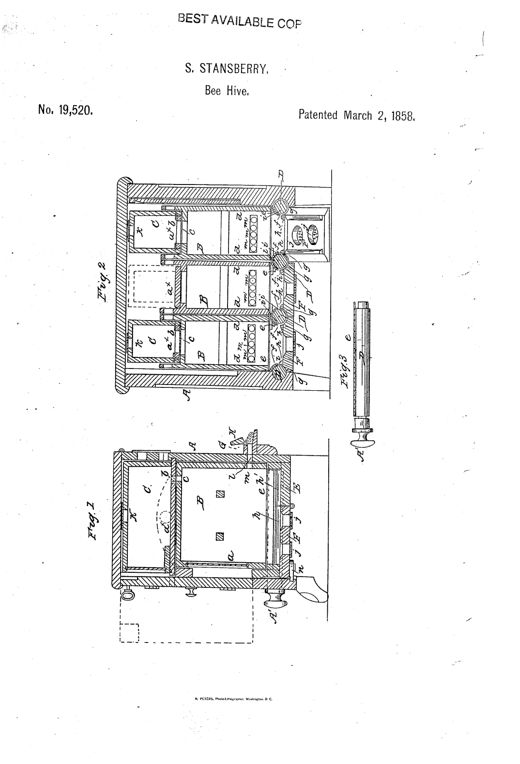
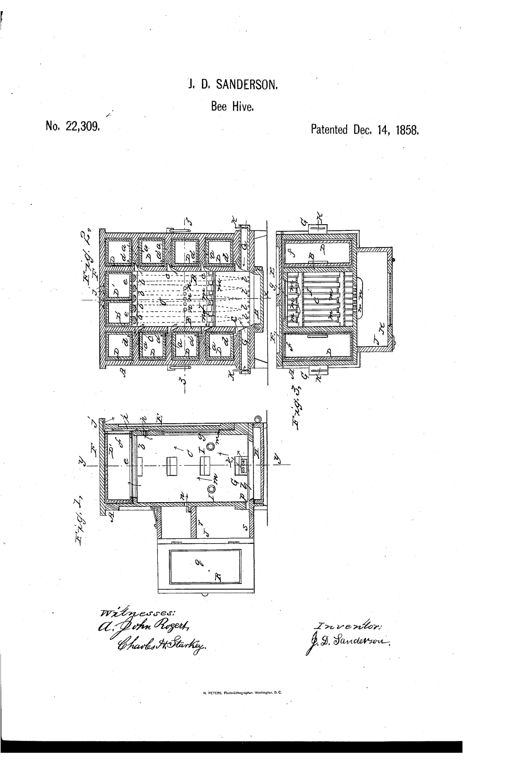
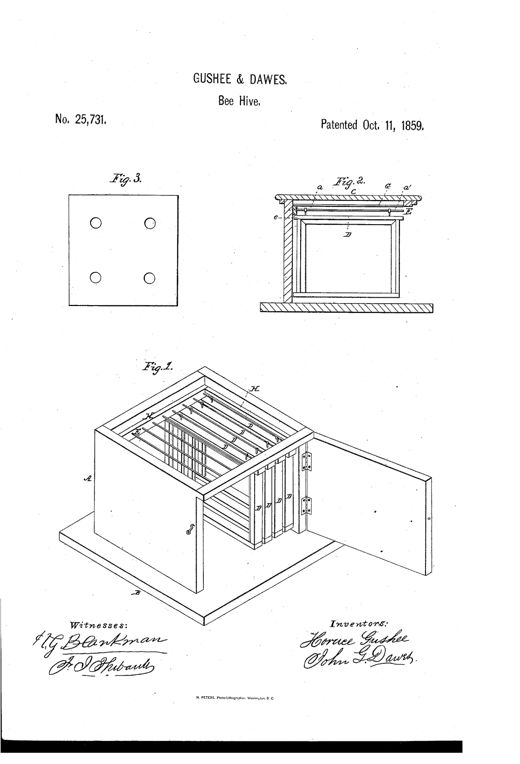
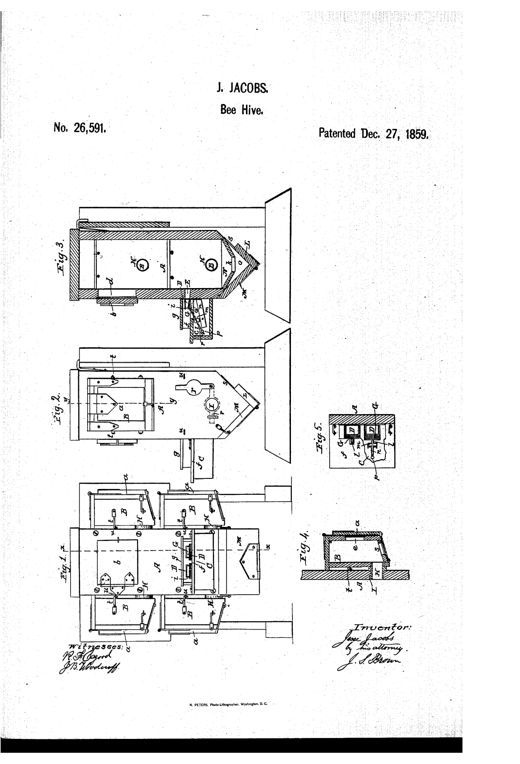
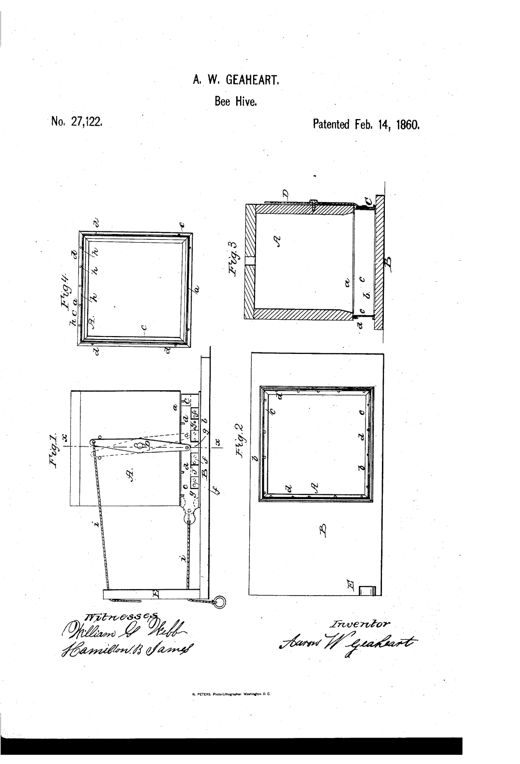
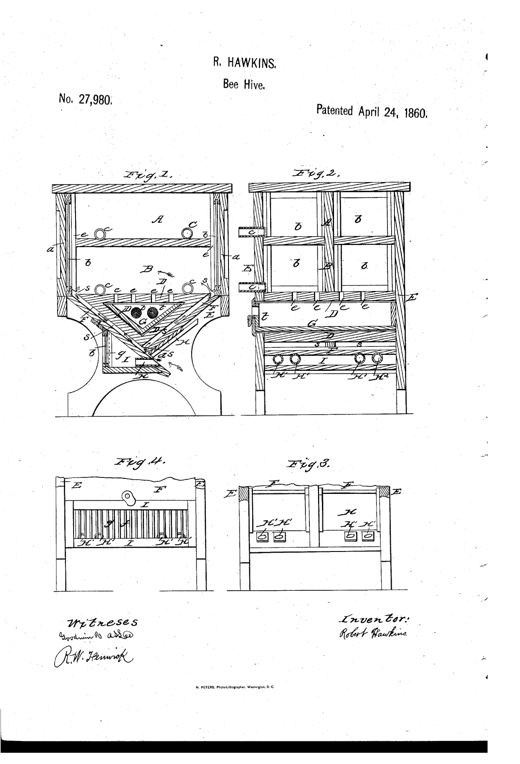
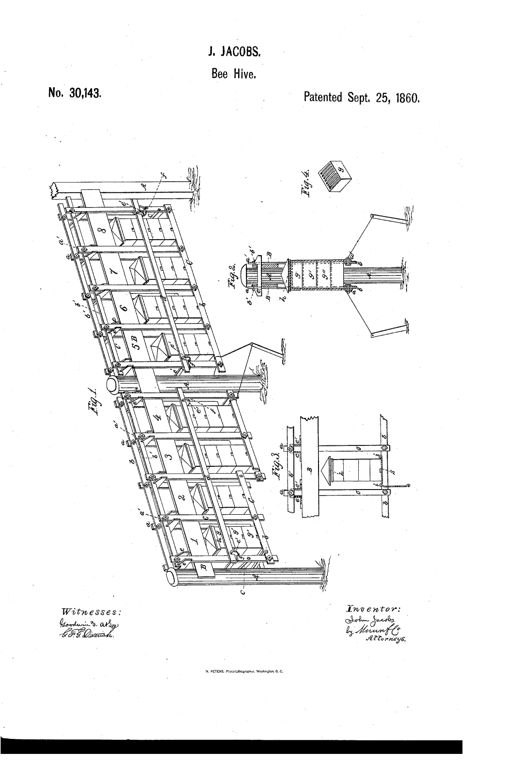
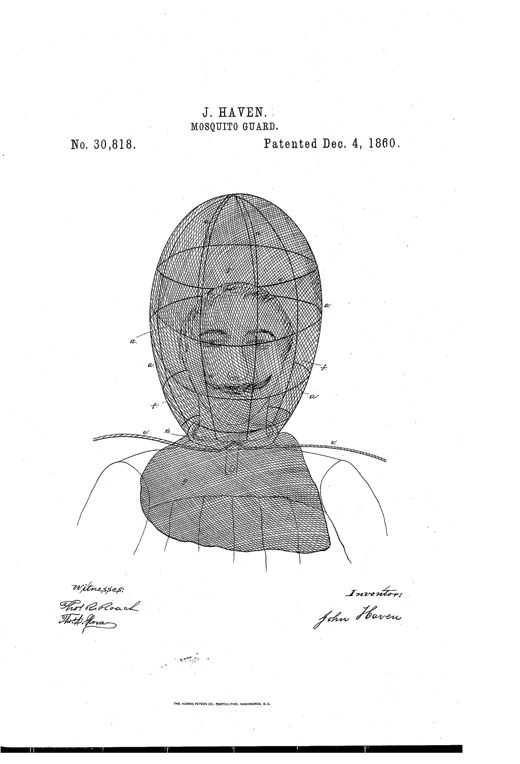
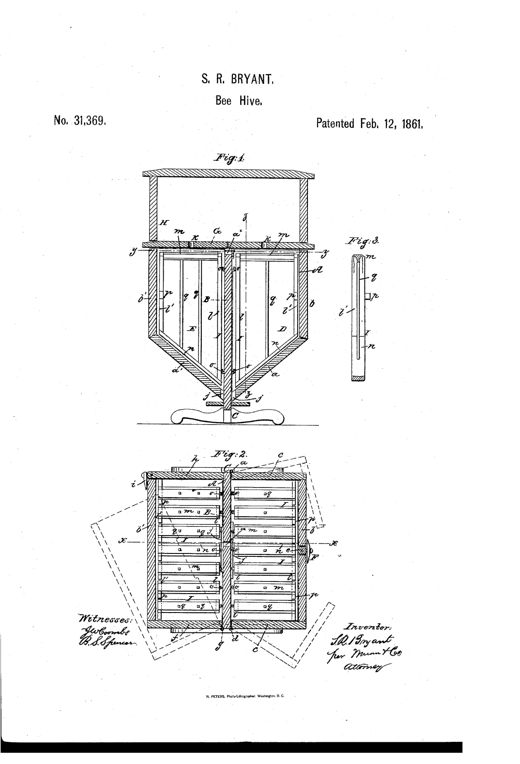
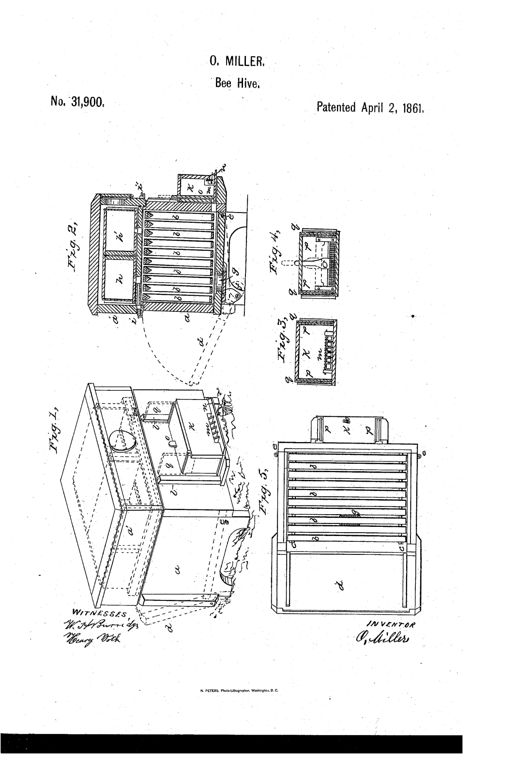
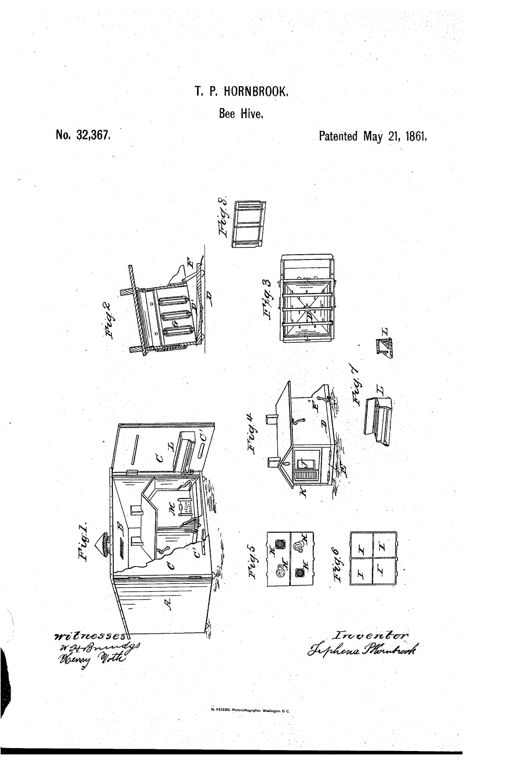
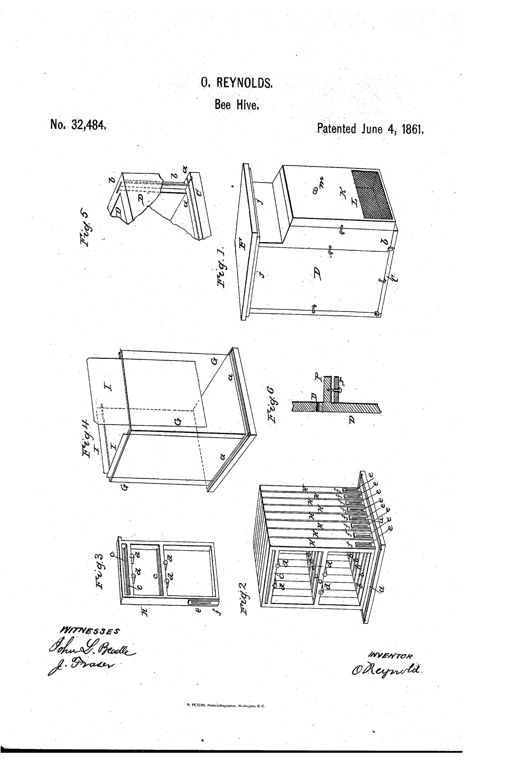
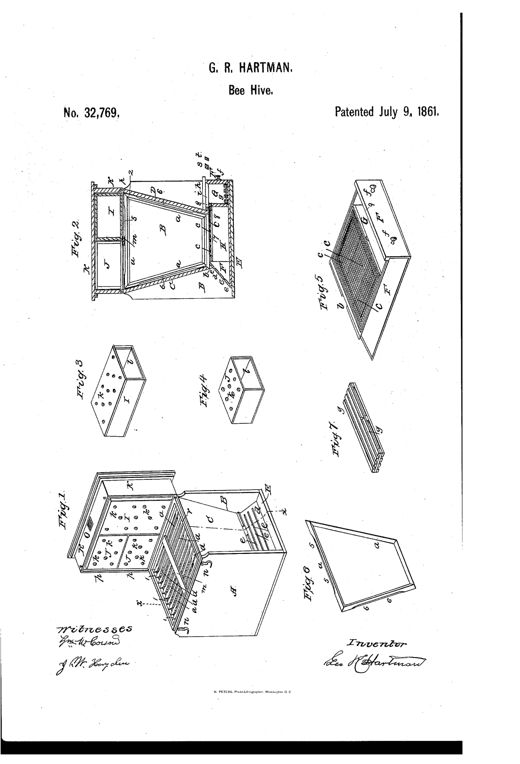
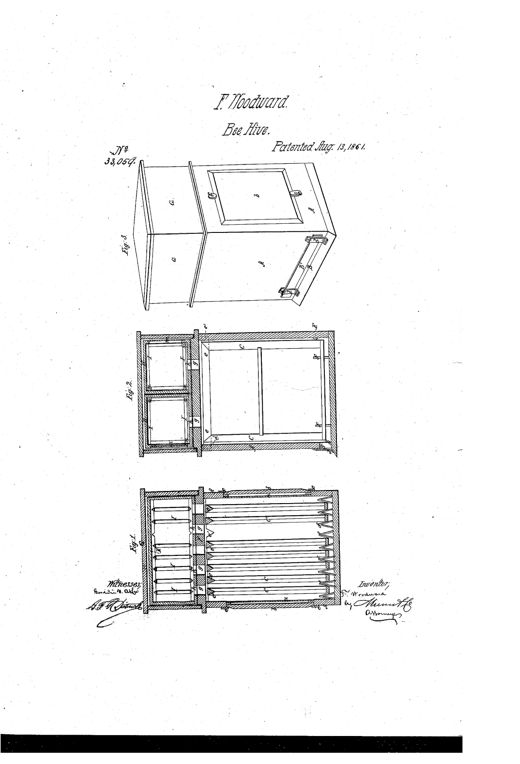
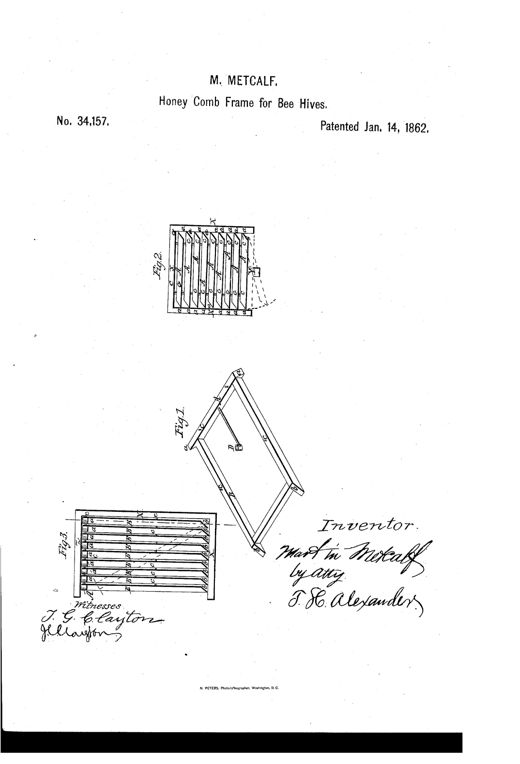
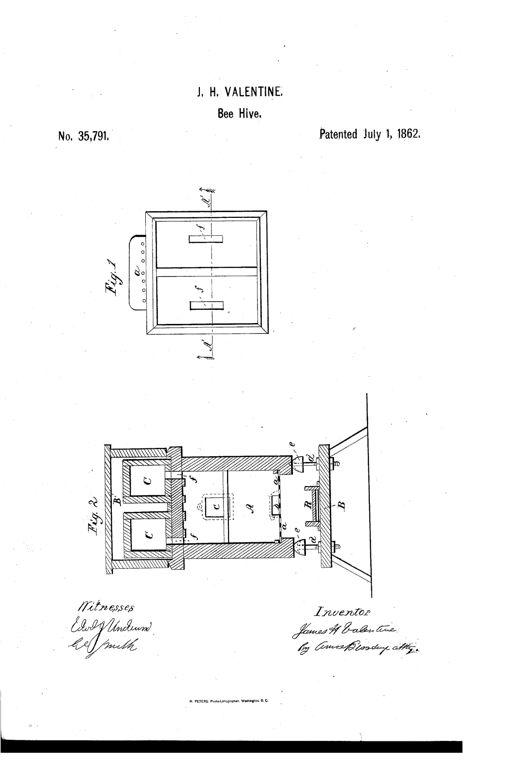
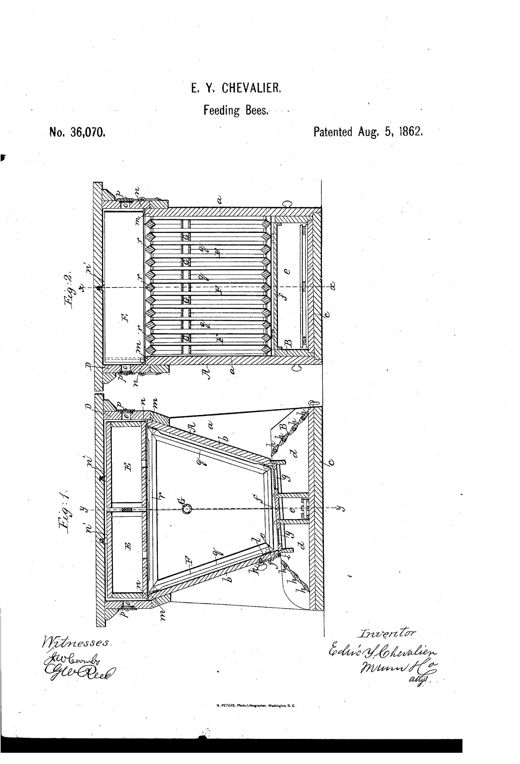
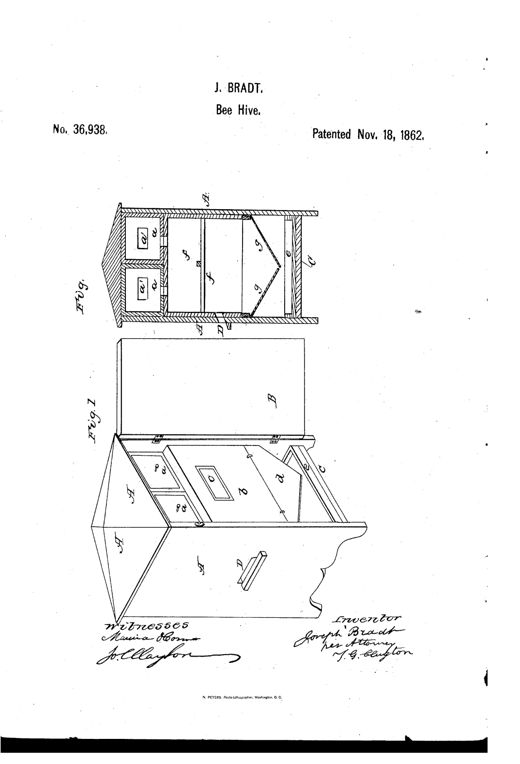
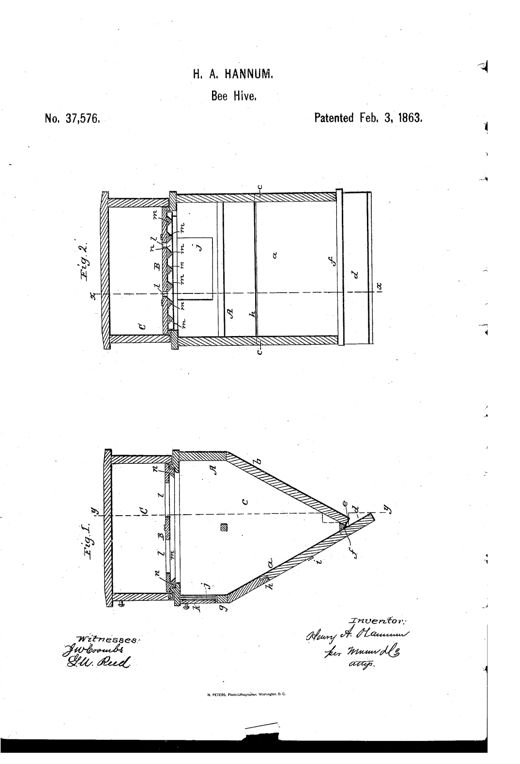
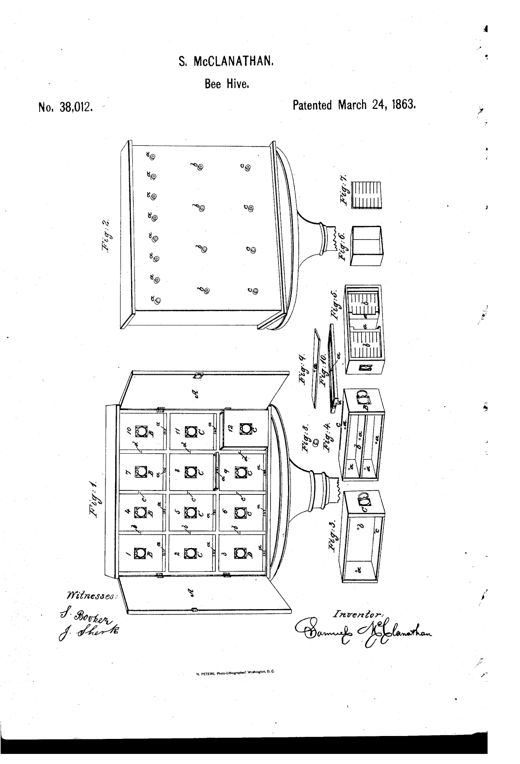
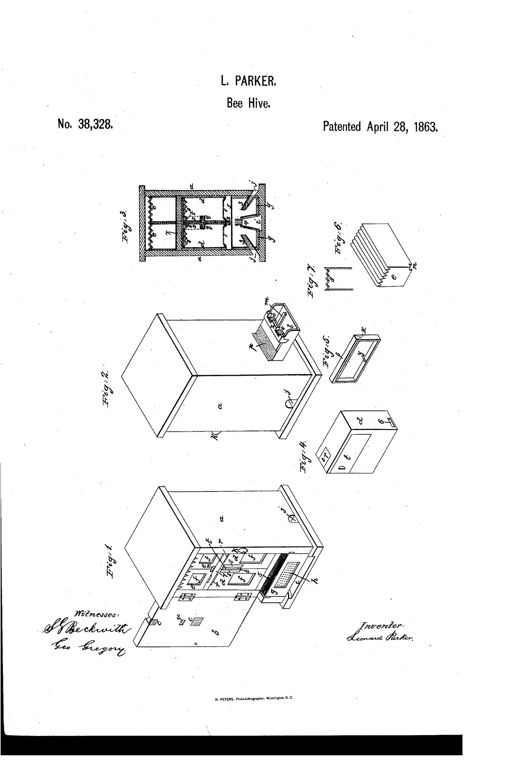
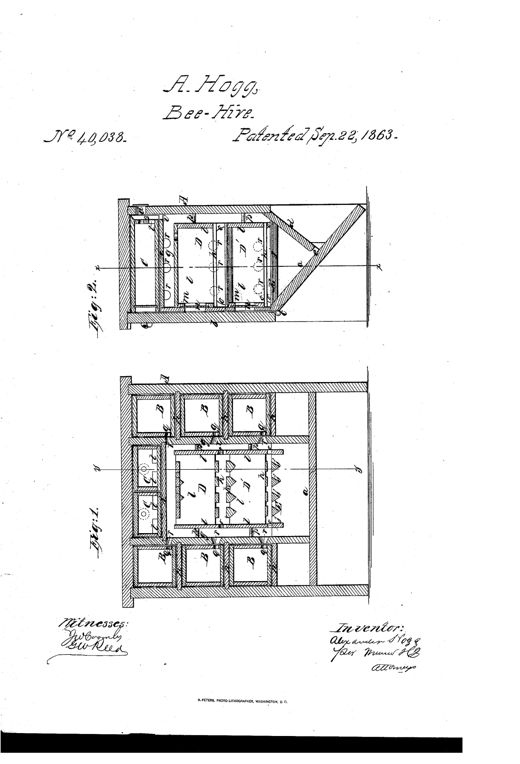
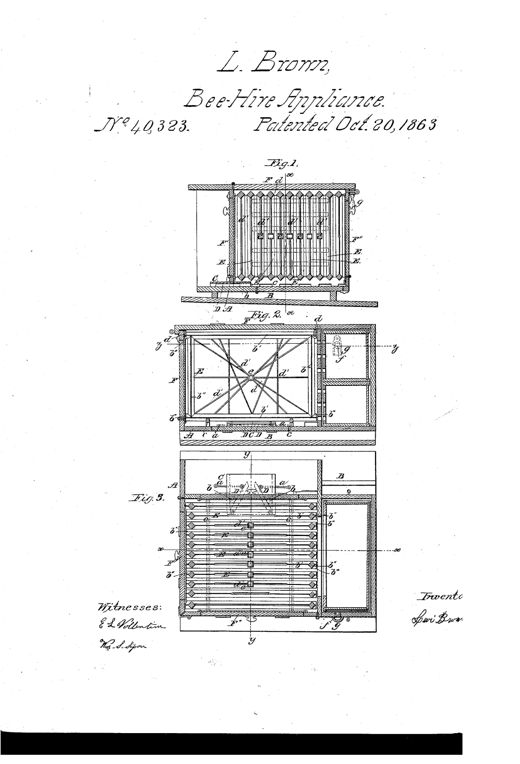
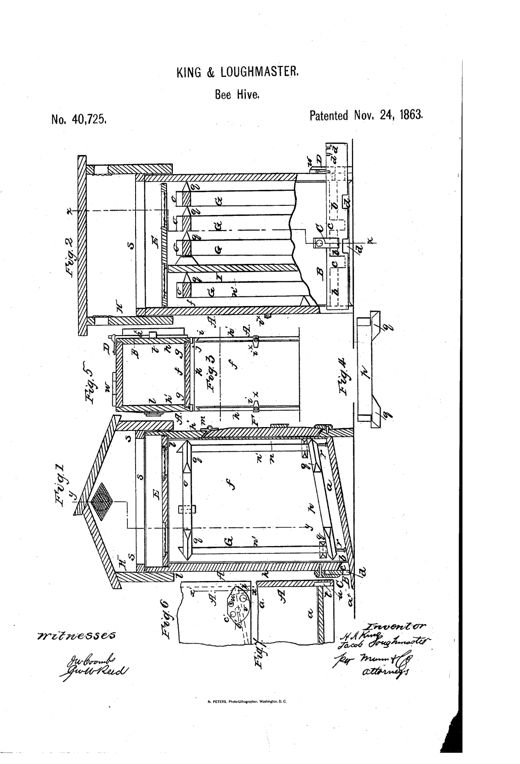
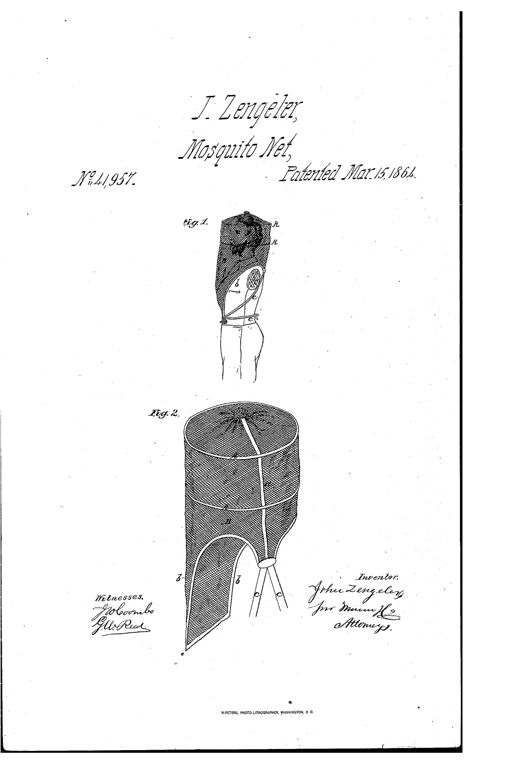
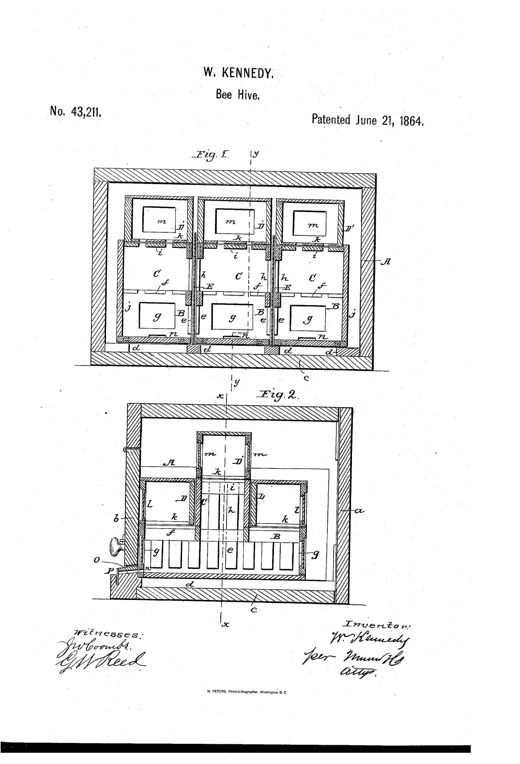
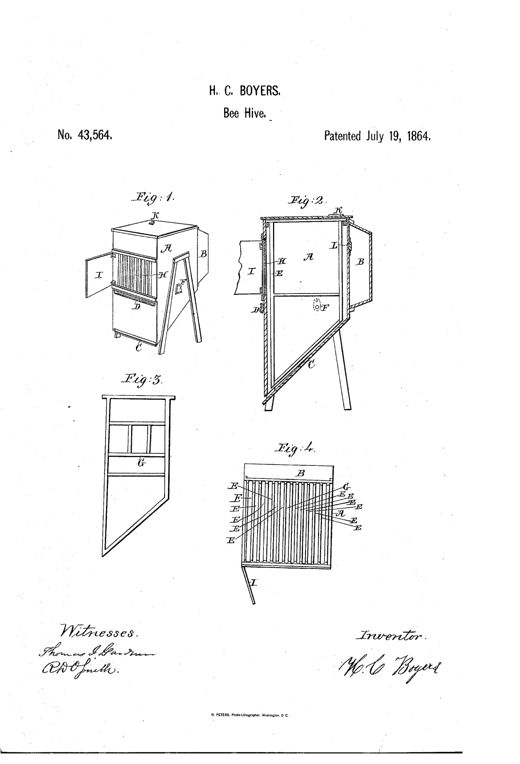
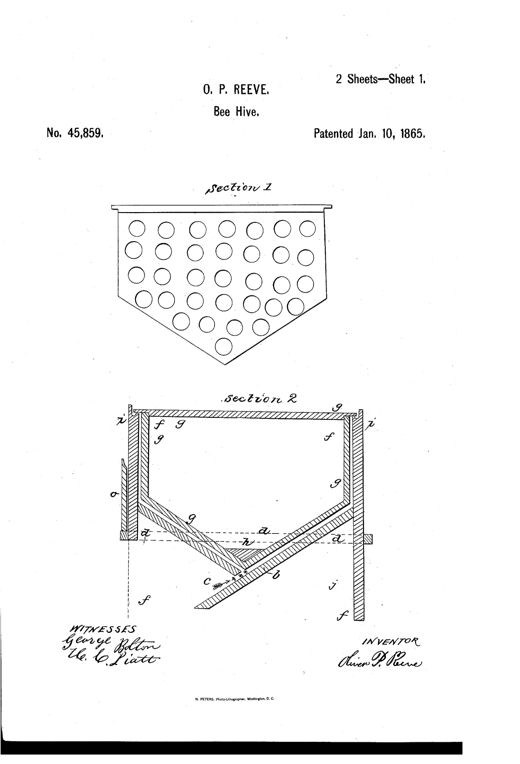
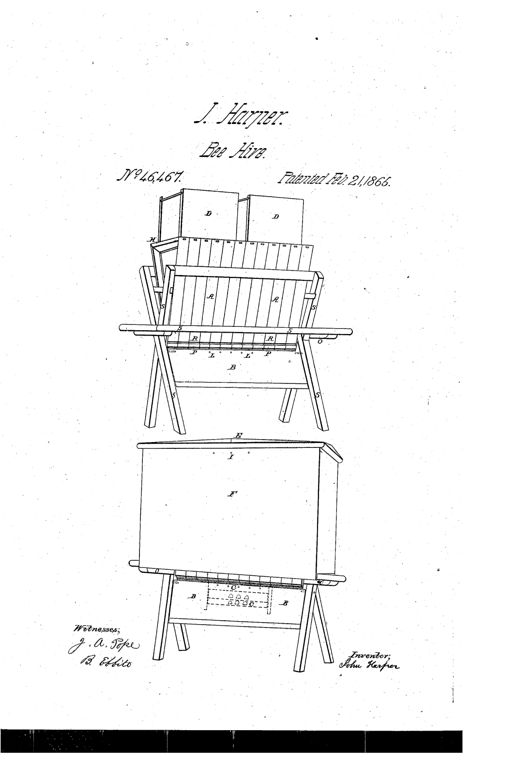
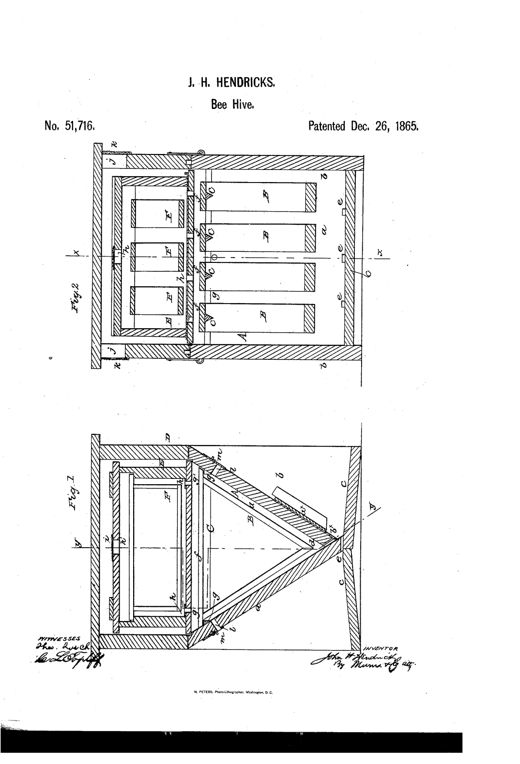
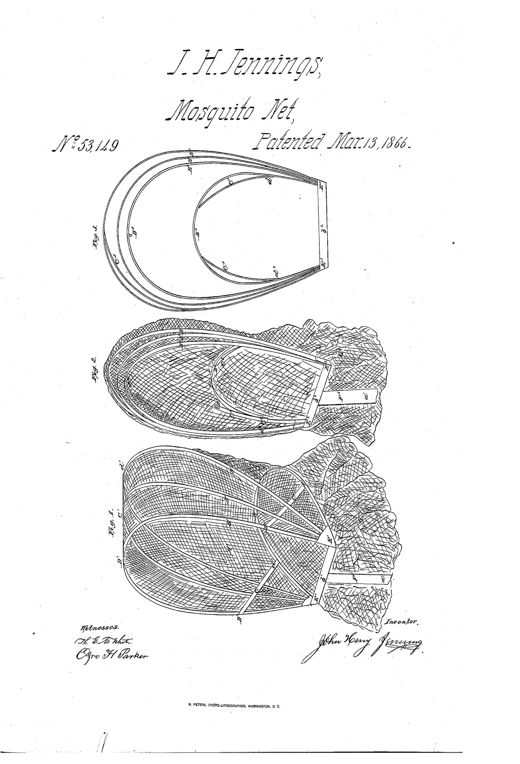
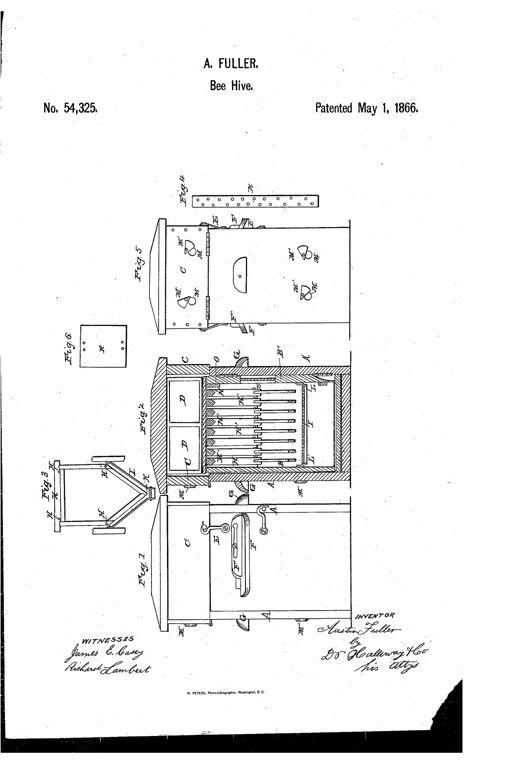
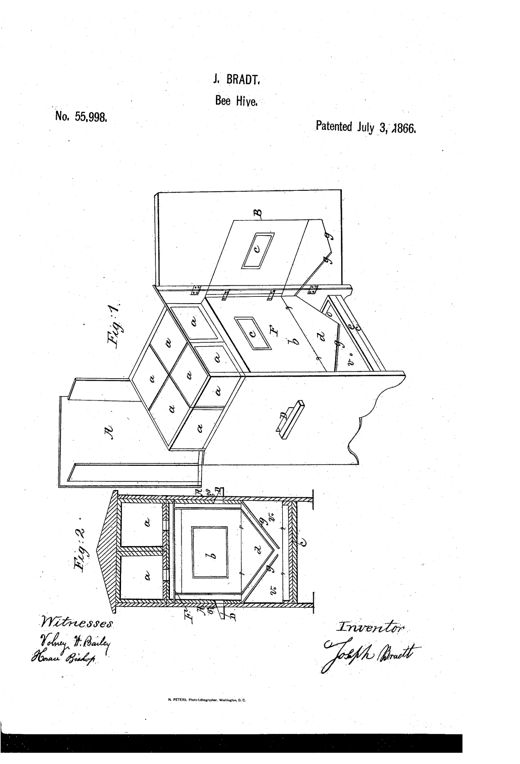
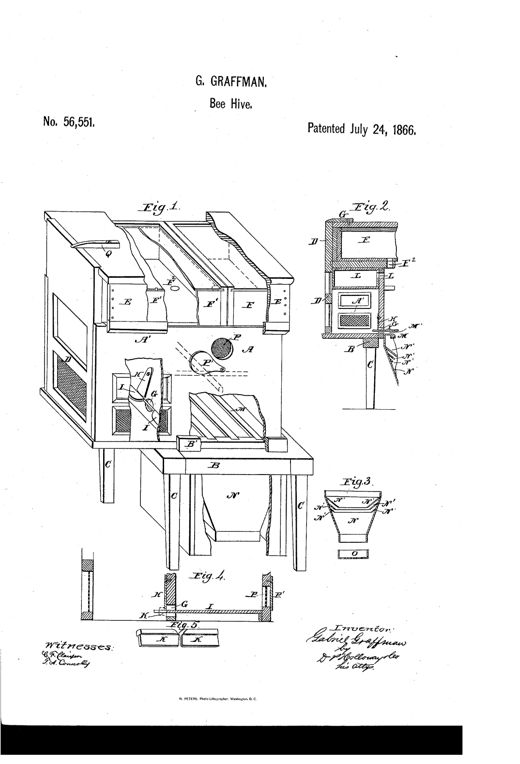
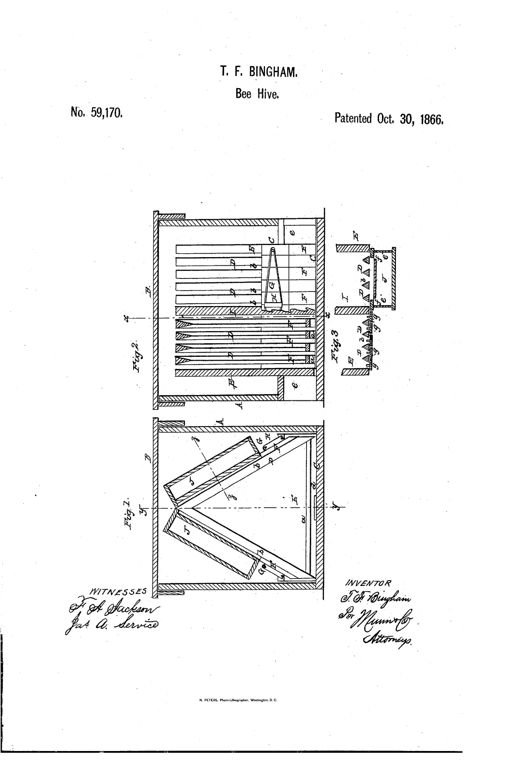
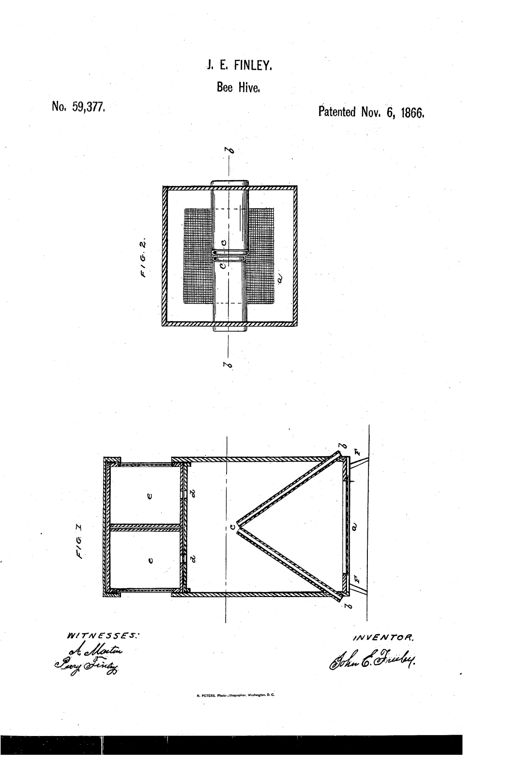
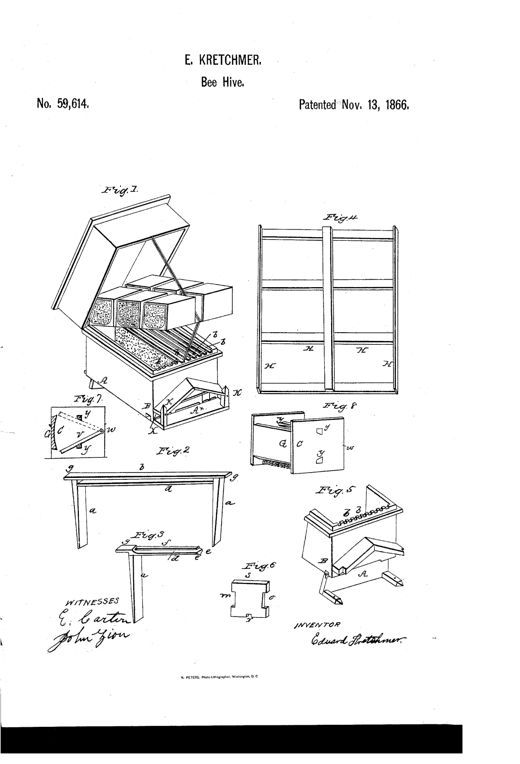
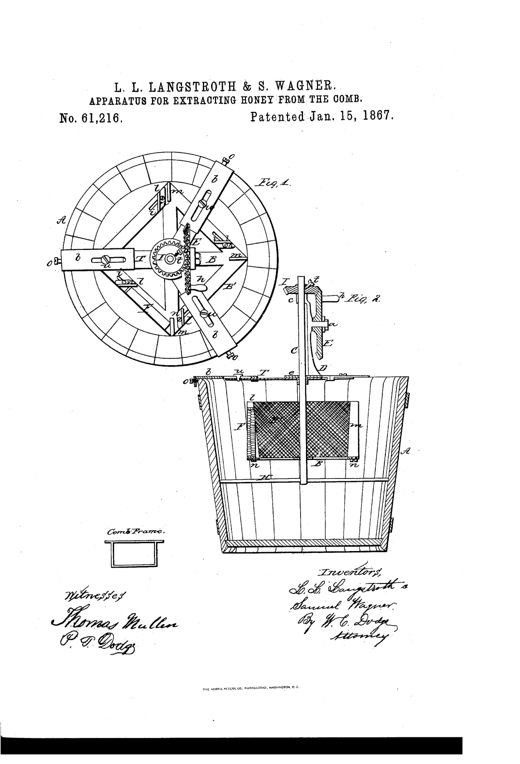
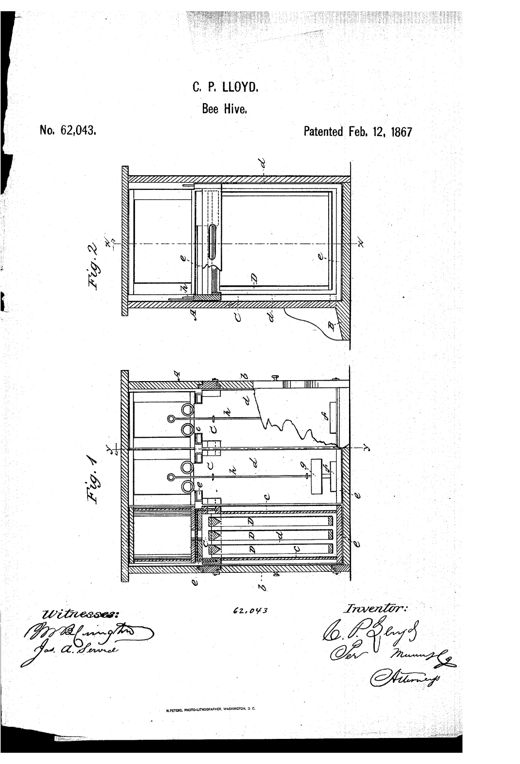
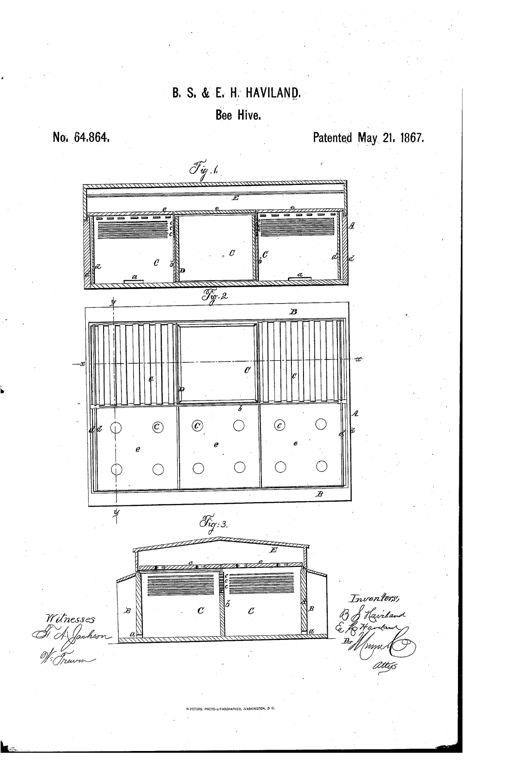
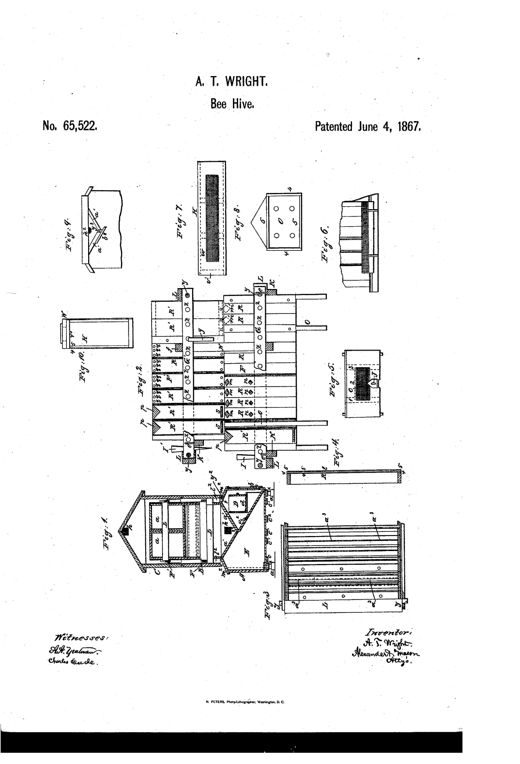
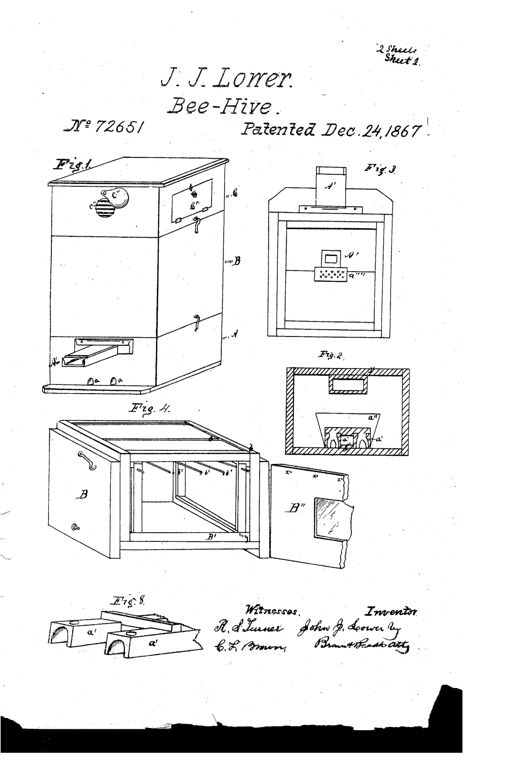
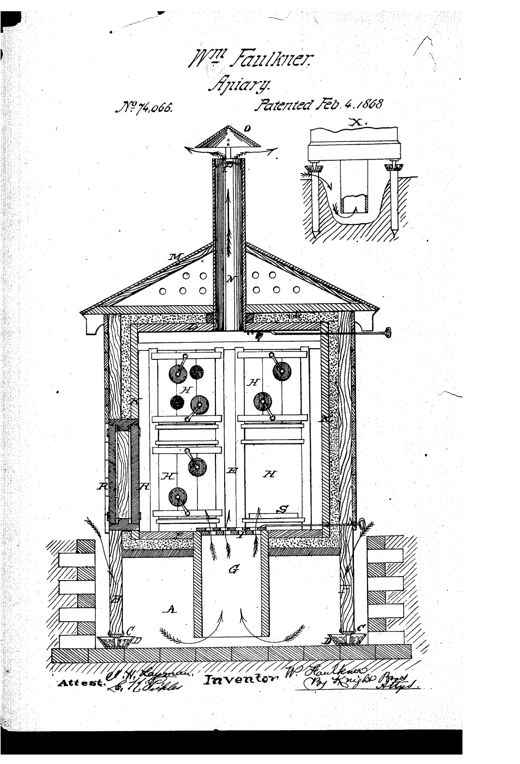
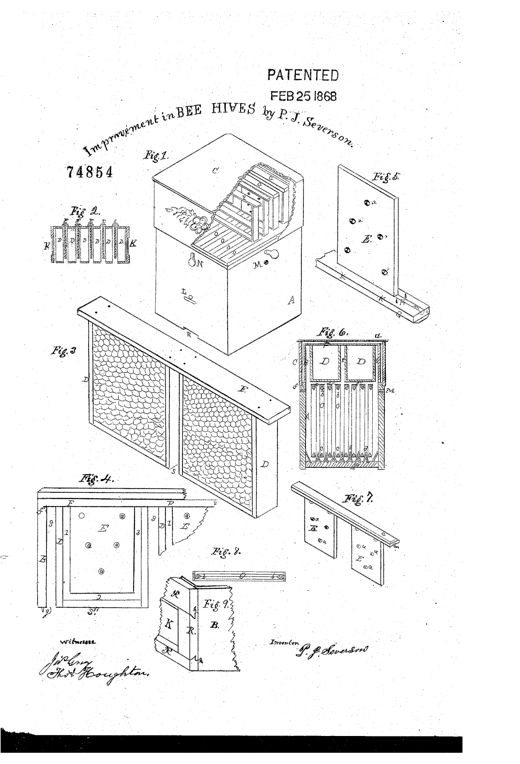
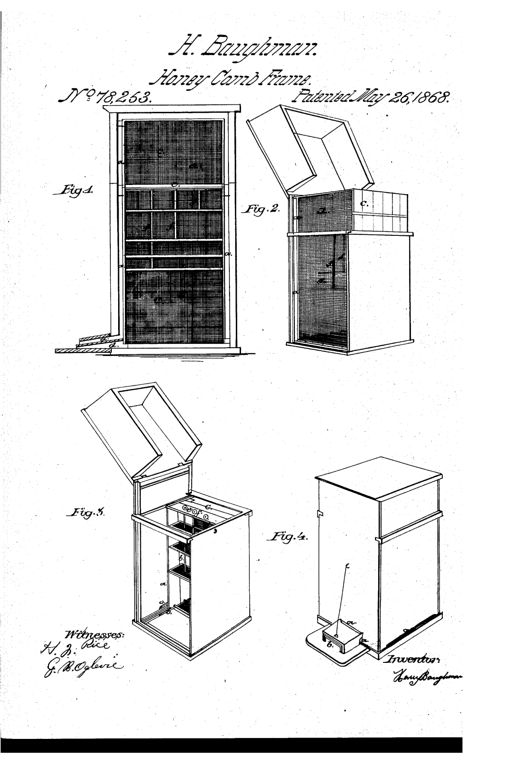
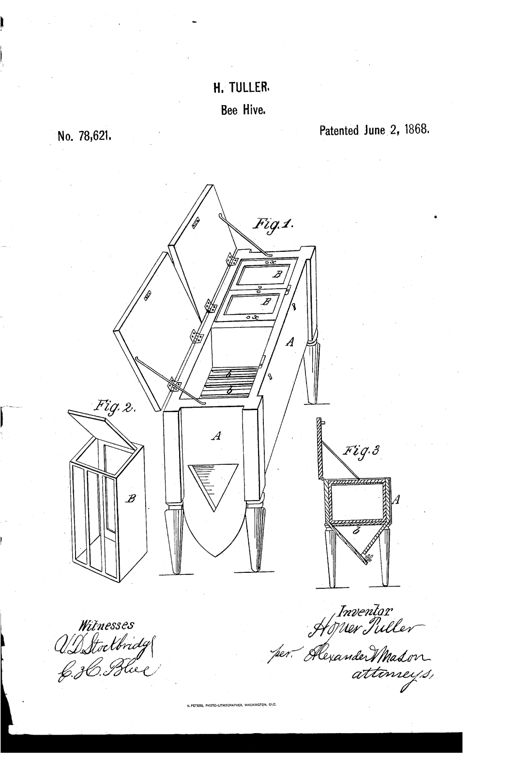
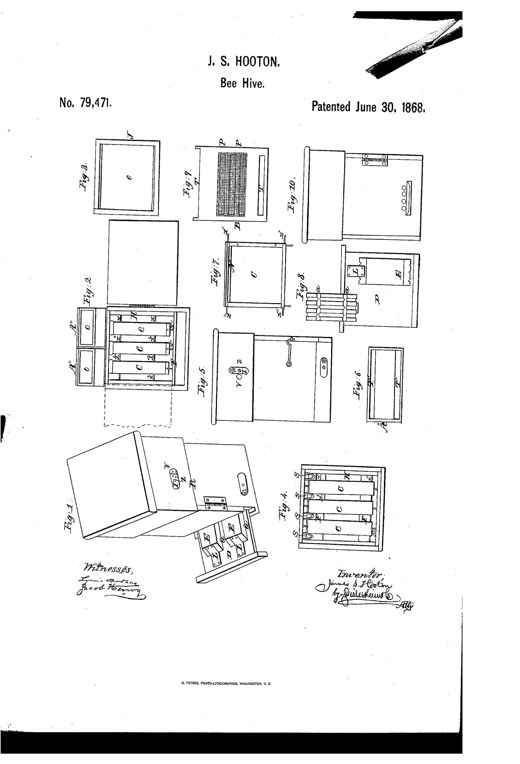
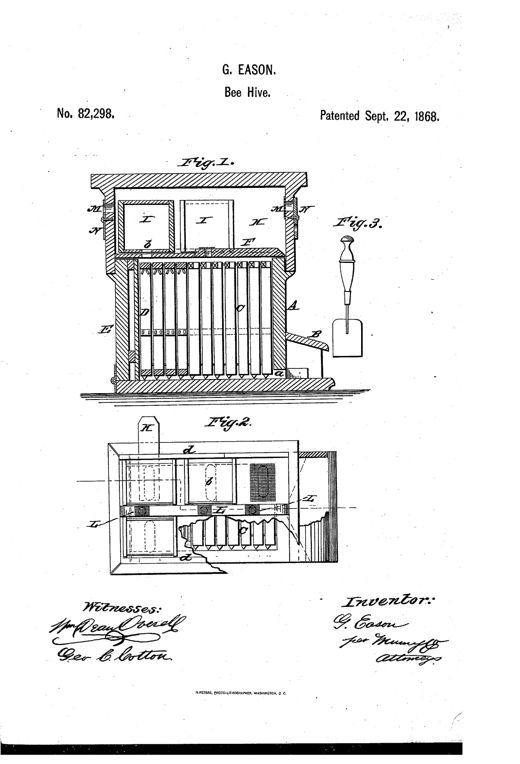
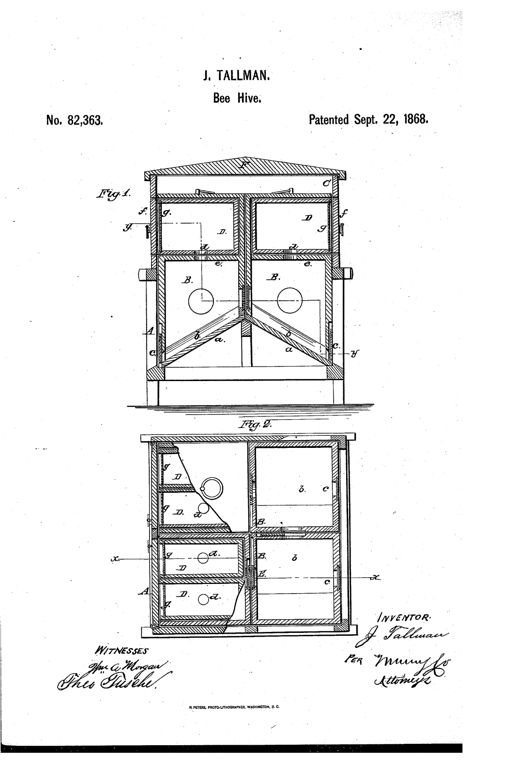
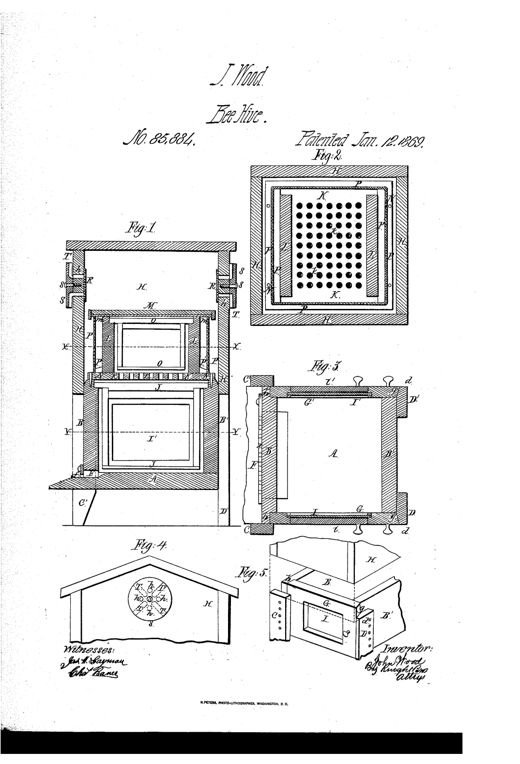
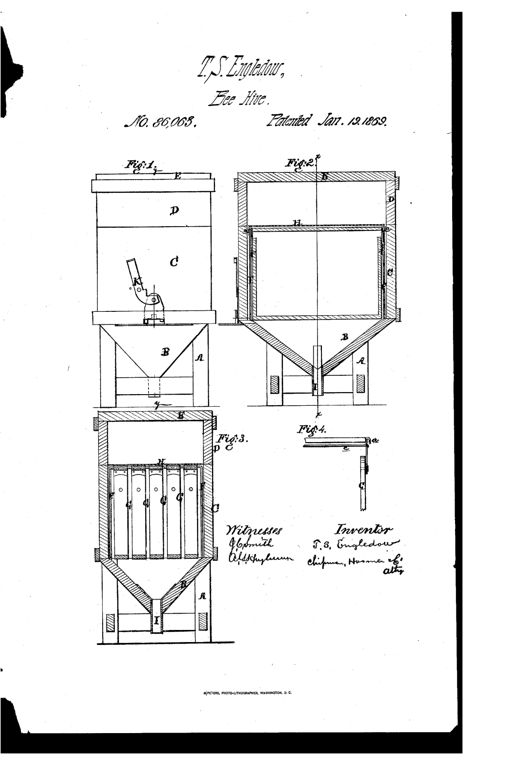
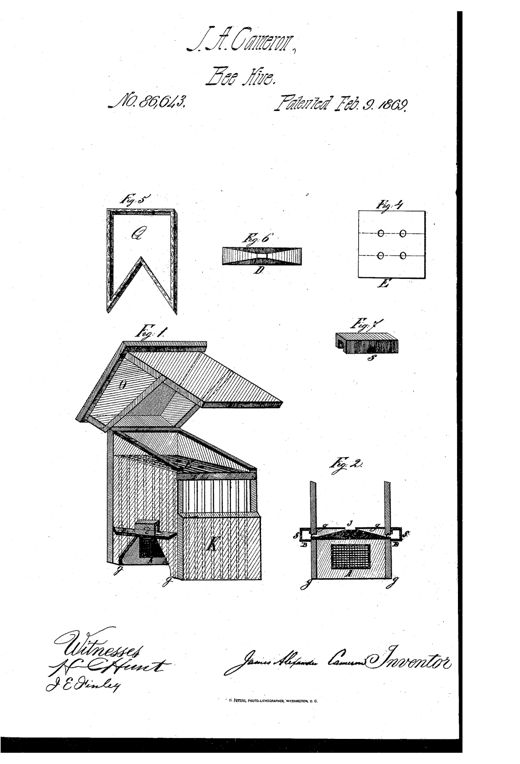
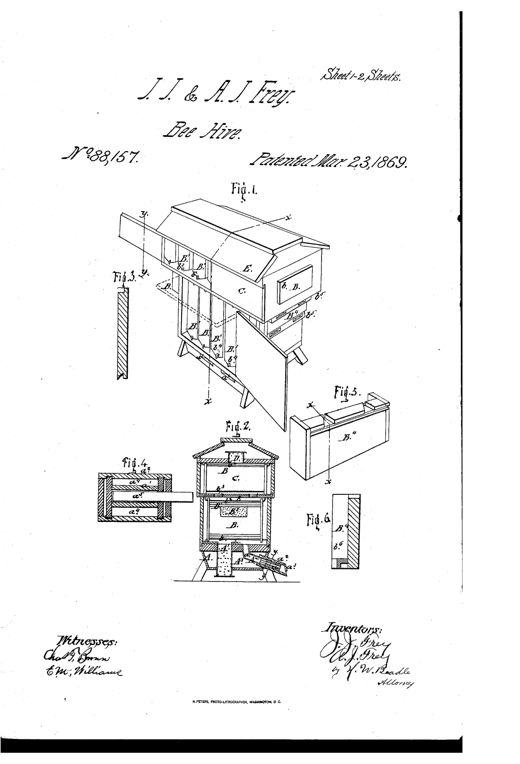
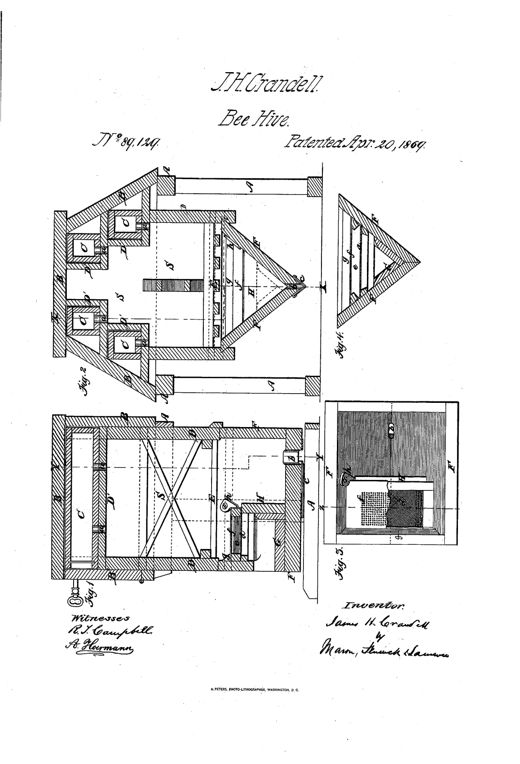
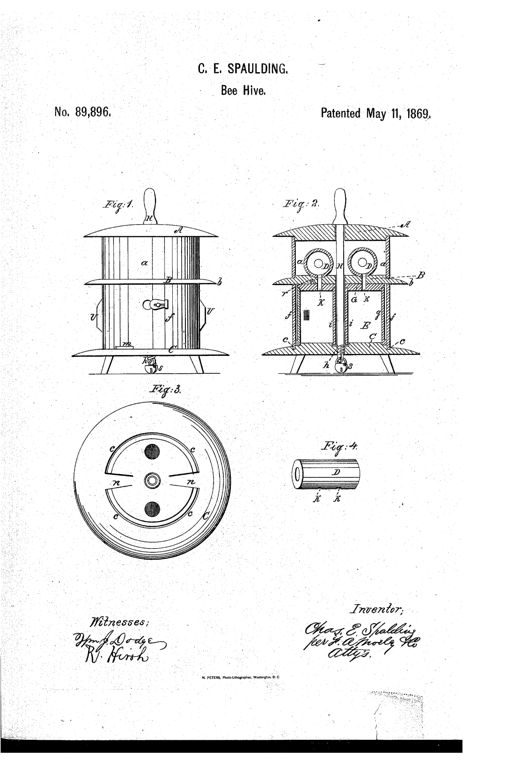
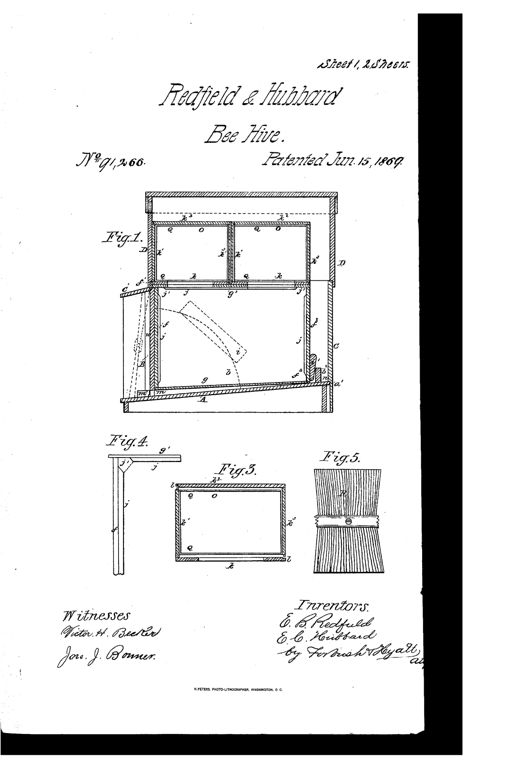
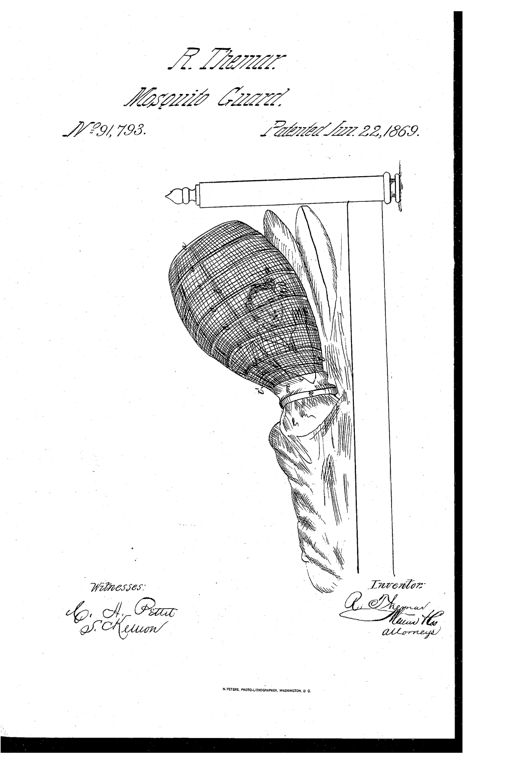
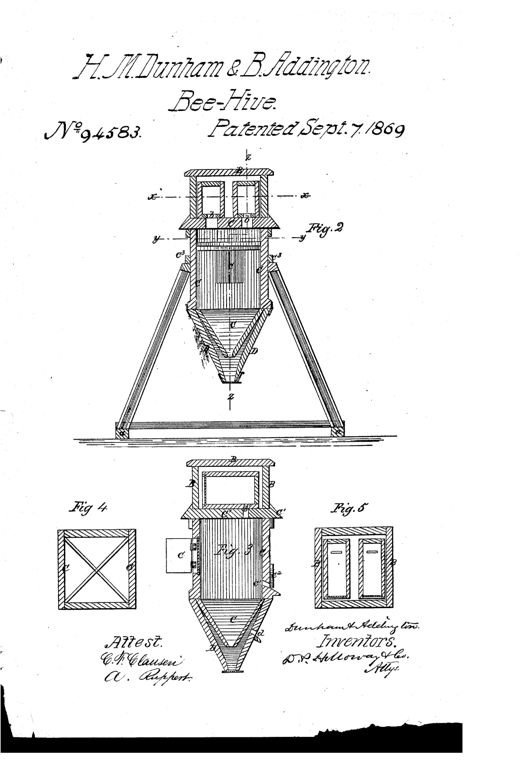
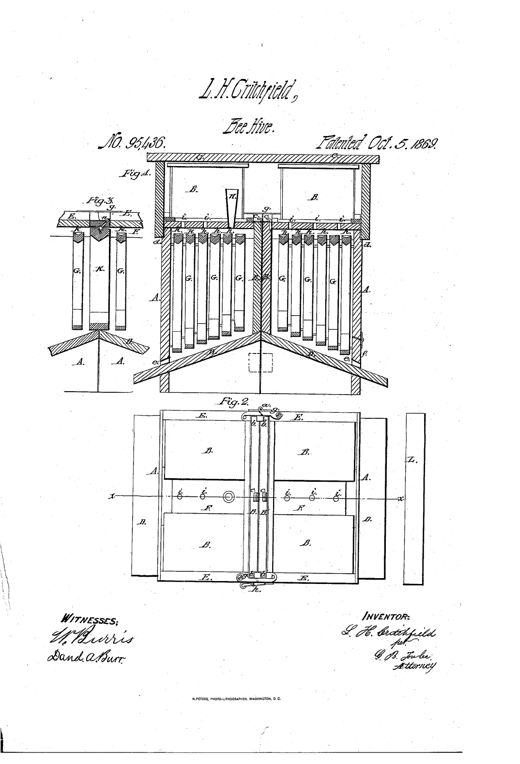
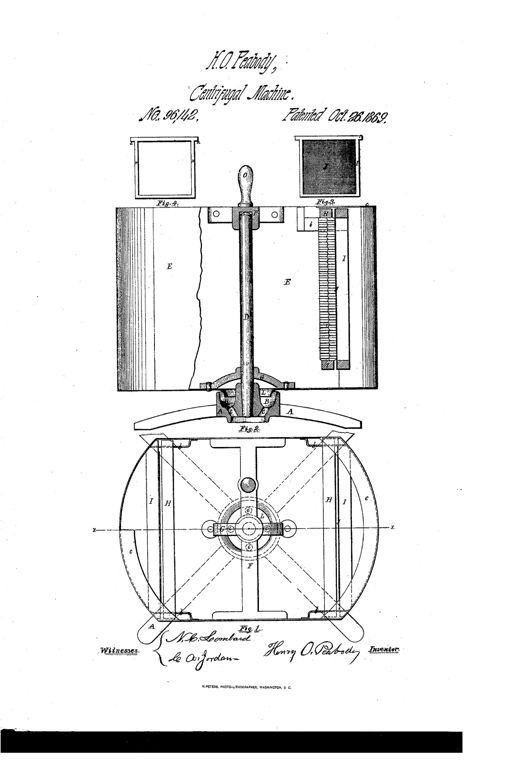
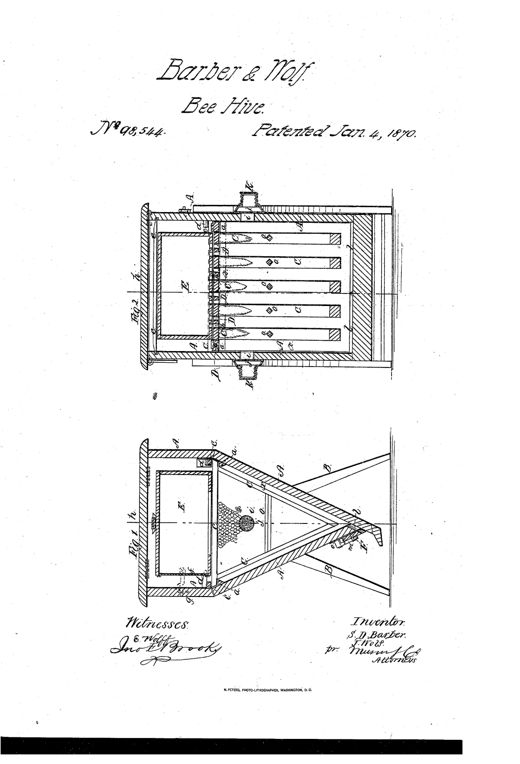
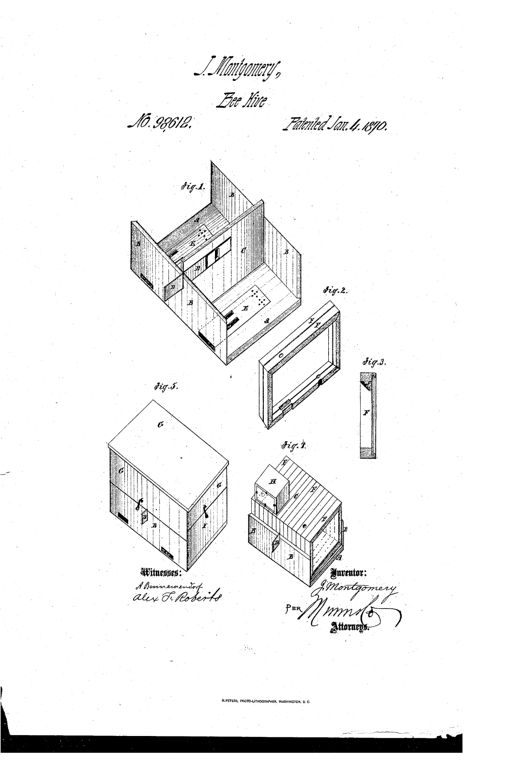
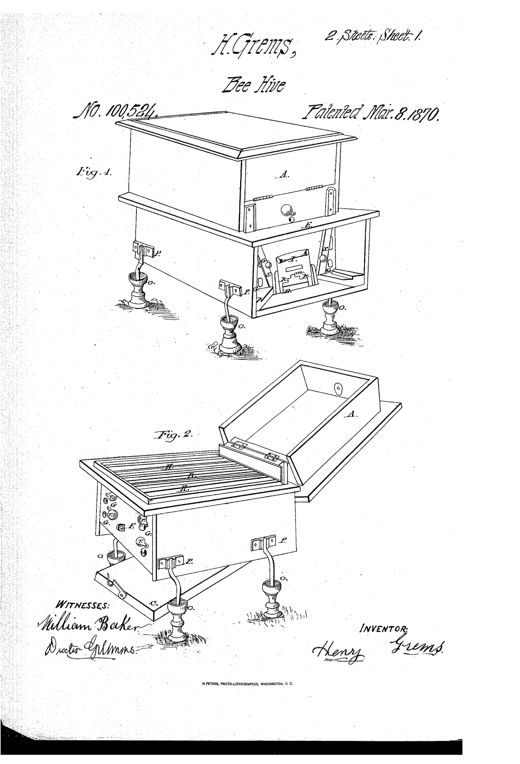
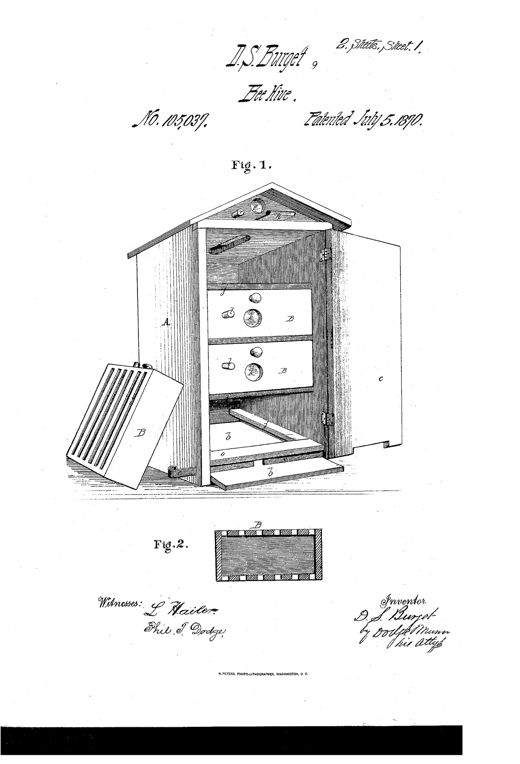
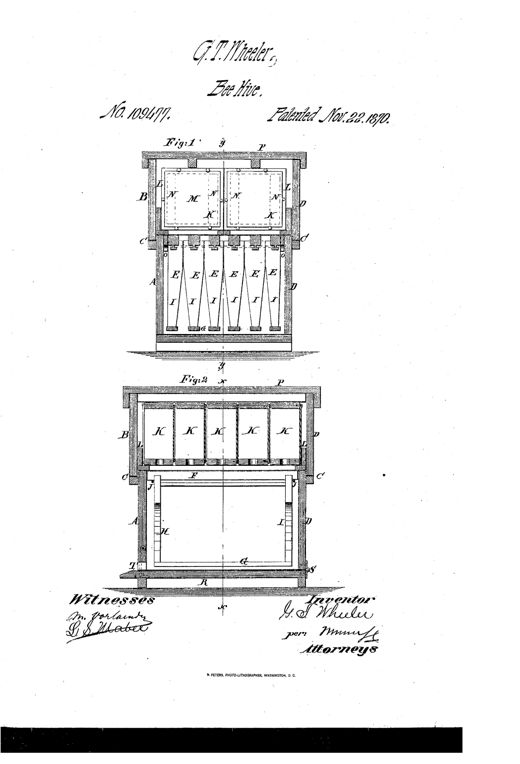
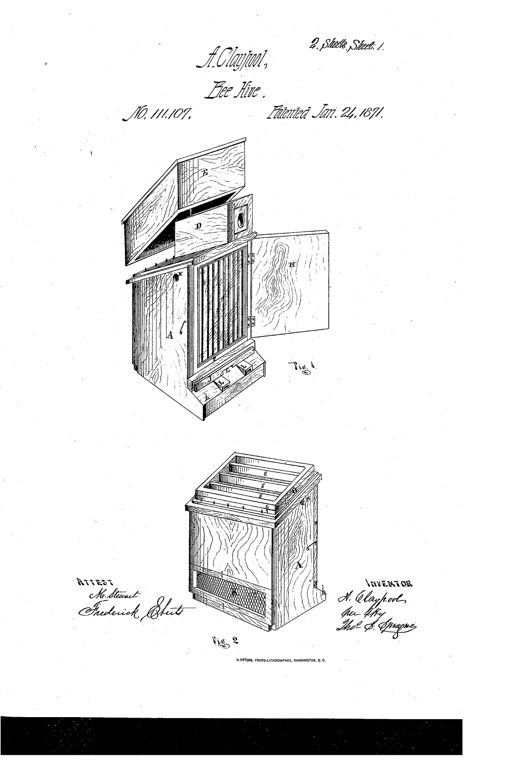
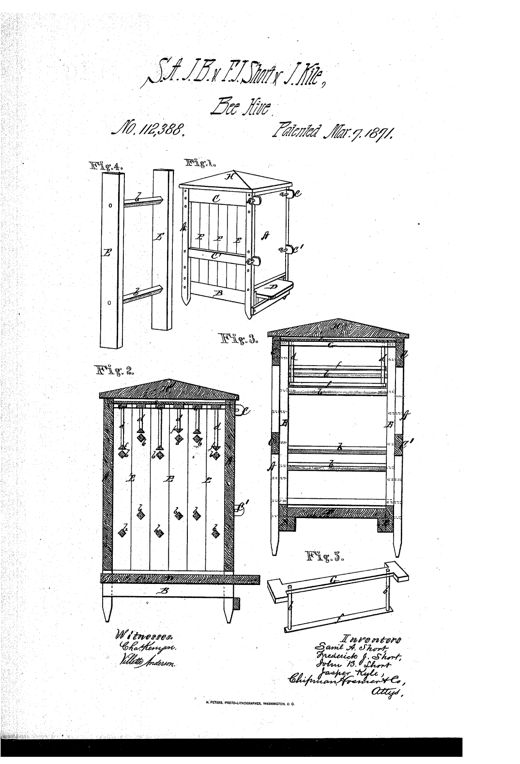
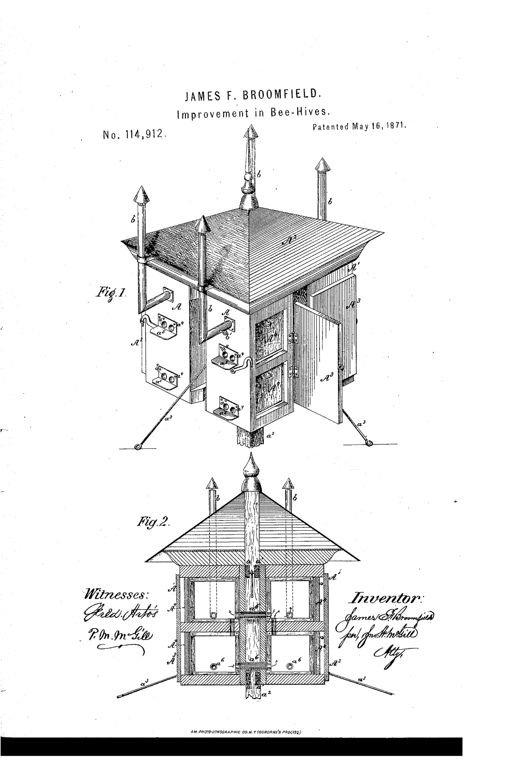
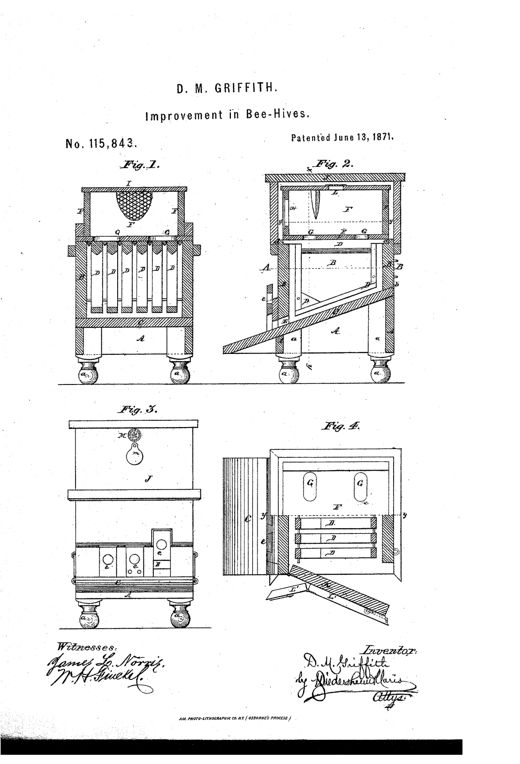
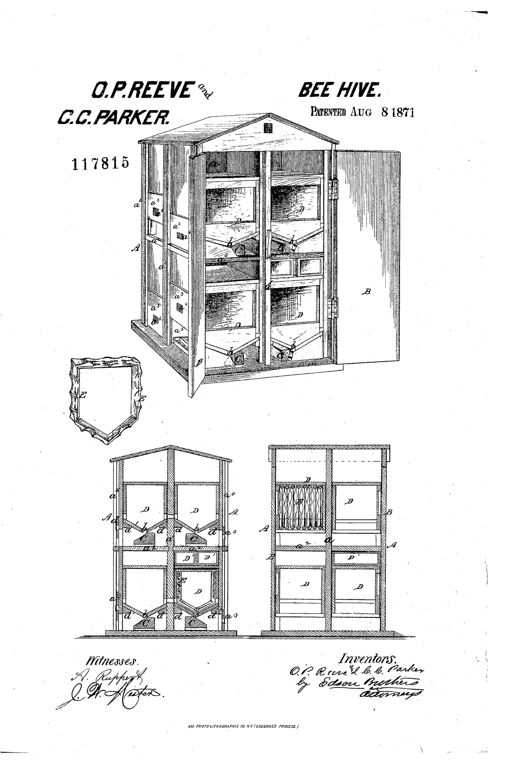
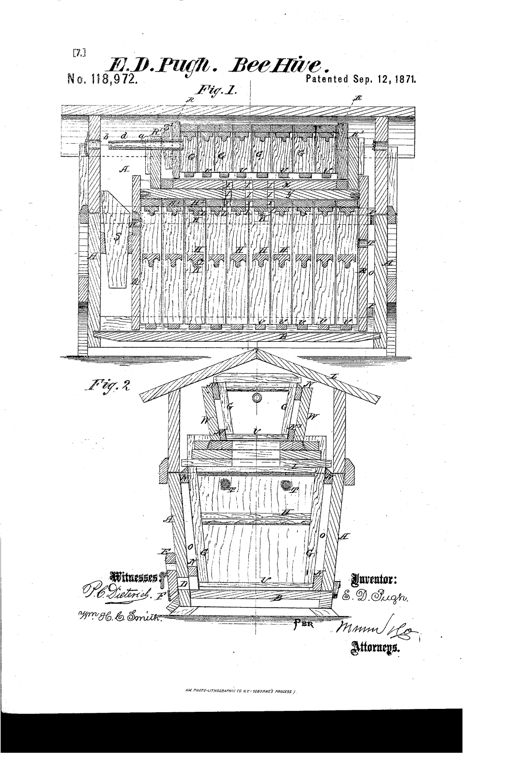
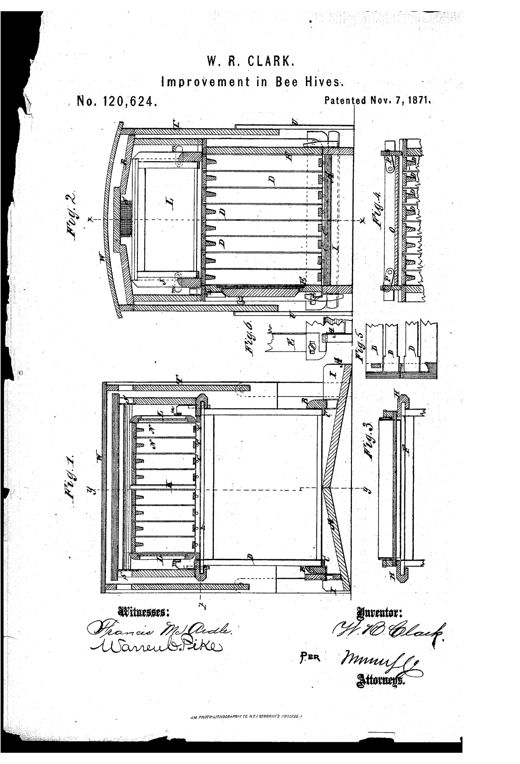
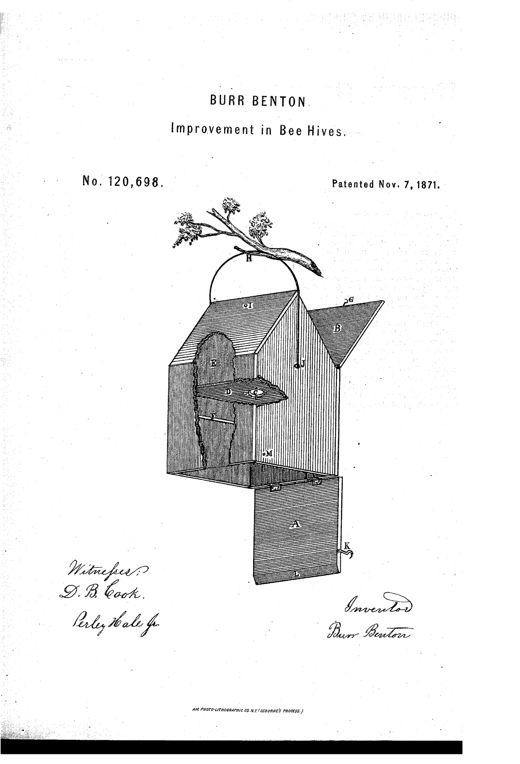
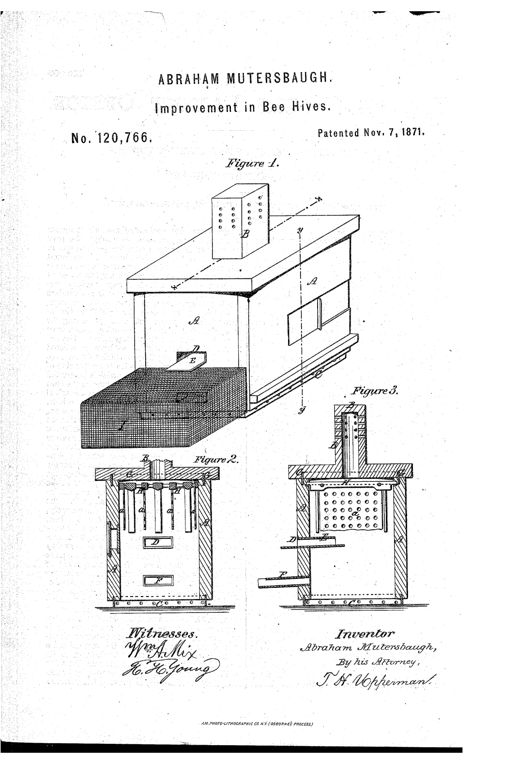
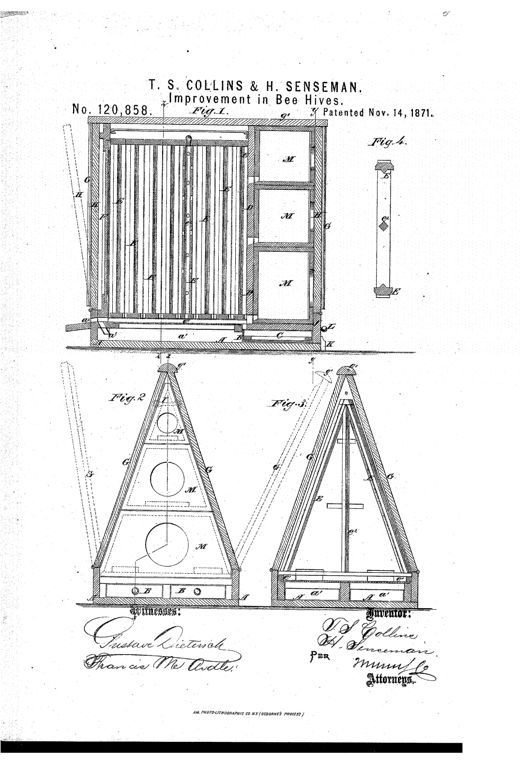
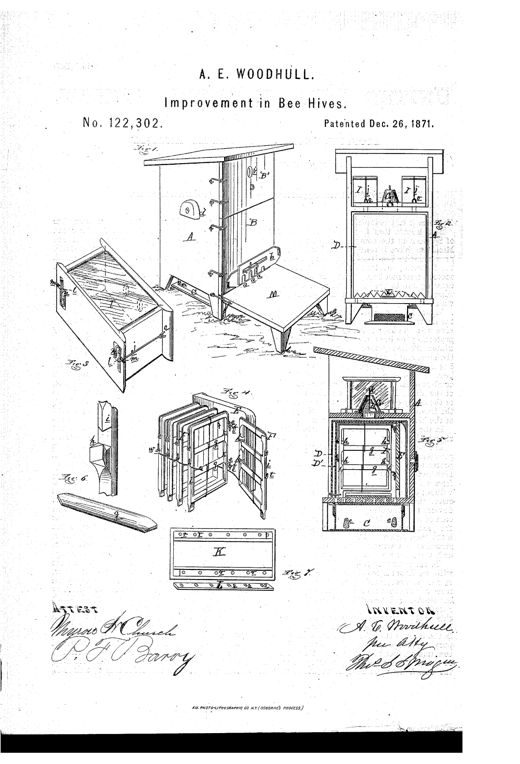
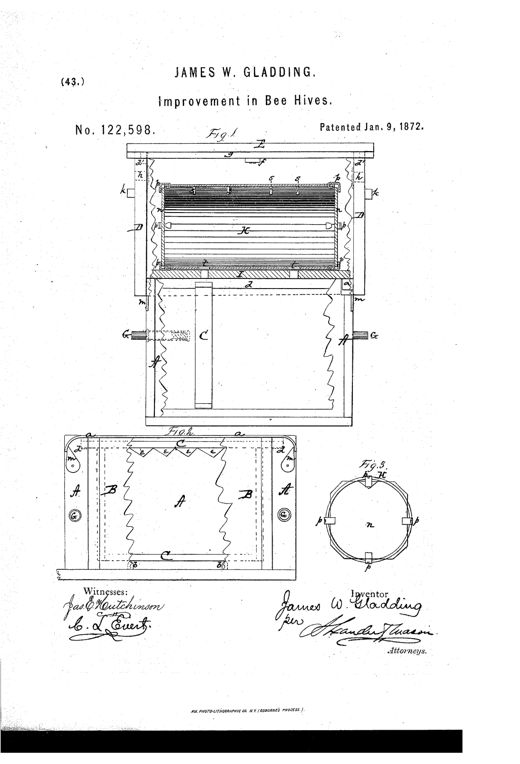
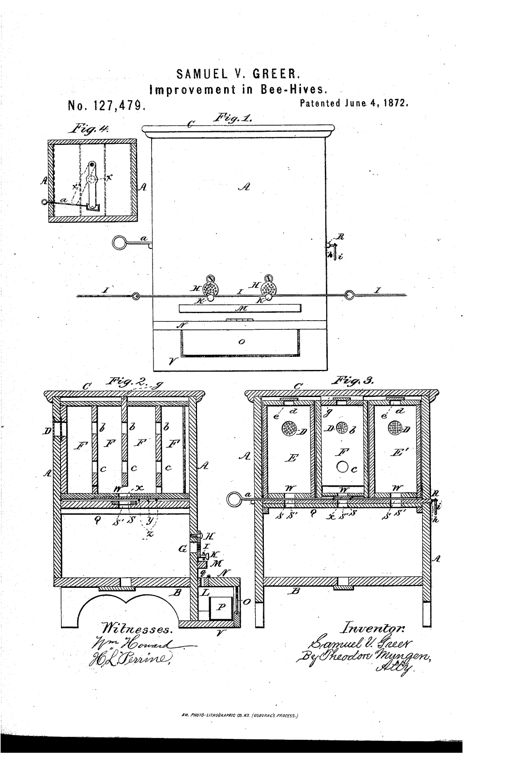
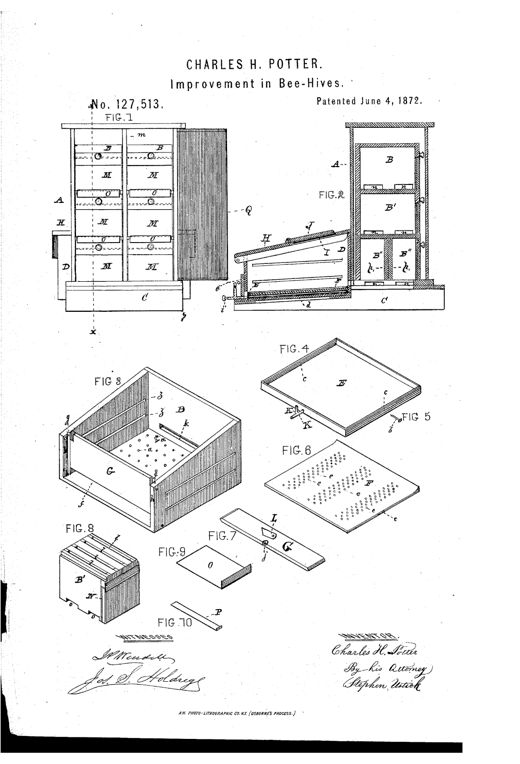
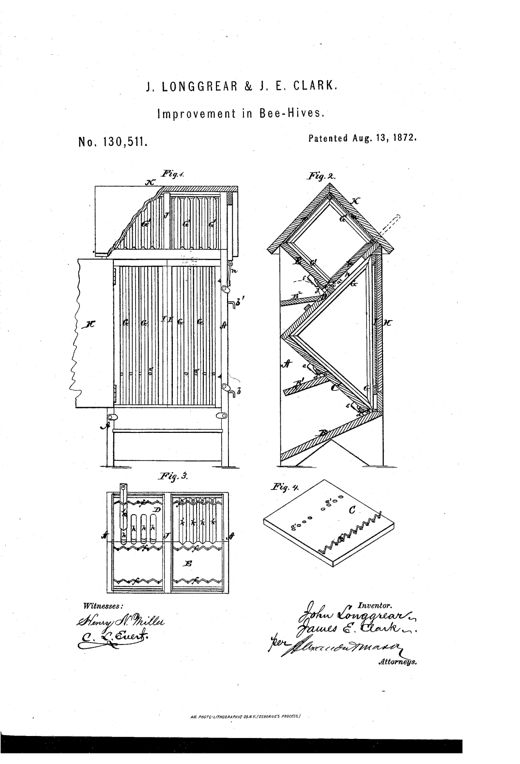
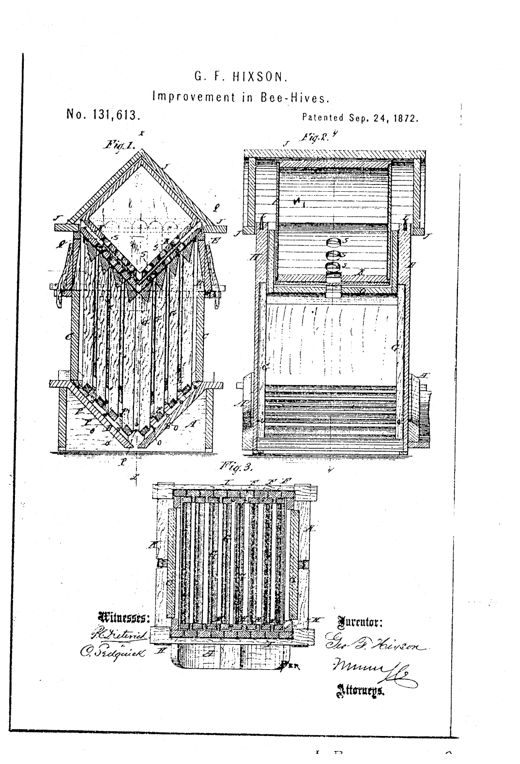
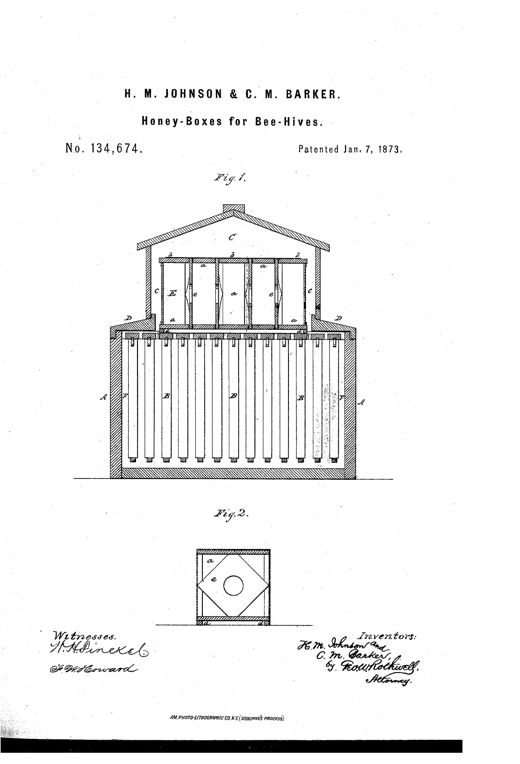
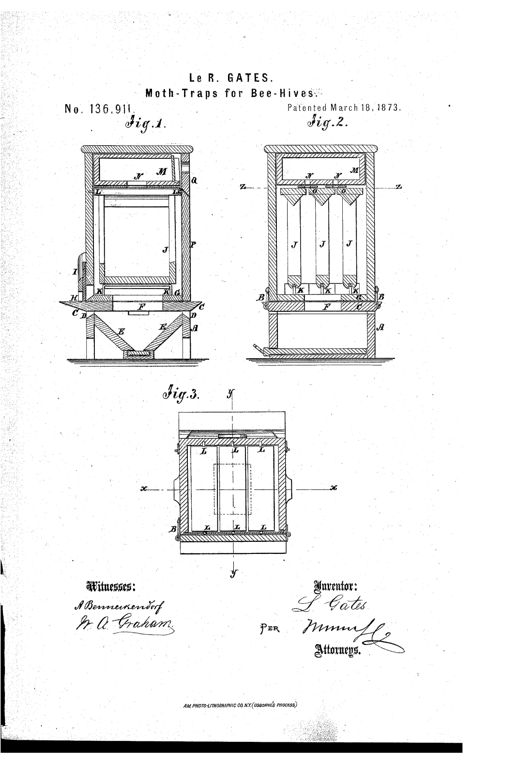
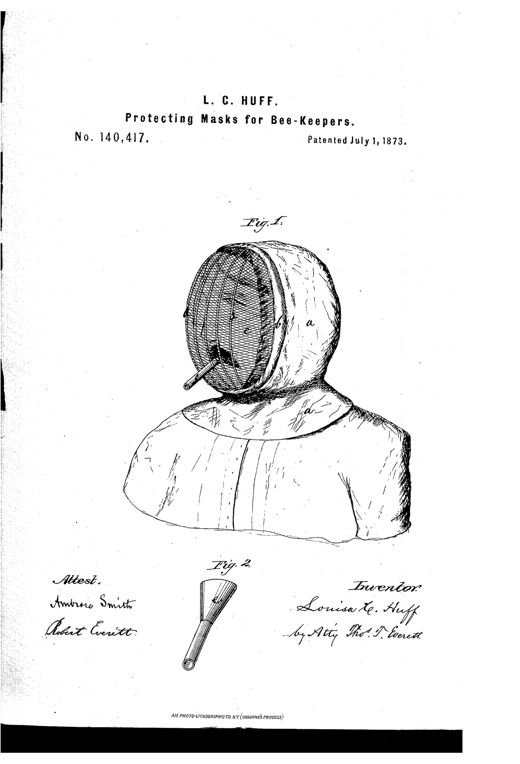
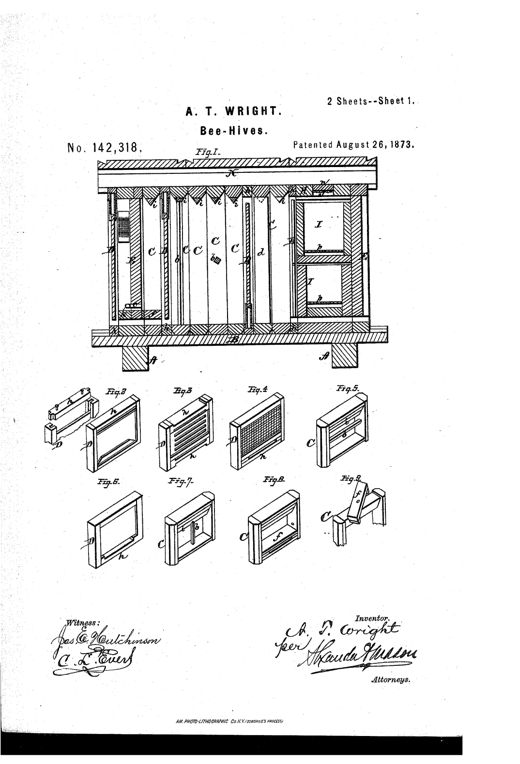
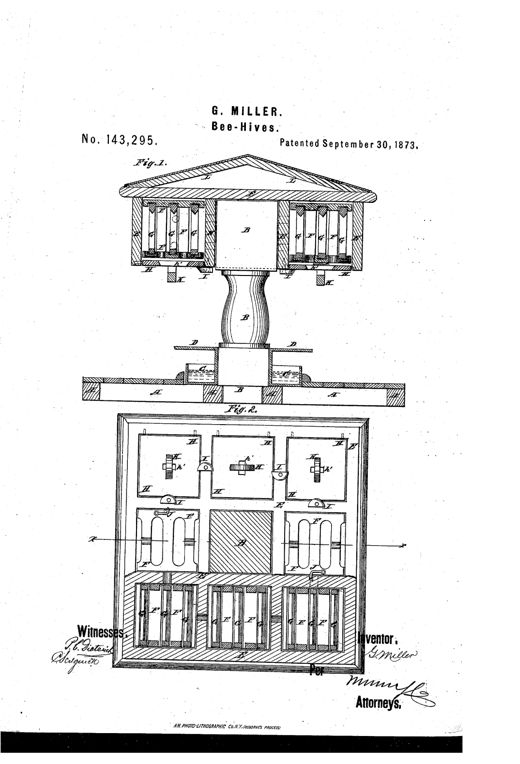
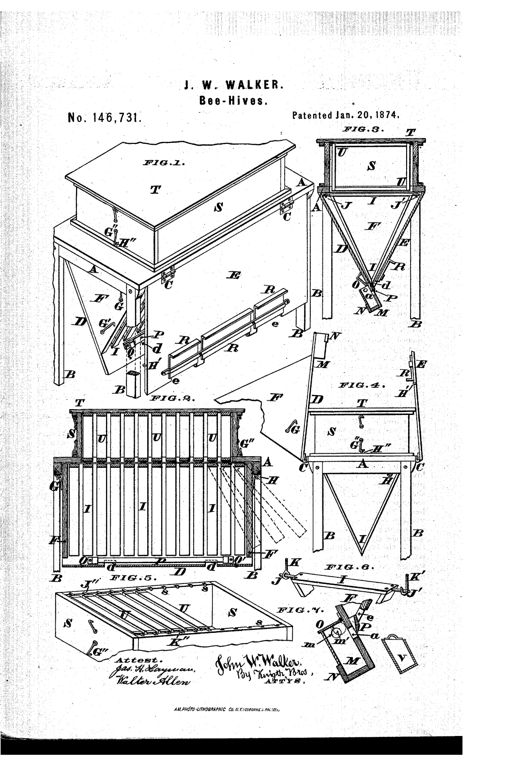
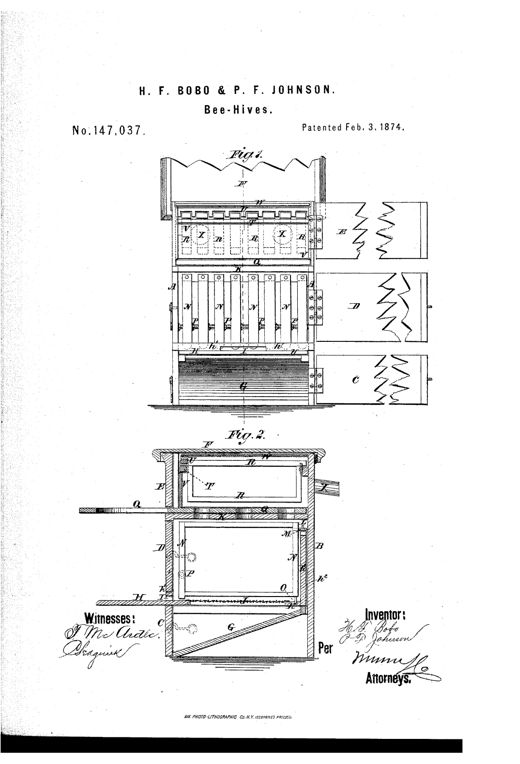
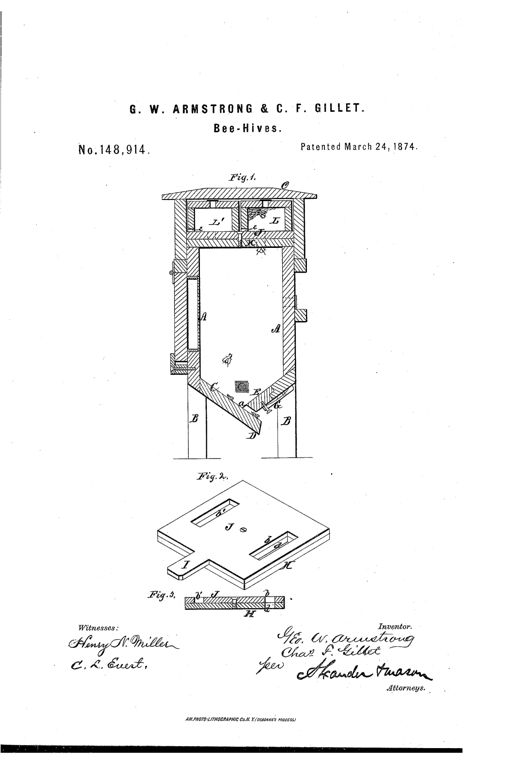
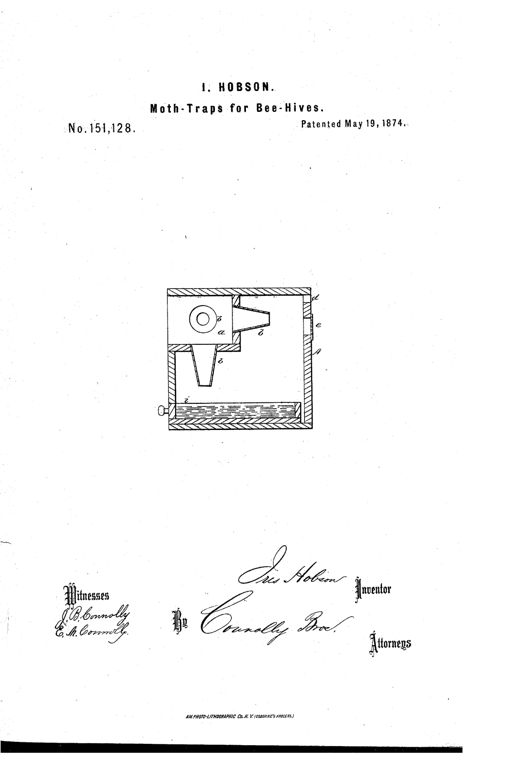
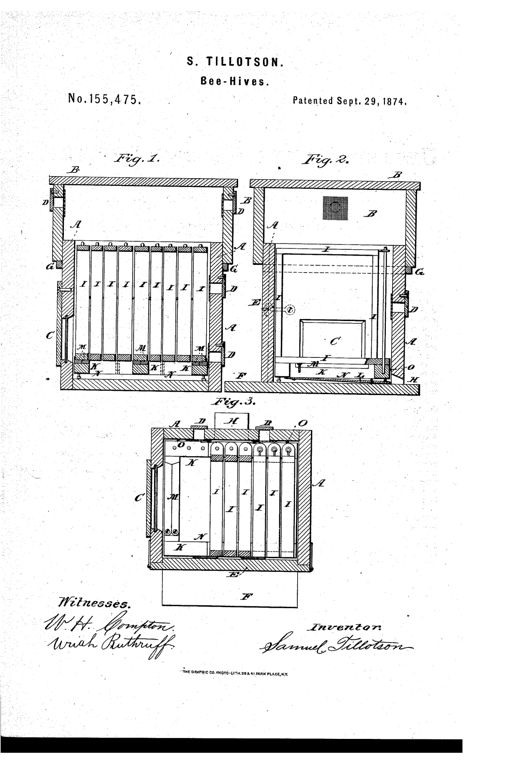
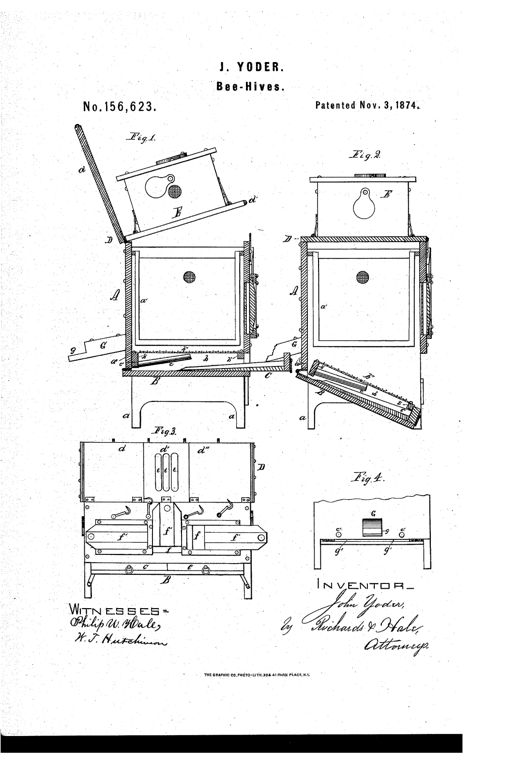
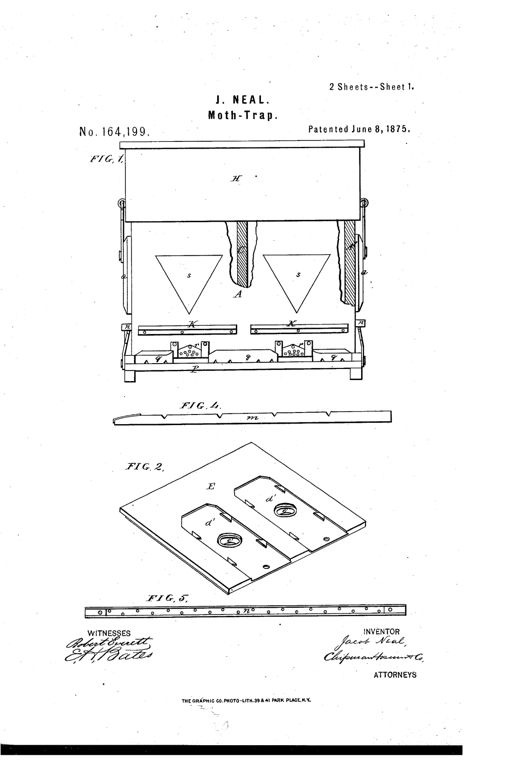
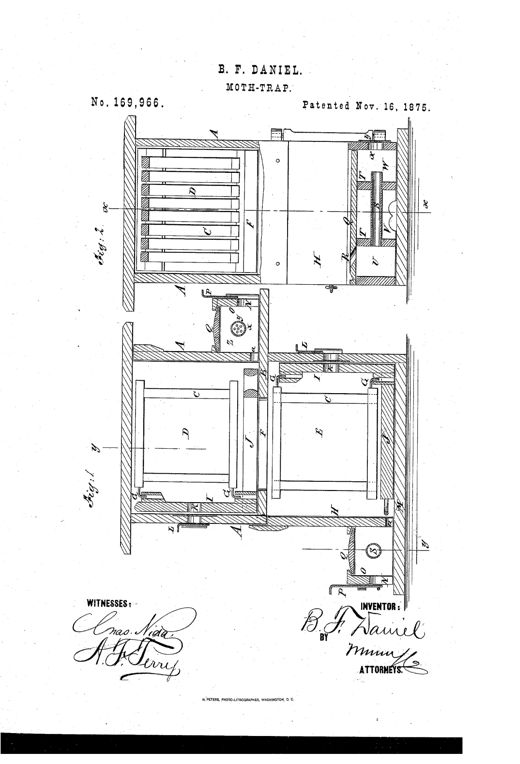
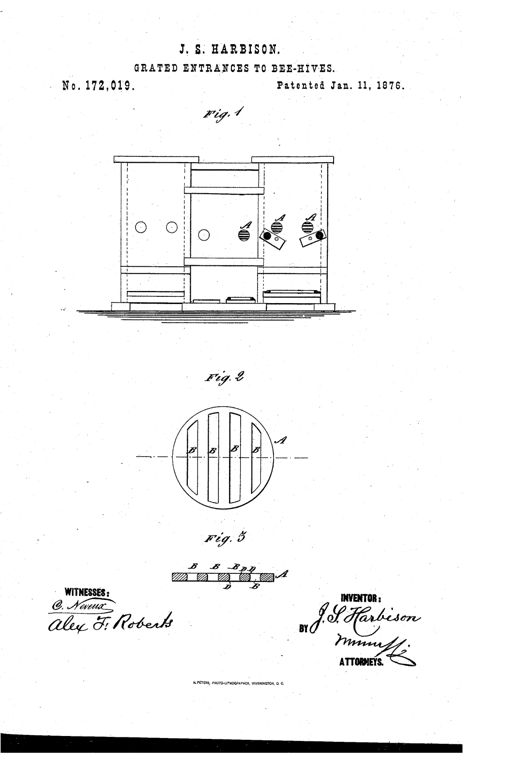
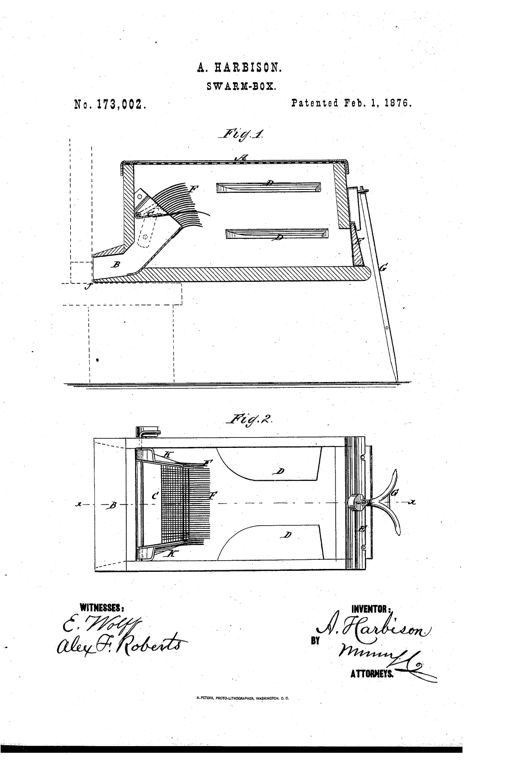
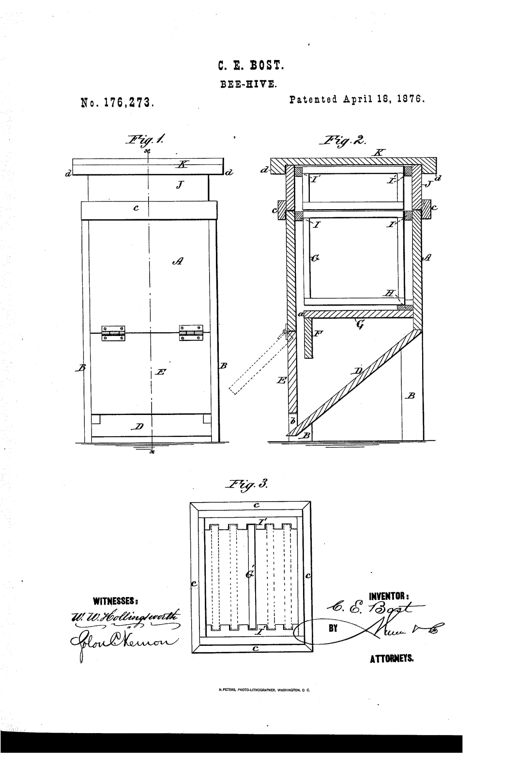
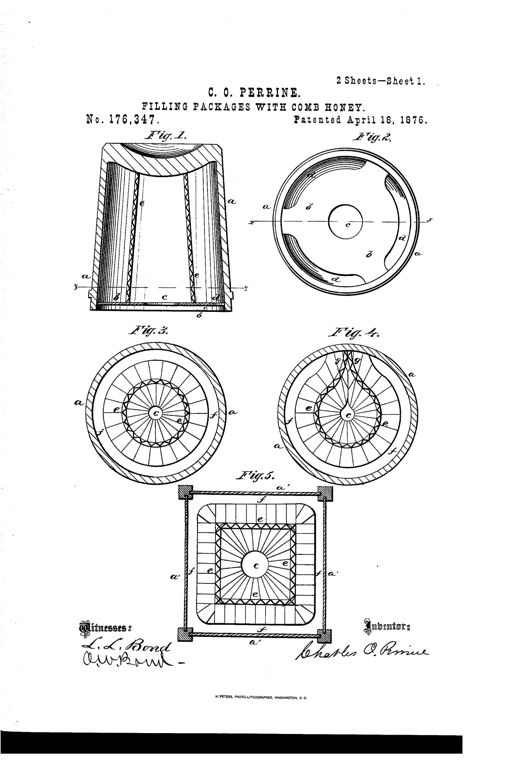
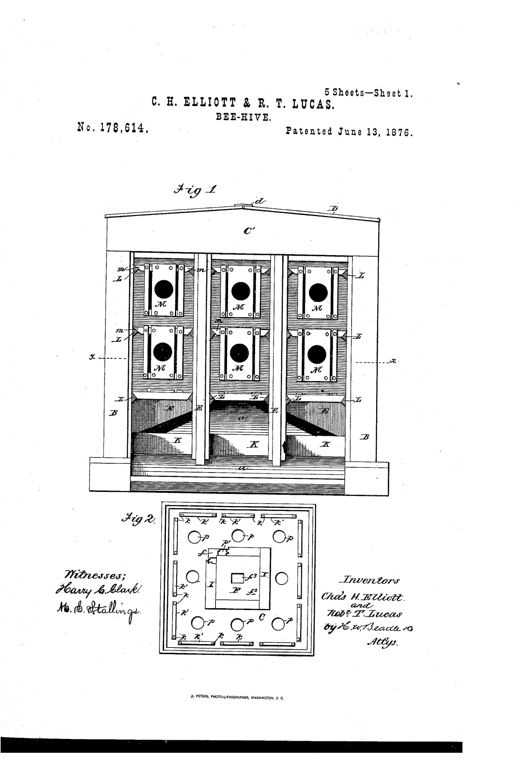
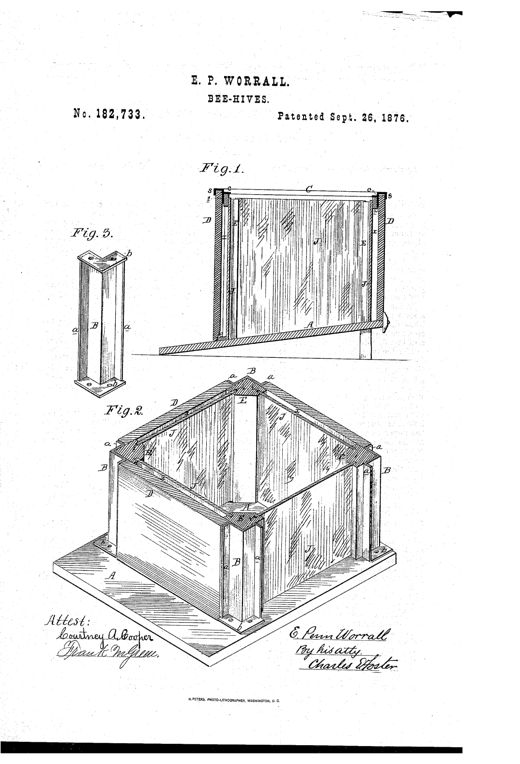
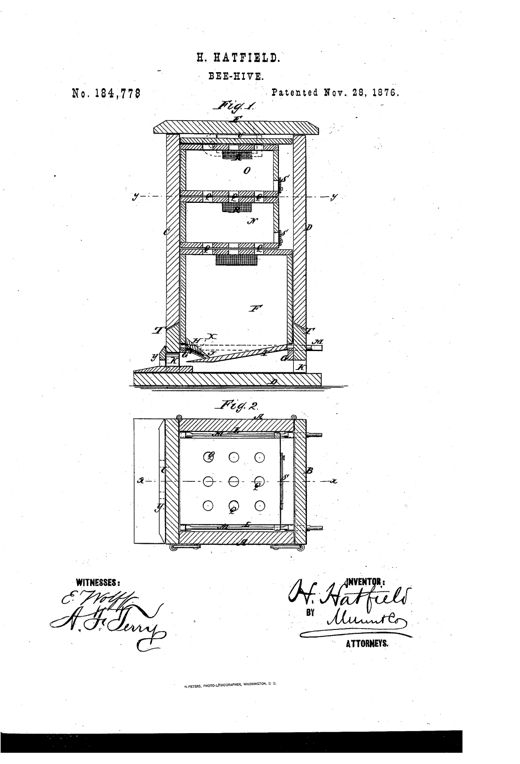
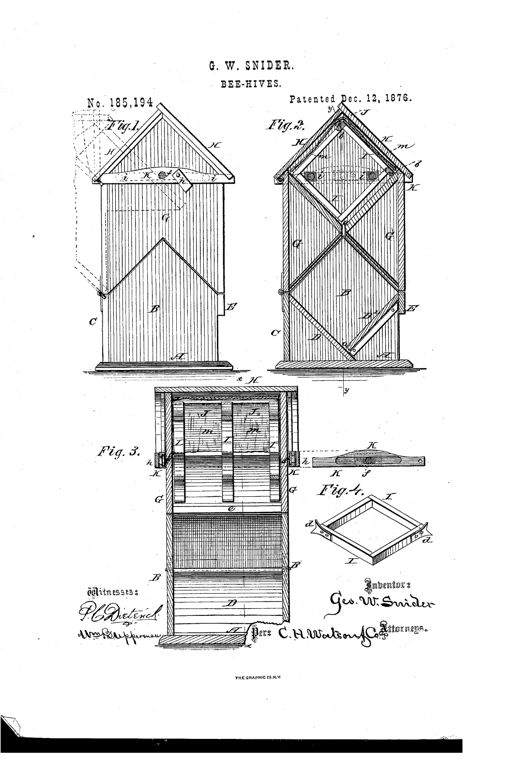
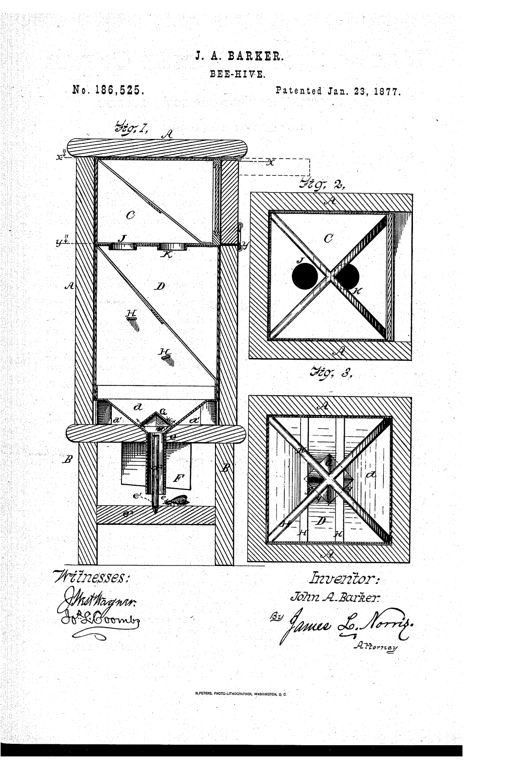
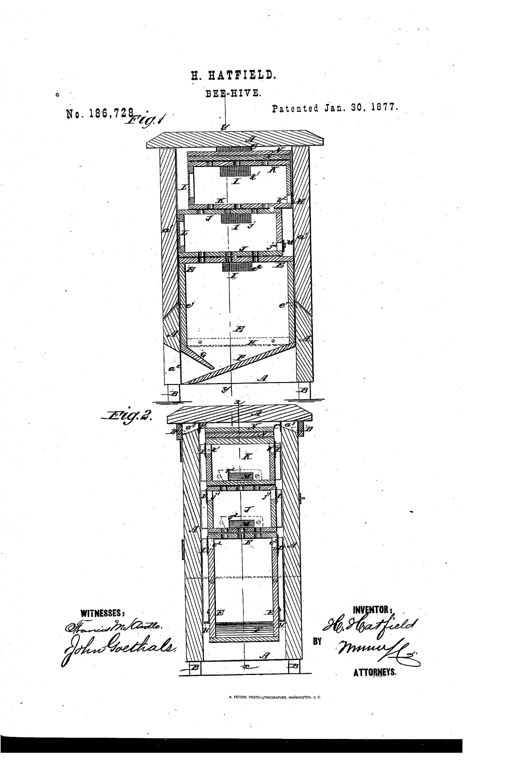
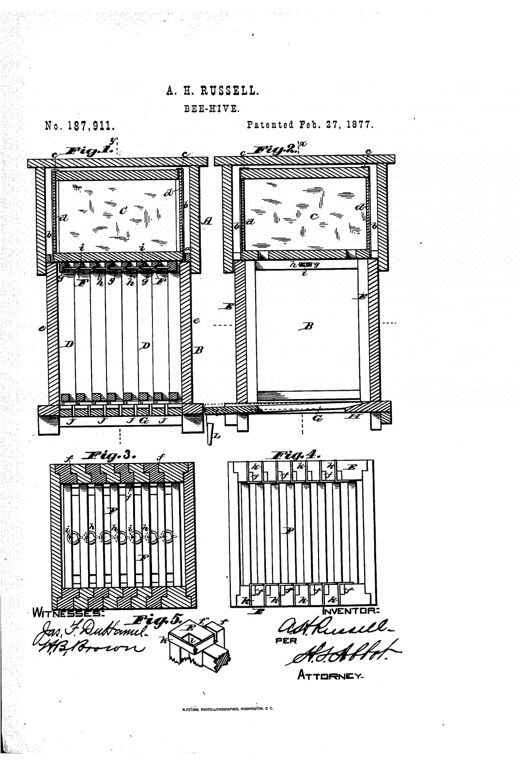
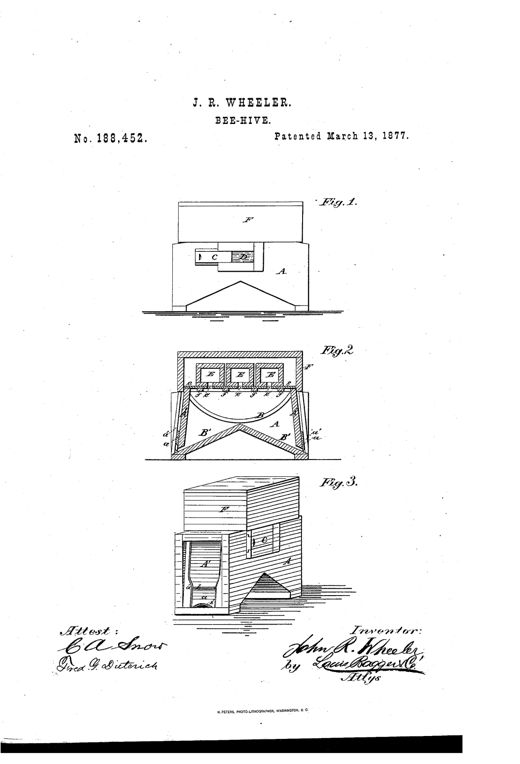
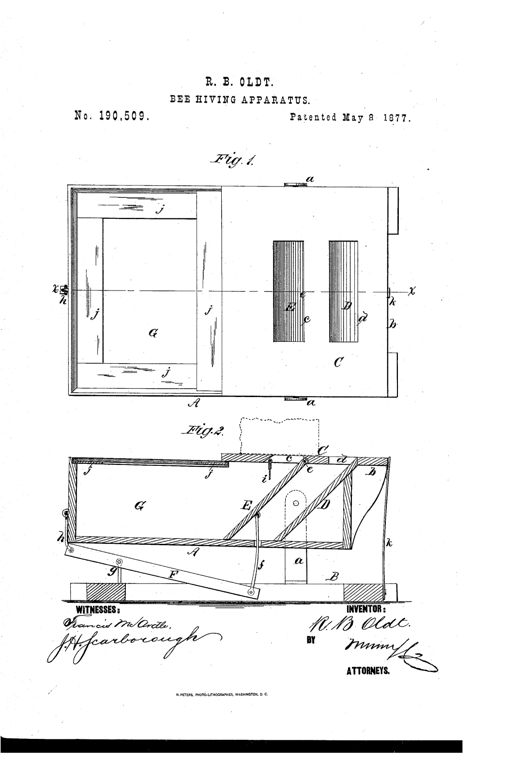
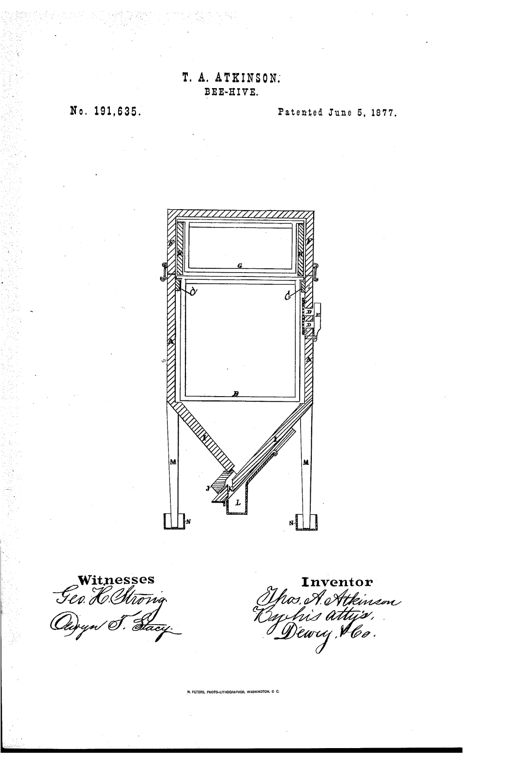
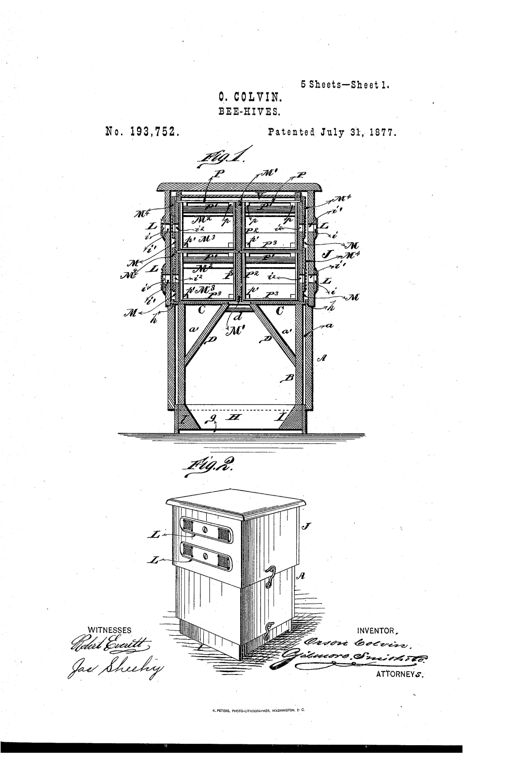
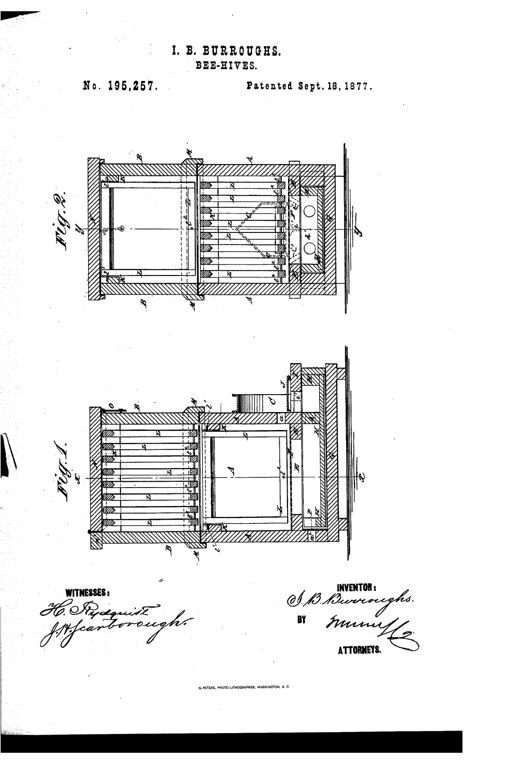
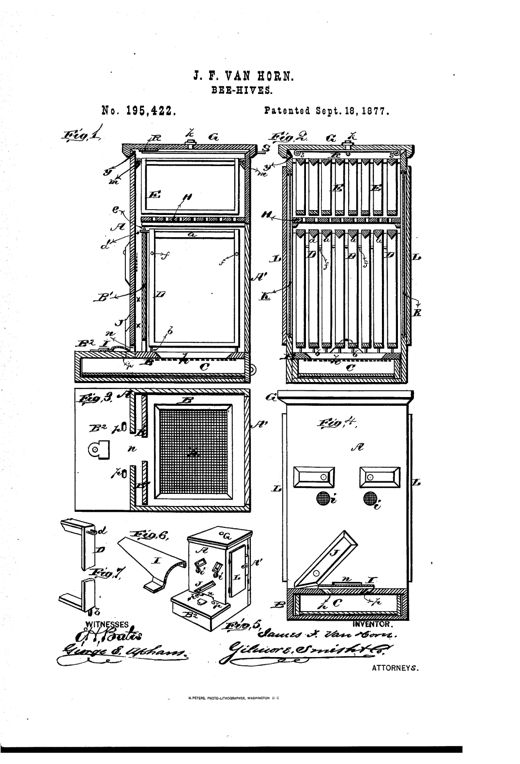
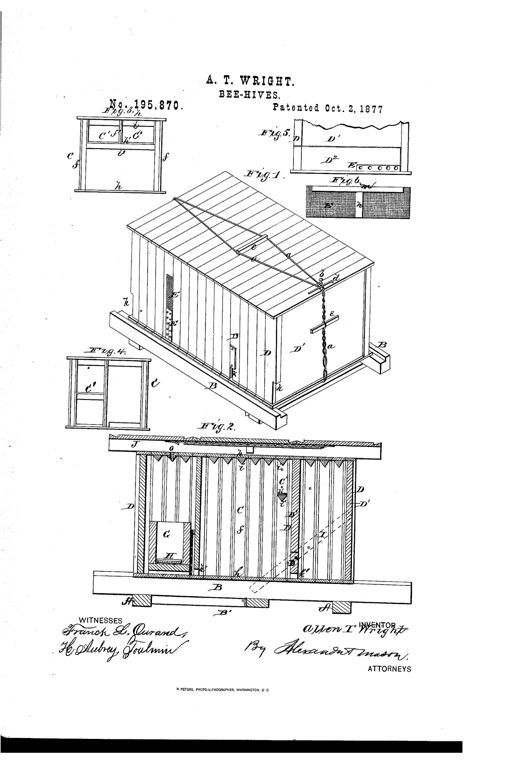
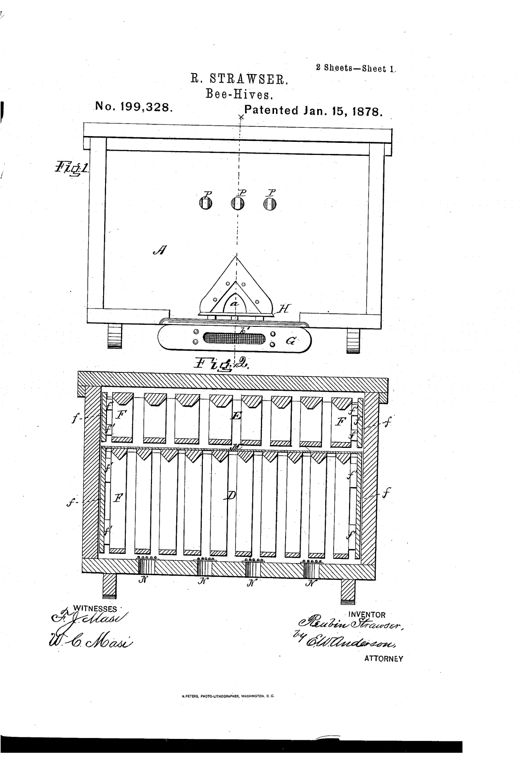
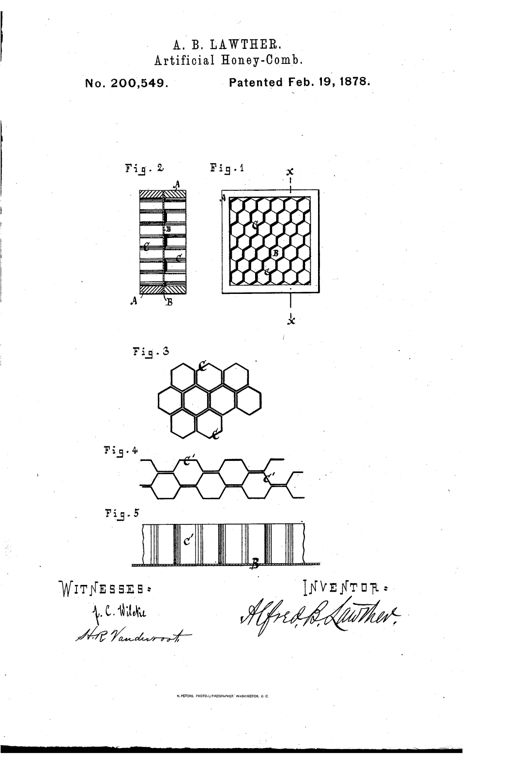
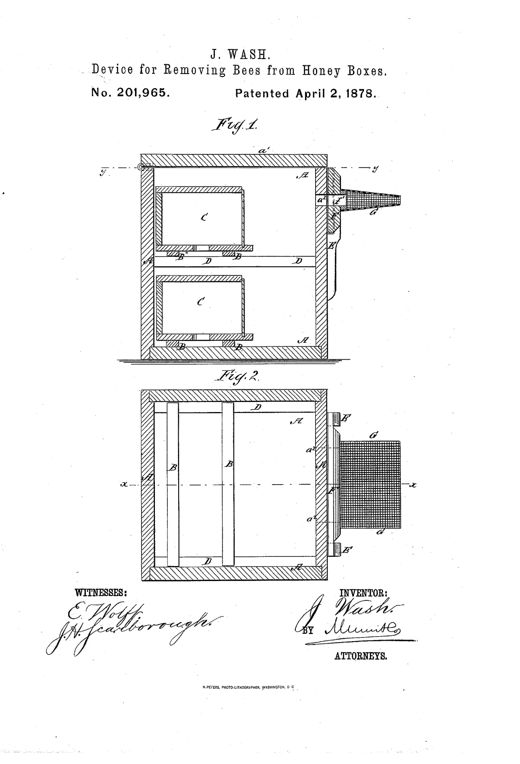
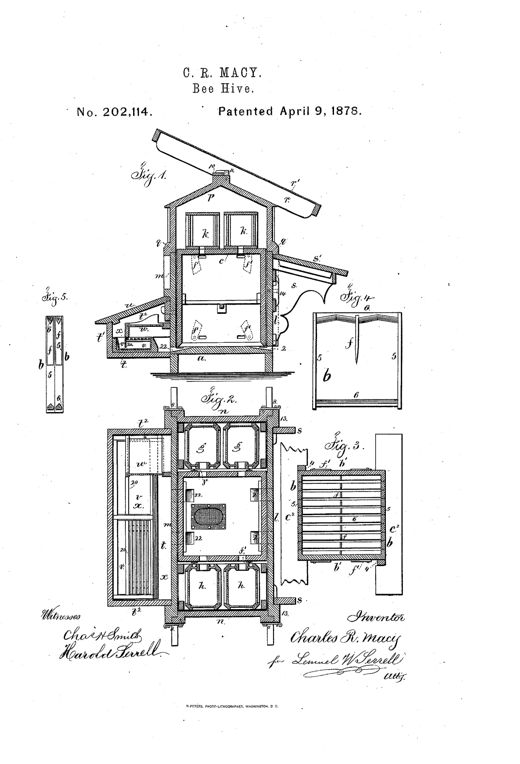
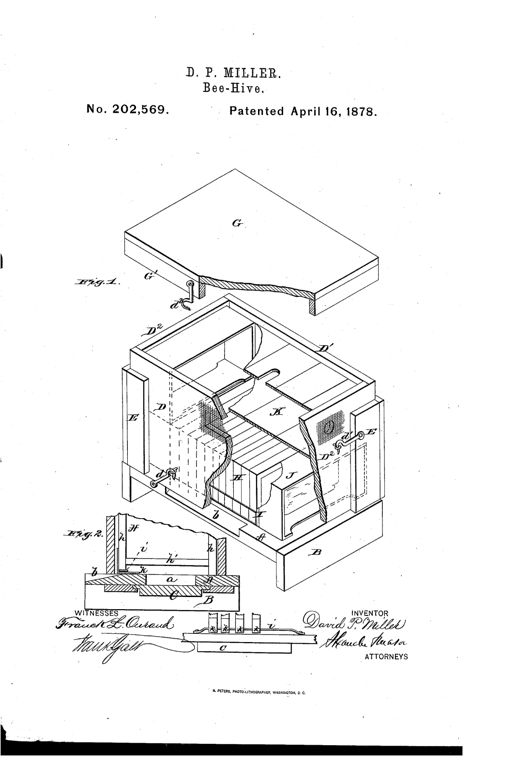
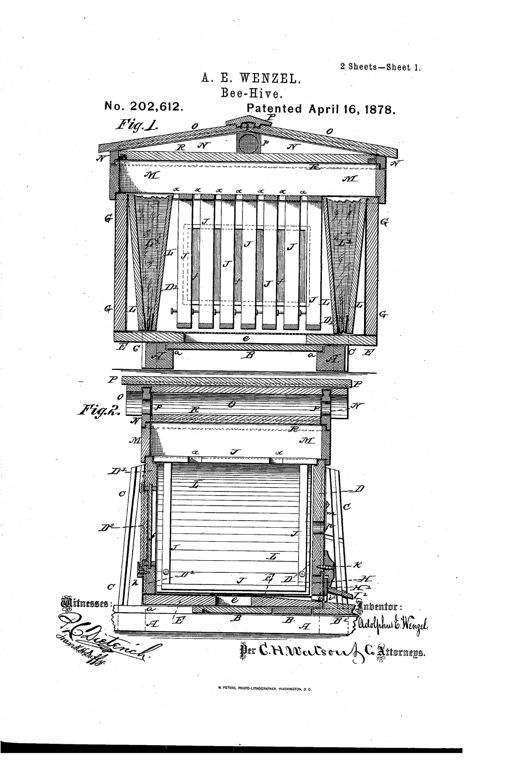
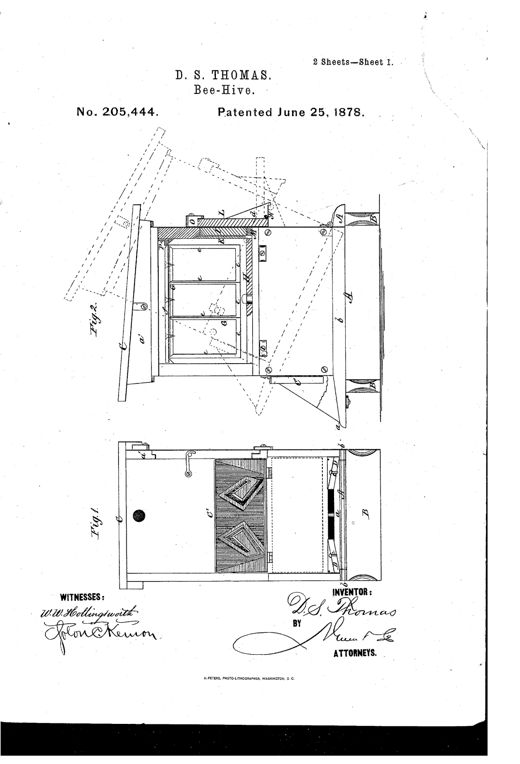
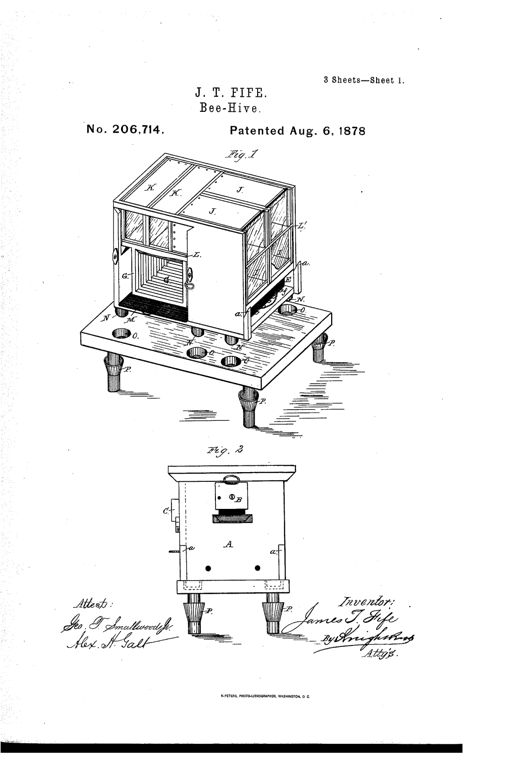
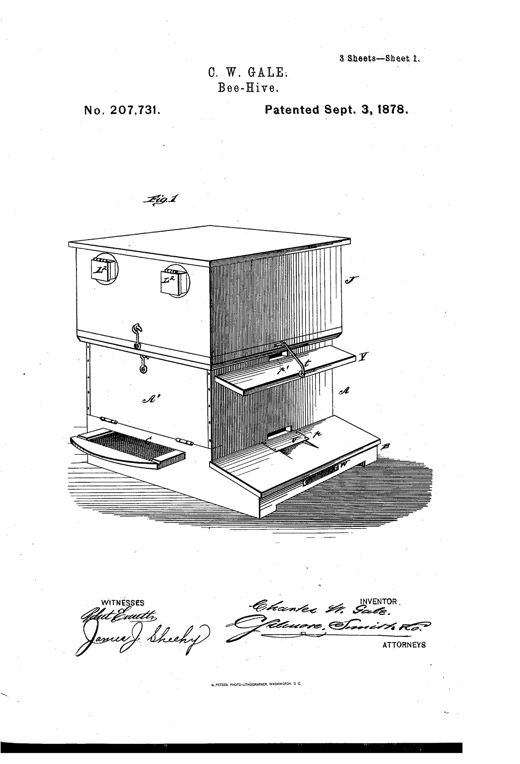
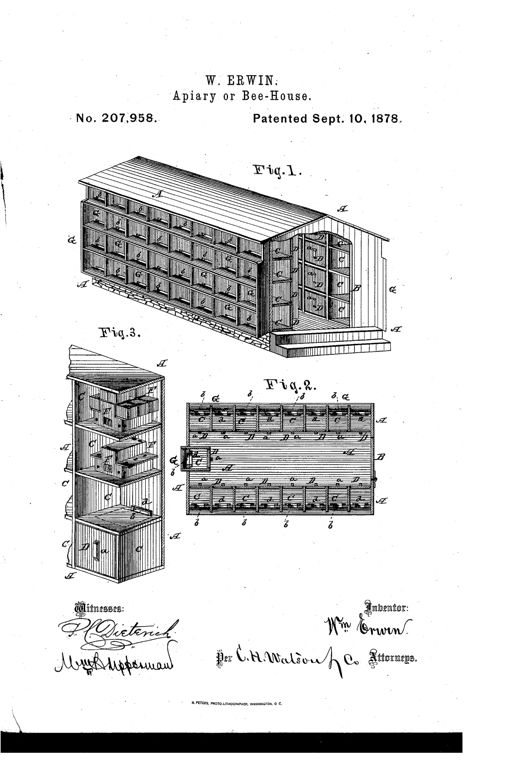
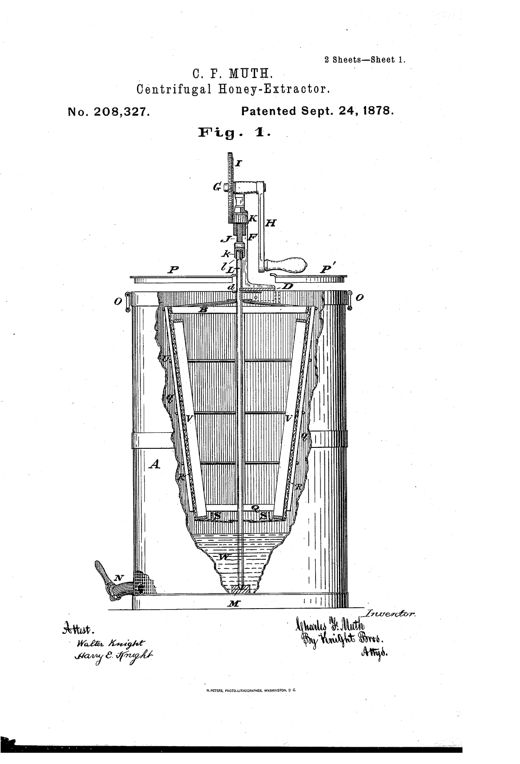
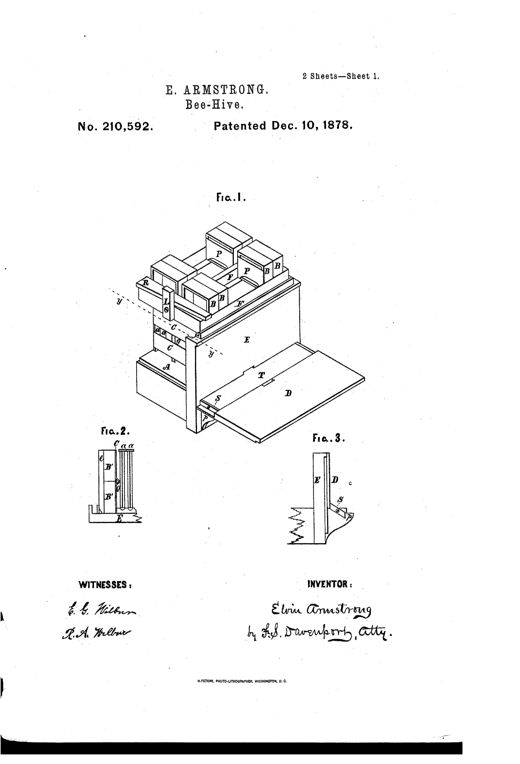
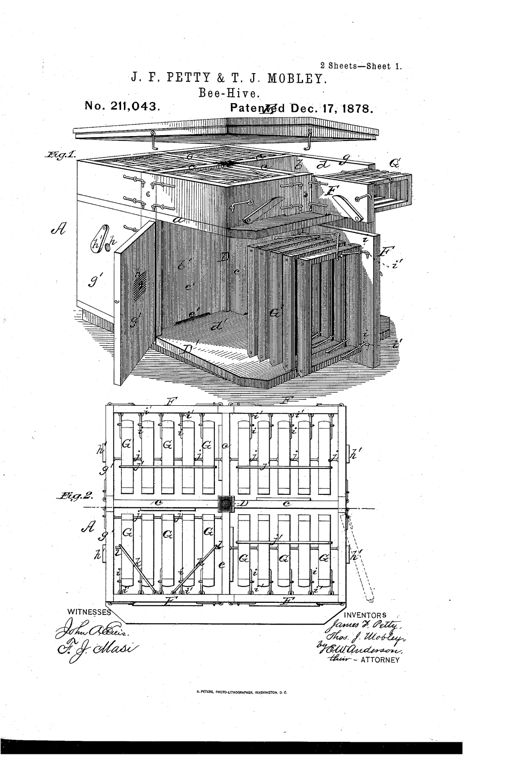
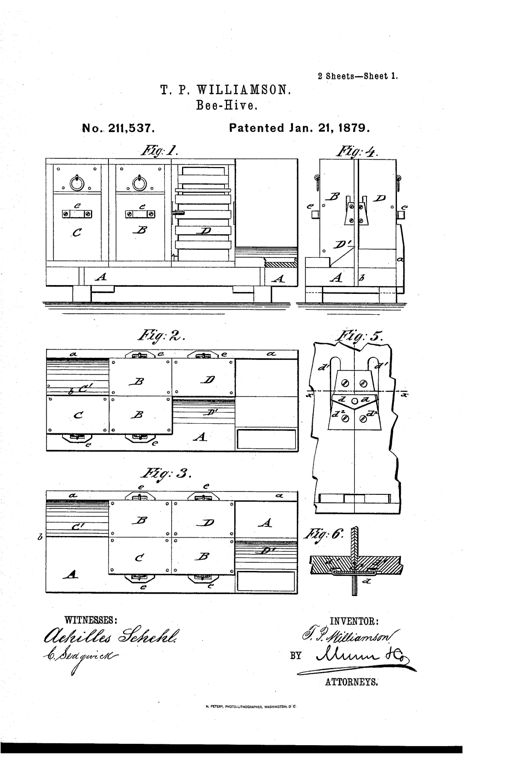
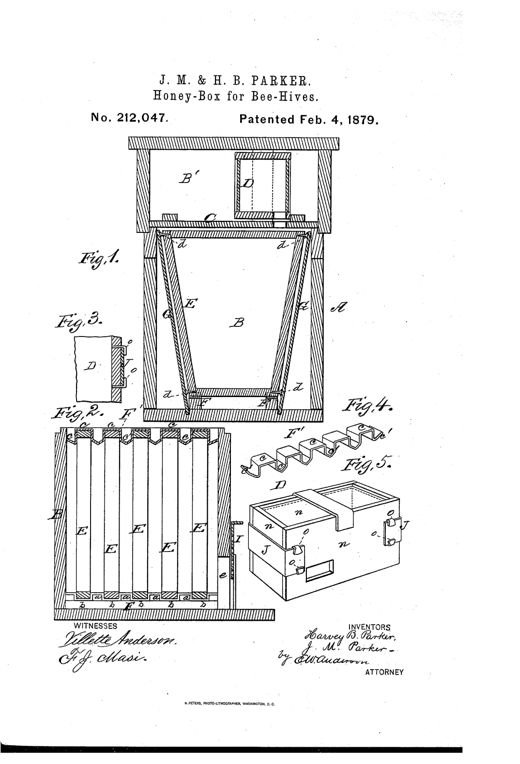
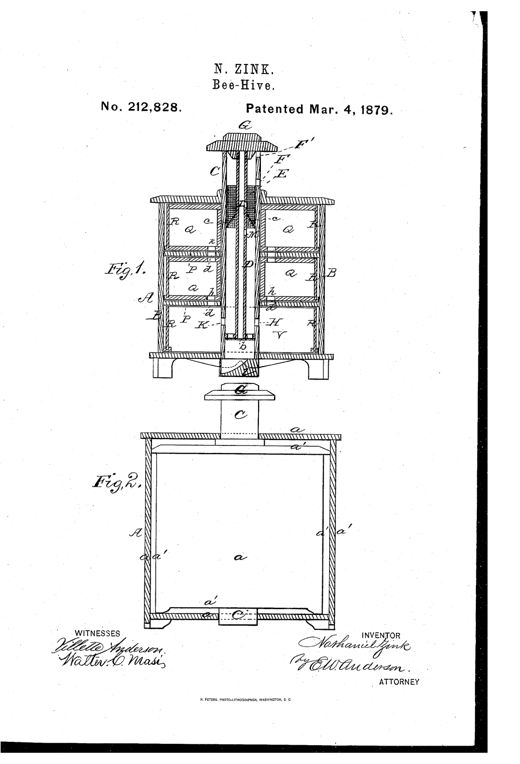
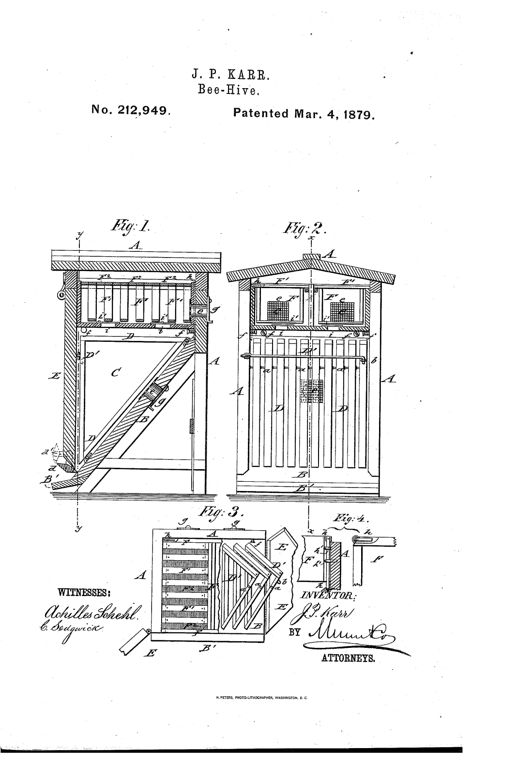
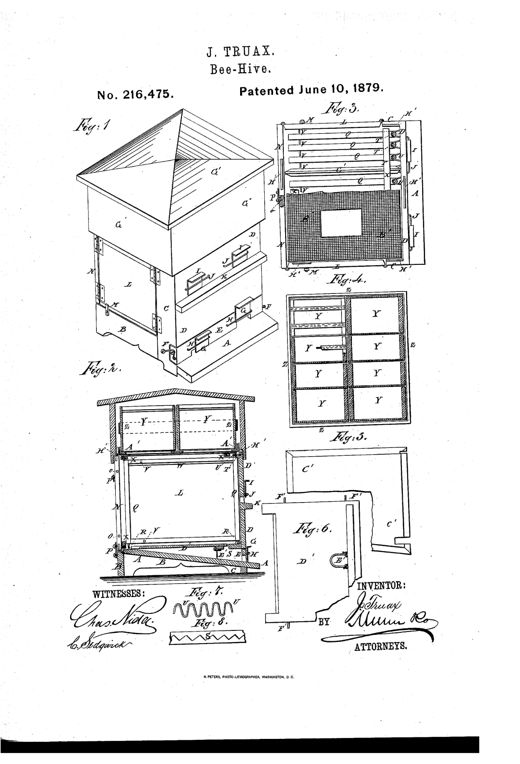
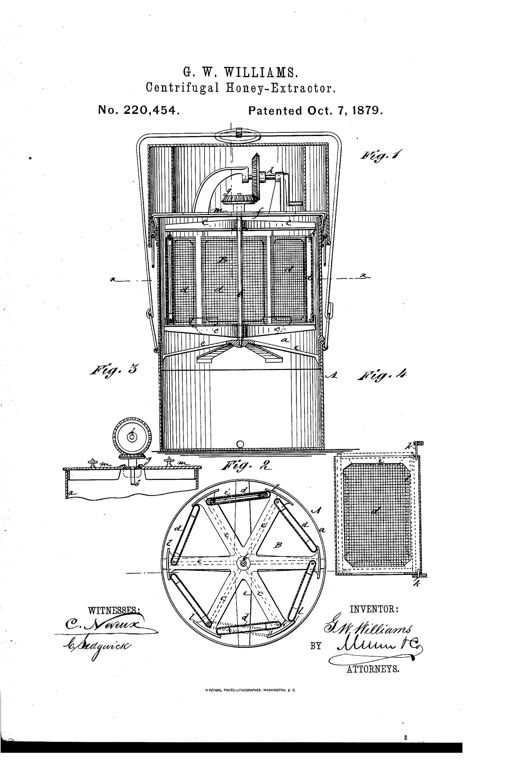
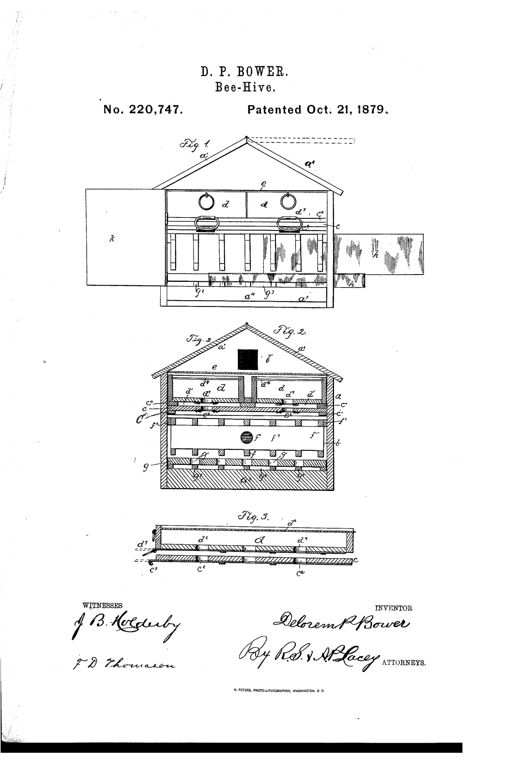
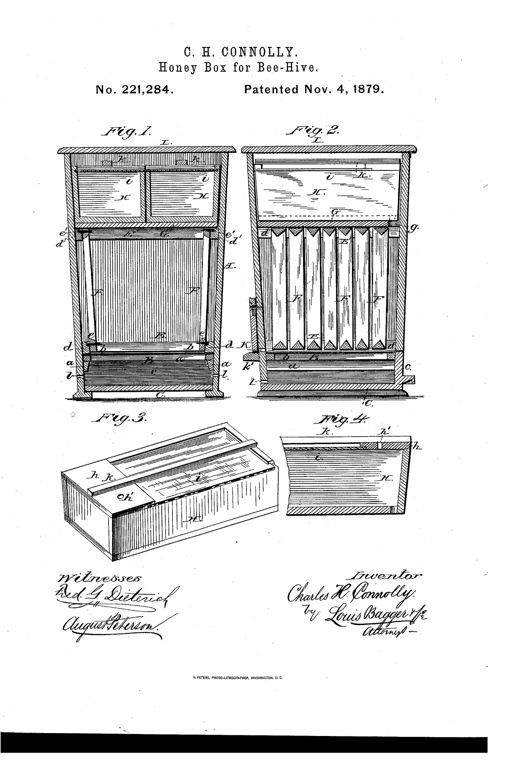
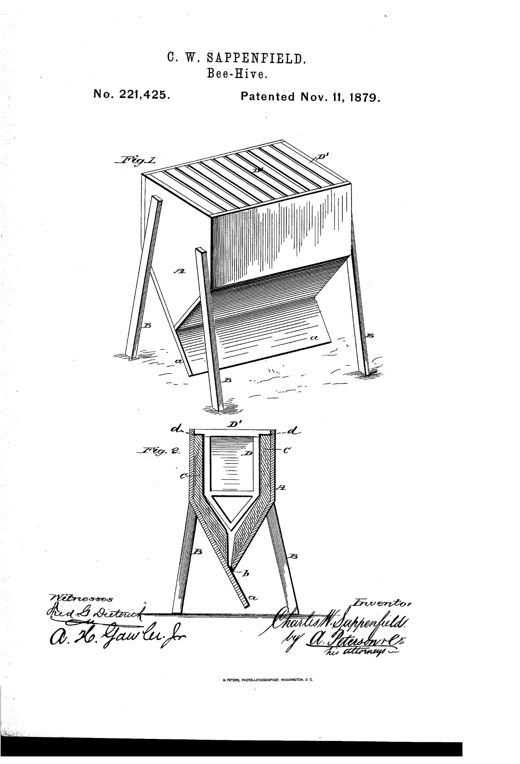
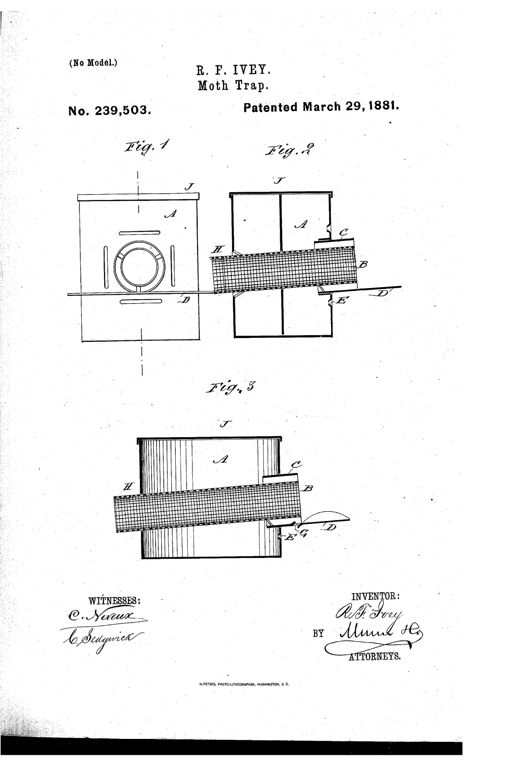
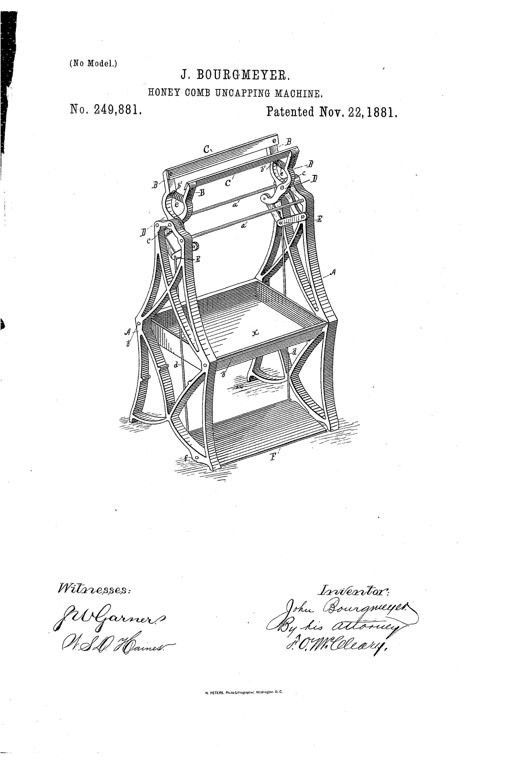
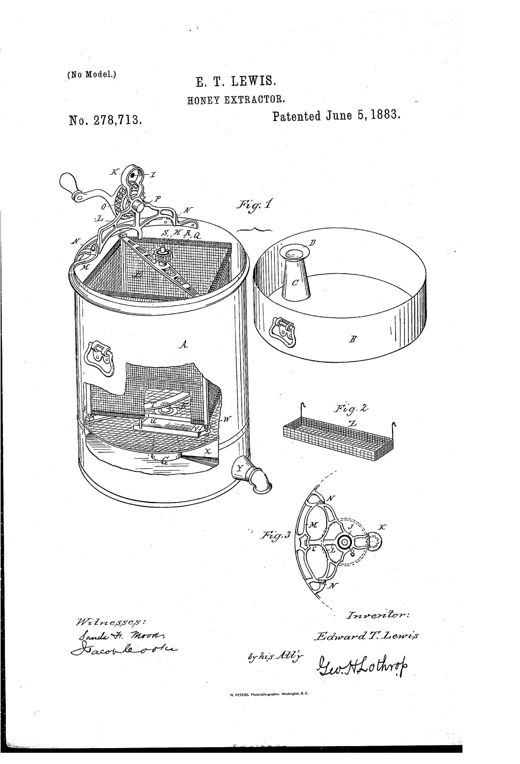
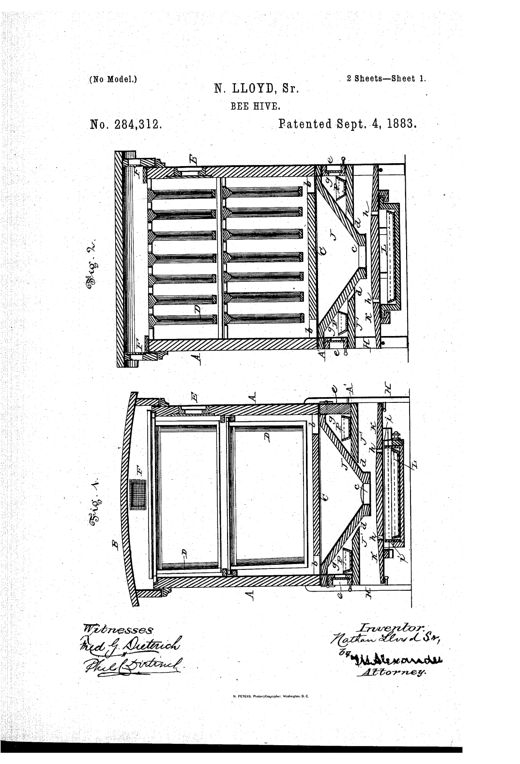
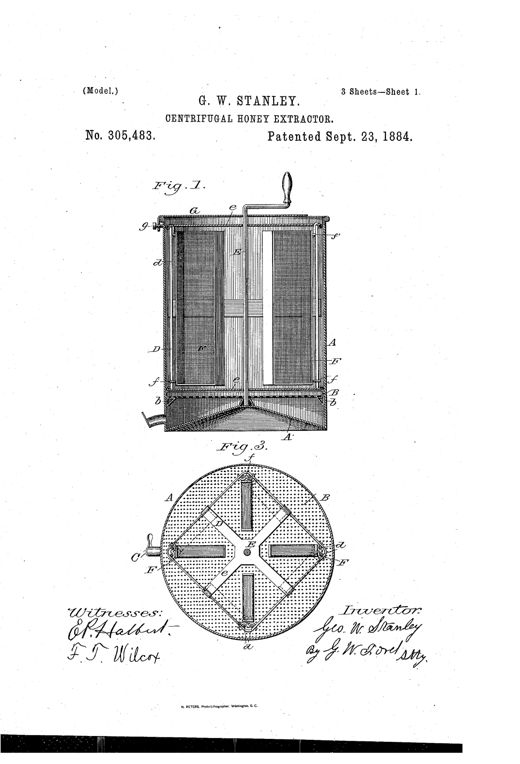
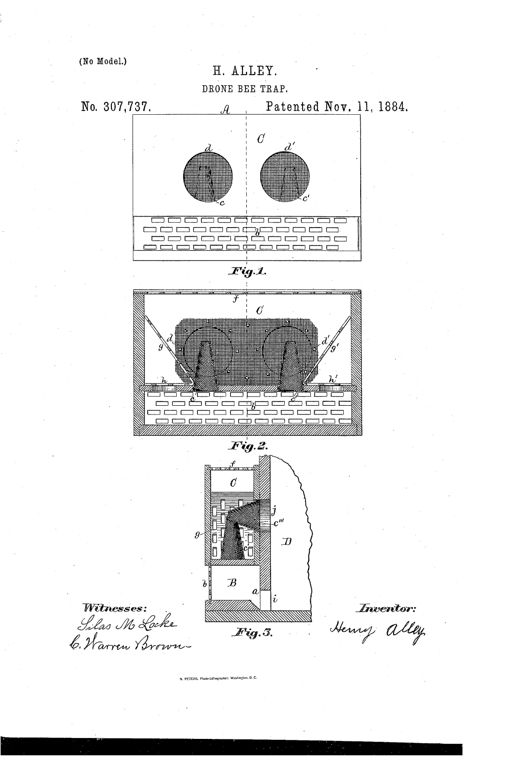
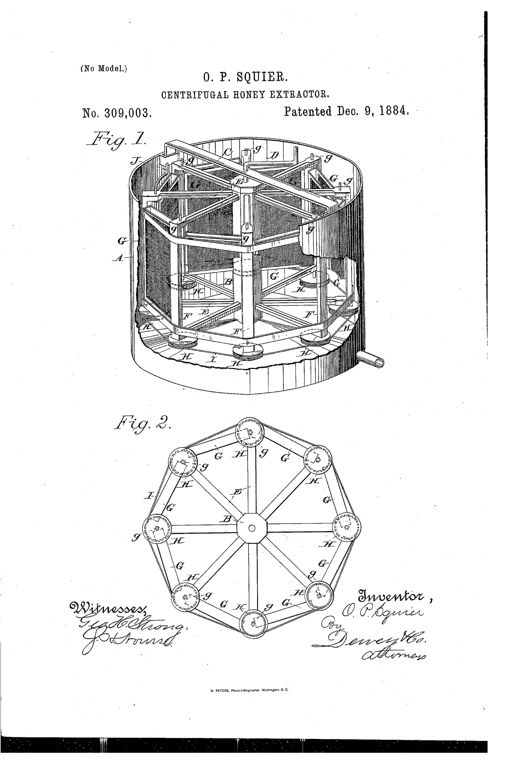
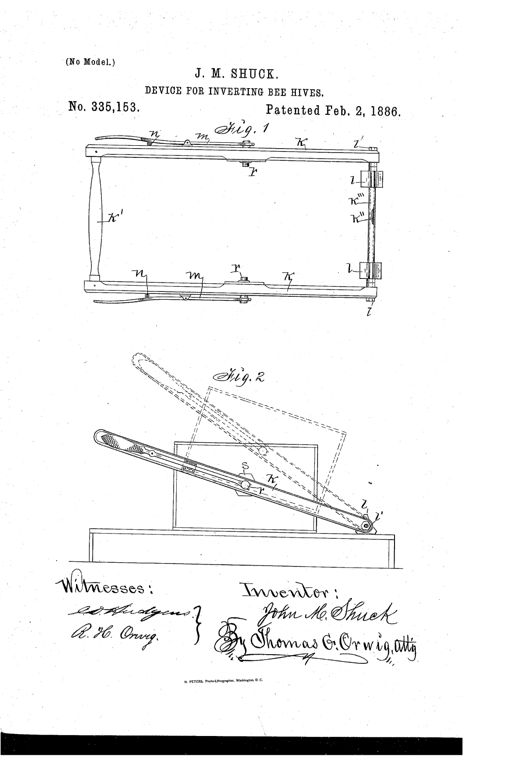
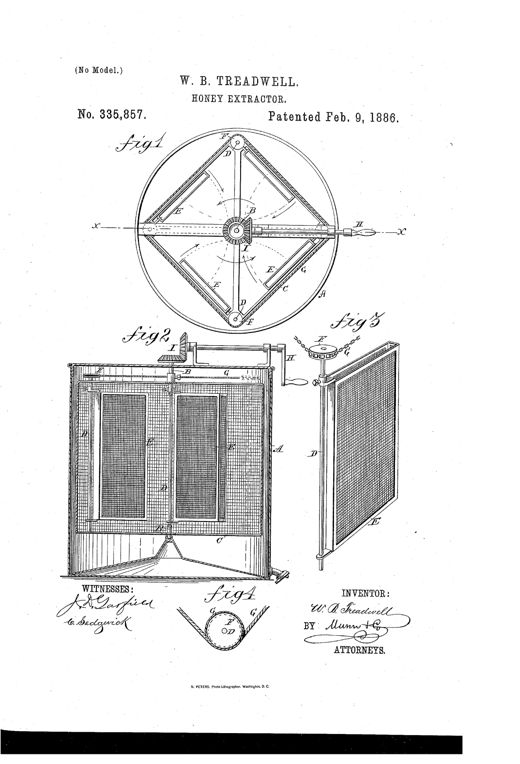
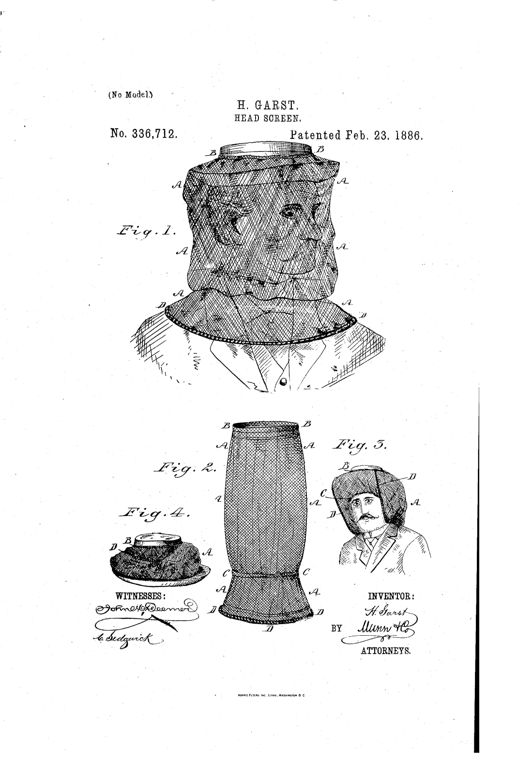
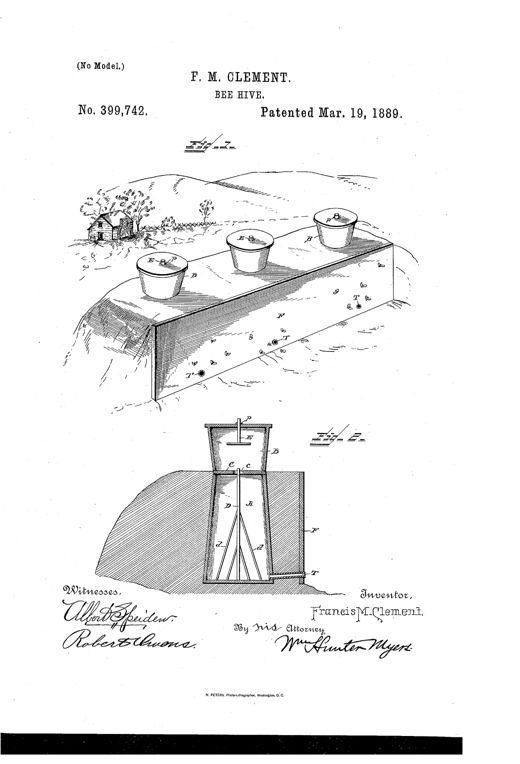
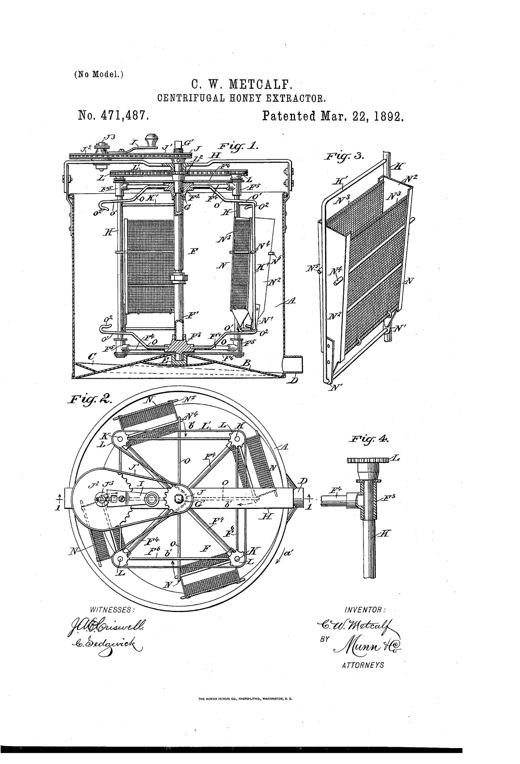
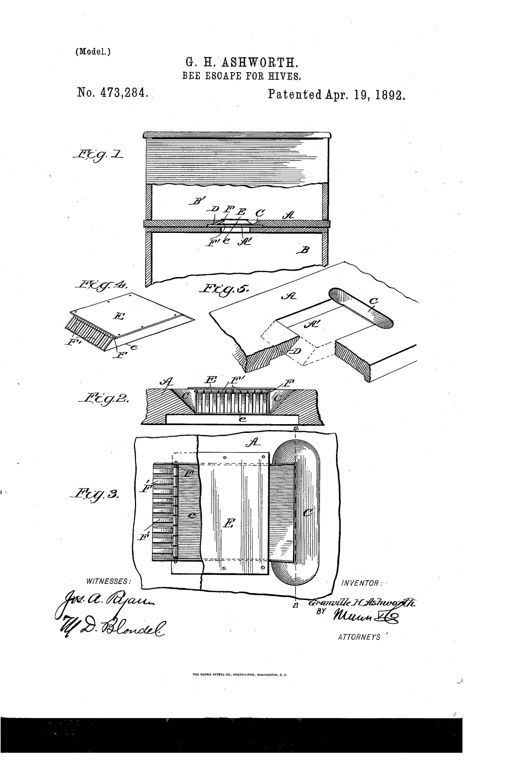
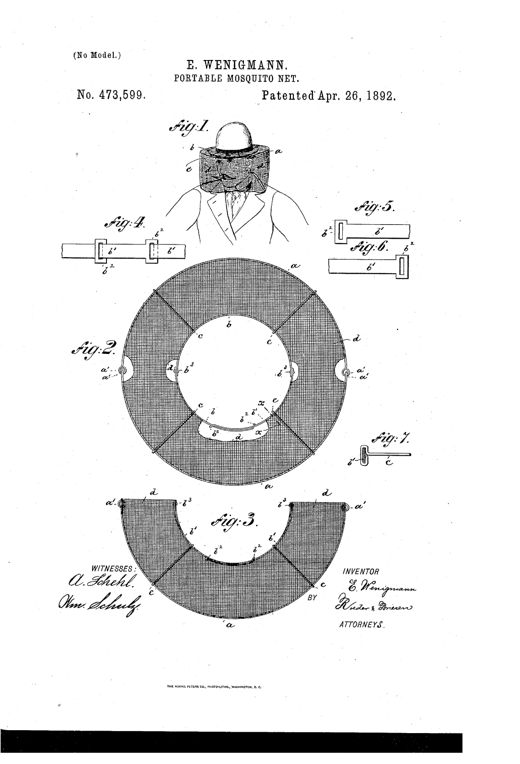
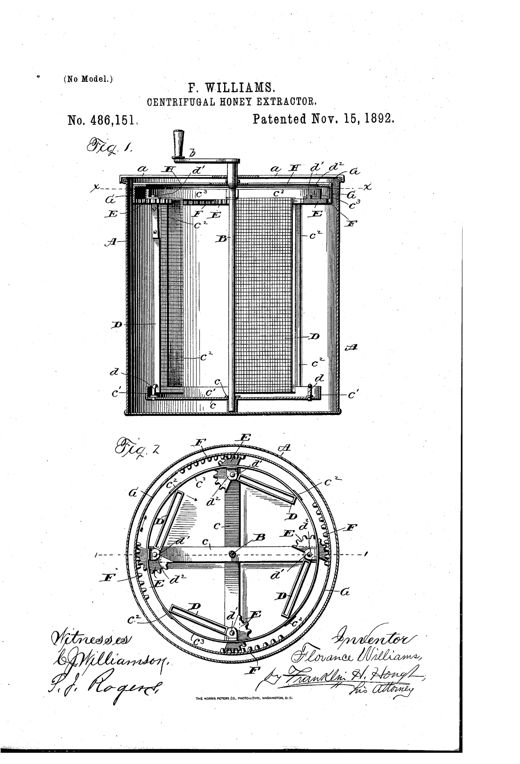
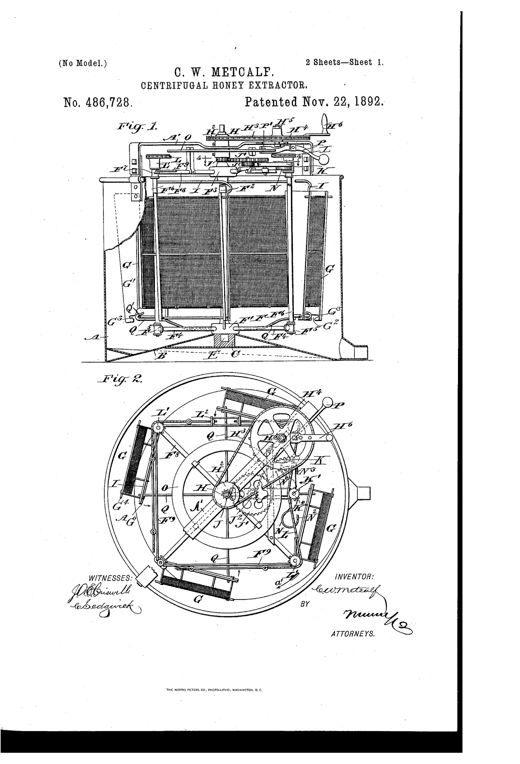
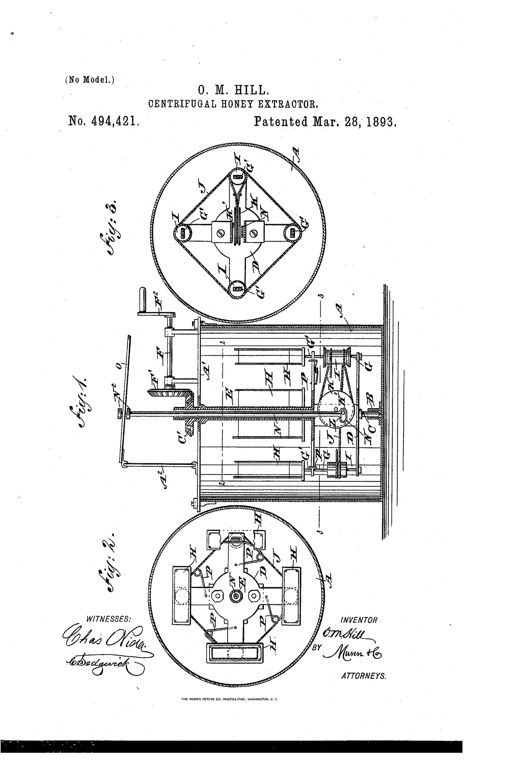
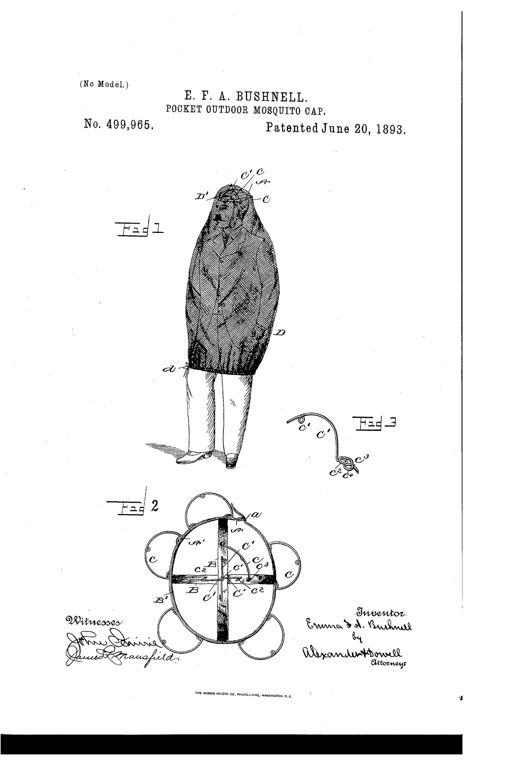
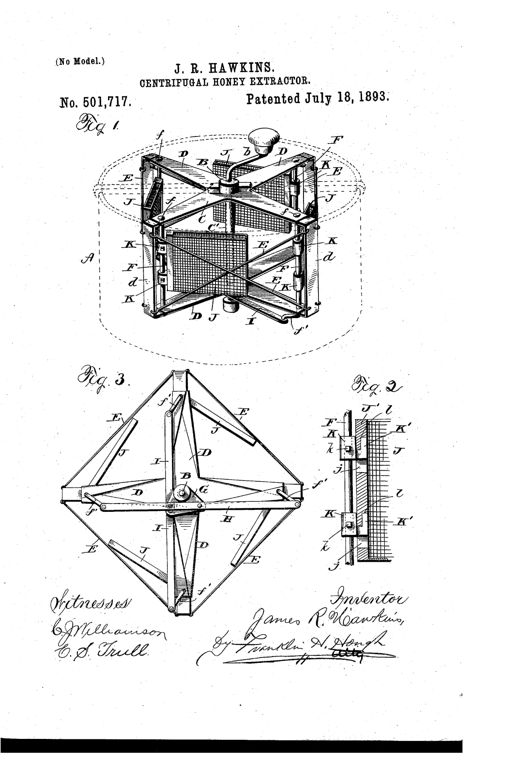
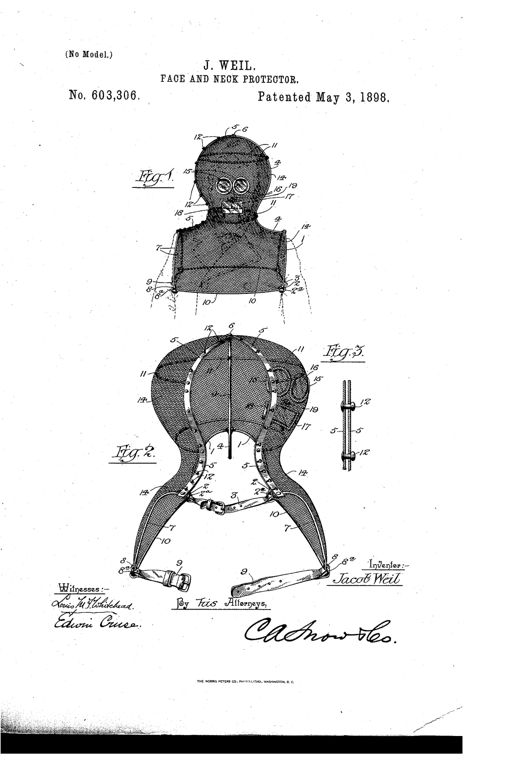
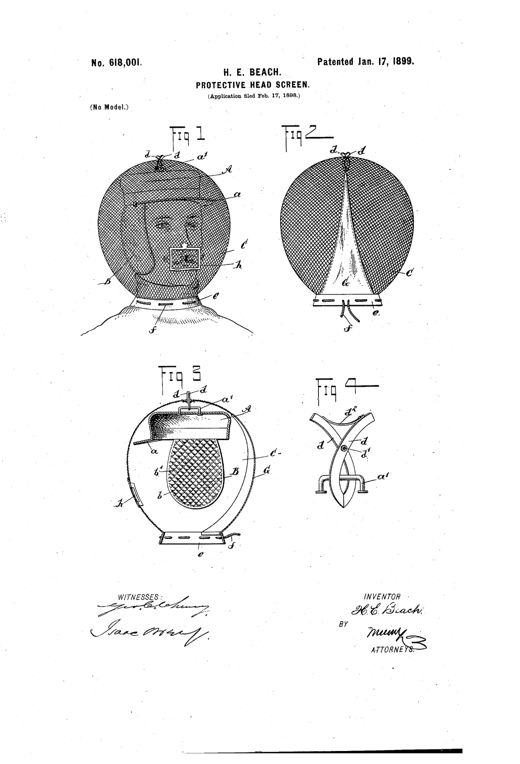
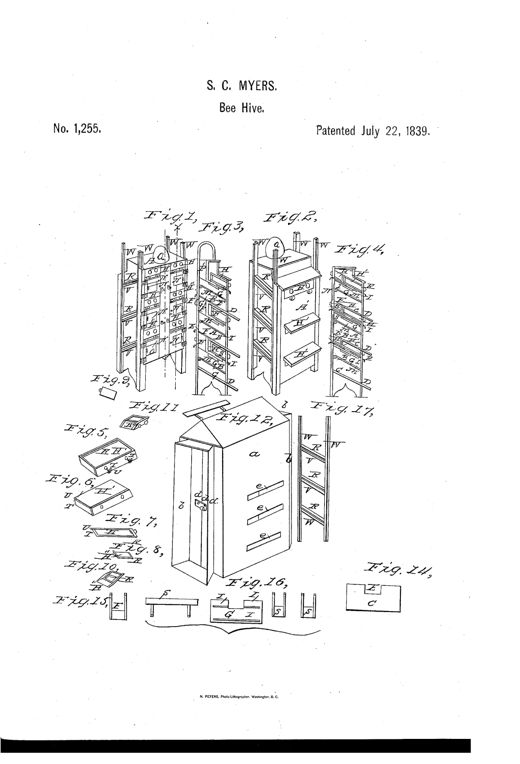
Patent drawing of a tall wooden multi-chamber beehive shown in exploded perspective, with labeled drawers, inclined ceilings, sliding tin gates, and an outer protective case for winter insulation.Bee HiveSamuel C. Myers · July 22, 1839Line drawing of a square wooden beehive with a peaked lid, side entrance holes, a honey-drawer chamber on top labeled B,B, and a hinged inclined-plane base below labeled A, C, D shown both assembled and in exploded detail views.BEEHIVE.William M. Hall · December 27, 1839Patent drawing of a house-shaped wooden beehive with a peaked roof, showing a cutaway transverse section revealing internal drawers, sliding gates, and chambers, alongside an end elevation view with decorative bracket-shaped legs.BEEHIVERobert Martin · May 19, 1840Patent drawing of a tall stacked beehive made of multiple rectangular boxes with small windows, topped by a peaked roof, alongside a perforated slide plate and a small tube.BEEHIVEJohn Milholland and Benjamin Crane · April 29, 1842Exploded technical drawing of a wooden beehive showing stacked sliding boxes with glass sides, perforated tin slides, sliding doors, and a separate ash-filled worm trap box beneath the stack.BEEHIVEElijah Grumman · May 26, 1842Technical patent drawing of a multi-story wooden beehive with labeled drawers, sliding doors, glass panels, and a central vertical passage connecting twelve compartments.BEEHIVEHenry Hiser · June 27, 1842Patent drawing of a bureau-like wooden beehive with a front elevation showing rows of square honey drawers and boxes arranged in a grid, plus separate detail views of individual drawers, boxes, and a hinged lid roof.BEEHIVE.Jesse W. Davidson · September 17, 1842Line drawing of a rectangular wooden beehive with its top removed, showing rows of hanging comb-cell boxes inside, a hinged front door, and two smaller perspective details of individual suspended cell units with ring pulls.Honey Comb Frame.Joseph Miller · November 6, 1843Patent drawing of Thomas D. Howell's bee protector showing a grooved base board with weighted, pivoting trap-boards labeled B, covered by hollow caps D and G, with glass or gauze panels E and F, illustrated in top view and three sectional views.BEE-PROTECTORThomas D. Howell · December 15, 1843Patent drawing sheet showing six labeled figures of a wooden beehive: a side elevation with inclined ramps and wheels, a vertical cross-section revealing stacked slatted boxes, a top view of a drone-chamber base with parallel bars, and detail views of an inclined bottom board, a semicircular entrance cap, and a front panel with sliding doors.BEEHIVEClark Wheeler · June 20, 1845Patent drawing of a wooden 'bee palace' beehive shown in three perspective views: a full exterior box with hinged lid and rear windows, a front detail with sliding drawer and inclined entrance planes, and a cutaway section revealing internal compartments, tubes, and honeycomb-lined passages labeled with letters A through m.BeehiveAbraham Decker · July 30, 1845Three technical line drawings of an 1850 beehive: a perspective view of the boxy hive body with a wind vane wheel mounted at the rear corner, a bottom view showing the two converging inclined planes forming the floor with a fluted roller between them, and a cross-sectional detail of the grooved roller sitting between the sloped surfaces.BEE-MOTH TRAPGeorge Fletcher, Sr. · March 26, 1850Exploded technical drawing of a wooden beehive box showing removable comb frames, a hinged door with rows of round ventilation holes, and a shallow honey chamber fitted above the brood combs.BEEHIVE.Lorenzo L. Langstroth · October 5, 1852Three patent line drawings show a rectangular wooden drone-trap box attached to the side of a beehive, featuring a sliding glass front, an inclined reticulated metal tube with hinged valves labeled F, G, and H, and escape passages marked A, B, C, D, and E for working bees.Drone Trap for Bee Hives.Clark Wheeler · May 9, 1854Technical patent drawing showing seven figures of a wooden beehive: a top plan view with rows of boxes labeled E and circular entrances, a front view with notched side extensions, an inverted bottom view showing internal ledges and grooves, a tall vertical cross-section revealing stacked honey boxes E with moth trap strips F, two smaller sectional views showing paired boxes divided by a transparent partition c,d and strap m, and a perspective view of a single grooved moth trap strip with alternating inlet holes g.Bee HiveB. D. Sanders · October 27, 1857Patent drawing of a wooden beehive case containing three stacked hive boxes with small spare honey boxes on top, rotating cylinders set into curved concave seats near the entrance, and a detailed side view of one cylinder and its bisected concave below.BEEHIVESolomon Stansberry · March 2, 1858Patent drawing of a wooden beehive with three sectional views showing a central brood chamber flanked by compartments for sliding spare honey boxes, side ventilation tubes with perforated plates, and a front feeding box with a glass door.BEEHIVE.Joseph D. Sanderson · December 14, 1858An exploded perspective drawing of a wooden beehive box with one door open, showing rows of sliding comb-frames suspended on rods inside, alongside a cross-section detail and a small honey-board with four round holes.BEEHIVEHorace Gushee and John G. Dawes · October 11, 1859Nineteenth-century patent drawing showing five views of a wooden beehive: a front elevation with paired honey-boxes flanking a central brood chamber, a side elevation, an internal cross-section revealing a hopper-shaped bottom and a pivoted valve-pedal entrance mechanism, a honey-box cross-section, and a detail plan of the valve assembly.Bee Hive.Jesse Jacobs · December 27, 1859Patent drawing of a wooden beehive showing a front elevation with a sliding door operated by cords and levers, a plan view of the supporting platform, a cross-sectional view revealing copper and zinc strips lining the hive's base, and an underside plan of the hive body.BEEHIVE.Aaron W. Geaheart · February 14, 1860Patent drawing of a wooden beehive shown in four sectional and elevation views, revealing internal chambers, a V-shaped bottom feed drawer, tubes, and a triangular insect trap with glass panel.Bee Hive.Robert Hawkins · April 24, 1860Patent drawing showing an angled perspective of a multi-tiered wooden bee hive stand with numbered stacked frames and hive sections, alongside smaller cross-sectional detail views of the joists, cross pieces, and a single cubic hive section.BEEHIVEJohn Jacobs · September 25, 1860Patent drawing of a head and shoulders covered by a cross-hatched netting held out by a whalebone frame, labeled with letters a, b, c, and f, tied at the neck with a drawstring.MOSQUITO GUARD.John Haven · December 4, 1860Patent drawing of a wooden double beehive shown in vertical and horizontal section, with hinged comb frames swinging from a central partition above sloped double bottoms, plus a detail of a single V-topped comb frame with a vertical guide strip.Bee HiveS. R. Bryant · February 12, 1861Patent drawing of a wooden beehive with a hinged back, stacked movable comb frames, and a small attached rectangular drone/robber trap box fitted with hinged doors and glass side panels.BEEHIVEOrlando Miller · April 2, 1861Patent drawing showing a wooden beehive with hinged door open to reveal comb frames inside an outer protective case, plus detail views of the feeding box, honey boxes, comb frame, and ventilator floor.Beehive.Triphena P. Hornbrook · May 21, 1861Patent drawing sheet showing seven figures of a wooden beehive, including an assembled exterior view, an interior arrangement of comb-section frames with tubes and slats, a detached comb-section frame with slots for glass slides, a double-glass insulating partition, a tongue-and-groove joint detail connecting the sides and bottom with strap iron, a cross-section of the front wall and hanging moth trap, and a front interior perspective view of the hive box with hooks and boards labeled with reference letters.Bee HiveOliver Reynolds · June 4, 1861Patent drawing showing an exploded perspective of a beehive with trapezoidal comb frames, a sliding miller/feed drawer with wire gauze cover, honey boxes with glass sides, and a top case, labeled with reference letters throughout.BEEHIVE.George R. Hartman · July 9, 1861Patent drawing showing a wooden beehive box in perspective with a hinged lid and glass inspection window, plus two cross-section views revealing rows of narrow triangular comb frames held by V-shaped wire stops inside the case.BEEHIVEFerdinand Woodward · August 13, 1861Patent drawing showing a diamond-shaped beveled bee-hive frame (Fig. 1), a plan view of several such frames arranged side by side in a rectangular hive box (Fig. 2), and a side view of the frames stacked with beveled feet (Fig. 3), alongside the inventor's signature and witnesses.Honey Comb Frame for Bee Hives.Martin Metcalf · January 14, 1862Patent drawing of a wooden bee hive shown in top view and cross-section, with honey boxes on top, a perforated landing plate at the entrance, and the hive resting on a bench supported by pins topped with inverted acorn-shaped glass bulbs to block moths.IMPROVEMENT IN BEE-HIVESJames H. Valentine · July 1, 1862Patent drawing showing two vertical sections of a wooden bee-hive: Fig. 2 depicts a top view with parallel slatted comb-frames and side ventilator boxes, while Fig. 1 shows a front cross-section with a triangular internal frame, side honey boxes, and a lower feed drawer with labeled parts.IMPROVEMENT IN BEE-HIVESEdward Y. Chevalier · August 5, 1862A patent drawing showing two views of a wooden bee hive: a full perspective view with the door open revealing internal glass-fronted honey boxes and comb bars, and a cross-sectional side view showing the inclined metal bottoms leading to a bottom drawer.IMPROVEMENT IN BEE-HIVESJoseph Bradt · November 18, 1862Two technical line drawings of a wooden beehive, one showing a side vertical section with an inclined alighting board and entrance, and the other showing an internal cutaway with parallel V-shaped comb bars and cleats supporting a removable top cover.IMPROVEMENT IN BEE-HIVESHenry A. Hannum · February 3, 1863Patent drawing of a large wooden beehive with a hinged lid, front doors open to reveal twelve labeled square drawers arranged in a four-by-three grid, each with a small round entrance hole, alongside smaller detail drawings of a bee-feeder, tin box, slitted board, ventilator cap, and litter-removal slide.IMPROVEMENT IN BEE-HIVES.Samuel McClanathan · March 24, 1863Patent drawing sheet showing seven labeled figures of a wooden beehive, including exterior perspective views with sliding doors, an interior sectional view revealing the miller-trap and brood chambers, a removable brood-comb frame, and a corrugated-top surplus-honey box.IMPROVEMENT IN BEE-HIVES.Leonard Parker · April 28, 1863Two labeled technical drawings of a wooden beehive box showing an inclined slatted bottom, hinged back, and multiple stacked and side slide-drawers with perforated partitions for bee passage.IMPROVEMENT IN BEE-HIVESAlexander Hogg · September 22, 1863Patent drawing of a wooden bee-hive with three sectional views showing rows of movable diamond-shaped frames, hinged entrance shutters, and a round ventilating button on the side.IMPROVEMENT IN BEE-HIVESLevi Brown · October 20, 1863Patent line drawings of a wooden bee hive showing the body with inclined floor and front entrances, internal movable frames, a honey-board, ventilation slide, and a peaked cap, labeled with reference letters across seven figures.IMPROVEMENT IN BEE-HIVESH. A. King and Jacob Loughmaster · November 24, 1863Patent drawing showing a hooped mosquito net worn over a person's head and shoulders in Fig. 1, and a detached perspective view of the netting cylinder with hoops and tie straps in Fig. 2.IMPROVED MOSQUITO-NETJohn Zengeler · March 15, 1864Two labeled cross-section drawings of a wooden bee hive case showing three side-by-side comb boxes topped with smaller glass-sided surplus honey boxes, with entrance slides and cleats at the base.IMPROVEMENT IN BEE-HIVES.Washington Kennedy · June 21, 1864Patent drawing of a wooden beehive with a sloping bottom, a rear knapsack extension, a glass-covered inspection window with sliding door, a moth-poison trough at the base, and interior sections showing rows of removable comb sashes.IMPROVEMENT IN BEE-HIVES.H. C. Boyers · July 19, 1864Patent drawing of a wooden beehive showing a perforated front panel with comb-guide holes, an internal cross-section with inclined bottom planes and moth apartment, and a perspective view of the assembled hive with a peaked super on top, surplus honey-boxes, and an entrance door at the base.IMPROVEMENT IN BEE-HIVESOliver P. Reeve · January 10, 1865Patent drawing of a wooden beehive showing a bank of triangular comb-bearer frames mounted on an X-shaped trestle stand, with two honey boxes on top, and below it a separate hinged-roof house covering a similar stand.IMPROVEMENT IN BEE-HIVES.John Harper · February 21, 1865Two patent line drawings of a wooden beehive: the top figure shows a rectangular outer box with an inner box holding several rectangular comb-frames labeled with letters, and the bottom figure shows a triangular cross-section with a V-shaped comb-frame and inclined alighting boards.IMPROVEMENT IN BEE-HIVESJohn H. Hendrick · December 26, 1865Patent drawing showing a hinged, elastic bow-frame mosquito net in three views: assembled and worn over the head with netting attached, folded flat for portability, and the bare wire frame with braces and hinge joints without netting.IMPROVED FLY AND MOSQUITO BAR.John Henry Jennings · March 13, 1866Patent drawing showing a wooden bee-hive with a front elevation, a cutaway side section revealing suspended frames and sloping funnel-shaped sides, a small perforated honey-board, and a detached perforated slide plate labeled Fig. 4.IMPROVEMENT IN BEE-HIVESAustin Fuller · May 1, 1866Patent drawing of a wooden bee-hive shown in perspective with its hinged top and front door open, revealing stacked honey boxes and a central brood chamber with comb frames, alongside a vertical cross-section labeled with interior parts.IMPROVEMENT IN BEE-HIVESJoseph Bradt · July 3, 1866A perspective drawing of a wooden beehive on four legs, showing a front porch with sliding door and glass windows, a sloped-roof cap section, and a cutaway revealing an interior pit with slanted metal shelves below a grated floor.IMPROVEMENT IN BEE-HIVESGabriel Graffham · July 24, 1866Patent drawing of a wooden beehive box showing triangular comb-frames arranged inside a rectangular case, with end views of the frame guides and clamp bar, and a cross-sectional triangular frame detail with hatched wood sections.IMPROVEMENT IN BEE-HIVEST. F. Bingham · October 30, 1866Patent drawing of a wooden bee hive: Figure 1 shows a side section with a V-shaped entrance tube leading to a divided honeycomb chamber raised on angled leg supports, and Figure 2 shows a top sectional view of a cylindrical ventilator tube surrounded by wire mesh screening set into a square frame.IMPROVEMENT IN BEE-HIVESJohn E. Finley · November 6, 1866Patent drawing sheet showing an open wooden beehive with lifted lid revealing comb sections and a slatted moth-trap floor, alongside detail views of a comb-holder frame, a sliding swarming-guard block, and a reversible entrance-protector with swinging bars.IMPROVEMENT IN BEE-HIVESEdward Kretchmer · November 13, 1866Patent drawing showing a circular top-view gear-driven rotating frame (Fig. 1) above a side-section view (Fig. 2) of a barrel-shaped tub containing a wire-gauze comb holder suspended from a central spindle, with a simple rectangular comb frame shown separately below.IMPROVED APPARATUS FOR EXTRACTING HONEY FROM THE COMBL. L. Langstroth and S. Wagner · January 15, 1867Patent drawing of a sectional beehive showing two cross-section views (Fig. 1 and Fig. 2) with a wooden outer case containing multiple glass-sided boxes fitted with hanging comb-frames, slide openings, and connecting rods, plus an alighting board at the base.IMPROVEMENT IN BEE-HIVES.C. P. Lloyd · February 12, 1867Patent drawing of a rectangular multi-compartment bee house showing a top plan view with six hive compartments arranged in a row, front and side vertical sections revealing internal partitions, honey-boards, entrance perches, and a removable roof cap.IMPROVEMENT IN BEE-HIVESB. S. Haviland and E. H. Haviland · May 21, 1867Patent drawing showing a sectional wooden bee-hive with stacked exterior boxes, internal clamped honey and brood frames, a feed-box with floats, and ventilating screen details across ten numbered figures.IMPROVEMENT IN BEE-HIVESA. T. Wright · June 4, 1867An exploded technical drawing of a wooden beehive showing a perspective view of the assembled three-tier hive, a sectional view of the moth-chamber with entrance holes, a sash-chamber with door open revealing internal rods and frames, a removable sash, a honey-box with glass panel, and a pair of grooved breeding-spiles.IMPROVEMENT IN BEE-HIVESJohn J. Lower · December 24, 1867A cutaway drawing of a peaked-roof wooden apiary building shows rows of beehives inside insulated double walls, a central hatchway leading down to an underground pit, and a roof flue with a cowl for venting warm air, with an inset labeled X detailing a post resting in a tar-filled cup to keep out vermin.IMPROVEMENT IN APIARY.William Faulkner · February 4, 1868Patent drawing of a wooden bee-hive with a square main box, a removable glazed surplus-honey box on top holding double comb-frames, and detailed cross-sections of separators and comb-frames labeled with letters A through K.IMPROVEMENT IN BEE-HIVESP. J. Severson · February 25, 1868Four line-drawing perspectives of a wooden bee-hive box, showing the enclosed comb-frames with wire-gauze fronts, a hinged sloped lid, an interior feeding frame with small troughs and tubes, and the fully closed hive with a small projecting entrance box at its base.IMPROVEMENT IN BEE-HIVESHenry Baughman · May 26, 1868Patent drawing of a wooden bee-hive with hinged double-lid top, two glass-topped honey boxes labeled B inside, angled legs, and a triangular entrance cutout at the front; a smaller box labeled B and a cross-section labeled A with slats b are shown separately.IMPROVEMENT IN BEE-HIVESHomer Tuller · June 2, 1868Patent drawing of a wooden beehive with hinged sides, a bottom drawer, comb-racks, glass-windowed honey-caps, and a ventilation board, shown in multiple perspective and sectional figures.IMPROVEMENT IN BEE-HIVESJames S. Hooton · June 30, 1868Patent drawing of a wooden bee-hive in cross-section showing stacked comb-frames, a honey chamber with removable boxes above, ventilation slides and valves, an entrance porch, and a separate long-handled implement for lifting out honey boxes.IMPROVEMENT IN BEE-HIVESGeorge Eason · September 22, 1868Two patent drawings of a wooden bee house: Fig. 1 shows a vertical cross-section with a peaked roof, upper spare-honey boxes with glass viewing panels, and lower hive chambers resting on inclined support bars; Fig. 2 shows a horizontal cross-section revealing four paired hive compartments with sliding connectors between them.IMPROVEMENT IN BEE-HIVES.James Tallman · September 22, 1868Patent drawing sheet showing five figures of a wooden beehive: a vertical cross-section revealing stacked working and breeding chambers with frames, a horizontal section with a perforated floor of round holes, a horizontal section of the breeding-chamber with doors and a hinged panel, a gable-end elevation with a circular rotating ventilator register, and a perspective view of the hive with the upper housing lifted to expose the breeding-chamber doors.IMPROVEMENT IN BEE-HIVES.John Wood · January 12, 1869Patent drawing of a wooden beehive showing a front elevation with a pivoted thumb-piece entrance, two sectional views revealing an inverted pyramid box with hanging comb-holders and a perforated ventilation plate, and a detail view of a hook-and-rod comb-hanging mechanism.IMPROVEMENT IN BEE-HIVEST. S. Engledow · January 19, 1869A wooden bee hive with a peaked, hinge-free removable cap, vertical slatted sides, an angled roof section, and a small ledge or alighting board at the base, shown in perspective with labeled parts including the cap (O) and body (A).IMPROVEMENT IN BEE-HIVES.James Alexander Cameron · February 9, 1869Patent drawing of a wooden beehive with a peaked roof, showing an exploded perspective of the bee-chamber with sliding frames, a honey-cap above, and side ventilator slats, alongside smaller detail views of the moth-chamber tubes, sliding ventilator boxes, and bee-entrance slide.IMPROVEMENT IN BEE-HIVESJ. J. Frey and A. J. Frey · March 23, 1869Patent drawing of a wooden bee hive shown in cross-section with upper honey boxes, a lower V-shaped angular chamber containing a partitioned moth-trap with screens and a removable drawer, plus a top view of the trap bottom.IMPROVEMENT IN BEE-HIVESJames H. Crandell · April 20, 1869Patent drawing of a cylindrical wooden bee-hive with a domed top and handle, vertical slatted walls, a padlock at the base, and a cutaway view revealing internal round honey-boxes and a central locking shaft.Bee Hive.Charles E. Spaulding · May 11, 1869Patent drawing of a wooden beehive showing a cross-sectional elevation with stacked comb-frame sections, glass-ended honey boxes on top, and a detailed corner view of a frame with a cut-away guide bead for bee passage.IMPROVEMENT IN BEE-HIVEEdmund B. Redfield and E. C. Hubbard · June 15, 1869A patent drawing showing a barrel-shaped wire and cloth frame covered in cross-hatched mosquito netting, hanging from a wall-mounted bracket, with smaller hoops and drawstring binding visible at the narrower end designed to fit around a sleeper's waist.IMPROVED MOSQUITO-GUARDRobert Themar · June 22, 1869Patent drawing of a wooden bee-hive box hanging inside a tall triangular A-frame stand, with a tapered lower trap box, hinged door, and small entrance holes near the top.IMPROVEMENT IN BEE-HIVESHomer M. Dunham and Bishop Addington · September 7, 1869Patent drawing showing a hinged double bee-hive in vertical section and top view, with removable partitions, sash, inclined bottoms, and surplus boxes labeled with letters.IMPROVEMENT IN BEE-HIVES.L. H. Critchfield · October 5, 1869Patent drawing of a hand-cranked centrifugal honey extractor showing a cylindrical sheet-metal vessel mounted on a central spindle with a crank handle on top, flanked by detail views of a wire-gauze screen frame and an open honey-frame, plus a plan view revealing the internal frame layout and discharge orifices.IMPROVED CENTRIFUGAL MACHINE FOR EXTRACTING HONEY FROM THE COMB.Henry O. Peabody · October 26, 1869Two technical drawings of a wooden bee-hive: Fig. 1 shows a triangular cross-section with hanging frames converging to a bottom entrance slot, and Fig. 2 shows a longitudinal section with a rectangular honey-box on top and rows of frames with numbered labels below.IMPROVEMENT IN BEE-HIVESSylvester D. Barber and James Wolf · January 4, 1870Patent drawing showing an exploded perspective of a wooden beehive with labeled side boards, a central partition, glass-paned frames, a metallic entrance plate, and a removable cap, alongside a smaller cross-section detail of a single frame and a complete assembled hive view.IMPROVEMENT IN BEE-HIVESJohn Montgomery · January 4, 1870Patent drawing of a wooden beehive with a hinged lid, legs ending in small cups, and a cutaway cross-section showing internal air-passage walls between the comb frames and honey boxes.IMPROVEMENT IN BEE-HIVESHenry Grems · March 8, 1870A wooden beehive shaped like a small house with a peaked, removable top chamber, a hinged front door, stacked drawers holding comb-frames visible through small glass windows, and a sliding bottom board forming a landing platform for bees.IMPROVEMENT IN BEE-HIVESDavid S. Burget · July 5, 1870Patent drawing showing two stacked vertical sections of a wooden bee-hive: the upper section (Fig. 1) with paired glass-fronted honey boxes and hanging tapered comb-frames below, and the lower section (Fig. 2) showing a row of five honey boxes above an open brood chamber with a hinged floor and bee entrance.IMPROVEMENT IN BEE-HIVESGeorge T. Wheeler · November 22, 1870Exploded perspective drawing of a wooden bee-hive box showing the front glazed door open, a raised cap with comb-frames inside, a sloping honey-board, and a drawer-like feeding box beneath, alongside a rear view showing wire-gauze ventilation and a hinged access door.IMPROVEMENT IN BEE-HIVESAlbert Claypool · January 24, 1871Patent drawing of a peaked-roof wooden bee-hive shown in perspective and in cross-section, revealing internal comb-frames hanging with small triangular guides and a separate honey-frame assembly above.IMPROVEMENT IN BEE-HIVES.Samuel Archabald Short, Fredrick Jackson Short, John Bunion Short, and Jasper Kile · March 7, 1871Patent drawing of a pagoda-roofed multi-chambered beehive on a central post, shown in perspective with an open outer door revealing inner doors (Fig. 1), and in cross-section showing internal boxes and ventilating tubes (Fig. 2).IMPROVEMENT IN BEE-HIVES.James F. Broomfield · May 16, 1871Four patent line drawings of a wooden beehive on ball feet, showing a front cross-section with hanging comb frames, a side sectional view with an inclined bottom board and honey-cap, a front elevation with ventilation holes, and a horizontal section with a partly opened side door revealing the comb frames inside.IMPROVEMENT IN BEE-HIVES.Daniel M. Griffith · June 13, 1871An exploded perspective drawing of a wooden beehive casing with a peaked roof, hinged front door, internal partitioned compartments holding honey-boxes, and a separate detailed drawing of a comb-frame below.IMPROVEMENT IN BEE-HIVESOliver P. Reeve and Christopher C. Parker · August 8, 1871Two technical line drawings of a wooden beehive: Fig. 1 shows a long cross-section with rows of tapered wooden sashes and cross braces labeled with letters, and Fig. 2 shows an angled front view of the peaked-roof hive box with a hinged sash lid and sliding front gate.IMPROVEMENT IN BEE-HIVESEdward D. Pugh · September 12, 1871Patent drawing showing cross-sectional views of a wooden bee-hive with stacked honey-section chambers, glass inspection panels, ventilator caps, and an adjustable-leg outer casing, labeled with reference letters A through Y across six figures.IMPROVEMENT IN BEE-HIVESWilliam R. Clark · November 7, 1871An engraving of a wooden beehive hanging by a curved bail from a tree branch, showing an angular hinged roof lid labeled B and G, a domed entrance E, an internal partition D with opening C, comb-support strips F, and a separate hinged bottom section A with hook K and staple L below the main hive body.IMPROVEMENT IN BEE-HIVES.Burr Benton · November 7, 1871Line drawing of a wooden bee-hive box with a perforated cupola on top, vertical metal side plates, an entrance trough and wire mesh screen at the front, alongside two cutaway side-section views labeled Figure 2 and Figure 3 showing internal comb racks and perforated ventilation openings.IMPROVEMENT IN BEE-HIVESAbraham Mutersbaugh · November 7, 1871Patent drawing of a peaked Gothic-style bee-hive shown in longitudinal section with triangular comb-frames, stacked honey-boxes, a double-bottom base with feed drawers, and two triangular end-view cross-sections labeled Fig. 2 and Fig. 3.IMPROVEMENT IN BEE-HIVESTandy S. Collins and Hiram Senseman · November 14, 1871Patent drawing sheet showing a wooden bee-hive with peaked roof, hinged front doors, an internal honeycomb frame assembly, a glass-sided honey box, a conical ventilator valve, and a hinged front platform, all labeled with reference letters A through M across seven numbered figures.IMPROVEMENT IN BEE-HIVES.Alonzo E. Woodhull · December 26, 1871Patent drawing showing a wooden bee-hive in cross-section with a slatted movable-frame brood chamber above a lower open compartment, plus a top-down view of the hive body and a separate round tubular honey box with end caps.IMPROVEMENT IN BEE-HIVESJames W. Gladding · January 9, 1872Patent drawing of a wooden bee-hive case with front elevation, two internal cross-sections showing stacked comb boxes and a central brood chamber, and a bottom detail of a pivoting button mechanism, along with a small attached moth-trap box.IMPROVEMENT IN BEE-HIVESSamuel V. Greer · June 4, 1872Patent drawing sheet showing a multi-tiered wooden bee-hive case with stacked boxes labeled B, B', B'', a separate feeding box with a hinged pan and perforated floor, and several detail views of slides, pins, and partitions used in the hive assembly.IMPROVEMENT IN BEE-HIVESCharles H. Potter · June 4, 1872Patent drawing of a diamond cross-section beehive showing a rear elevation with vertical comb-frames and alighting boards, a triangular internal frame section, a plan view of the hive floor, and a small bottom board diagram with hexagonal comb marks.IMPROVEMENT IN BEE-HIVESJohn Longgrear and James E. Clark · August 13, 1872Patent drawing showing a diamond-topped wooden bee-hive with removable narrow vertical side boards, angled internal comb-frames, and a horizontal section view revealing the frame spacing and central honey-box compartment.Improvement in Bee-HivesGeorge F. Hixson · September 24, 1872Cross-sectional patent drawing of a peaked-roof bee-hive showing a lower brood chamber with hanging comb frames and an upper super containing several narrow honey boxes separated by small gaps, plus a smaller square drawing of a single honey box with diagonal corner division-boards and a circular hole.IMPROVEMENT IN HONEY-BOXES FOR BEE-HIVES.Harley M. Johnson and Cassius M. Barker · January 7, 1873Patent drawing showing three views of a wooden bee hive with a moth trap base: a front vertical section (Fig. 1), a side vertical section with hanging comb-frames (Fig. 2), and a horizontal top-down section showing frame slots (Fig. 3), all labeled with reference letters A through Z.IMPROVEMENT IN MOTH-TRAPS FOR BEE-HIVESLeroy Gates · March 18, 1873Line drawing of a person's head and shoulders wearing a woolen hood with a wire-supported gauze face screen and a small mouth tube, labeled with parts a, b, c, d; below it a separate small tapered tube is shown as Fig. 2.IMPROVEMENT IN PROTECTING-MASKS FOR BEE-KEEPERS.Louisa C. Huff · July 1, 1873Patent drawing sheet showing a sectioned bee-hive with beveled comb-frames, reversible bars, screens, and a feed-box frame, plus isometric detail views of individual hive components labeled Fig.1 through Fig.19.IMPROVEMENT IN BEE-HIVESAllen T. Wright · August 26, 1873Patent drawing of a post-mounted 'cottage' beehive: Fig. 1 shows a vertical cross-section with a gabled roof, multi-cell chamber holding removable frames, a carved central post, and a base with a surrounding water trough; Fig. 2 shows the underside of the upper chamber divided into nine cells with frames, plates, and hooks.IMPROVEMENT IN BEE-HIVES.George Miller · September 30, 1873Patent drawing sheet showing a wooden triangular-prism bee-hive in perspective and sectional views, with labeled parts including the brood-chamber sides D and E, swinging triangular comb-frames I on pivots J and J', a surplus honey box S with frames U on top, and a small moth-trap M with glass panel N mounted beneath the hive's sloped bottom.IMPROVEMENT IN BEE-HIVESJohn W. Walker · January 20, 1874Patent drawing of a wooden bee-hive with front doors open showing rows of hinged comb-frames, a honey-box above with glass panels, and a sliding bottom with wire gauze below.IMPROVEMENT IN BEE-HIVES.Hyram F. Bobo and Phillip F. Johnson · February 3, 1874A patent drawing showing a cross-section of a square wooden bee-hive on four legs with an inclined bottom forming an alighting board, two honey boxes labeled L and L' on top under a peaked cap, and below it a perspective and side view of the rotating slotted top boards H and J with handle I.IMPROVEMENT IN BEE-HIVESGeorge W. Armstrong and Charles F. Gillet · March 24, 1874A cross-sectional line drawing of a rectangular wooden trap box mounted beside a bee-hive wall, showing a smaller box with a circular decoy tube and conical funnel leading into the main chamber, two labeled holes (d and e) at the back for bee entry and honey odor, and a shallow water-filled drawer at the bottom to drown moths.IMPROVEMENT IN MOTH-TRAPS FOR BEE-HIVESIris Hobson · May 19, 1874Patent drawing of a wooden bee-hive box shown in three views, revealing rows of vertical honey-frames held by a hinged three-part frame with support brackets, a side window, and a bottom platform for bee entry.IMPROVEMENT IN BEE-HIVESSamuel Tillotson · September 29, 1874Patent drawing of a wooden bee-hive box on legs with a hinged screened bottom, sliding drawers, a detachable honey-box on top with wire-covered openings, and a front view showing hinged lid sections raised to screen the beekeeper.IMPROVEMENT IN BEE-HIVESJohn Yoder · November 3, 1874Front elevation drawing of a wooden beehive showing two triangular pivoted comb-frames inside a divided chamber, ledges labeled K, small moth-trap boxes q along the base, and a hive cap H above with square honey-box openings.IMPROVEMENT IN MOTH-TRAPS.Jacob Neal · June 8, 1875Two stacked cross-section drawings of a wooden bee-hive box showing internal partitions, honey-frames labeled C and D, sliding doors, and a separate moth-trap chamber with labeled compartments U, V, W and connecting tube S, with hand-signed inventor and witness signatures below.IMPROVEMENT IN MOTH-TRAPS.Benjamin Franklin Daniel · November 16, 1875Patent drawing of a wooden beehive with two grated entrance plates (Fig. 1), a circular passage plate with four elongated slots labeled B (Fig. 2), and a cross-section strip showing rounded slot edges labeled D (Fig. 3).IMPROVEMENT IN GRATED ENTRANCES TO BEE-HIVES.John S. Harbison · January 11, 1876Patent drawing of a wooden swarm box with a wire-mesh top, an angled entrance tube fitted with wire pickets and a hinged door, internal shelves for bees to cluster, and a slip-door at the far end, shown in side elevation and horizontal section views.IMPROVEMENT IN SWARM-BOXESAndrew Harbison · February 1, 1876Patent drawing of a wooden bee-hive showing a front elevation with hinged door and legs, a cross-section revealing internal honey frames and an inclined bee-landing board, and a top plan view with the cover removed exposing rows of frames.IMPROVEMENT IN BEE-HIVESCaleb E. Bost · April 18, 1876Patent drawing of a tapered glass tumbler package with a central comb-foundation strip and surrounding hexagonal honeycomb cells, shown in section, bottom view, and completed elevation.IMPROVEMENT IN FILLING PACKAGES WITH COMB-HONEYCharles O. Perrine · April 18, 1876Patent drawing of a square wooden beehive divided into nine compartments over a shared pyramidal floor, showing a central removable brood chamber flanked by round-holed honey chambers, sliding knives, glass-fronted doors, and a peaked roof with metal ridge cap.IMPROVEMENT IN BEE-HIVESCharles H. Elliott and Robert T. Lucas · June 13, 1876Patent drawing of a beehive with a metal top frame and corner standards holding glass side plates and detachable wooden side panels, shown in sectional, perspective, and detail views.IMPROVEMENT IN BEE-HIVESElwood Penn Worrall · September 26, 1876Patent drawing of a wooden beehive in cross-section showing stacked honey boxes labeled O and N above a larger main hive chamber F, with sloped bottom boards, side ventilators, and a horizontal sectional view below showing a grid of round bee-passage holes.IMPROVEMENT IN BEE-HIVESHiram Hatfield · November 28, 1876Patent drawing of a peaked wooden beehive showing side elevation, cross-sections revealing internal diamond-shaped frames arranged in an X pattern, and a detail of a single diamond frame with pronged feet.IMPROVEMENT IN BEE-HIVESGeorge W. Snider · December 12, 1876Patent drawing of a wooden bee-hive box shown in cross-section with internal metal chambers, cross-braced supports, and a narrow guarded entrance passage at the bottom, alongside two top-view diagrams of the upper and lower metal chambers.IMPROVEMENT IN BEE-HIVESJohn A. Barker · January 23, 1877Patent drawing showing two vertical sections of a wooden bee-hive with an outer case, inner bee-chamber, stacked honey boxes with glass inspection windows, hinged vent doors, and labeled parts A through N.IMPROVEMENT IN BEE-HIVESHiram Hatfield · January 30, 1877Patent drawing of a wooden bee-hive shown in cross-section with a glass-sided honey box in the top cover and a row of vertical interlocking comb-frames in the lower body, alongside detail views of the frames' top and bottom edges and a small perspective sketch of a corner joint with tongue and socket.IMPROVEMENT IN BEE-HIVESAlbert H. Russell · February 27, 1877Patent drawing of a wooden bee-hive showing a side elevation, an internal cross-section with bent comb-support bows over a double-sloped floor, and a perspective view with a sliding glass observation panel and stacked honey-boxes under a removable cover.IMPROVEMENT IN BEE-HIVESJohn R. Wheeler · March 13, 1877Patent drawing showing a rectangular hive casing with a queen-yard, two inclined steps, a hinged lever and spring mechanism, and a side sectional view showing the pivoted tipping action.IMPROVEMENT IN BEE-HIVING APPARATUSReuben B. Oldt · May 8, 1877A vertical cross-section drawing of a wooden bee-hive box with an upper glazed super containing frames, a lower brood chamber with hanging frames, a V-shaped sloping floor leading to a narrow center entrance flanked by grooved blocks, drain tubes descending to a trough below, and the whole structure standing on four legs set into small water-filled cups.IMPROVEMENT IN BEE-HIVESThomas Albion Atkinson · June 5, 1877An exploded and sectional patent drawing of a wooden bee-hive showing the outer casing, inner brood chamber with inclined partitions, stacked honey-box cases with wire-gauze vents and pivoting buttons, and the wooden forms or formers used to assemble each part.IMPROVEMENT IN BEE-HIVESOrson Colvin · July 31, 1877Two technical line drawings show cross-section views of a wooden bee-hive with internal movable comb-frames, a lower brood section, an upper section, and a sliding drawer beneath a slotted platform near the entrance, all labeled with reference letters.IMPROVEMENT IN BEE-HIVESIsham Berry Burroughs · September 18, 1877Patent drawing showing four sectional views of a wooden beehive with removable frames, a perforated honey-board, sliding bottom with alighting board, glass observation windows, and small perspective details of the frame hardware and wax-cutter.IMPROVEMENT IN BEE-HIVES.James F. Van Horn · September 18, 1877Isometric line drawing of a rectangular wooden bee-hive with a peaked roof, a cord and spring-catch fastening system wrapped around it, and labeled internal frames, end boards, and entrance notches, accompanied by smaller detail drawings of individual comb frames and a screen insert.IMPROVEMENT IN BEE-HIVESAllen T. Wright · October 2, 1877Patent drawing of a wooden bee-hive showing a front elevation with an entrance platform and miller-box below, a longitudinal section with rows of comb-frames labeled D and E, a cross-section detailing the miller trap and bee-perch, and a perspective view of an end comb-frame with a separated back wall.IMPROVEMENT IN BEE-HIVESRubin Strawser · January 15, 1878Patent drawing showing a square wooden frame filled with rows of hexagonal paper cells (Fig. 1), a cross-section revealing the double frame and web (Fig. 2), enlarged hexagon cell clusters (Fig. 3), and corrugated sheet cell variations (Figs. 4 and 5).IMPROVEMENT IN ARTIFICIAL HONEY-COMBSAlfred B. Lawther · February 19, 1878Patent drawing showing a wooden box with two stacked honey-box compartments on internal bars, a slotted side panel, and a tapering wire-gauze funnel tube projecting outward for bees to exit.IMPROVEMENT IN DEVICES FOR REMOVING BEES FROM HONEY-BOXESJames Wash · April 2, 1878Patent drawing showing a peaked-roof wooden beehive in vertical and plan sections, with labeled interior frames, honey-boxes, a feeding trough, and a separate detailed frame with zigzag cross-bars and a central tongue.IMPROVEMENT IN BEE-HIVESCharles R. Macy · April 9, 1878An exploded perspective drawing of a wooden beehive showing a flat lid with a rim lifting off a rectangular body, revealing internal comb-frames, honey boxes, and a division board, with a smaller detail drawing below showing the frame foot and base strip.IMPROVEMENT IN BEE-HIVES.David P. Miller · April 16, 1878Patent line drawings of a wooden bee-hive shown in vertical section with a peaked roof, comb-frames hanging inside a rectangular brood chamber, sliding front door with entrance holes, and detailed corner hardware including angular catches and dovetailed joints.IMPROVEMENT IN BEE-HIVESAdolphus E. Wenzel · April 16, 1878Patent drawing of a wooden bee-hive on a bench base, showing a hinged front moth-trap board with grooves, triangular entrance-closing blocks, comb-frames inside, and a rear elevation with a hinged alighting-board door.IMPROVEMENT IN BEE-HIVESDavid S. Thomas · June 25, 1878Patent drawing of a wooden bee-hive raised on peg-like legs over a slotted table, showing internal brood-chamber frames, side honey-boxes, and a front door with a circular revolving shutter mechanism.IMPROVEMENT IN BEE-HIVESJames T. Fife · August 6, 1878An exploded perspective drawing of a wooden beehive box with a hinged alighting board, latched cap, screened front panel, and a sliding drawer beneath the brood chamber, alongside detailed sectional views of internal comb-frames and a ventilator cap.IMPROVEMENT IN BEE-HIVESCharles W. Gale · September 3, 1878An isometric line drawing of a long wooden bee-house with a gabled roof, its side wall removed to reveal four stacked rows of small hive compartments, each with its own door, handle, and bee entrance, alongside a plan view and a close-up perspective of individual pocket compartments.Improvement in Apiaries or Bee-HousesWilliam Erwin · September 10, 1878Patent drawing of a cylindrical honey-extractor tank with a crank-operated central shaft turning an inclined wire-mesh basket that holds honeycomb frames, with a discharge faucet at the base.IMPROVEMENT IN CENTRIFUGAL HONEY-EXTRACTORSCharles F. Muth · September 24, 1878Patent drawing of a wooden bee-hive shown in perspective with stacked honey-boxes on top, a hinged front alighting-platform lowered, and detail views of the clamping rack, separators, and button mechanism.IMPROVEMENT IN BEE-HIVESElvin Armstrong · December 10, 1878Exploded perspective drawing of a wooden multi-compartment beehive with a double-pitched roof, hinged doors with gauze vents, rows of hanging comb frames, and a central ventilating shaft, accompanied by sectional drawings showing the internal frame layout.IMPROVEMENT IN BEE-HIVESJames F. Petty and Thomas J. Mobley · December 17, 1878Patent drawing of a wooden bee-hive dividing apparatus showing a table with guide slots, two connected hive sections labeled B, C, and D with sliding vertical walls and locking hooks, plus detail views of the locking mechanism and a perspective view of the assembled hive.IMPROVEMENT IN BEE-HIVESThomas Porter Williamson · January 21, 1879Patent drawing showing a sectioned wooden beehive with a brood chamber holding trapezoidal comb frames and an upper glass-sided honey box, plus detail views of the metal U-shaped clamps and guide strips used to hold the box together.Honey-Box for Bee-HivesJeremiah M. Parker and Harvey B. Parker · February 4, 1879Patent drawing of a wooden bee-hive with stacked compartments containing sliding drawers, flanked by hinged doors, and a central vertical ventilating tube topped with a cap projecting above the hive, alongside a second figure showing the double-walled outer box with an air gap.IMPROVEMENT IN BEE-HIVESNathaniel Zink · March 4, 1879Patent drawing of a wooden bee-hive showing a front elevation and cross-section with a peaked roof, a honey-box compartment with glass-covered frames at top, hinged triangular brood-chamber frames below forming an inclined floor, and swinging front and side doors with a diamond-shaped entrance slat.IMPROVEMENT IN BEE-HIVESJames Power Karr · March 4, 1879Patent drawing sheet showing a pyramidal-roofed wooden bee-hive in perspective, a cutaway side section, top views of the comb-frame arrangement and surplus honey boxes, and small detail drawings of the division board, false bottom, and pivoting wire.IMPROVEMENT IN BEE-HIVESJoseph Truax · June 10, 1879Patent drawing of a centrifugal honey extractor showing a tall cylindrical vessel with an internal spinning basket holding wire-mesh comb frames on swinging arms, driven by a crank-operated bevel gear at the top, alongside a plan view of the six-armed rotor and a detail of one comb-holder.IMPROVEMENT IN CENTRIFUGAL HONEY-EXTRACTORS.George Warren Williams · October 7, 1879Patent drawing of a wooden beehive with a gable roof, showing a front elevation with open doors revealing internal drawers and comb frames, a cross-section detailing the layered chambers and perforated false bottom, and a separate detail view of a sliding comb-rack drawer.IMPROVEMENT IN BEE-HIVESDelorem P. Bower · October 21, 1879Patent drawing showing a slant-sided wooden bee-hive in cross-section with movable comb frames, a wire-cloth false bottom, and two honey-boxes on top each fitted with a sliding glass cover and a perforated stationary lid, along with a separate perspective view of one honey-box and its cross-section.IMPROVEMENT IN HONEY-BOXES FOR BEE-HIVESCharles H. Connolly · November 4, 1879Patent drawing of a wooden bee-hive on splayed legs with a tapered wedge-shaped base, an alighting board leading to a bee entrance, and a cutaway section showing the plaster lining and hanging comb-frames inside.IMPROVEMENT IN BEE-HIVESCharles W. Sappenfield · November 11, 1879Patent drawing showing three views of a wooden box moth trap with a perforated metal tube passing through it, a shorter outer sleeve tube, and a small landing plate beneath, labeled with letters A through J indicating the box, tubes, apertures, and top.Moth-TrapRobert F. Ivey · March 29, 1881Perspective line drawing of a wooden frame machine with two paired lazy-tongs levers holding horizontal knives at top, operated by a foot treadle below, with a shallow pan at the base to catch drippings.HONEY-COMB-UNCAPPING MACHINE.John Bourgmeyer · November 22, 1881Line drawing of a cylindrical metal honey extractor can with a cutaway showing a wire-mesh basket, a crank-driven gear mechanism on a hinged frame at top, a separate deep cover with a cone-shaped comb-frame rest, a small wire-cloth tray, and a detail plan view of the gear hinge.HONEY-EXTRACTOREdward T. Lewis · June 5, 1883Patent drawings show a wooden beehive with dovetailed corners, a curved removable roof with a screened vent, glass observation windows on the sides, a hopper-shaped bottom section for catching moths, and a slide-out drawer moth-trap with glass windows beneath legs; two interior cross-section views reveal stacked rows of comb-frames above a funnel-shaped chamber with pans and perforated inclined table.BEE-HIVE.Nathan Lloyd, Sr. · September 4, 1883Patent drawing of a cylindrical centrifugal honey extractor showing a hand-cranked vertical shaft turning a rectangular skeleton frame with hinged wire-cloth comb baskets swinging outward, plus a top view of the four-armed rotating basket assembly and a side view of a honeycomb frame.CENTRIFUGAL HONEY-EXTRACTOR.George W. Stanley · September 23, 1884Patent drawing of a wooden drone-bee trap box showing two circular wire-cloth trap chambers above a perforated sliding panel, with a third cross-sectional figure showing the trap mounted onto a beehive with internal partitions and tubes.DRONE-BEE TRAP.Henry Alley · November 11, 1884A cutaway perspective drawing of a cylindrical honey extractor showing an internal polygonal wire basket with hinged comb pockets around a central rotating shaft, plus a plan view from below showing the pulley and cord linkage connecting the pockets.CENTRIFUGAL HONEY-EXTRACTOR.Oliver Perry Squier · December 9, 1884Patent drawing showing an oblong wooden frame with side bars, a rounded handle end, pivoted levers, and triangular shoes, plus a side view of the frame tilted to invert a bee-hive resting on a stand.DEVICE FOR INVERTING BEE-HIVES.John M. Shuck · February 2, 1886Patent drawing of a honey extractor showing a circular plan view of a diamond-arranged wire-cloth cage with four comb-pockets linked by chain-wheels, a side sectional view of the square cage assembly with crank handle, and a detailed perspective of a single comb-pocket with its spindle and chain-wheel.HONEY-EXTRACTOR.William B. Treadwell · February 9, 1886A patent drawing of a man wearing a bag-shaped mosquito-net head screen that covers his face and drapes over his shoulders and chest, held by bands at the top and neck and weighted along its lower edge, with additional detail views showing the screen detached and raised up onto a hat.HEAD-SCREENHorace Garst · February 23, 1886Patent drawing showing three conical earthenware beehives set into a sloped earthen embankment with a farmhouse in the background, and a vertical cross-section below revealing the internal standard, plate, and honey chamber construction.BEE-HIVEFrancis M. Clement · March 19, 1889Patent drawing of a centrifugal honey extractor showing a cylindrical vessel with a rotating frame holding wire-mesh comb-holders, gear and sprocket-chain drive mechanism, and a crank handle for reversing rotation.CENTRIFUGAL HONEY-EXTRACTOR.Charles Wesley Metcalf · March 22, 1892Patent drawing of a wooden beehive with a cutaway board showing a rectangular escape tube fitted with hanging guard-fingers between the brood and storage chambers, plus detail views of the escape case and board opening.BEE-ESCAPE FOR HIVES.Granville H. Ashworth · April 19, 1892Patent drawing of a man wearing a bowler hat with a wire-framed mosquito net draped from the brim, alongside detailed top views of the folding concentric wire rings and metal strap hardware that form the net's expandable frame.PORTABLE MOSQUITO-NET.Ernest Wenigmann · April 26, 1892Patent drawing of a cylindrical centrifugal honey extractor showing a vertical cross-section with comb holders and a horizontal cross-section revealing the gear and rack mechanism for reversing the holders.CENTRIFUGAL HONEY-EXTRACTOR.Florance Williams · November 15, 1892Patent drawing of a hand-cranked centrifugal honey extractor showing a barrel-shaped vessel with a rotating frame holding wire-netting comb baskets, gears, sprocket chains, and a crank handle on top.CENTRIFUGAL HONEY-EXTRACTOR.Charles W. Metcalf · November 22, 1892Patent drawing showing a centrifugal honey extractor with a tall cylindrical vessel, a hand-crank mechanism at top, internal shafts and comb baskets connected by belts to a central reversing pulley, and two circular plan views showing the diamond-shaped drum and basket arrangement.CENTRIFUGAL HONEY-EXTRACTOR.Oscar Melvan Hill · March 28, 1893Patent drawing of a man wearing a full-body mosquito net cap held out from his face by radiating wire loops attached to a folding headband frame, with detail views of the top-view skeleton frame and the wire loop coil mechanism.POCKET OUTDOOR MOSQUITO-CAPEmma F. A. Bushnell · June 20, 1893Patent drawing of a boxy centrifugal honey extractor with a crank handle on top, an X-shaped internal frame holding two wire mesh honey baskets, and a detailed star-shaped plan view of the triangular drive plate and connecting rods below.CENTRIFUGAL HONEY-EXTRACTOR.James Richard Hawkins · July 18, 1893Line drawing of a wire-mesh head, neck and shoulder veil with numbered parts showing eye frames, a hinged mouth flap, spring-wire yokes over the shoulders, and underarm straps, shown both worn on a bust figure (Fig. 1) and laid open flat (Fig. 2), with a small sectional detail of the locking pins (Fig. 3).FACE AND NECK PROTECTOR.Jacob Weil · May 3, 1898Patent drawing of a spherical wire-mesh head screen worn over a cap, with ear flaps, a neck drawstring, a hinged mouth door, and a detail of the spring-loaded clamping fingers that attach the screen to the cap's top button.PROTECTIVE HEAD-SCREENHenry E. Beach · January 17, 1899