IMPROVEMENT IN BEE-HIVES
A basement nursery for wax moths — invite the enemy in, then evict them
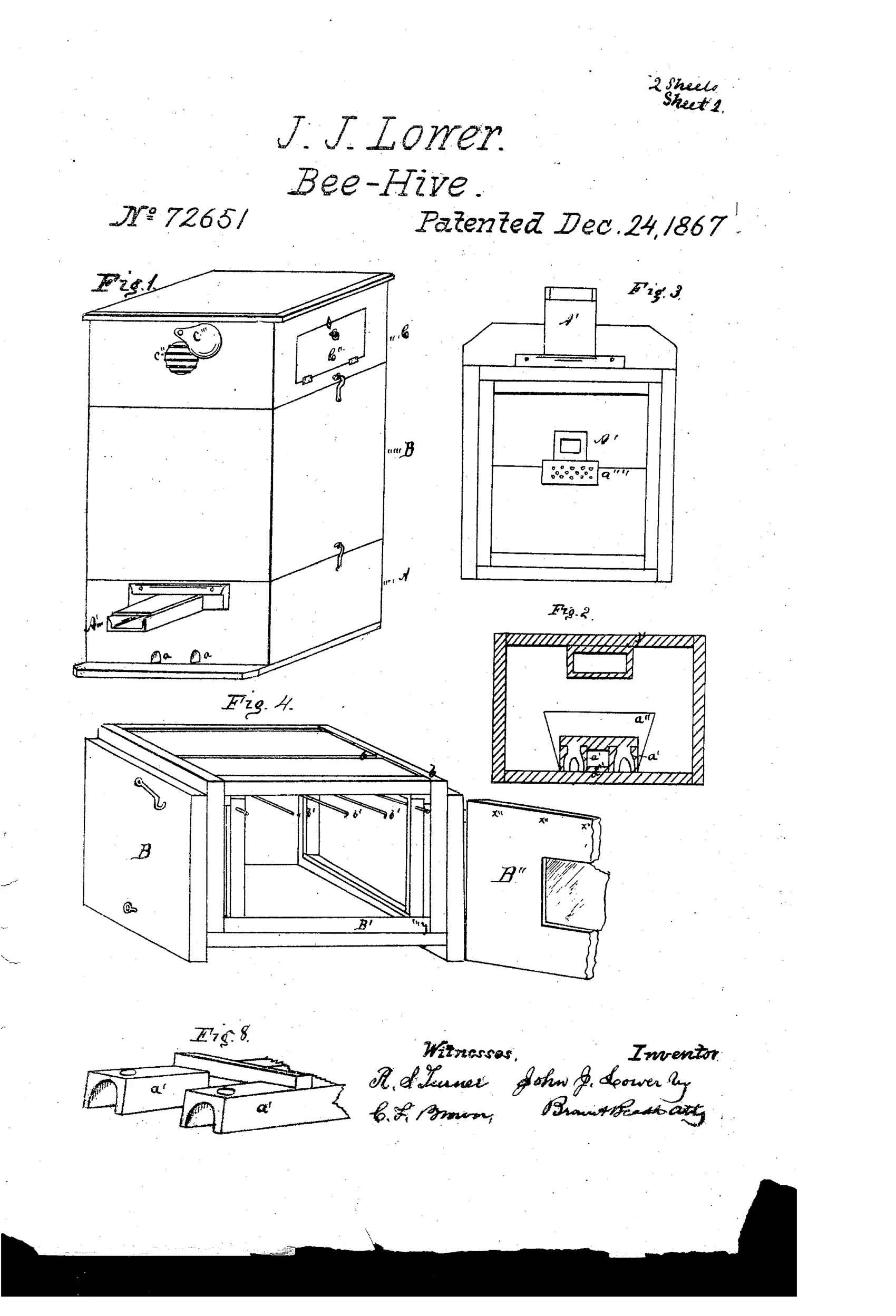
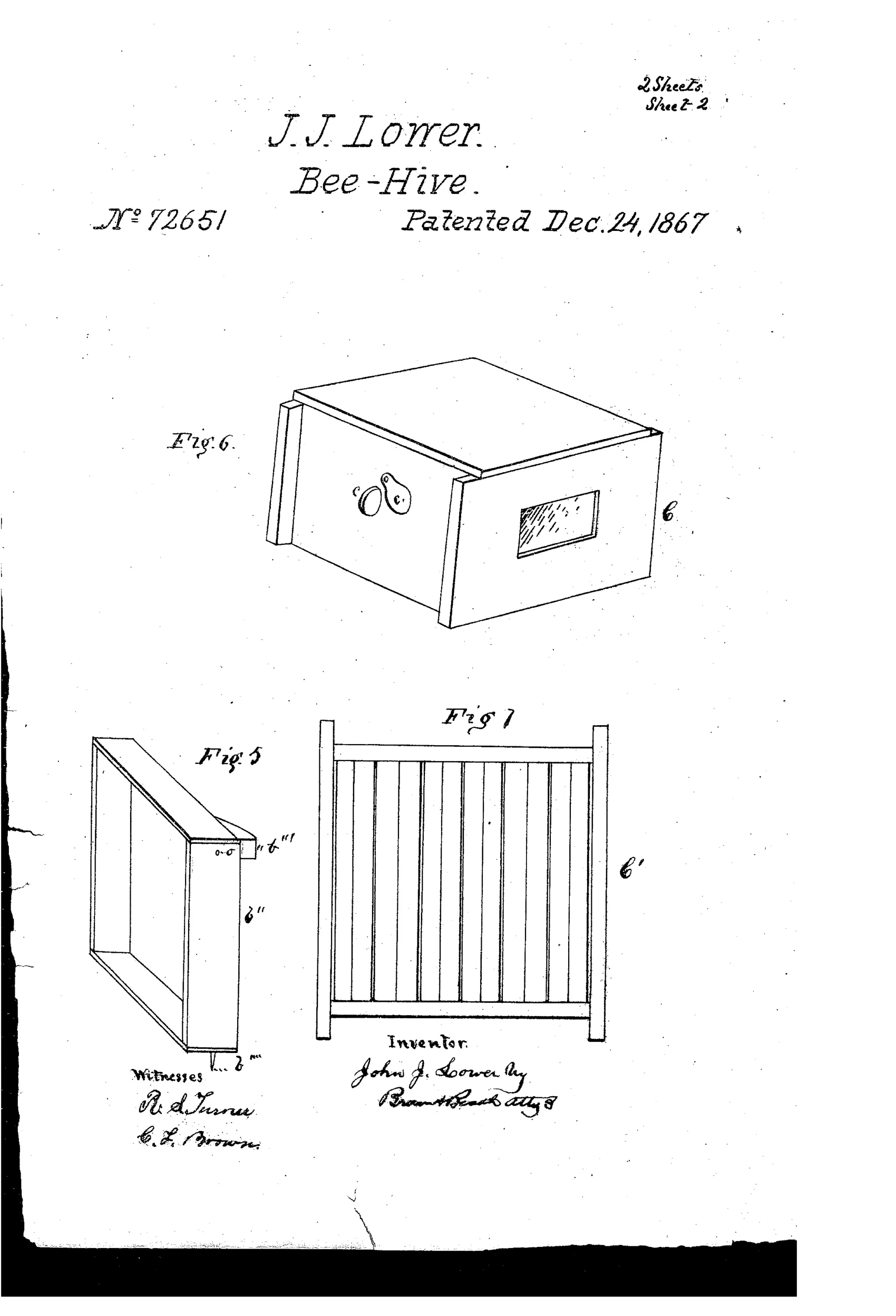
A three-part moth-proof beehive with movable sashes
⬡ How it works
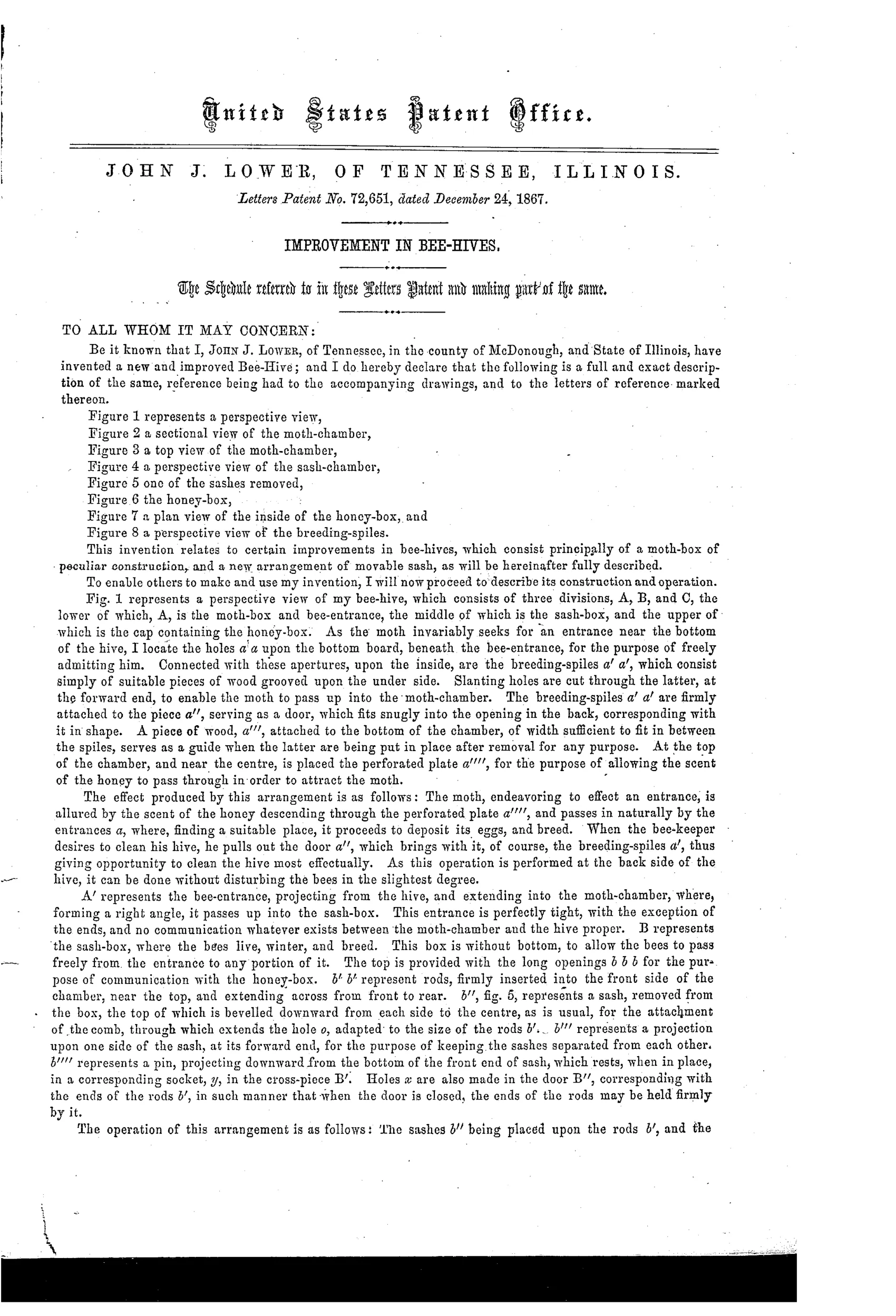
The hive is divided into three sections: a lower moth-chamber with entrances and removable breeding-spiles for cleaning, a middle sash-box holding the comb-bearing frames, and an upper cap containing a glass-sided honey-box. Moths are lured through a perforated plate by the honey scent and descend into the moth-chamber where they breed on the spiles, which can be pulled out from the rear door for cleaning without disturbing the bees. The sashes in the sash-box are held rigid by rods, projections, and pins that fit into sockets and holes in the door, preventing them from shifting or touching each other when the hive is moved. Ventilators with buttons in the cap allow temperature regulation and glass panels let the beekeeper observe the honey-box's progress.
⬡ What was claimed
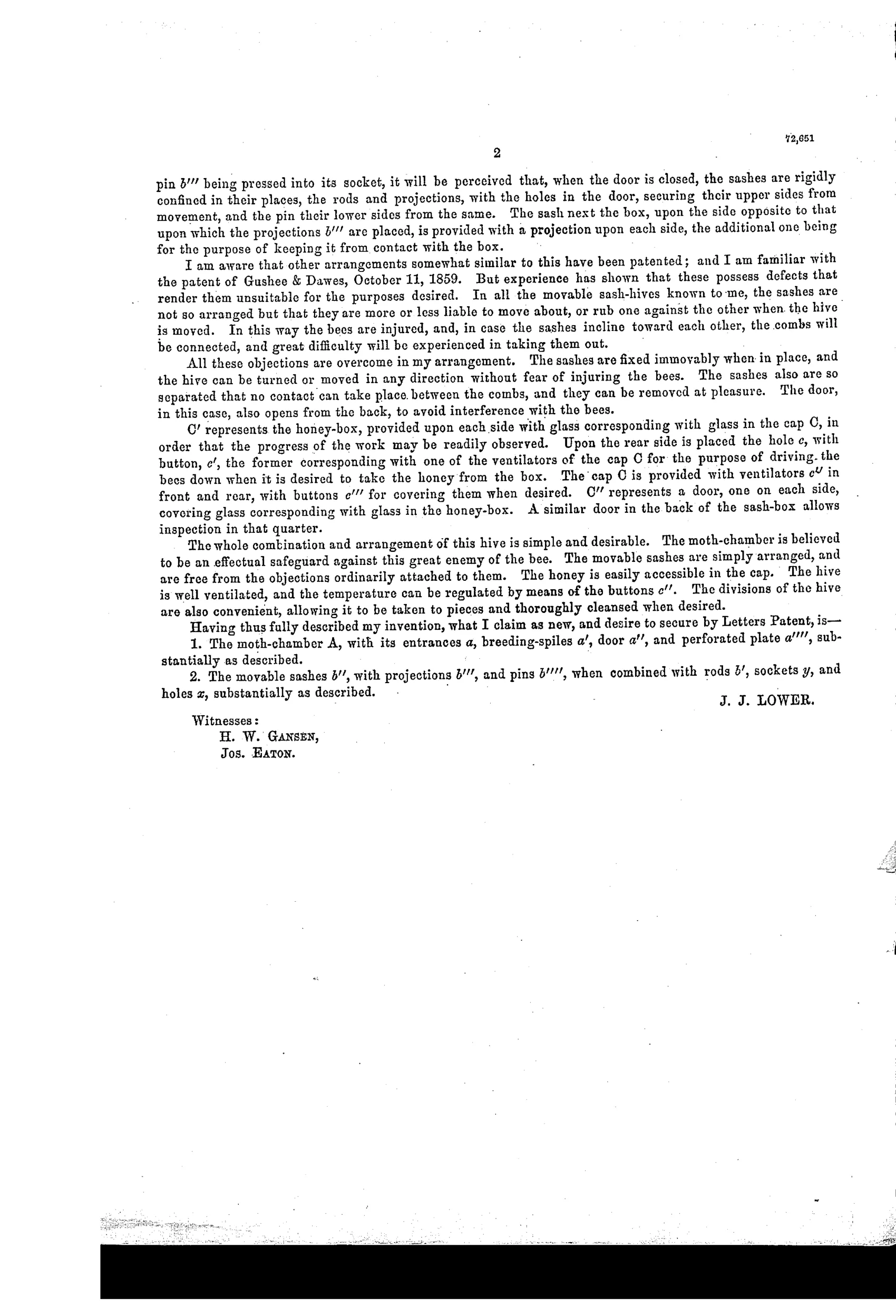
“1. The moth-chamber A, with its entrances a, breeding-spiles a', door a'', and perforated plate a'''', substantially as described. 2. The movable sashes b'', with projections b''', and pins b'''', when combined with rods b', sockets y, and holes x, substantially as described.”
In plain English: The patent claims both the moth-trapping chamber with its entrance holes, removable breeding rods, rear door, and scent-plate, and the rigidly-secured movable comb sashes held in place by rods, pins, and sockets.
⬡ In the inventor’s words
“The moth-chamber is believed to be an effectual safeguard against this great enemy of the bee.”— John J. Lower, from the specification
Fate unknown
No production record or surviving example is documented; a marked hive or a period advertisement from downstate Illinois would settle it.
⬡ Commentary
Most 1860s moth-trap hives tried to keep the wax moth out. John J. Lower's approach is stranger and more interesting: he builds the moth a dedicated apartment. Below the brood chamber sits a moth-chamber with entrance holes and a perforated plate that lets honey scent drift down as bait. The moths descend, lay their eggs on removable 'breeding-spiles' — those grooved wooden rods in Fig. 8, each with a little arched tunnel just the size a moth larva likes — and the beekeeper periodically pulls the spiles out through a rear door and destroys the whole generation without opening the hive proper. It's pest control by sacrificial habitat, a genuinely clever idea even if it overestimates how selective a moth is about real estate.
The sash-box in Fig. 4 shows Lower had absorbed the Langstroth lesson, fifteen years on: movable comb frames, here locked rigid by rods, pins, and sockets so they can't swing or touch during transport. That anti-rattle hardware is the part a casual reader misses, and it's more practical than the moth-chamber — though it also means more fiddly parts than a plain rabbet ledge, which is why the simpler Langstroth suspension won.
The truth beekeepers eventually learned is that a strong colony polices moths itself; traps mostly caught the blame for weak hives. Lower's hive is an earnest, well-drafted entry in that doomed campaign, with one honestly original mechanism to its name.
Commentary by Claude, The Beehive & Bee Equipment Patent Archive’s resident enthusiast