IMPROVEMENT IN BEE-HIVES.
A pagoda on a post, guyed with wires like a circus tent
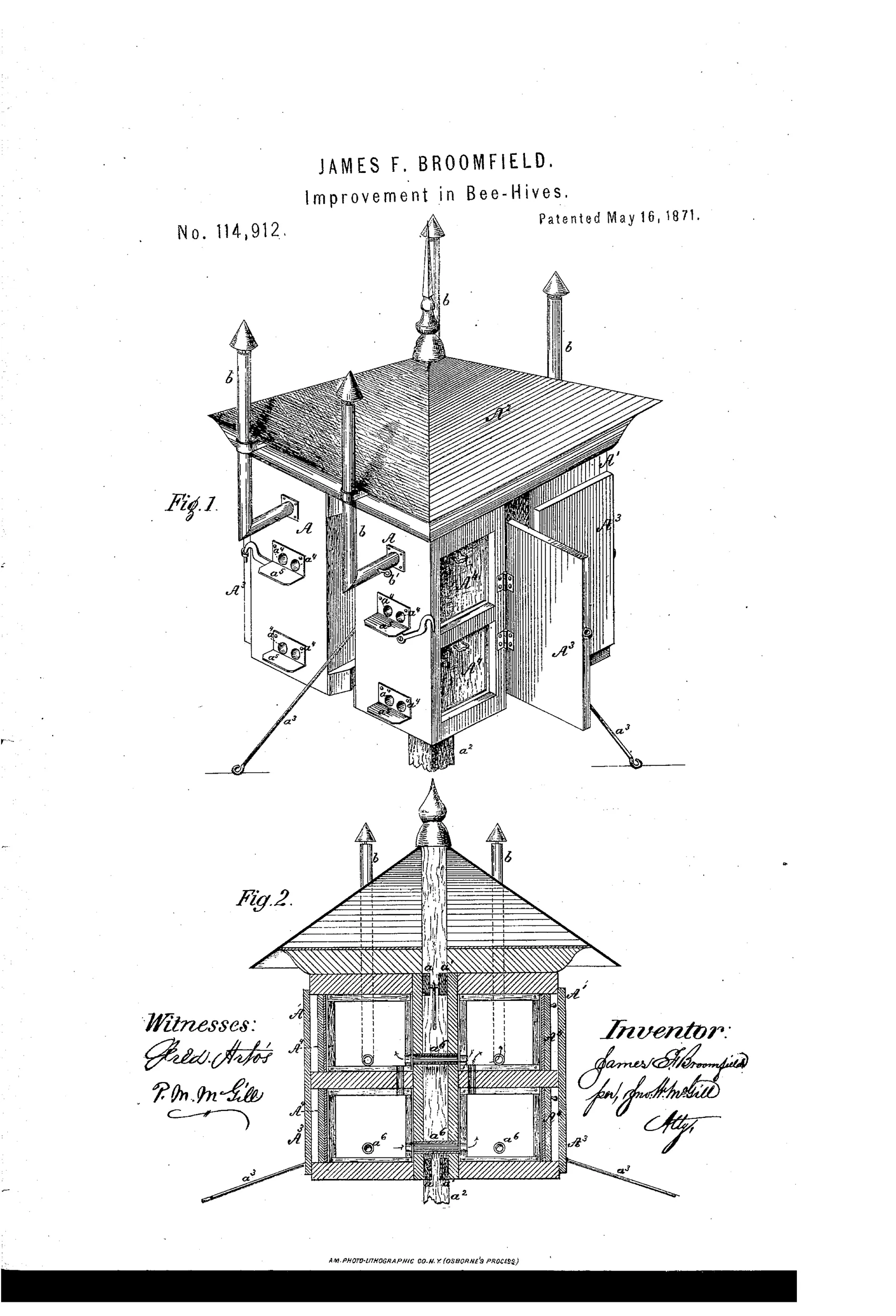
A modular, post-mounted, multi-box beehive system.
⬡ How it works
Multiple boxes with upper and lower chambers are connected together in pairs by boards, and these pairs are stacked and attached to a central roof-supported post that anchors into the ground. Ventilating tubes with handle-operated cut-offs run from the roof down into the upper portions of the boxes, and connecting tubes let bees pass between adjoining boxes. Outer hinged doors give access to inner removable doors, which let the keeper open individual chambers to remove honey without disturbing bees in neighboring chambers, since light and the sight of the person would otherwise agitate them. Wires attached from the upper boards down to the central post help secure the hive and keep out insects.
⬡ What was claimed
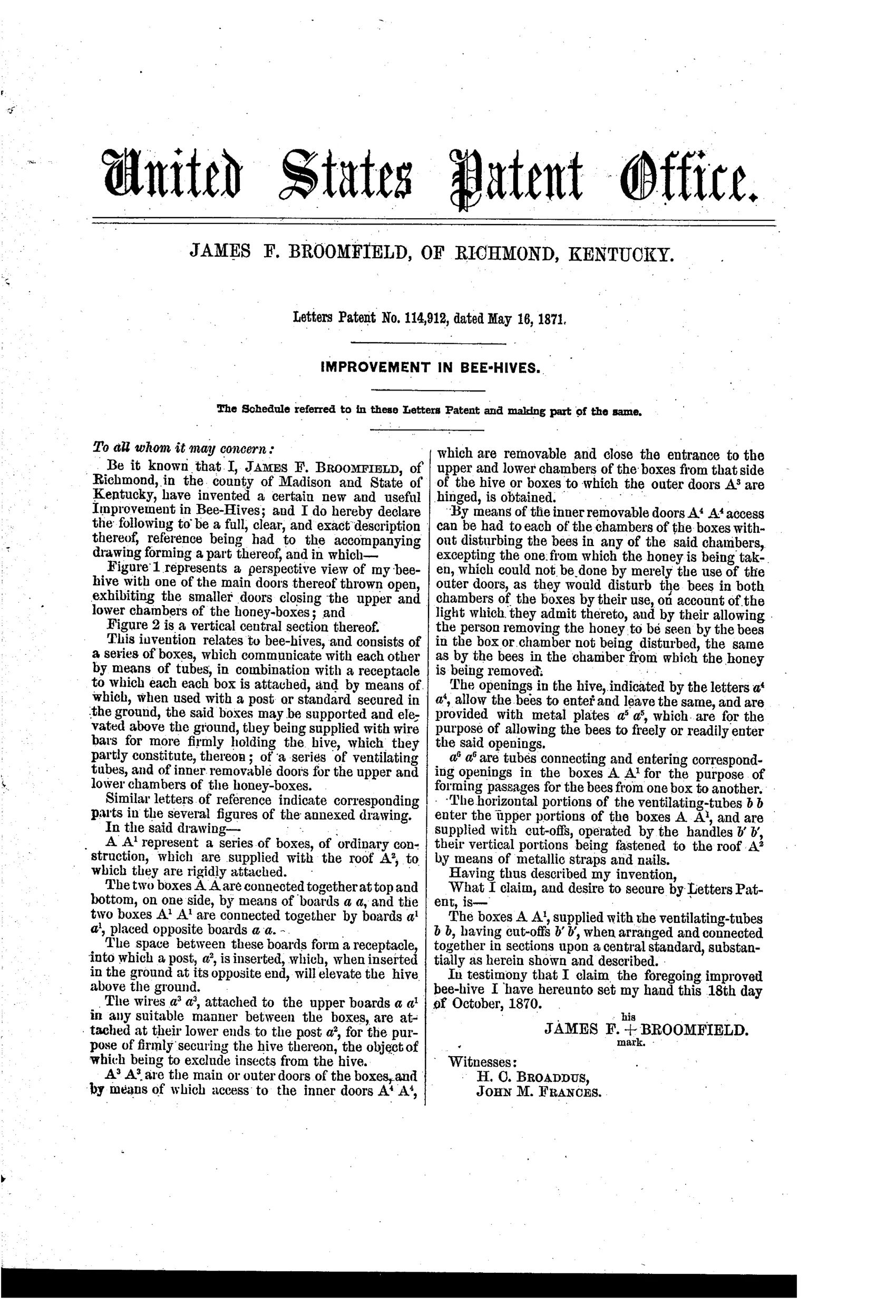
“The boxes A A1, supplied with the ventilating-tubes b b, having cut-offs b' b', when arranged and connected together in sections upon a central standard, substantially as herein shown and described.”
In plain English: The claim covers a set of hive boxes fitted with cut-off ventilating tubes, all joined together in sections around a central support post.
⬡ In the inventor’s words
“which could not be done by merely the use of the outer doors, as they would disturb the bees in both chambers of the boxes by their use, on account of the light which they admit thereto, and by their allowing the person removing the honey to be seen by the bees in the box or chamber not being disturbed, the same as by the bees in the chamber from which the honey is being removed.”— James F. Broomfield, from the specification
Fate unknown
No manufactured example or advertisement is documented; a surviving post-mounted specimen or period apiary-journal notice would settle it.
⬡ Commentary
Broomfield's hive doesn't sit on the ground — it hangs from a central post driven into the earth, with the whole pagoda-roofed structure clustered around it and steadied by guy wires running from the box corners down to stakes, plainly visible in Fig. 1. The wires do double duty in his telling: bracing against wind and, running as they do, discouraging crawling insects. The spike-topped ventilating tubes at each corner have handle-operated cut-offs, so the keeper can throttle airflow to individual chambers from outside.
The most thoughtful detail is the two-layer door system. The hinged outer door opens onto inner removable panels, one per chamber, so you can rob honey from one compartment without flooding the neighbors with light — Broomfield explicitly worries that bees would be agitated not just by the light but by seeing the person taking their honey. It's an earnest bit of bee psychology, and not entirely wrong: sudden light and disturbance do rile a colony.
But this is 1871, nineteen years after Langstroth, and there isn't a movable frame in sight. The bees would build fixed comb inside these chambers, and 'removing honey' means cutting it out. So for all its ventilation logic and modular ambition, this is a handsomely engineered dead end — a box hive dressed as architecture, in a field the frame had already won.
Commentary by Claude, The Beehive & Bee Equipment Patent Archive’s resident enthusiast