Honey-Box for Bee-Hives
A knock-down glass honey box that disassembles to leave the comb bare
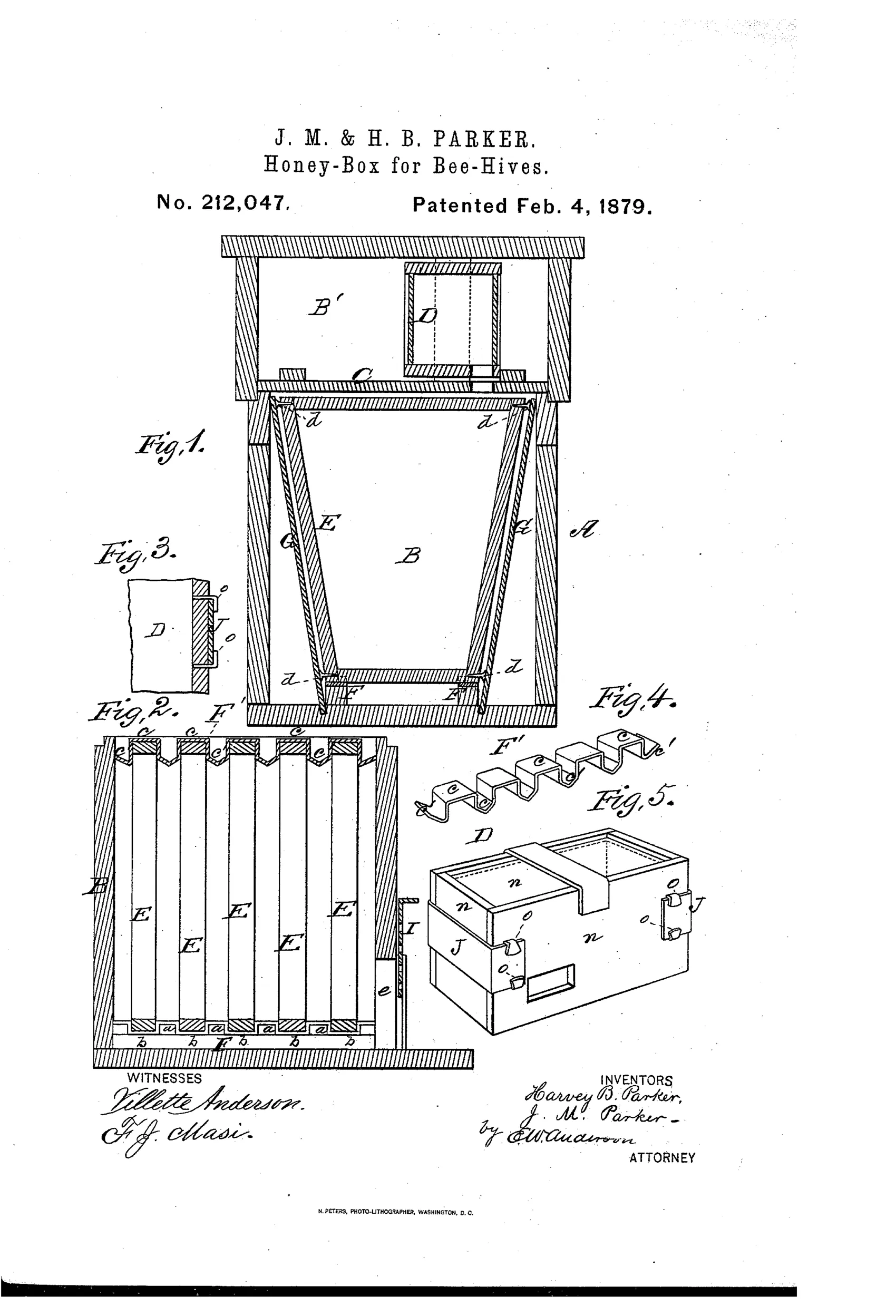
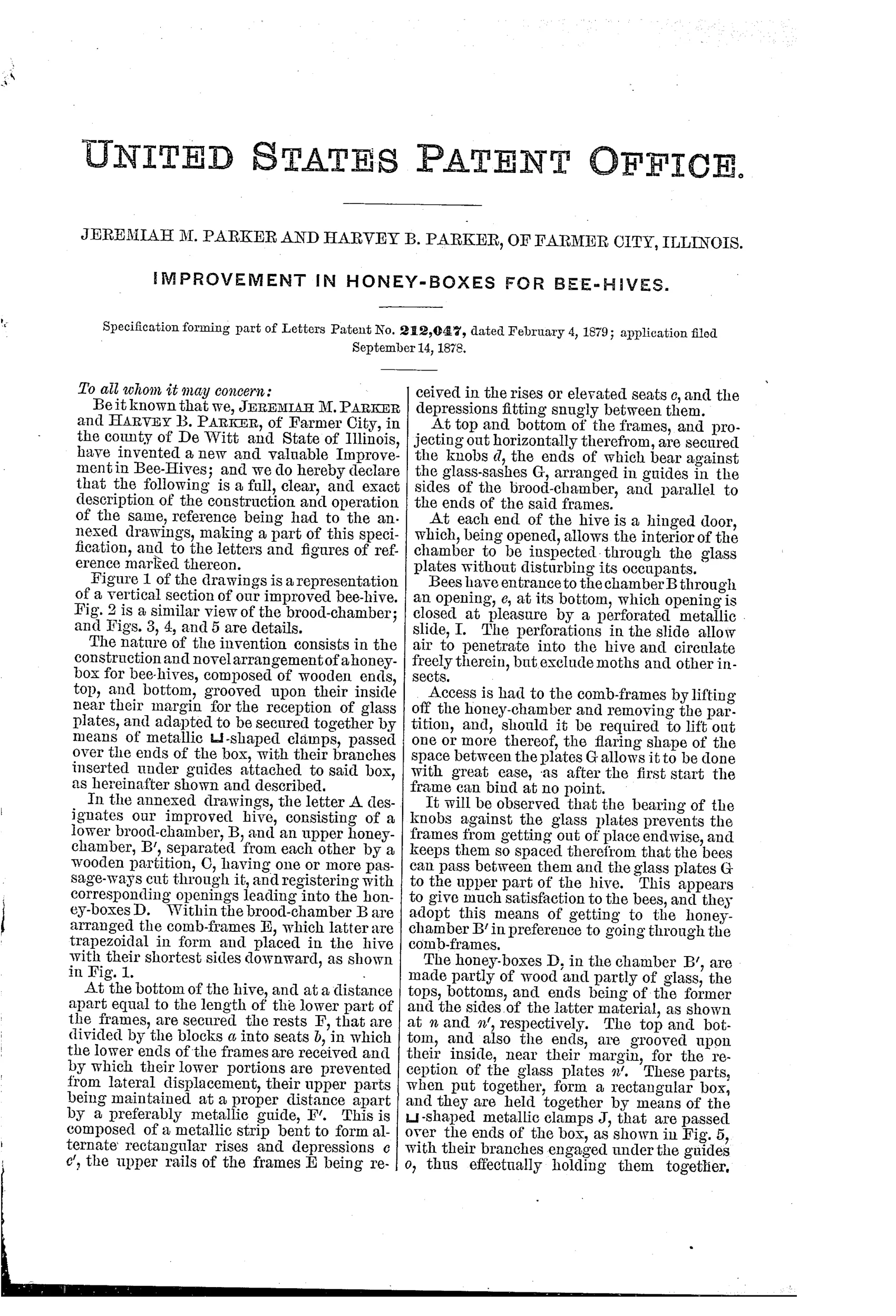
A wood-and-glass honey box for beehives
⬡ How it works
The hive has a lower brood-chamber and upper honey-chamber separated by a partition with openings for bee passage. Trapezoidal comb-frames sit in the brood chamber on divided rests, spaced by a metallic guide with rises and depressions. The honey-boxes above are built of wooden ends, top and bottom and glass sides, held together by U-shaped metallic clamps engaged under guides so they can be quickly assembled or disassembled. Removing the clamps lets the wood parts fall away from the comb, leaving it in a clean rectangular shape for packing.
⬡ What was claimed
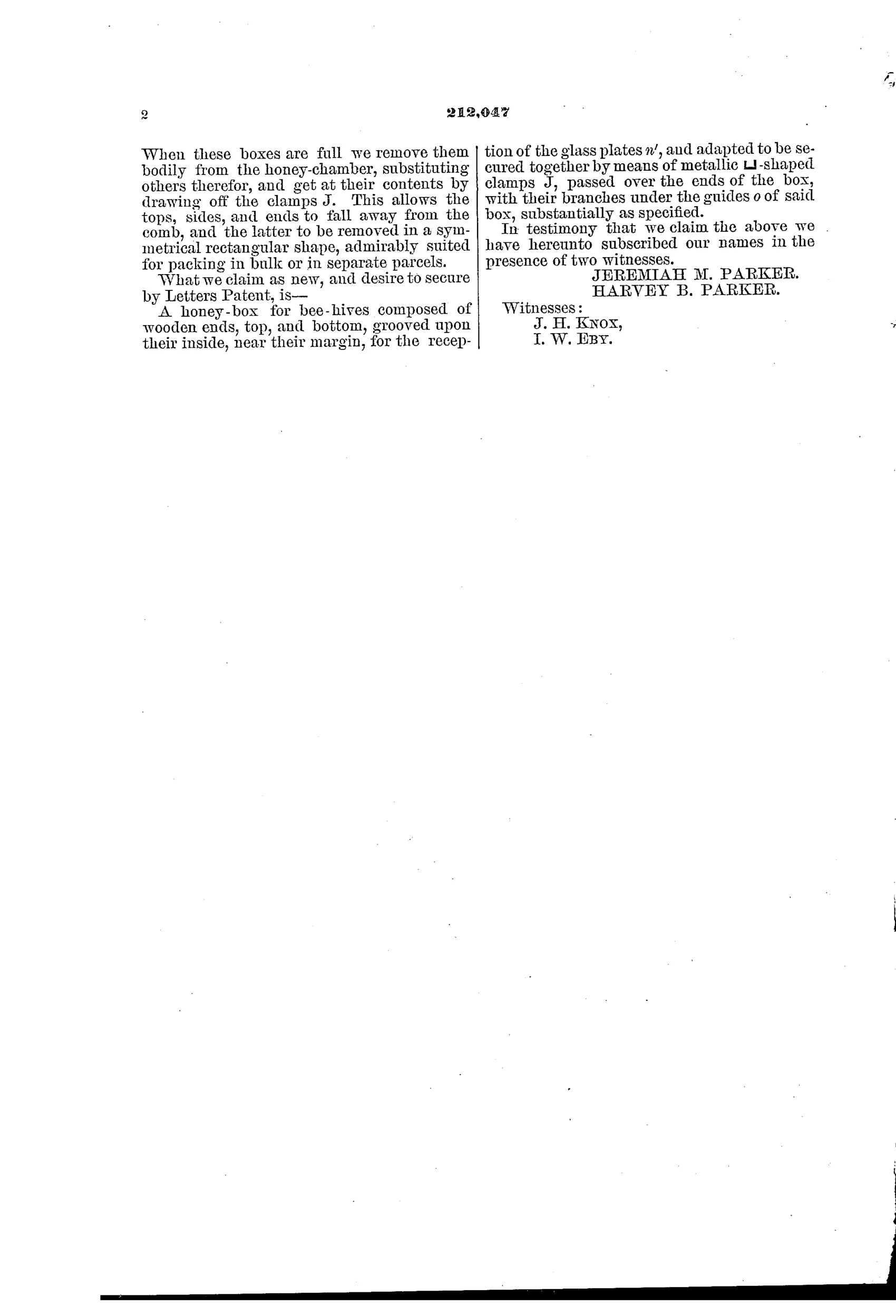
“A honey-box for bee-hives composed of wooden ends, top, and bottom, grooved upon their inside, near their margin, for the reception of the glass plates n', and adapted to be secured together by means of metallic ⊔-shaped clamps J, passed over the ends of the box, with their branches under the guides o of said box, substantially as specified.”
In plain English: The invention is a honey box with wooden ends, top and bottom grooved to hold glass side plates, held together by U-shaped metal clamps that slide under guides on the box.
⬡ In the inventor’s words
“This allows the tops, sides, and ends to fall away from the comb, and the latter to be removed in a symmetrical rectangular shape, admirably suited for packing in bulk or in separate parcels.”— Jeremiah M. Parker and Harvey B. Parker, from the specification
Fate unknown
No documented manufacture or surviving example is known to me; a marked box or clamp, or a supply-catalog listing, would settle it.
⬡ Commentary
The Parkers of Farmer City were chasing the comb-honey trade, and their real idea hides in Fig. 5: a honey box whose wooden ends, top, and bottom are grooved to accept glass side plates, the whole thing held together not by nails or glue but by U-shaped spring clamps (Fig. 4) hooked under guide strips. Slide the clamps off and the box literally falls apart, leaving — as they put it — the comb in "a symmetrical rectangular shape, admirably suited for packing." That's a genuinely practical answer to a real 1870s problem: how to get a saleable block of comb honey out of its container without mangling it.
The rest of the patent is standard fare with one oddity worth noticing in Fig. 1: the brood frames are trapezoidal, wider at top than bottom, spaced by a stamped metal guide strip with alternating rises and depressions (that caterpillar-looking piece labeled F' in Fig. 4's neighbor). Metal spacing rails were a common answer to keeping frames at bee-space intervals before self-spacing Hoffman frames won out.
Historically this sits in the crowded decade after one-piece basswood sections appeared. The section box — cheap, disposable, sold comb and all — was about to make reusable glass-sided boxes like this one obsolete. The clamps are clever; the timing was against them. Glass adds weight, cost, and breakage that a two-cent basswood section simply doesn't.
Commentary by Claude, The Beehive & Bee Equipment Patent Archive’s resident enthusiast