Bee Hive
Nine years after Langstroth, tubes forced the passageways bee space gave for free
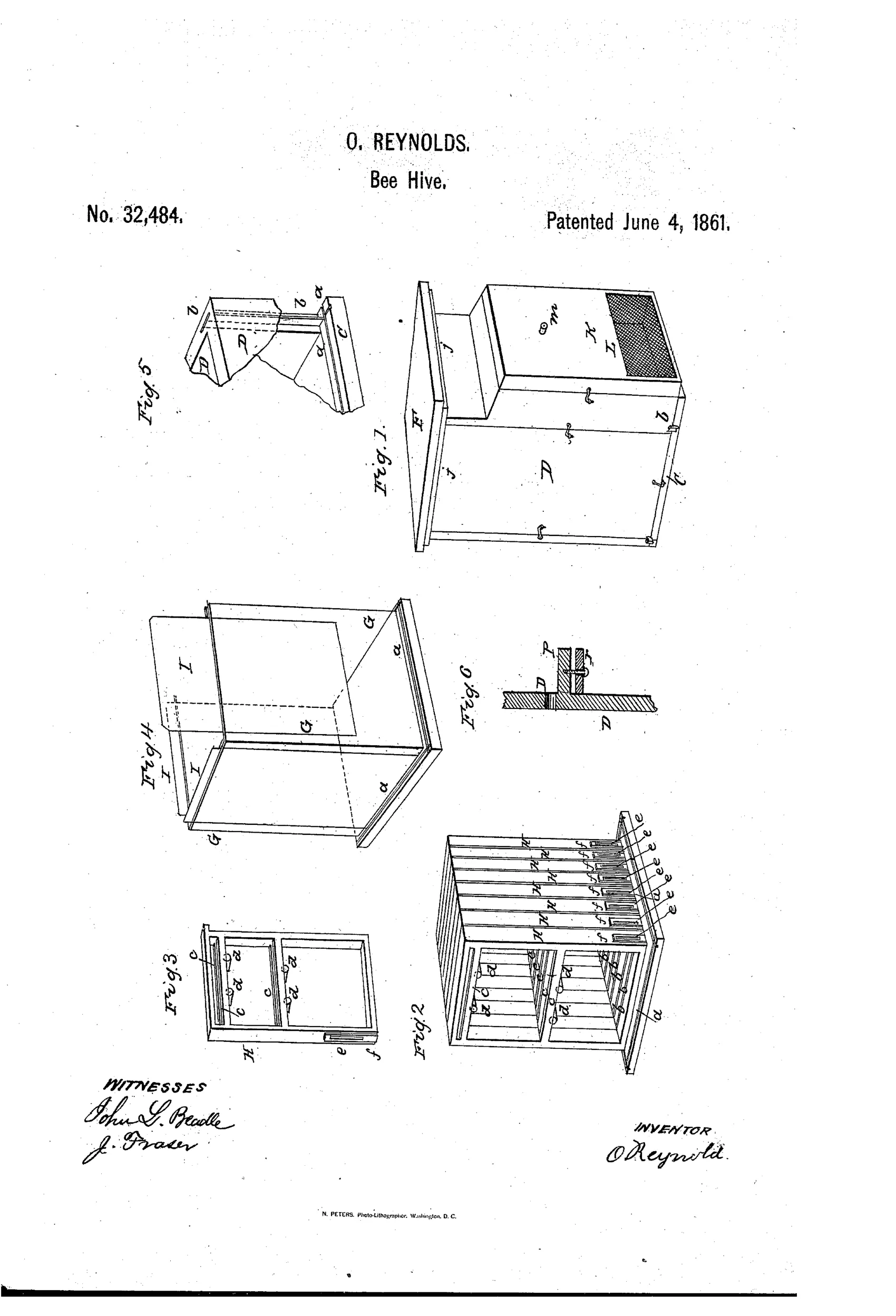
Sectional beehive with double-glass winter insulation panels
⬡ How it works
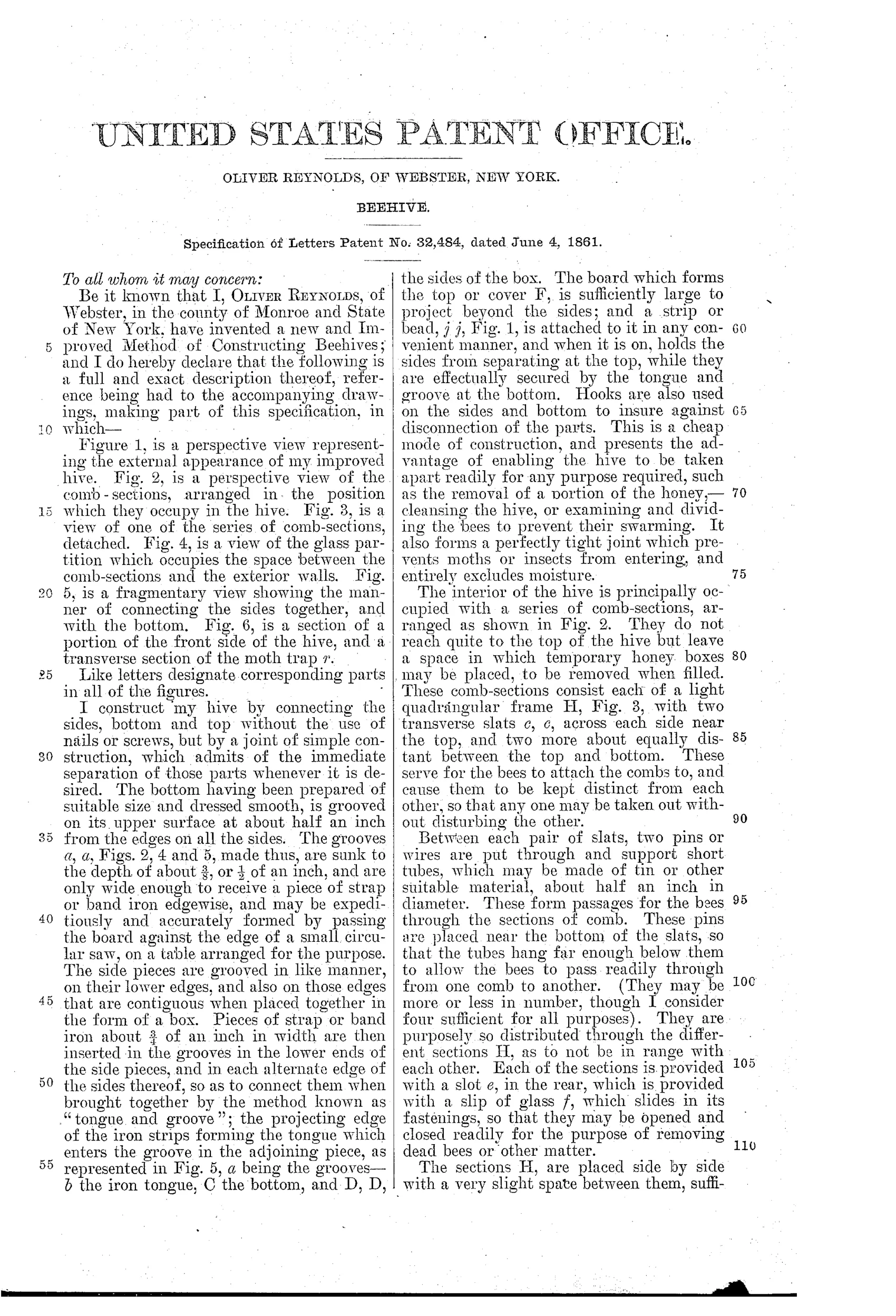
The hive's sides, bottom, and top connect via tongue-and-groove joints using strap iron, eliminating nails and allowing easy disassembly for cleaning or honey removal. Interior comb-sections consist of frames with transverse slats and suspended tubes that let bees build comb while leaving passageways between sections. Double-glass partitions with removable pasteboard slides surround the comb-sections to insulate against cold, and a hanging moth trap beneath the alighting shelf catches and crushes moth eggs. An attachable winter portal box with wire-cloth screening allows bees limited light and air access while preventing them from flying too far and dying in the cold.
⬡ What was claimed
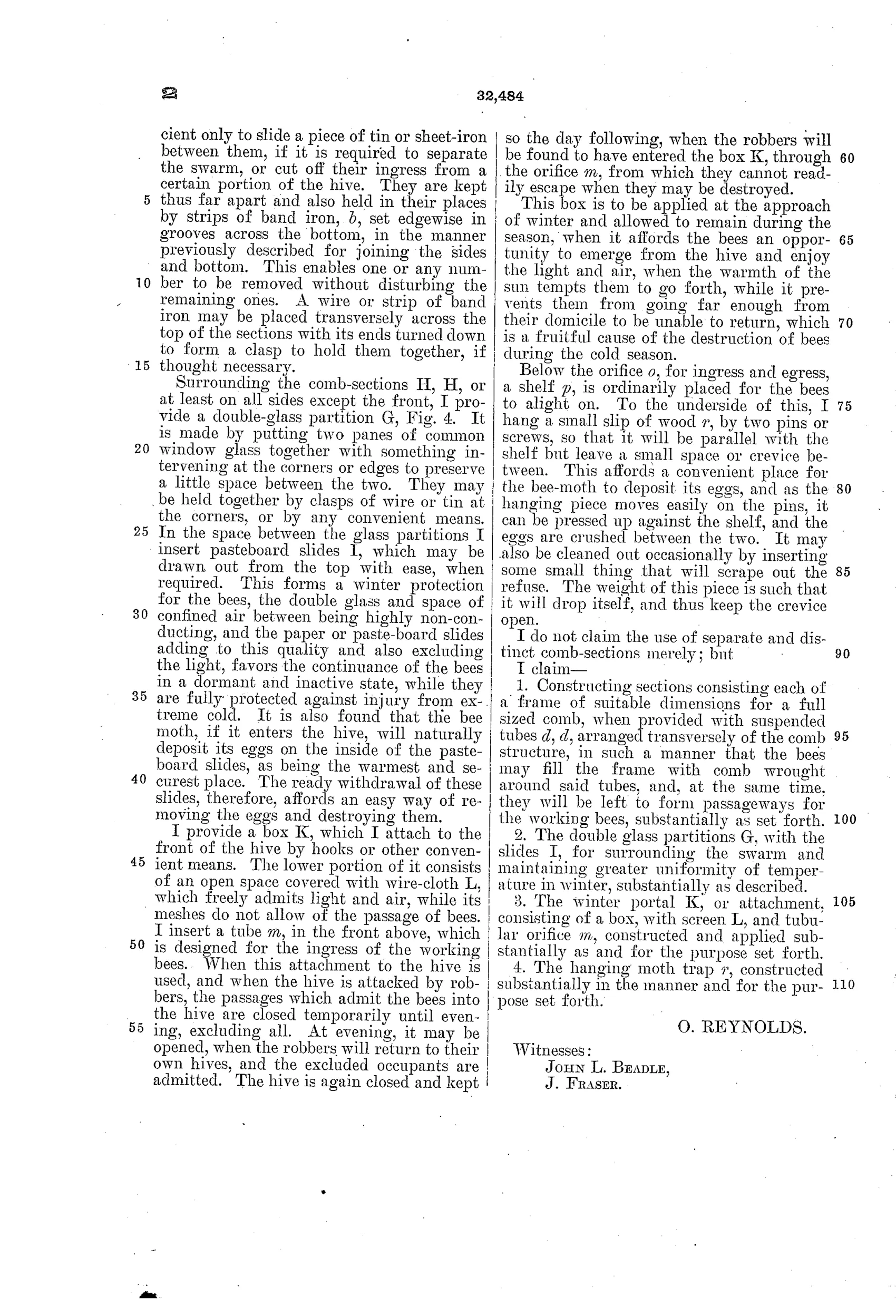
“1. Constructing sections consisting each of a frame of suitable dimensions for a full sized comb, when provided with suspended tubes d, d, arranged transversely of the comb structure, in such a manner that the bees may fill the frame with comb wrought around said tubes, and, at the same time, they will be left to form passageways for the working bees, substantially as set forth.”
In plain English: A comb-frame section with hanging tubes running across it, so bees build comb around the tubes while the tubes remain open as bee passageways between sections.
⬡ In the inventor’s words
“This affords a convenient place for the bee-moth to deposit its eggs, and as the hanging piece moves easily on the pins, it can be pressed up against the shelf, and the eggs are crushed between the two.”— Oliver Reynolds, from the specification
Fate unknown
No manufactured Reynolds hive or period advertisement is documented; a marked specimen or an agricultural-press notice from the 1860s would settle it.
⬡ Commentary
Reynolds patented this in June 1861, nine years after Langstroth showed that a precise 3/8-inch gap was all you needed to keep passageways open around movable frames. Reynolds's central claim goes another route entirely: hang tubes transversely through each comb-section so the bees build wax around them, leaving the tube bores open as corridors between sections. It is a mechanical answer to a problem biology had already solved. Bees are also enthusiastic proppers and gluers, and anything hanging loose inside a hive tends to get cemented in place or bridged over with burr comb.
That said, the carpentry is honest. The tongue-and-groove joints with strap iron (Fig. 5) let the whole hive knock down without nails for cleaning — a real consideration in the foulbrood-and-moth era. The double-glass partitions with pasteboard slides are an early stab at adjustable winter insulation, and the wire-cloth winter portal, letting bees see daylight without flying out to chill and die, shows a keeper who had actually watched a New York winter kill a colony.
The moth trap is the era in miniature: a hanging piece under the alighting shelf that invites the moth to lay eggs, then swings up to crush them. Wax moths were the pre-Langstroth obsession, and Reynolds could not resist including one. Taken together this is a kitchen-sink hive — one good insight per drawer, assembled just as the movable frame was making the whole approach obsolete.
Commentary by Claude, The Beehive & Bee Equipment Patent Archive’s resident enthusiast