IMPROVEMENT IN BEE-HIVES.
Smoke goes in, bees exit through back tubes — a self-emptying honey-box from Tennessee
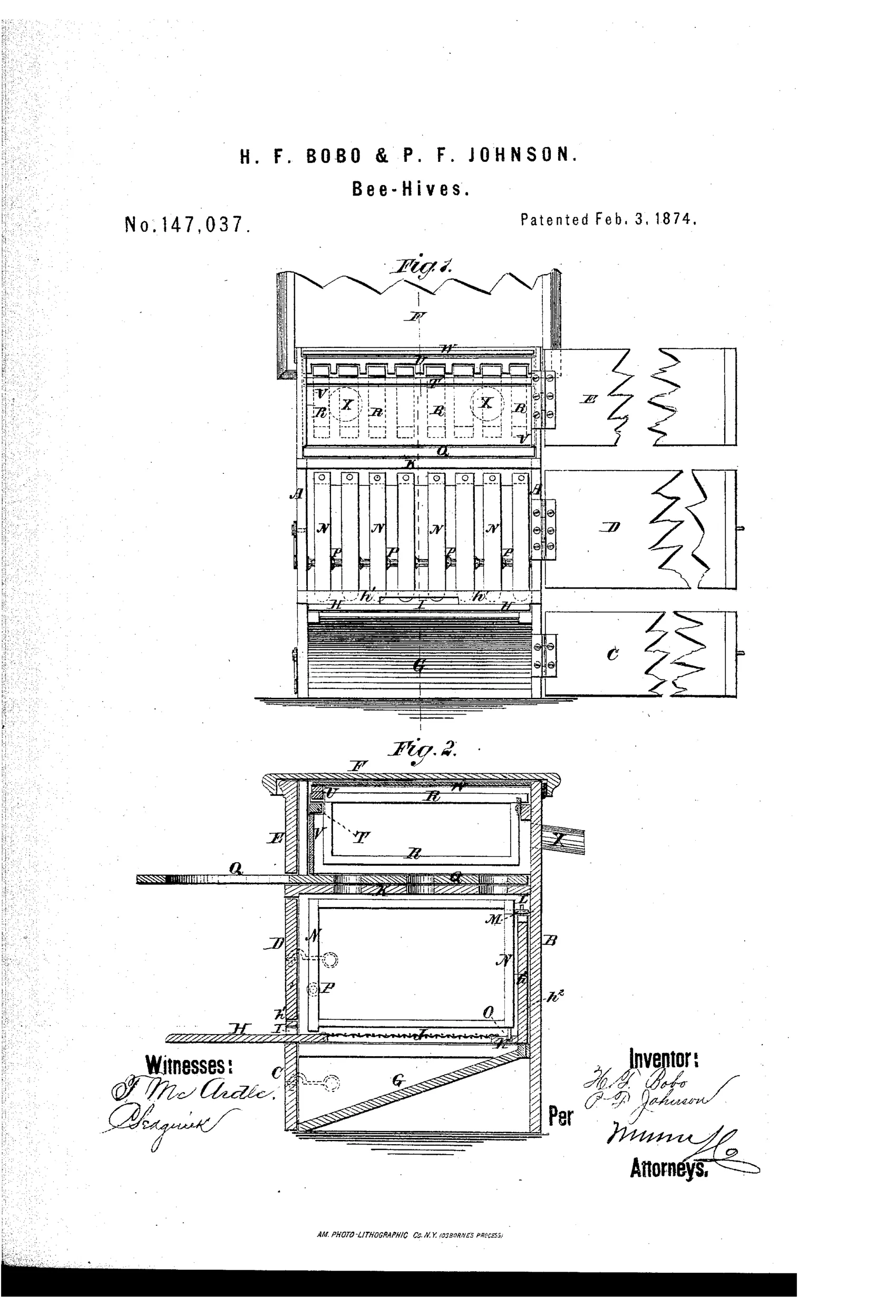
Improved multi-compartment bee-hive with sliding frames
⬡ How it works
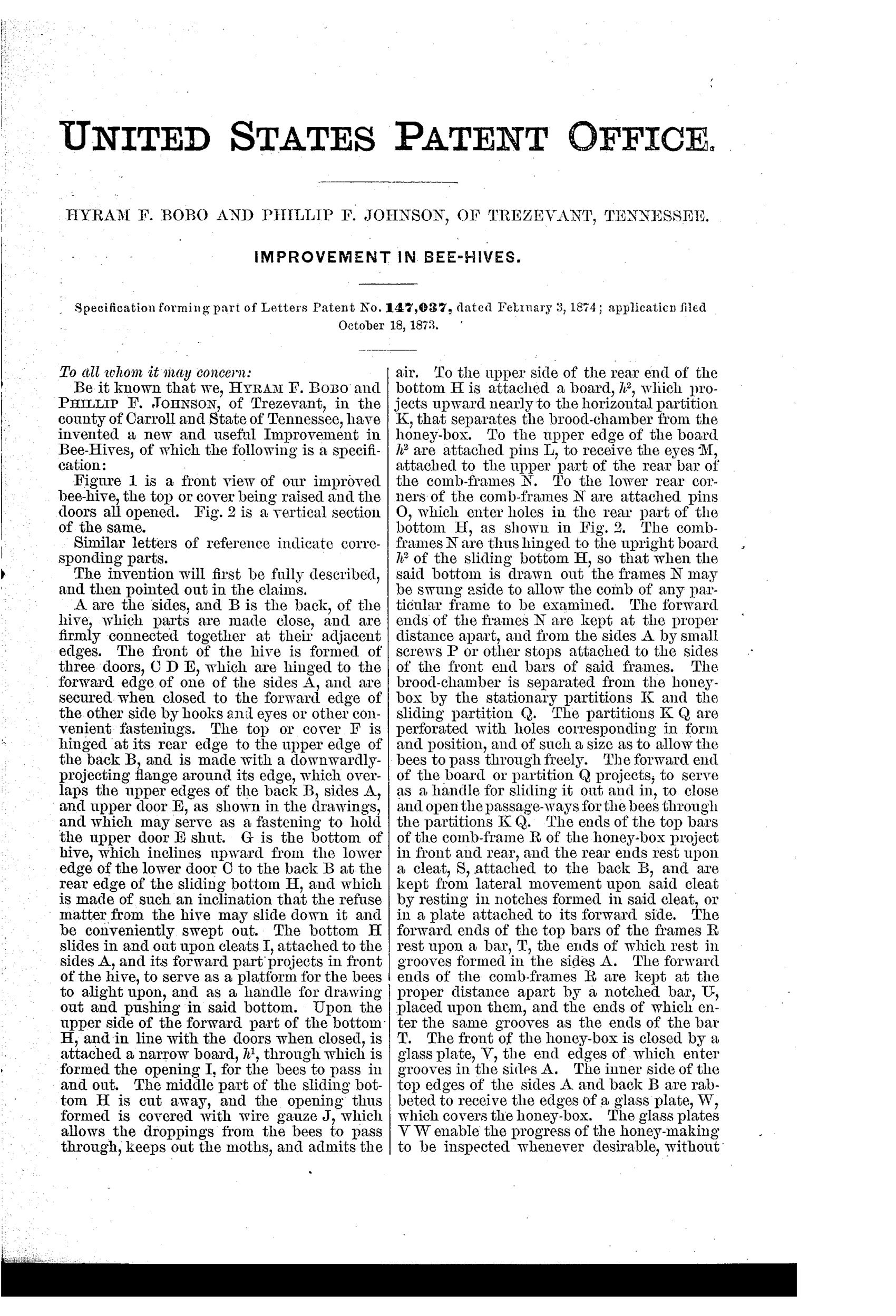
The hive is divided by perforated partitions K and Q into a brood-chamber and honey-box, with a sliding partition Q used to open or close bee passages between them. A sliding bottom H holds hinged comb-frames N that can swing aside for inspection, and a wire-gauze section allows droppings to pass while keeping out moths. Outwardly-projecting tubes X in the back serve as ventilators and escape passages, letting smoke drive bees out of the honey-box while they re-enter through the front opening I. Glass plates V and W over the honey-box permit inspection of comb-building without disturbing the bees.
⬡ What was claimed
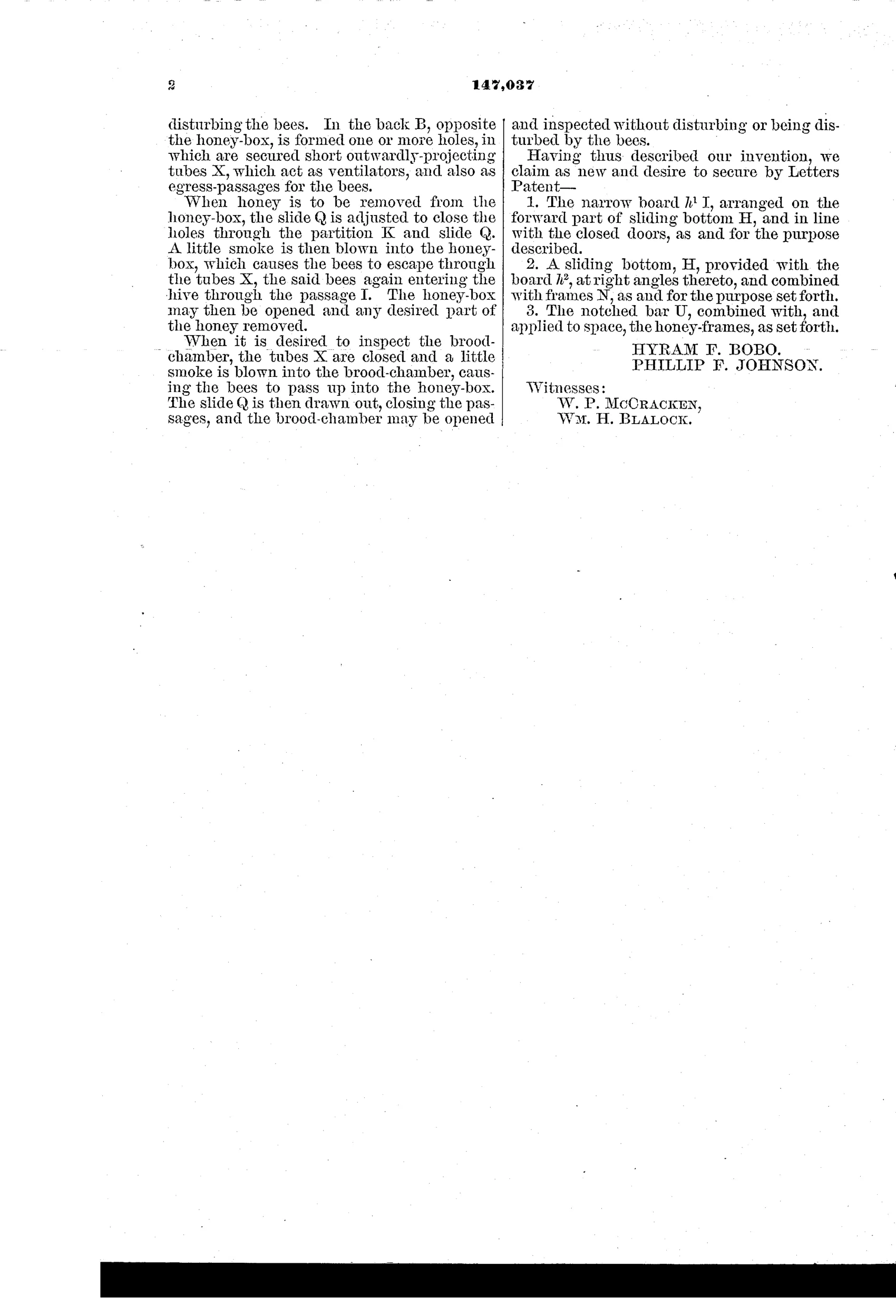
“2. A sliding bottom, H, provided with the board h2, at right angles thereto, and combined with frames N, as and for the purpose set forth.”
In plain English: A sliding bottom board fitted with an upright board that holds hinged comb-frames so they can be swung aside for inspection.
⬡ In the inventor’s words
“A little smoke is then blown into the honey-box, which causes the bees to escape through the tubes X, the said bees again entering the hive through the passage I.”— Hyram F. Bobo and Phillip F. Johnson, from the specification
Fate unknown
No record of manufacture or a surviving example is known to me; a marked hive or a Tennessee agricultural-press advertisement would settle it.
⬡ Commentary
Twenty-two years after Langstroth, most rural inventors had absorbed the movable-frame gospel but not its discipline, and Bobo and Johnson's hive is a good specimen of the type. It has everything: perforated partitions, a sliding gate between brood chamber and honey-box, glass inspection panels, wire gauze that lets debris fall through while excluding moths, and — the genuinely interesting bit — rear ventilator tubes (X in Fig. 1) meant to work as one-way bee escapes. Puff smoke into the honey-box, the bees flee out the tubes, walk around to the front entrance, and you harvest an empty super. That's the same logic as the Porter bee escape, which wouldn't be patented until 1891, executed here with crude tubes instead of spring gates.
The second claim is the odd one: a sliding bottom board carrying hinged comb-frames that swing aside like pages of a book. Look at Fig. 2 and you can see the pivot points on the left edge of the frames N. It's inspection without lifting — appealing on paper, but hinged frames get propolized solid within a season, and swinging a comb through an arc inside a box is a fine way to roll the queen.
So: one prescient instinct (drive the bees out before you open the box) buried in a cabinet of complications. The industry kept the instinct and threw away the cabinet.
Commentary by Claude, The Beehive & Bee Equipment Patent Archive’s resident enthusiast