IMPROVEMENT IN BEE-HIVES
Eight hives in one box, all breathing through a single central chimney
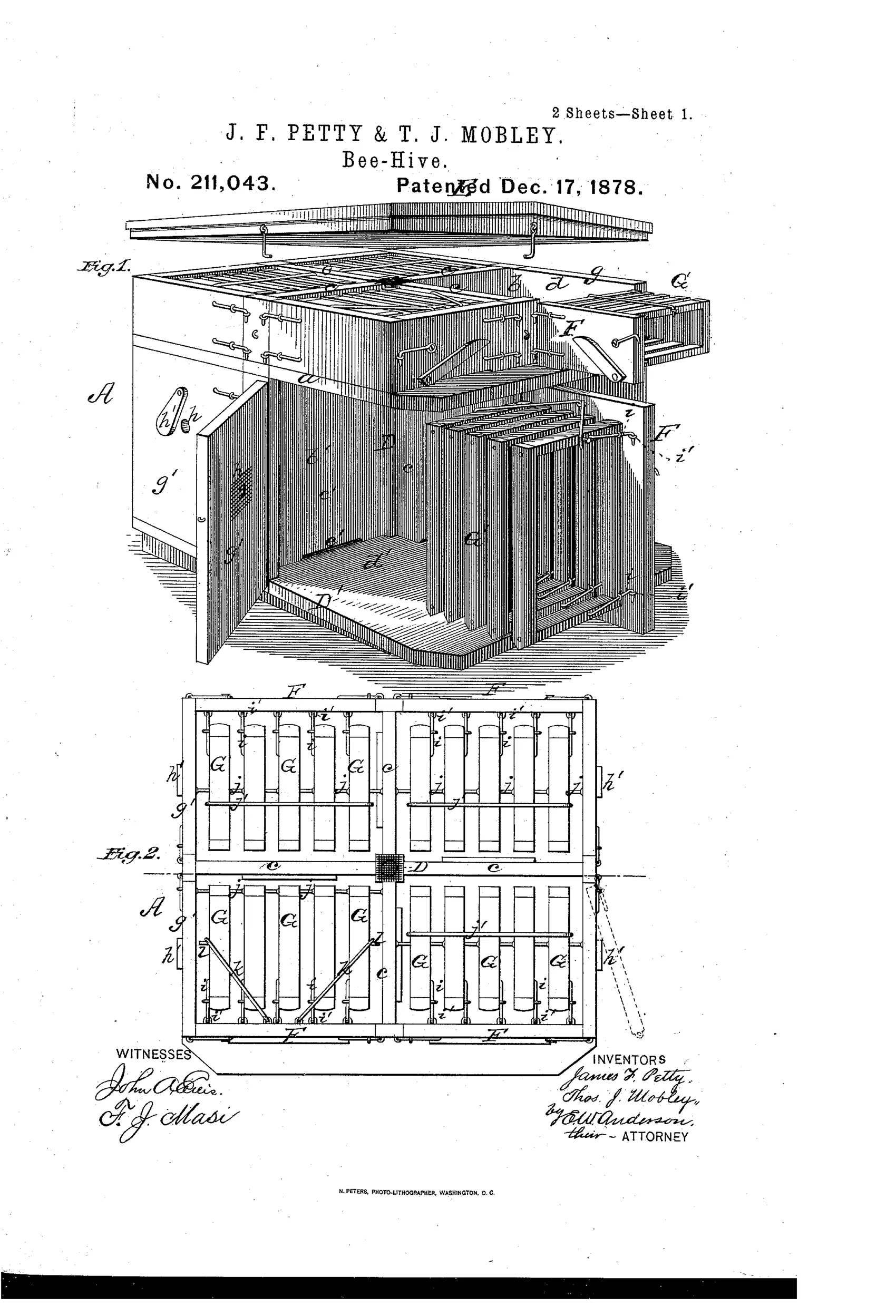
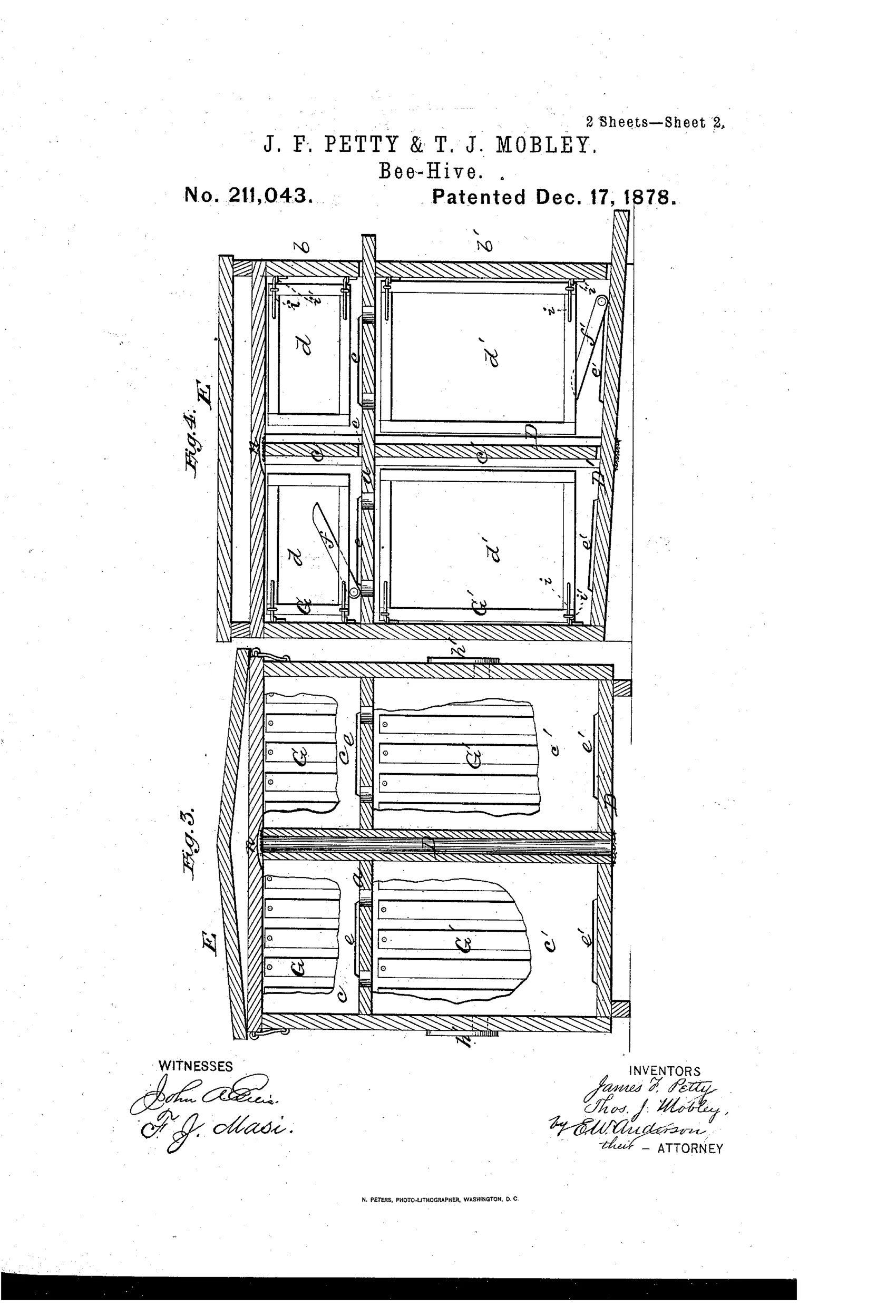
Multi-chamber bee-hive with central ventilating shaft
⬡ How it works
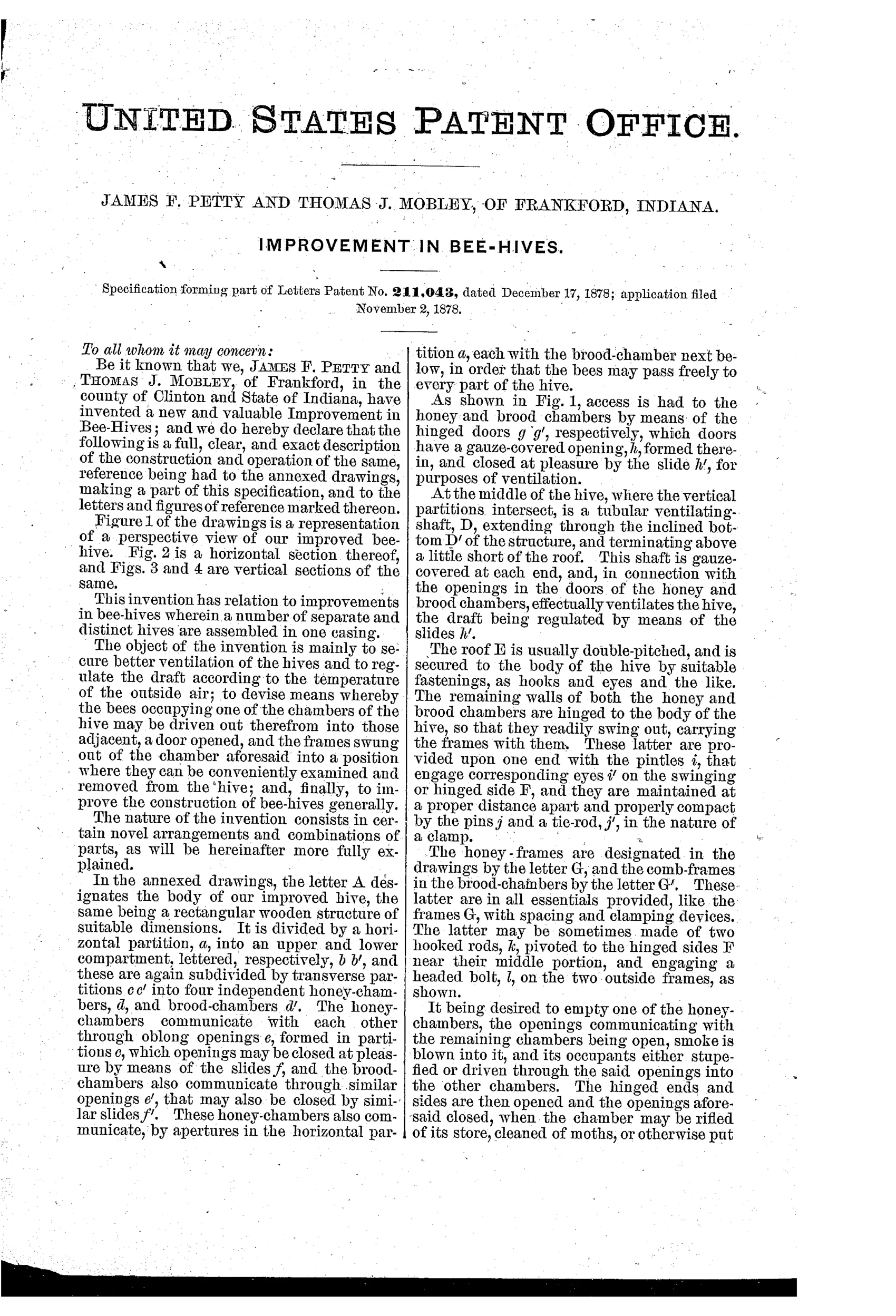
The hive body is divided by a horizontal partition into upper honey-chambers and lower brood-chambers, each further split by transverse partitions into four independent sections. Openings between adjacent honey-chambers and between brood-chambers, closable by sliding gates, let bees pass freely, while smoke can be used to drive bees out of one chamber into the others so it can be emptied. A central tubular ventilating shaft runs from the inclined bottom up through the intersection of the partitions to a cruciform groove in the ceiling, which branches to each honey-chamber, providing airflow regulated by gauze-covered sliding vents. The hinged sides and ends, carrying the movable frames on pintles, swing outward so frames can be inspected or removed without disturbing the rest of the hive.
⬡ What was claimed
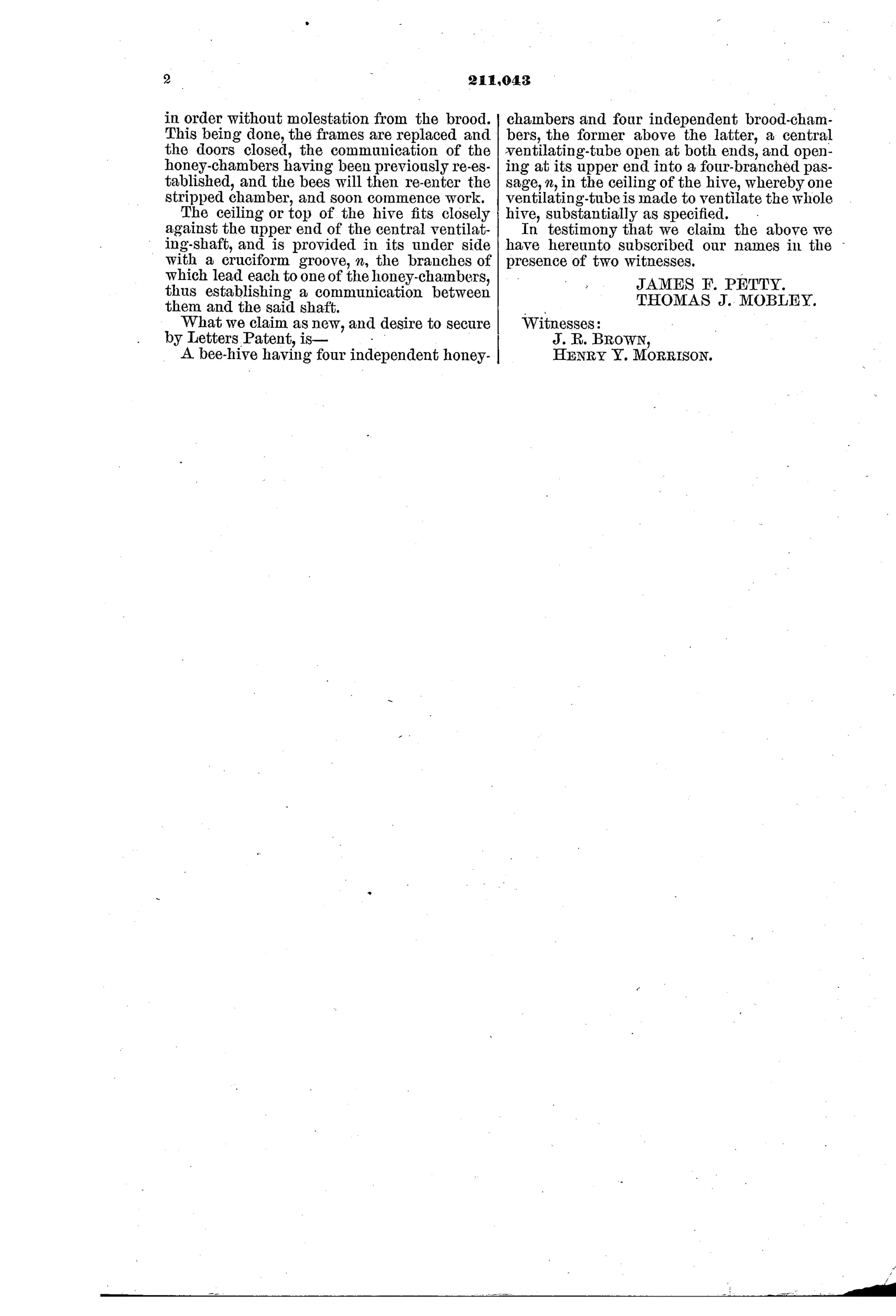
“A bee-hive having four independent honey-chambers and four independent brood-chambers, the former above the latter, a central ventilating-tube open at both ends, and opening at its upper end into a four-branched passage, n, in the ceiling of the hive, whereby one ventilating-tube is made to ventilate the whole hive, substantially as specified.”
In plain English: The hive has four separate honey chambers above four separate brood chambers, all ventilated by one central tube that branches out to each honey chamber through the ceiling.
⬡ In the inventor’s words
“Smoke is blown into it, and its occupants either stupefied or driven through the said openings into the other chambers.”— James F. Petty and Thomas J. Mobley, from the specification
Paper patent — likely never produced
The joinery-heavy multi-chamber design ran against the industry's move to simple stackable boxes, and no manufactured example or trade listing is known to me.
⬡ Commentary
Petty and Mobley of Frankfort, Indiana, took the movable-frame hive Langstroth had settled a quarter-century earlier and multiplied it: four brood chambers below, four honey chambers above, all packed into one cabinet with a double-pitched roof. The connecting thread — literally — is a single ventilating tube running from the inclined bottom up through the crossing point of the partitions, where it meets a cruciform groove in the ceiling that feeds air to each honey chamber. One chimney for eight rooms is a genuinely tidy piece of thinking, and the gauze-covered sliding vents show they'd worried about robbing and cold drafts.
The harvest scheme is the part worth lingering on: sliding gates between chambers let the keeper blow smoke into one compartment and drive its bees into the neighbors, so a section could be emptied without opening the whole hive. Note also the hinged sides in Fig. 1, swinging outward with the frames hanging on pintles — inspection from the outside in, rather than lifting boxes off the top.
That's also why it never had a future. Langstroth's insight was that simple, interchangeable boxes beat clever cabinets, and by 1878 the industry was standardizing hard in that direction. Eight interdependent chambers in one carcass means one hive's problems become everyone's, and a joiner's week of work per unit. It's an earnest, well-drawn late entry in the palace-hive tradition, arriving just as that tradition was losing the argument.
Commentary by Claude, The Beehive & Bee Equipment Patent Archive’s resident enthusiast