IMPROVEMENT IN BEE-HIVES
A moth-trap drawer that weaponizes darkness and light against the wax miller
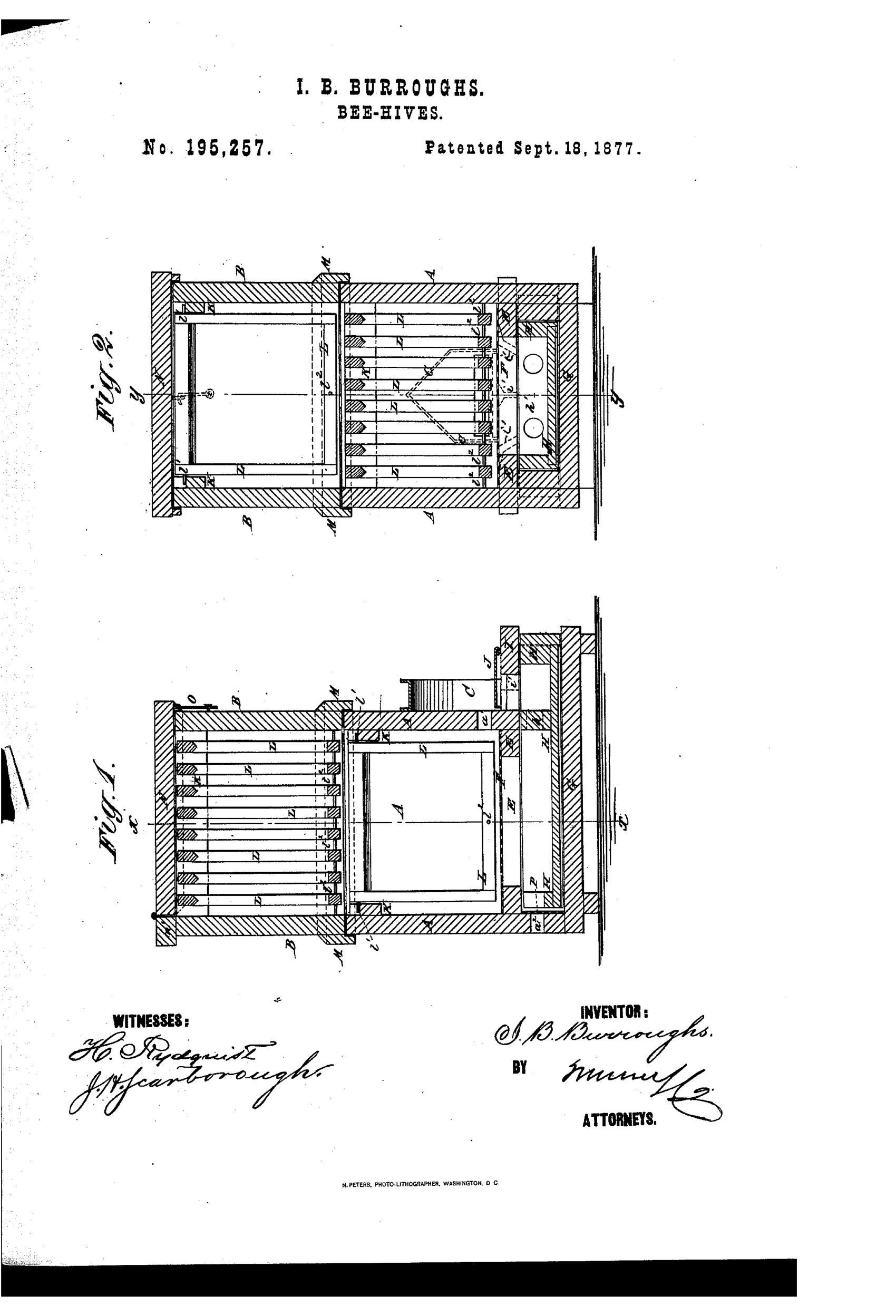
A moth-proof, moveable-frame bee-hive with drawer trap
⬡ How it works
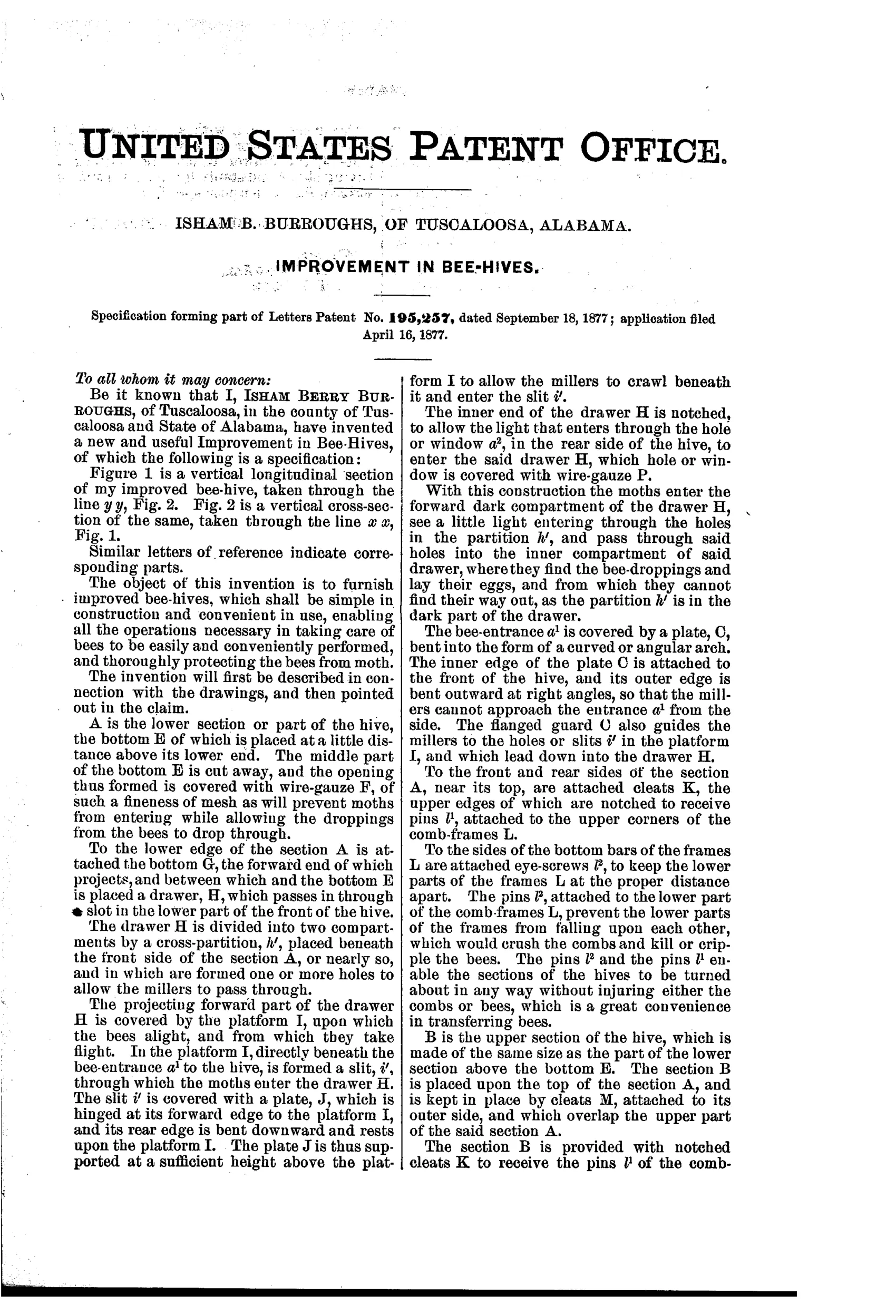
The hive is divided into a lower brood section A and upper section B, each fitted with movable comb-frames hung on notched cleats so they can be turned without crushing bees or comb. A drawer beneath the hive is divided by a partition with holes, and moths entering through a slit in the platform are guided into the drawer's dark inner compartment where they lay eggs and cannot escape. The bee-entrance is shielded by a curved, flanged arch plate that lets bees pass but keeps millers (moths) from approaching the entrance from the side. Bee droppings fall through a wire-gauze-covered opening in the hive bottom while the gauze mesh blocks moths from entering upward.
⬡ What was claimed
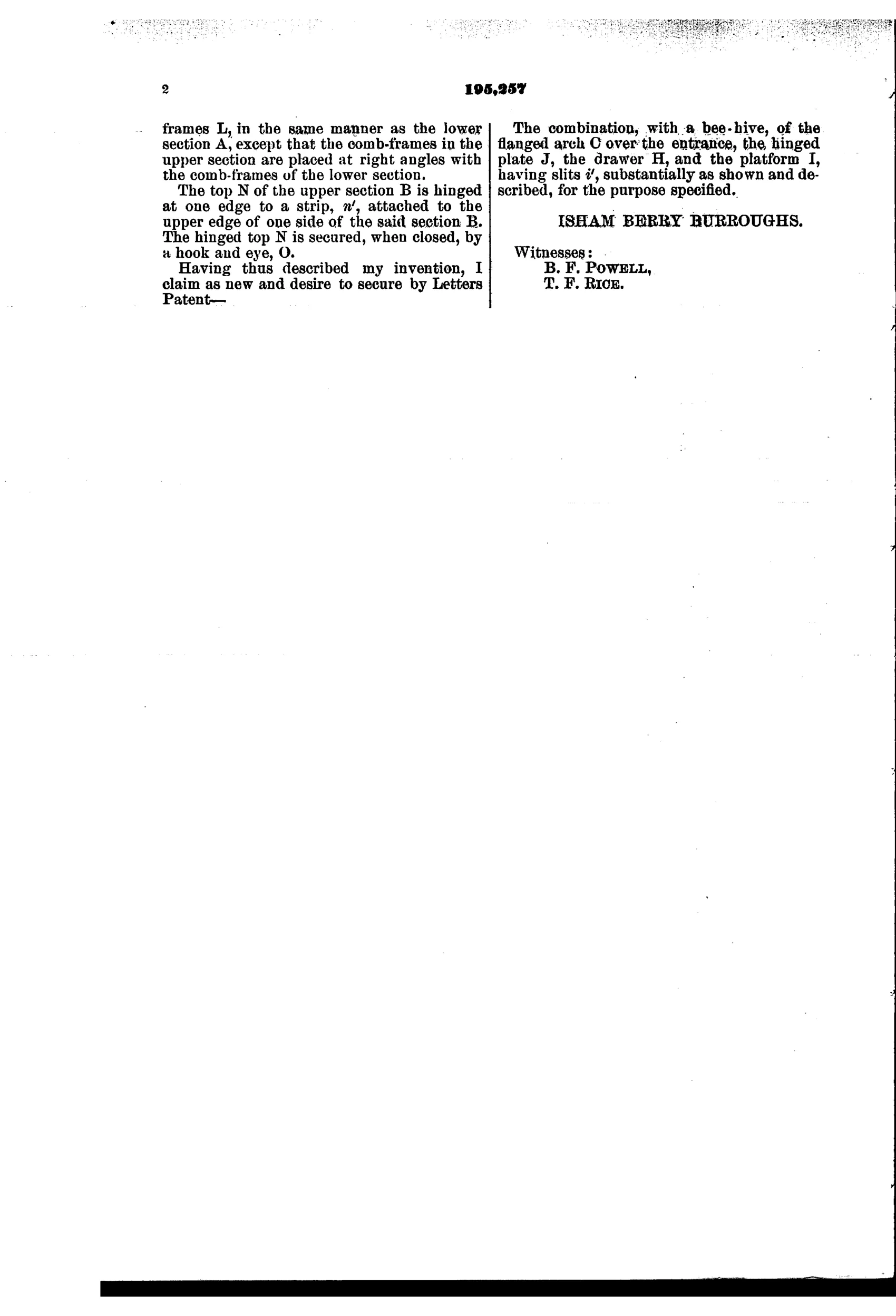
“The combination, with a bee-hive, of the flanged arch C over the entrance, the hinged plate J, the drawer H, and the platform I, having slits i', substantially as shown and described, for the purpose specified.”
In plain English: The patent claims the combined arrangement of the arched entrance guard, hinged trap plate, drawer, and slitted platform that work together to trap moths while letting bees enter freely.
⬡ In the inventor’s words
“With this construction the moths enter the forward dark compartment of the drawer H, see a little light entering through the holes in the partition h', and pass through said holes into the inner compartment of said drawer, where they find the bee-droppings and lay their eggs, and from which they cannot find their way out, as the partition h' is in the dark part of the drawer.”— Isham Berry Burroughs, from the specification
Fate unknown
No documented example or manufacturing record is known; a surviving marked hive or an Alabama agricultural-press advertisement would settle it.
⬡ Patented the same day
- IMPROVEMENT IN BEE-HIVES. — James F. Van Horn
⬡ Commentary
By 1877 the wax moth was the great bogeyman of American beekeeping, and half the patent hives of the era are really moth traps with bees attached. Burroughs's entry from Tuscaloosa is one of the more thought-through examples. His trap is genuinely clever as insect psychology: moths slip through a slit in the platform into a dark drawer compartment, spot pinpricks of light coming through holes in a partition, and fly toward them — into an inner chamber baited with bee droppings, where they lay their eggs and can't navigate back out. He's using the moth's own phototaxis as a one-way valve. Add the flanged arch plate over the entrance, which lets bees walk in but blocks a miller's sideways approach, and you have a layered defense.
The drawings reward a close look: both sections carry movable frames hung on notched cleats, so this is a post-Langstroth hive, not a sealed box. The wire-gauze floor opening that passes debris downward while barring moths from climbing up is a tidy sanitation detail.
The catch is the one every moth-trap inventor missed: a strong colony patrols its own comb, and a weak one is doomed regardless of drawers. The trap treats the symptom. Still, as symptom-treatments go, this is careful, buildable carpentry rather than a hinged palace — a workmanlike answer to the question the whole decade was asking.
Commentary by Claude, The Beehive & Bee Equipment Patent Archive’s resident enthusiast