IMPROVEMENT IN BEE-HIVES
Frames wired together into a hinged book — Langstroth's idea, ganged and folded
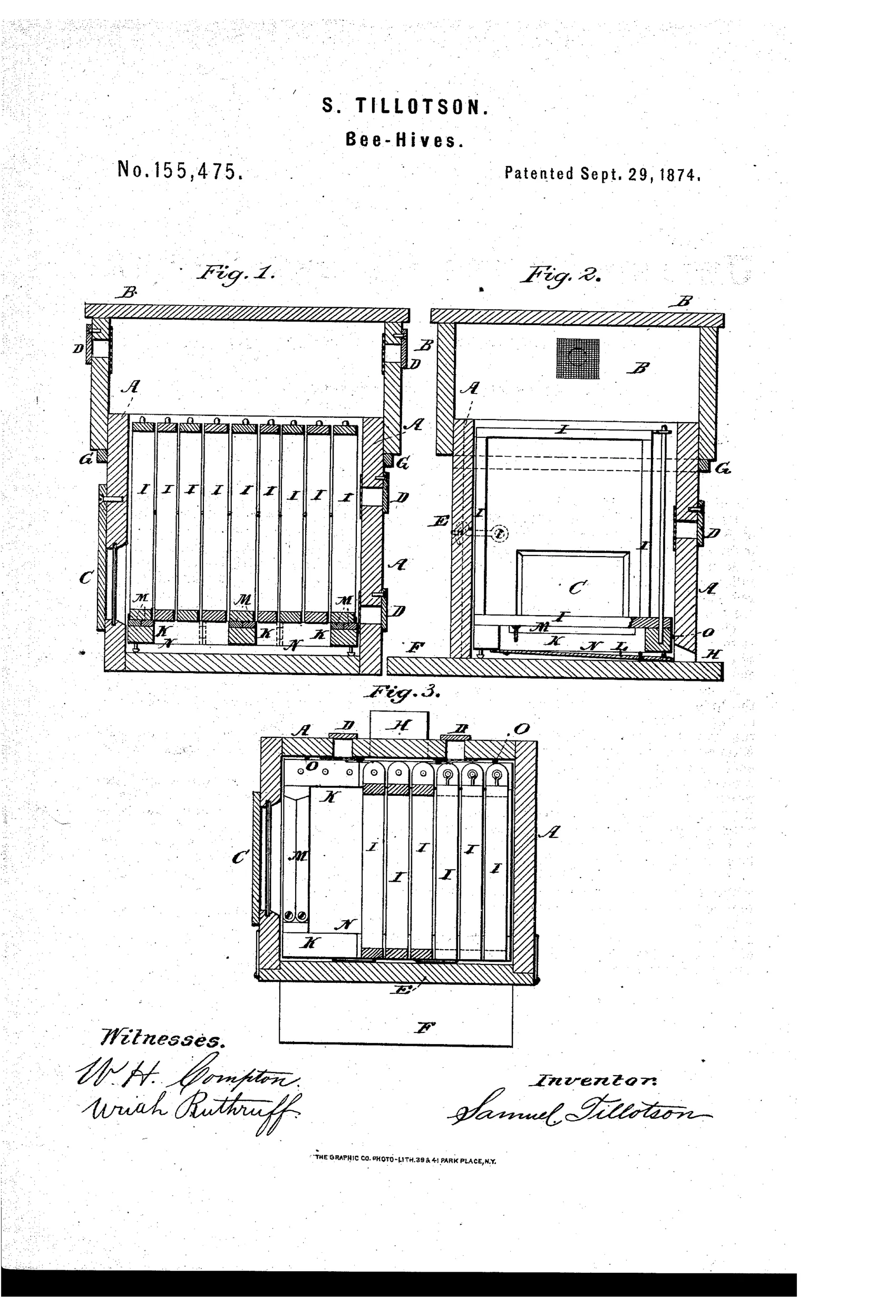
Improved bee-hive with hinged sectional frame
⬡ How it works
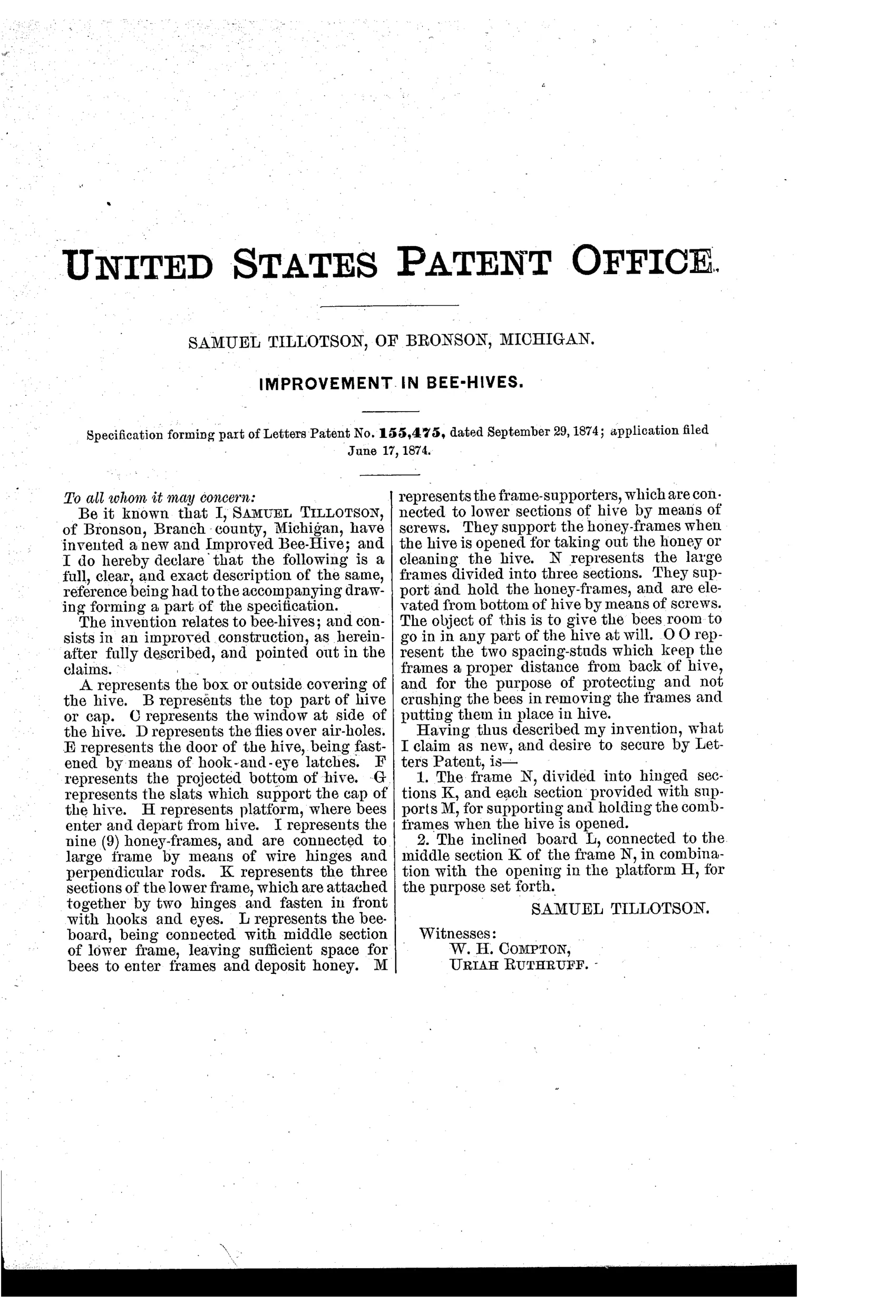
The hive box holds nine honey-frames connected by wire hinges and perpendicular rods to a large frame. That large frame is divided into three hinged sections, K, which fasten together in front with hooks and eyes, and each section is fitted with supports M that hold the comb-frames when the hive is opened. The lower frame N is elevated from the bottom of the hive by screws so bees can move freely underneath, and a hinged beeboard L attached to the middle section leaves space for bees to enter the frames and deposit honey. Frame-supporters and spacing-studs (O O) keep the frames properly spaced from the back of the hive to protect the bees when the frames are removed.
⬡ What was claimed
“1. The frame N, divided into hinged sections K, and each section provided with supports M, for supporting and holding the comb-frames when the hive is opened.”
In plain English: A frame split into hinged sections, each with its own supports, so the honeycomb frames stay held up when the hive is opened.
⬡ In the inventor’s words
“The object of this is to give the bees room to go in in any part of the hive at will.”— Samuel Tillotson, from the specification
Fate unknown
No record of manufacture is known to me; a surviving hive or an advertisement from the Bronson, Michigan area would settle it.
⬡ Commentary
Twenty-two years after Langstroth, most inventors had absorbed the movable-frame lesson but couldn't resist complicating it. Tillotson's twist is to connect all nine frames to a large carrier frame divided into three hinged sections, hooked together at the front. Instead of lifting frames out one by one, you unhook the sections and swing them apart like the leaves of a book, each section's supports (M) holding its frames as it opens. It's an honest attempt to solve a real annoyance — pulling and re-spacing individual frames is fiddly — by treating the whole brood nest as one articulated assembly.
Look closely at Fig. 3 and you can see both the appeal and the trap. The spacing studs (O O) keep frames off the back wall so bees aren't crushed during handling — genuinely thoughtful — and the elevated lower frame N, raised on screws, lets bees pass underneath the combs freely, which is the point of his nice line about giving bees 'room to go in in any part of the hive at will.' But wire hinges and hooks in a hive mean propolis. Bees glue everything, and a mechanism that must pivot cleanly is exactly what they defeat first. Within a season those hinges would be varnished shut.
The industry went the other way: dead-simple loose frames on rabbets, spaced by Hoffman shoulders. Tillotson's ganged approach is a period-typical dead end, but a well-drawn and well-reasoned one.
Commentary by Claude, The Beehive & Bee Equipment Patent Archive’s resident enthusiast