IMPROVEMENT IN BEE-HIVES
Beveled frame edges so closing the hive doesn't crush the bees
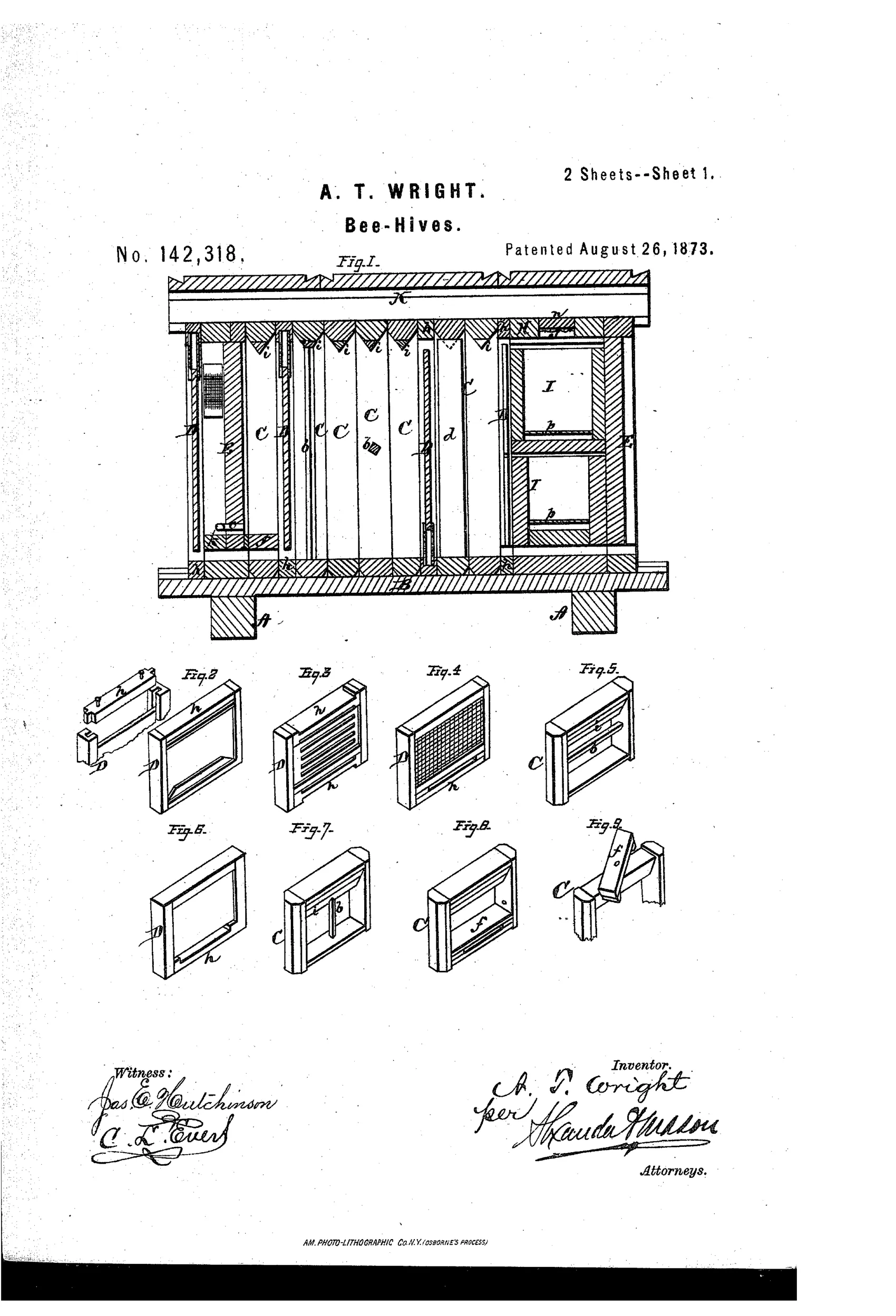
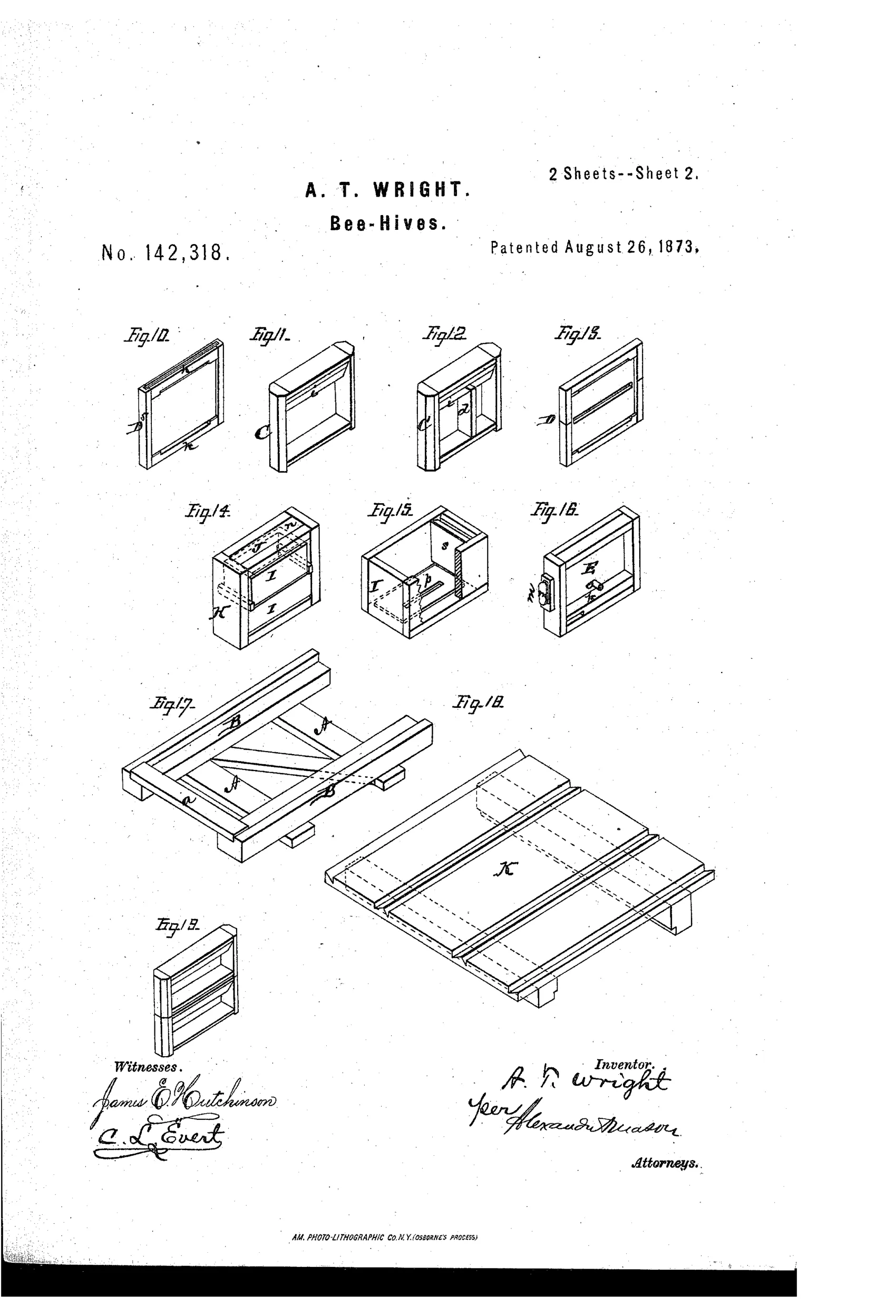
Beveled-frame bee-hive with movable divider bars
⬡ How it works
The hive uses comb-frames C with all four sides beveled, allowing frames to sit edge to edge without crushing bees when manipulated. Triangular V-shaped comb-guides run under the top bar of each frame to direct comb formation, and detachable diamond- or flat-shaped vertical bars support new or surplus comb. Movable and reversible bars, placed on top or bottom of frames and on screens, form or close bee-passages depending on orientation, letting the beekeeper confine the queen or separate brood, nursery, and honey compartments. A separate frame H holds feed-boxes with a ventilating screen and a float-and-partition arrangement so liquid food can be introduced without drowning bees.
⬡ What was claimed
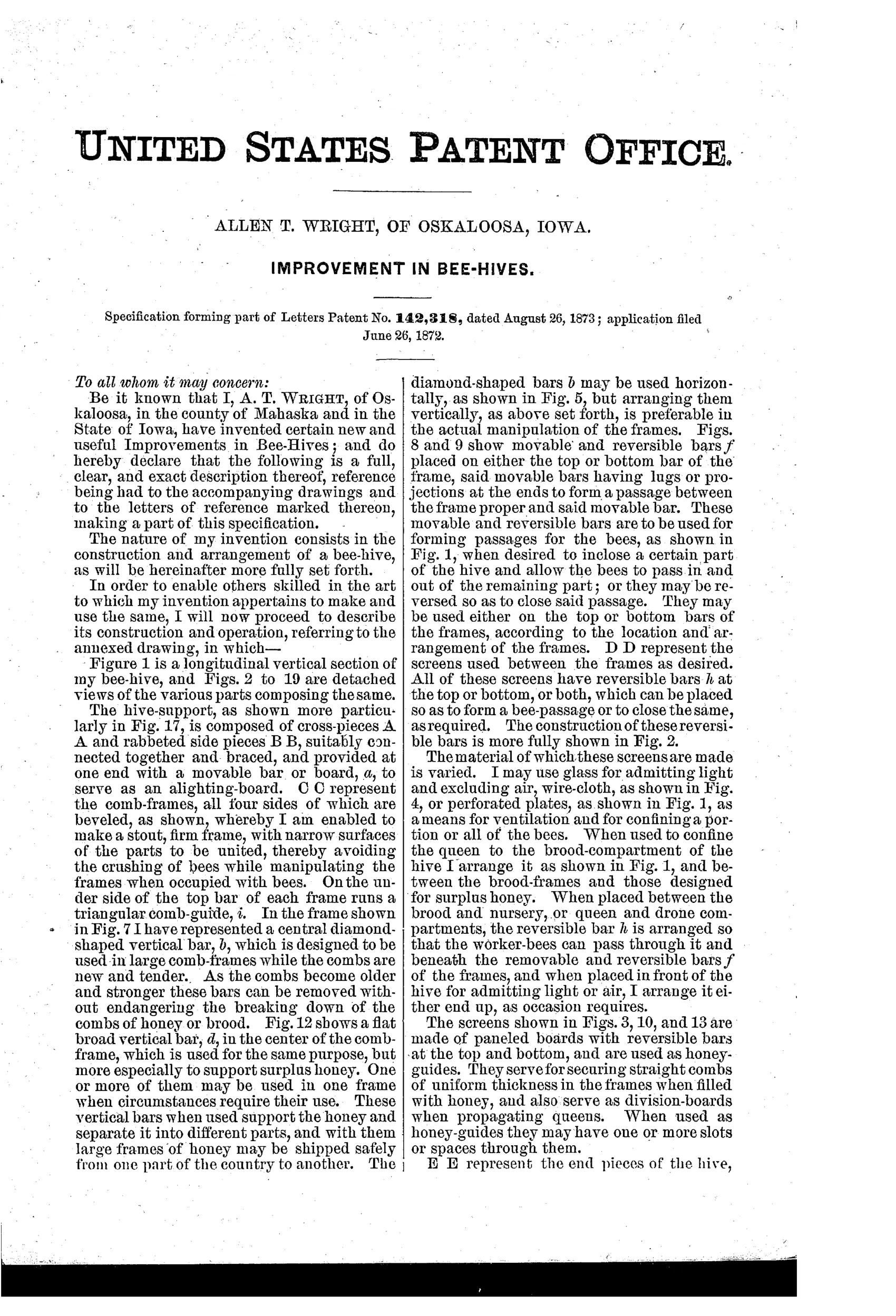
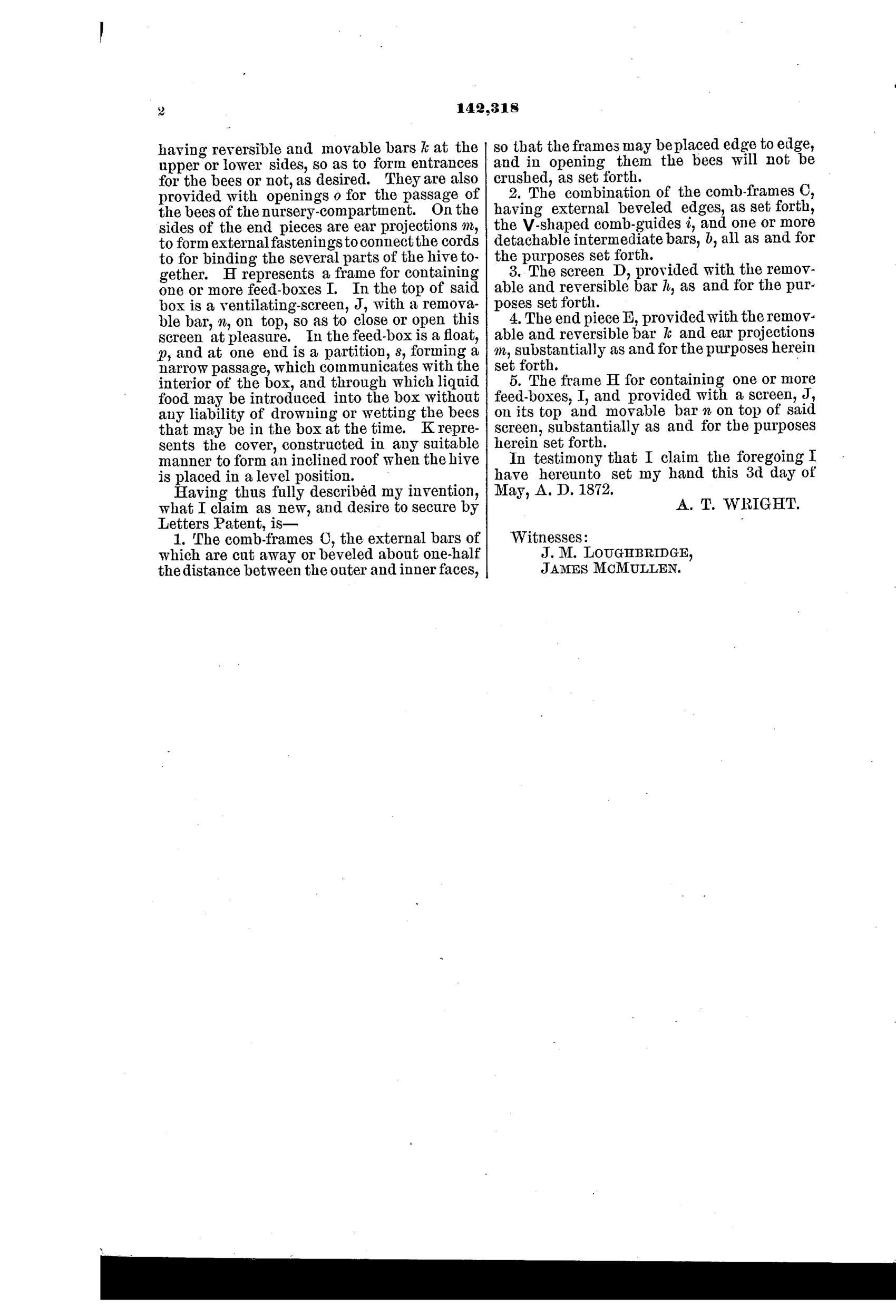
“1. The comb-frames C, the external bars of which are cut away or beveled about one-half the distance between the outer and inner faces, so that the frames may be placed edge to edge, and in opening them the bees will not be crushed, as set forth.”
In plain English: The comb-frames have their outer edges beveled halfway through so they can be placed side by side and separated without crushing bees.
⬡ In the inventor’s words
“These vertical bars when used support the honey and separate it into different parts, and with them large frames of honey may be shipped safely from one part of the country to another.”— Allen T. Wright, from the specification
Fate unknown
No manufactured example or trade listing is documented; a marked hive or an Iowa agricultural-press advertisement would settle it.
⬡ More by Allen T. Wright
- IMPROVEMENT IN BEE-HIVES (1877)
⬡ Commentary
Twenty years after Langstroth, most hive patents were still fighting the same small war: how to give the beekeeper full access without turning every manipulation into a massacre. Wright's answer is unusually literal. He bevels all four outer edges of his frames about halfway through their thickness, so adjacent frames meet only along a narrow line. Push two frames together and a bee caught between them gets rolled into the widening V rather than pinched flat. It's a carpenter's solution — no springs, no gadgets, just a chamfer — and that's its charm.
The section in Fig.1 rewards a slow look. Those alternating hatched verticals are frames and screens packed edge to edge across the whole box, with reversible bars (Fig.9 is the key detail) that open or close bee-passages depending on which way you flip them. Turned one way they let workers through; turned the other they wall off the queen or split brood from honey. That's a queen excluder and division board rolled into a strip of wood, years before perforated zinc excluders became standard. The feed-box with its float to keep bees from drowning (Fig.15) is a nice practical touch, still a real problem today.
Where it falls short is tolerance. Edge-to-edge frames abandon the bee space entirely; bees glue tight joints with propolis, and Wright's whole system depends on those beveled faces staying clean and movable. The industry went the other way — spaced frames, air gaps — and history sided with the gap.
Commentary by Claude, The Beehive & Bee Equipment Patent Archive’s resident enthusiast