IMPROVEMENT IN BEE-HIVES
A diamond-section hive with triangular frames, twenty years after Langstroth solved it
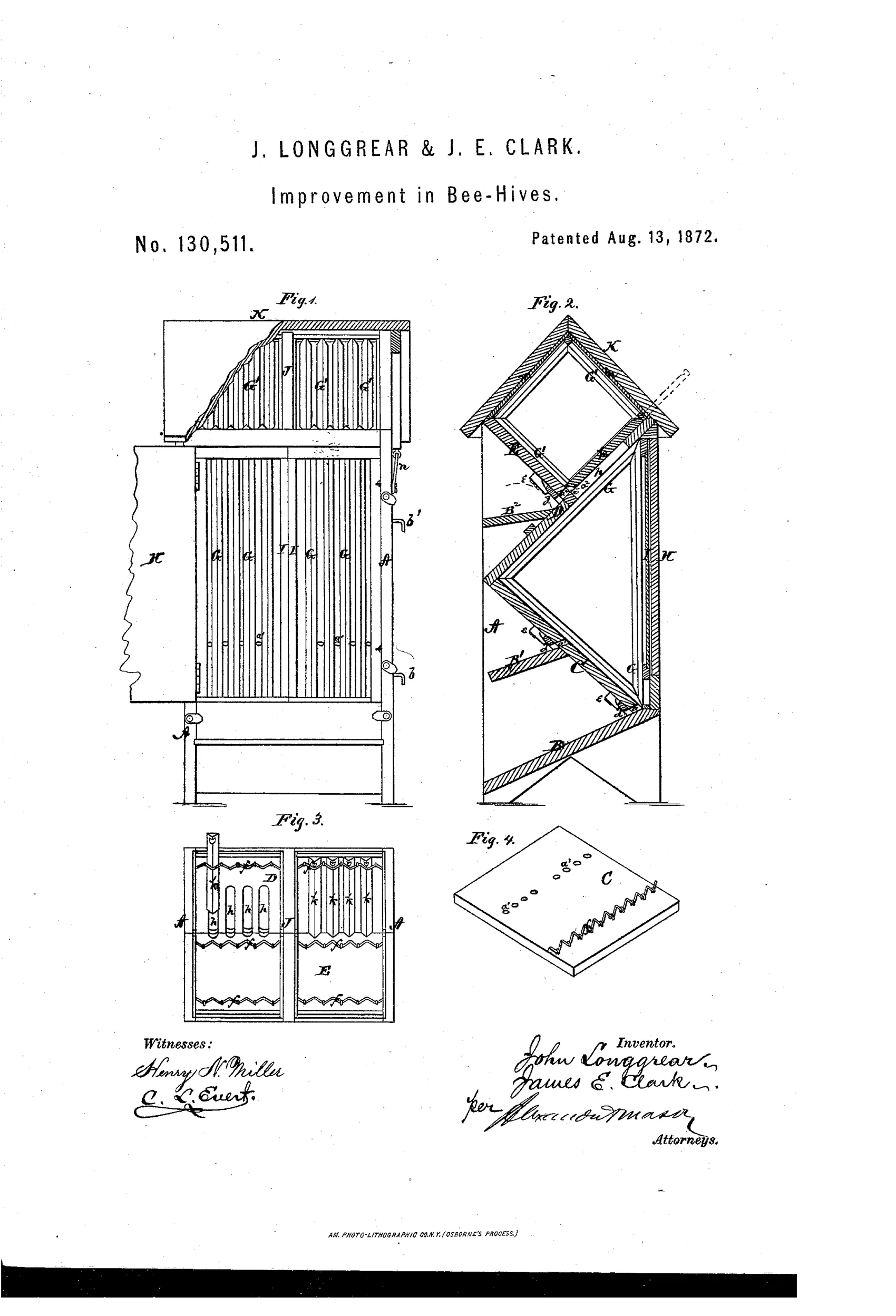
A diamond-shaped wooden bee-hive with multiple entrances
⬡ How it works
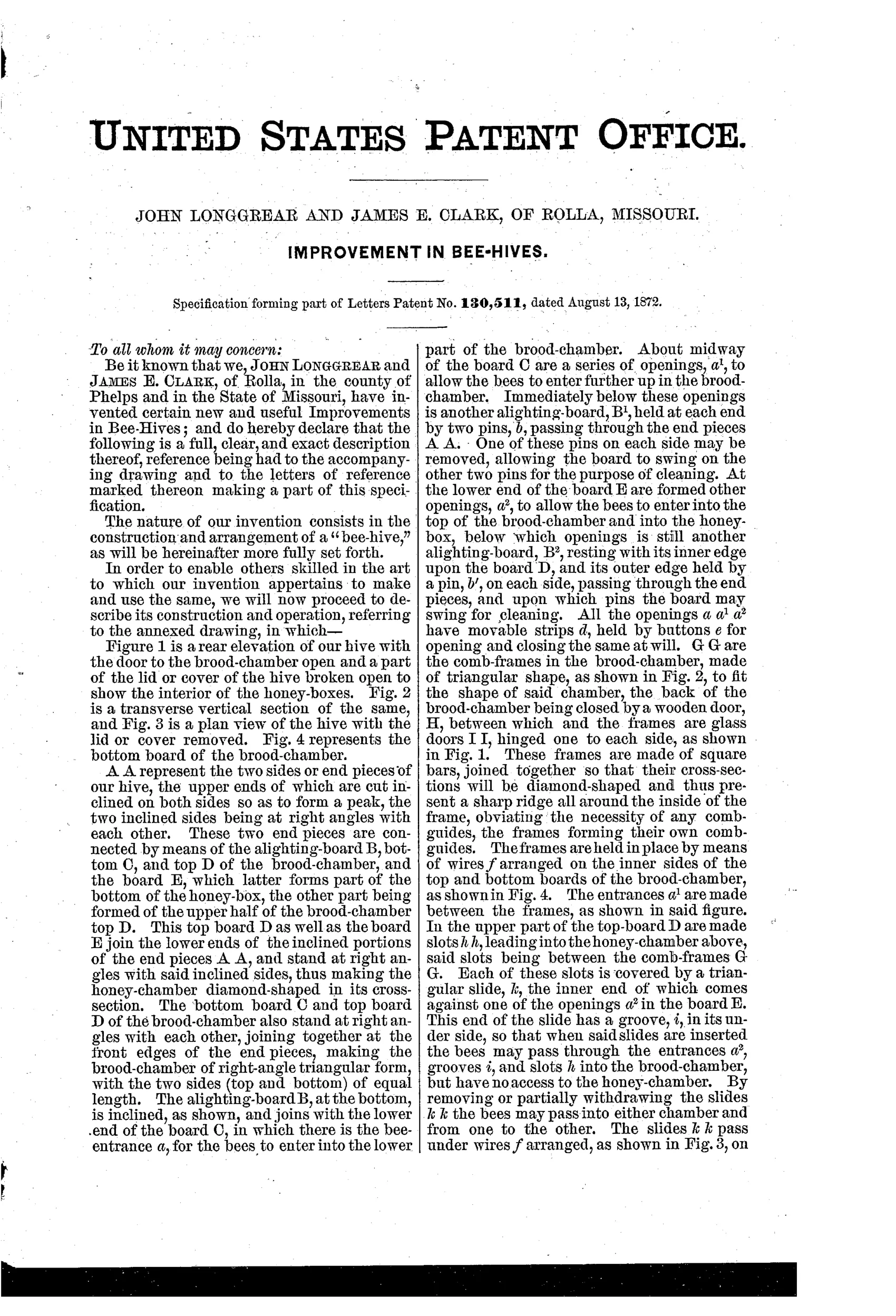
The hive is formed of two triangular end pieces joined by inclined boards to create a diamond cross-section, with the lower portion forming a triangular brood-chamber and the upper portion a diamond-shaped honey-chamber. Triangular comb-frames fit the brood-chamber and rectangular diamond-shaped frames fit the honey-boxes above, held in place by wires, with the frame bars themselves forming comb-guides via a diamond cross-section ridge. Three separate alighting-boards and entrance openings (bottom, middle, and top) let bees enter directly near where they are working, reducing travel distance, and sliding gates with grooves let the keeper control whether bees access the brood-chamber, honey-chamber, or both. The back of the hive has a solid wooden door and an inner hinged glass door for observing the brood-frames without disturbing the bees, and glass plates over the honey-boxes retain heat while allowing inspection.
⬡ What was claimed
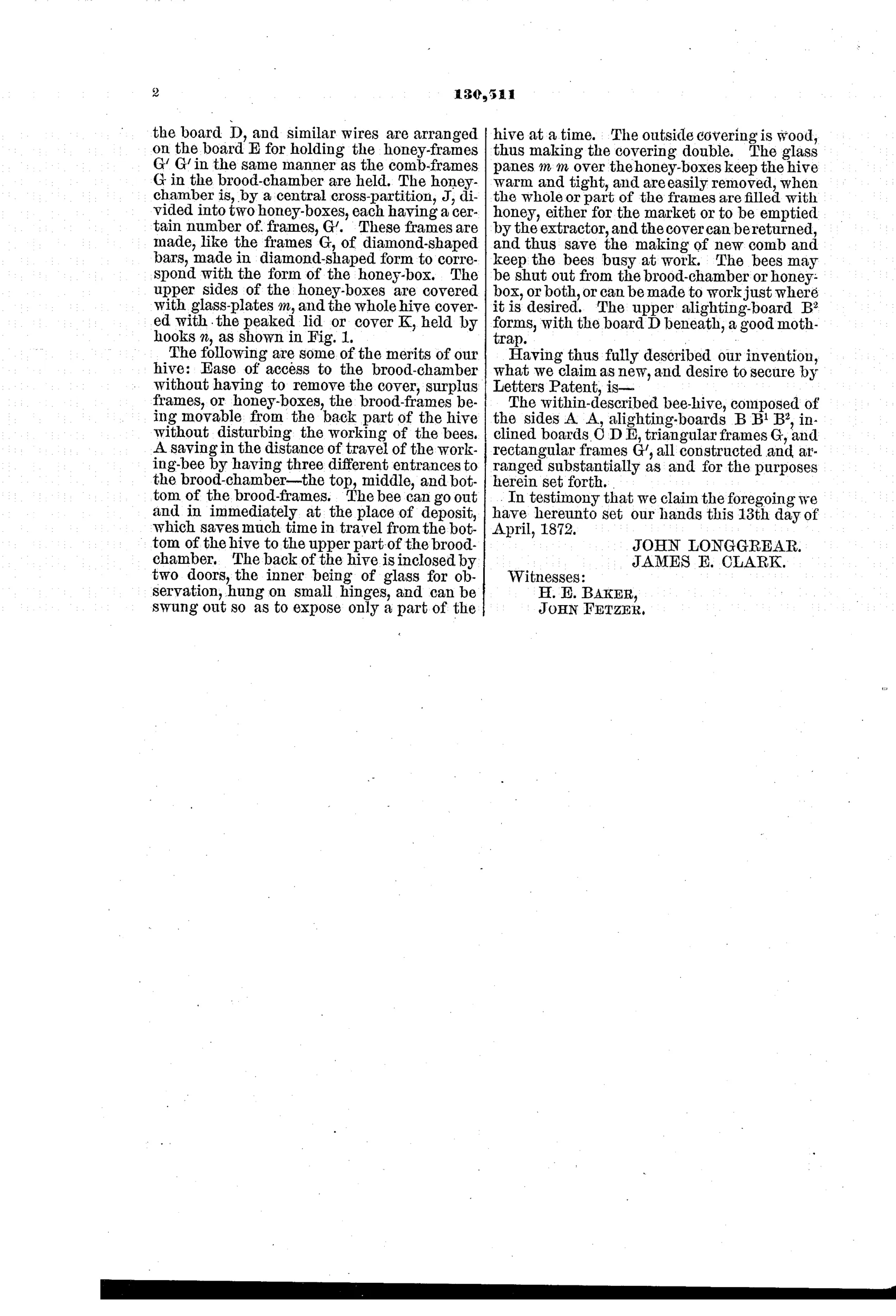
“The within-described bee-hive, composed of the sides A A, alighting-boards B B1 B2, inclined boards C D E, triangular frames G, and rectangular frames G', all constructed and arranged substantially as and for the purposes herein set forth.”
In plain English: The claim covers the overall hive design combining triangular end sides, three alighting-boards, inclined connecting boards, and both triangular and rectangular comb-frames working together as described.
⬡ In the inventor’s words
“The bee can go out and in immediately at the place of deposit, which saves much time in travel from the bottom of the hive to the upper part of the brood-chamber.”— John Longgrear and James E. Clark, from the specification
Fate unknown
No manufactured example or trade listing is documented; the odd geometry argues against production, but a surviving marked hive or local Missouri sale record would settle it.
⬡ Commentary
Longgrear and Clark of Rolla, Missouri, looked at the rectangular box that Langstroth had already standardized and decided the real answer was a diamond. Fig. 2 shows the whole scheme: two triangular end walls joined by inclined boards, with a triangular brood-chamber below and a diamond-shaped honey-chamber above. Every frame has to match this geometry — triangular frames for the brood nest, lozenge-shaped ones for the honey space — which means nothing in this hive is interchangeable with anything else on earth.
The cleverest touch is the three-tiered entrances. Their argument, quoted in the patent, is that a bee should "go out and in immediately at the place of deposit" instead of trudging up from the bottom board. It's the sort of idea that sounds efficient on paper and mostly gives robber bees and wax moths extra doors to defend. The sliding gates that shunt bees toward brood or honey chambers anticipate the queen-excluder impulse, though without the crucial size-selective slot.
The glass inner door at the rear is the tell that this belongs to the 1860s–80s wave of parlor hives: designed as much for the keeper's viewing pleasure as for the bees. They did adopt movable frames with ridge comb-guides, so they were reading the right literature — they just bolted the good ideas onto a shape that no supplier would ever tool up for. A genuinely earnest dead end.
Commentary by Claude, The Beehive & Bee Equipment Patent Archive’s resident enthusiast