IMPROVEMENT IN BEE-HIVES
A false wall on studs — and a lit viewing box for trapped moths
A wooden bee-hive with detachable comb-frame walls
⬡ How it works
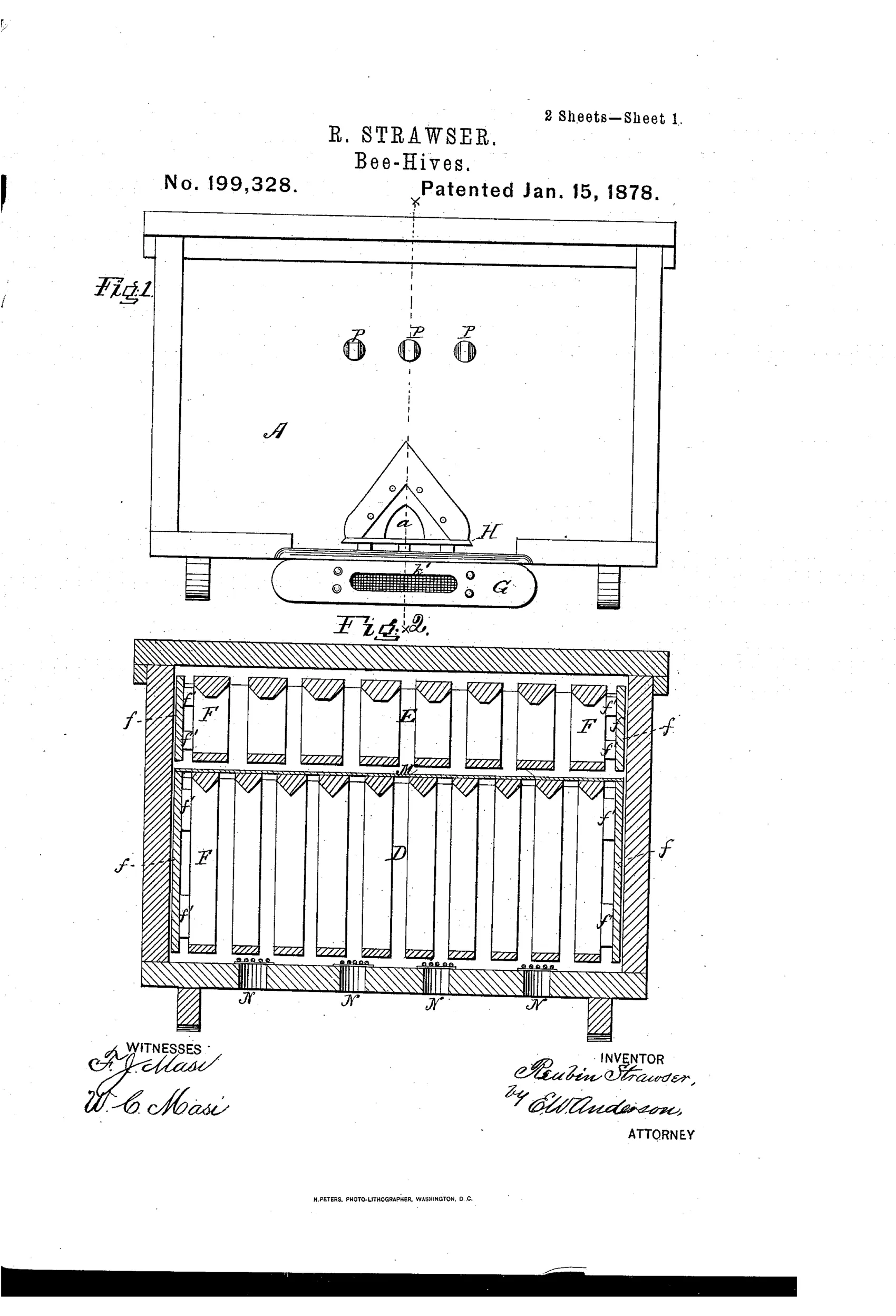
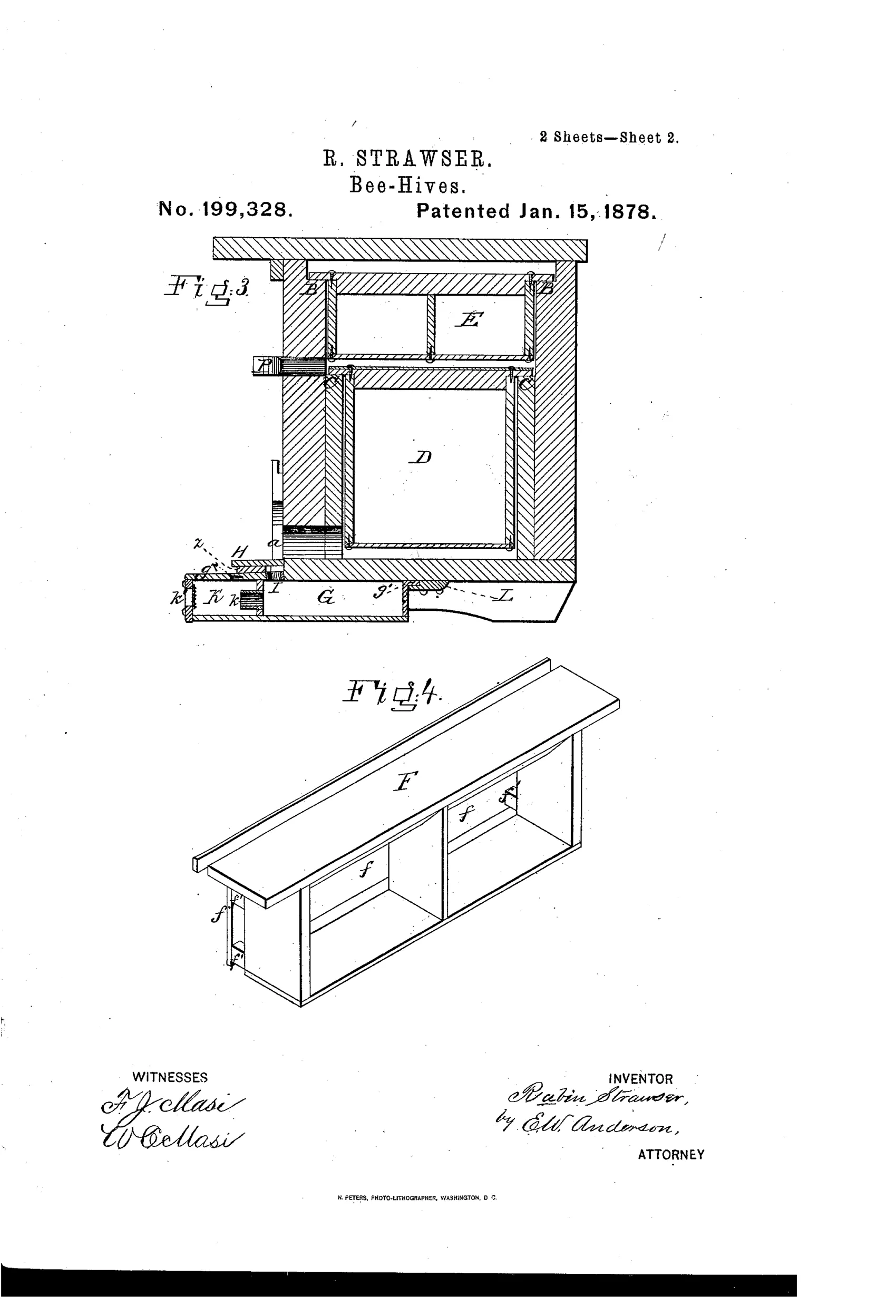
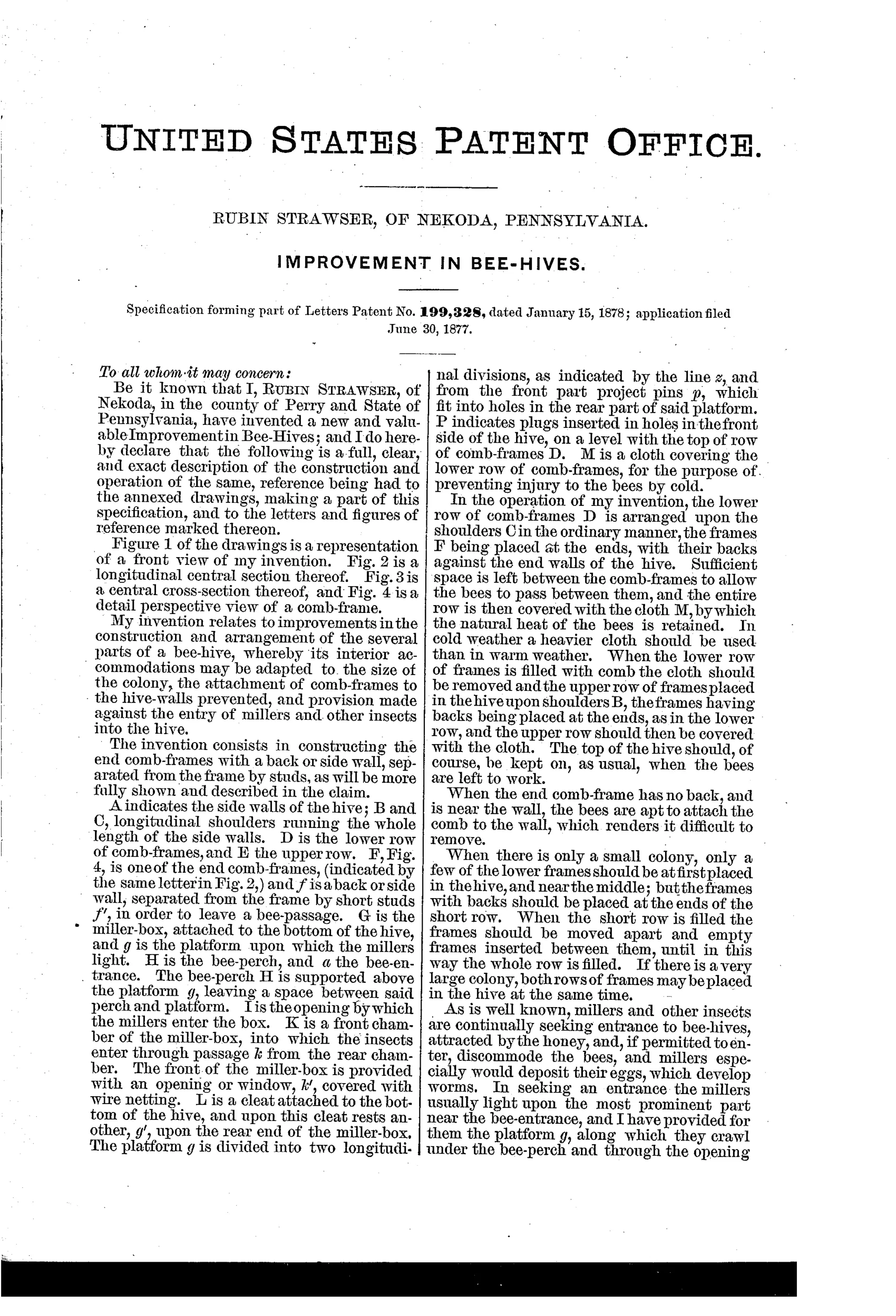
The hive has side walls with longitudinal shoulders B and C that support two rows of comb-frames, an upper row E and a lower row D. The end comb-frames F are built with a back or side wall f, separated from the frame by short studs f' to leave a bee-passage, preventing bees from attaching comb directly to the hive wall. A bee-perch H sits above a platform g, leading insects such as millers through an entrance into a miller-box G with front and rear chambers; a window k' with wire netting lets light attract the trapped insects into a viewable front chamber K. A cloth M covers the lower row of frames to retain heat, and plugs P block access to the upper row until the lower row is filled.
⬡ What was claimed
“In a bee-hive, the comb-frame F, having a back or side wall, f, separated from said frame by the studs f', substantially as and for the purpose specified.”
In plain English: The invention claims an end comb-frame with a separate back wall held apart by small studs, creating a bee-passage and preventing bees from gluing comb to the hive wall.
⬡ In the inventor’s words
“As is well known, millers and other insects are continually seeking entrance to bee-hives, attracted by the honey, and, if permitted to enter, discommode the bees, and millers especially would deposit their eggs, which develop worms.”— Rubin Strawser, from the specification
Paper patent — likely never produced
The studded double-wall frames and multi-chamber miller trap add cost with no documented manufacture or trade presence; no surviving example is known.
⬡ Commentary
Strawser's actual claim is narrower and smarter than the drawing's busy trap hardware suggests. His end comb-frames carry their own back wall, held off the frame by short studs to leave a bee-passage. The point: bees will glue comb to any flat surface within reach, so he gives them a sacrificial wall that travels with the frame. Pull the frame, and the propolis and burr comb come out with it instead of tearing loose from the hive body. It's a 1877 answer to the same problem Langstroth solved more elegantly with the bee space — leave the right gap and bees leave it alone. Strawser adds wood where Langstroth subtracted it.
The miller-box is the era's obsession on full display. The bee-perch H funnels wax moths down into a two-chamber trap below the entrance, and the wire-netted window k' uses light to lure captives into a front chamber where the beekeeper can inspect the catch. Fig. 2 rewards a close look: the plugs P blocking the upper frame row until the lower brood chamber fills is a crude but real supering discipline, and the cloth quilt M over the lower frames for warmth is standard good practice.
As a whole it's a workmanlike Pennsylvania entry in the crowded post-Langstroth decade — sound frames underneath, moth-trap theater on top. The trap would catch some moths and stop none of the worms already inside.
Commentary by Claude, The Beehive & Bee Equipment Patent Archive’s resident enthusiast