IMPROVEMENT IN DEVICES FOR REMOVING BEES FROM HONEY-BOXES
A dark box and a light-baited funnel, thirteen years before the Porter escape
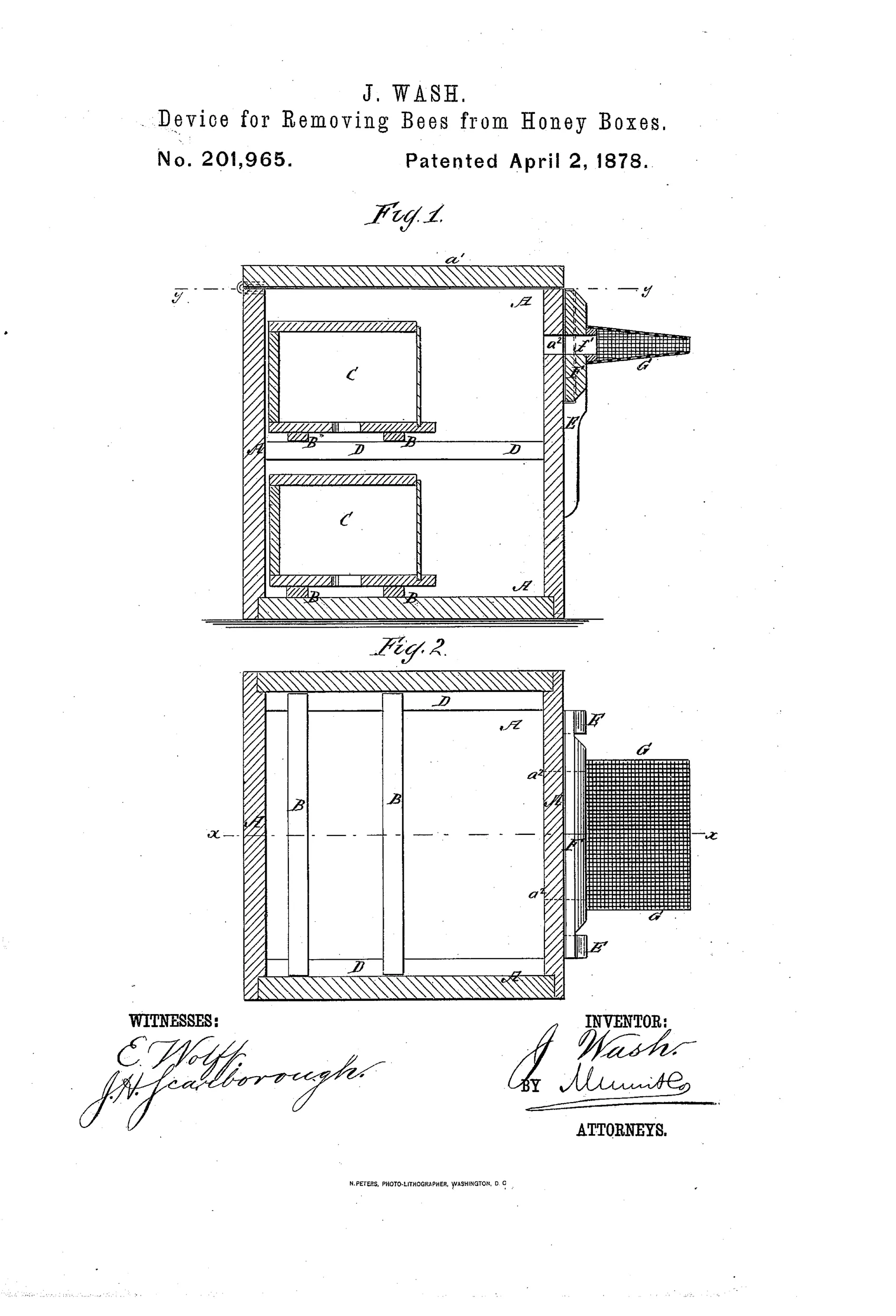
Box with escape funnel to clear bees
⬡ How it works
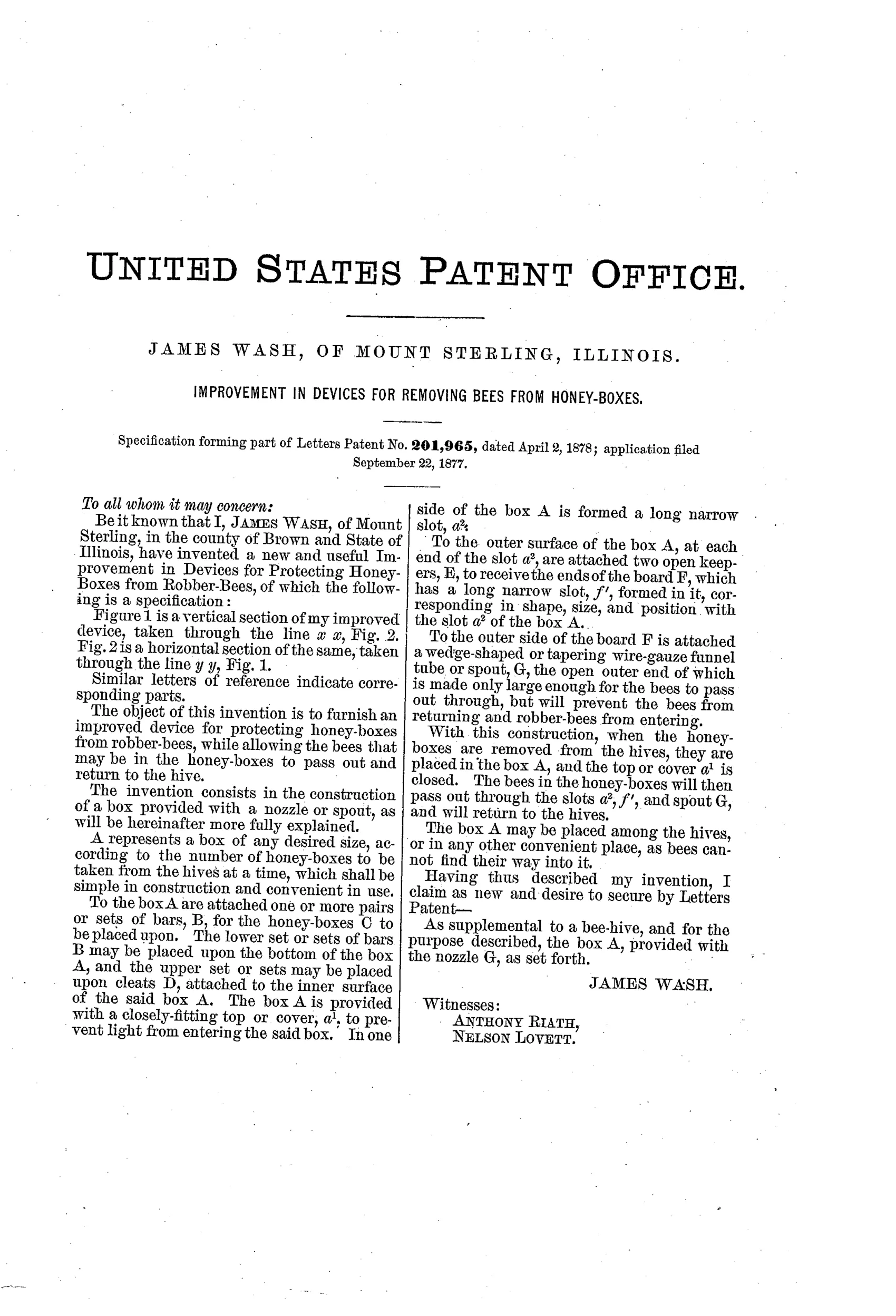
A closed box A holds honey-boxes C on sets of bars B, with a tight-fitting cover a1 to exclude light. A narrow slot a2 in one side leads to keepers E holding a board F with a matching slot f', to which is attached a wedge-shaped wire-gauze funnel G. When honey-boxes full of bees are placed inside and the lid closed, the bees crawl toward the light through the slots and funnel, exiting through the narrow outer end of G, which is too small and gauze-lined to let robber-bees back in.
⬡ What was claimed
“As supplemental to a bee-hive, and for the purpose described, the box A, provided with the nozzle G, as set forth.”
In plain English: The claim covers a box fitted with a special escape nozzle, used alongside a beehive to let bees out of honey-boxes while keeping robber-bees out.
⬡ In the inventor’s words
“The object of this invention is to furnish an improved device for protecting honey-boxes from robber-bees, while allowing the bees that may be in the honey-boxes to pass out and return to the hive.”— James Wash, from the specification
Paper patent — likely never produced
No trade-catalog listing or surviving example is known, and the dedicated-chest format lost decisively to escape boards; a marked specimen would overturn this.
⬡ Commentary
The problem here is real and every comb-honey producer of the era faced it: you pull a section box off the hive and it comes with a hundred bees who have no intention of leaving. Brush them off and you crush bees and start a robbing frenzy. James Wash's answer is to weaponize phototaxis. Drop the full honey-boxes into a light-tight chest, close the lid, and the only glimmer comes through a narrow slot leading to a wedge-shaped wire-gauze funnel. The bees crawl toward the light and out the funnel's narrow tip — which, fish-trap fashion, is too small and awkward for robbers to enter against.
Look at Fig. 1 and you can see the honey-boxes C sit on bars B rather than the floor, keeping their bottom openings clear so bees can actually exit downward and find the slot. That's a small detail that suggests Wash had actually done this, not just drawn it.
Where it sits in the story matters: the Porter bee escape, the spring-loaded one-way valve that became the standard, arrived in 1891. Wash is working the same problem thirteen years earlier with light and geometry instead of springs. The scheme should work, if slowly — bees do reliably drift toward light — but it demands a separate dedicated chest per clearing session, which is why the industry eventually settled on a cheap escape board you slip under the super instead.
Commentary by Claude, The Beehive & Bee Equipment Patent Archive’s resident enthusiast