BEEHIVE
A Sacramento inventor engineers the awkward moment of lifting a frame, 1861
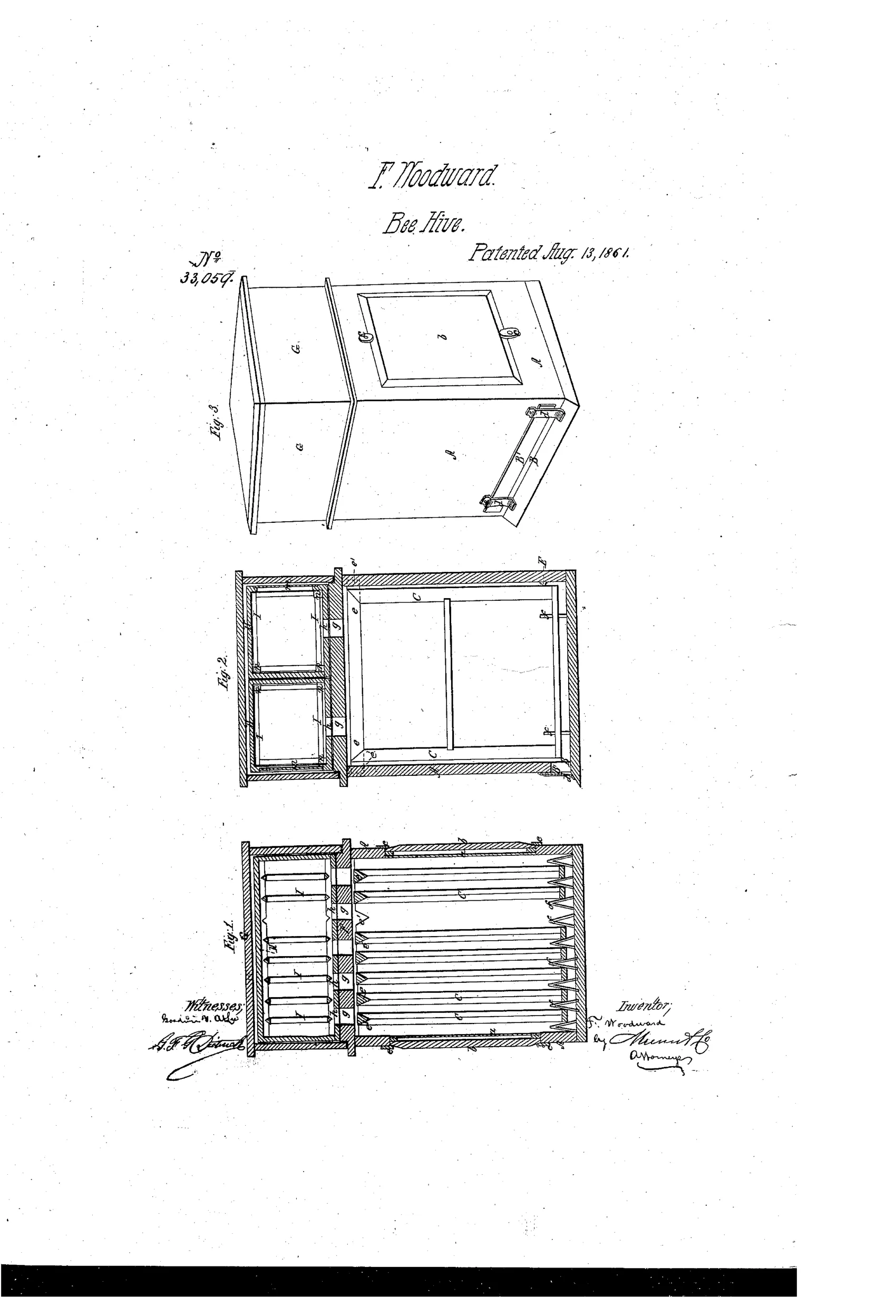
A movable-frame beehive with inspection windows
⬡ How it works
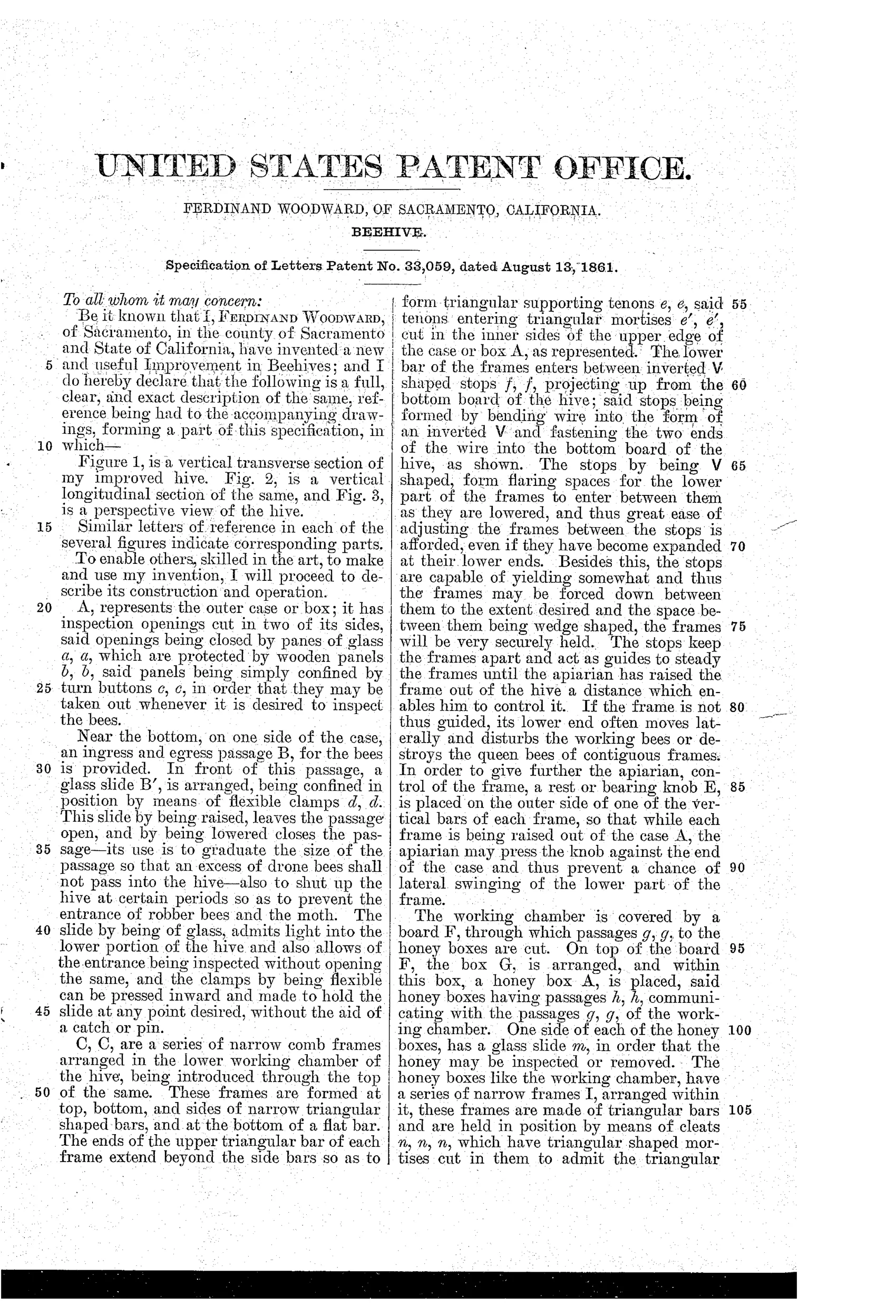
The hive body contains narrow triangular-barred comb frames that hang between V-shaped wire stops and slide into triangular mortises, allowing them to be raised and controlled without disturbing adjacent combs. A rest or bearing knob on each frame lets the beekeeper press against the case to prevent lateral swinging while lifting a frame out. Glass-paned inspection openings covered by removable wooden panels let the beekeeper view the bees without opening the hive, and a glass slide with flexible spring clamps regulates the size of the entrance passage. Above the brood chamber sits a covered working chamber leading to removable honey boxes fitted with their own narrow triangular frames held by notched cleats, so honey can be inspected, exhibited, or sold in sections.
⬡ What was claimed
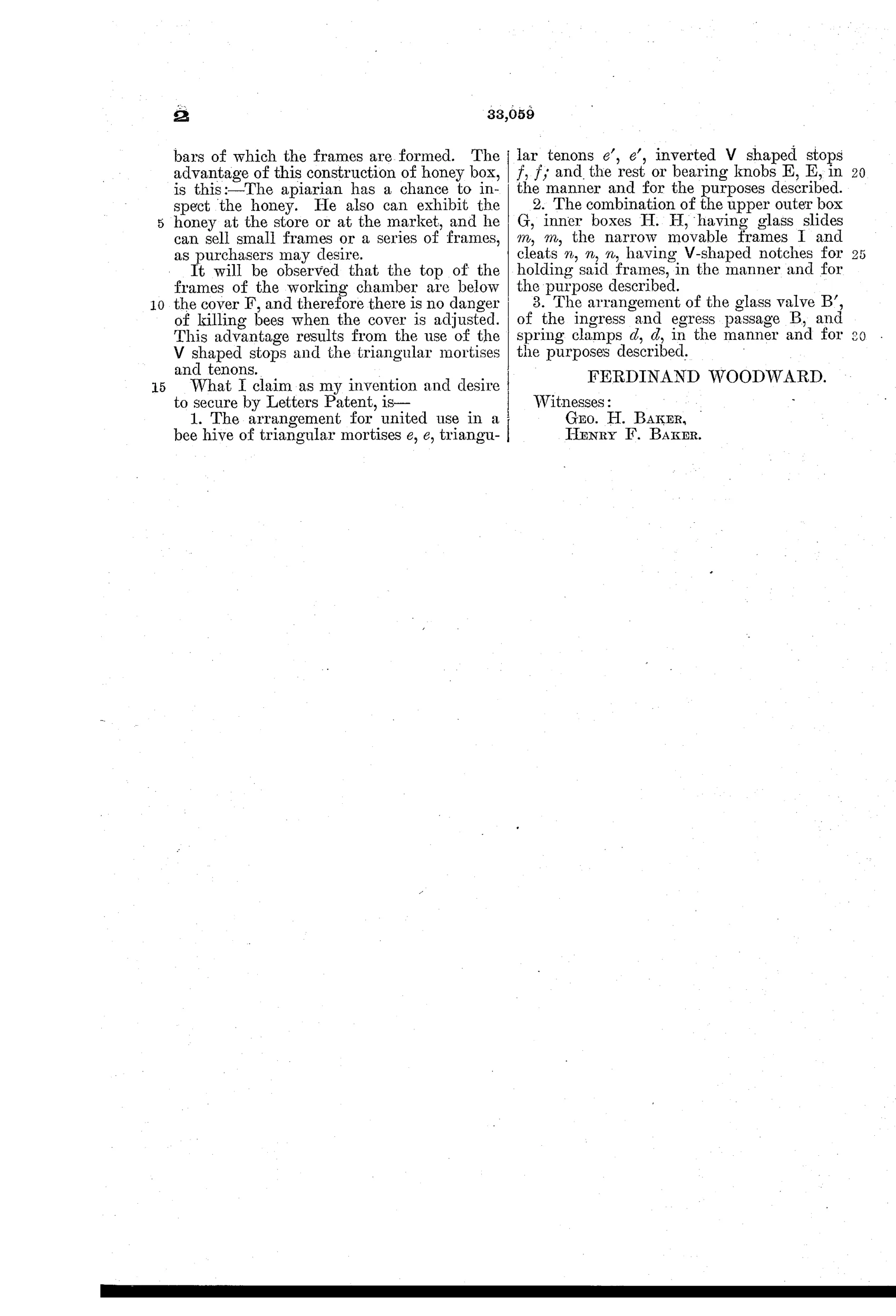
“1. The arrangement for united use in a bee hive of triangular mortises e, e, triangular tenons e', e', inverted V shaped stops f, f; and the rest or bearing knobs E, E, in the manner and for the purposes described.”
In plain English: A claim covering the combined use in a beehive of triangular mortises and tenons, inverted V-shaped wire stops, and bearing knobs that together guide and steady the movable comb frames as they are lifted from the hive.
⬡ In the inventor’s words
“The stops keep the frames apart and act as guides to steady the frames until the apiarian has raised the frame out of the hive a distance which enables him to control it.”— Ferdinand Woodward, from the specification
Paper patent — likely never produced
The precision triangular joinery and wire-stop system would have been costly to produce and prone to propolis fouling; no manufactured example or trade record is known to me.
⬡ Commentary
Nine years after Langstroth's movable frame, Woodward is working on a problem every hobbyist still knows: the wobbly, bee-crushing moment when a frame comes out of the hive. His answer is a little machine-shop-minded — triangular tenons on the frame ends dropping into triangular mortises, inverted V-shaped wire stops between frames, and a bearing knob you press against the case so the frame can't swing sideways as it rises. The claim covers all of it as a united system, and Fig. 1 shows why: those rows of narrow frames sit in a jig, not just a box.
The V-wire stops are the interesting part. They double as spacers and as guides that steady the frame 'until the apiarian has raised the frame out of the hive a distance which enables him to control it' — an early stab at what the industry later solved more cheaply with self-spacing Hoffman frame shoulders. Woodward's version is more precise and more expensive: every triangular joint has to be cut true, and propolis would gum the sliding fit fast.
Add the glazed inspection panels behind removable wooden covers, a spring-clamped glass entrance slide, and sectioned honey boxes above, and you get a thoughtful, over-machined hive from the far edge of the continent — Sacramento in 1861, when most patent hives were coming out of the Northeast. A refinement, not a dead end, chasing the right problem with too much joinery.
Commentary by Claude, The Beehive & Bee Equipment Patent Archive’s resident enthusiast