IMPROVEMENT IN BEE-HIVES
A Kansas answer to sticky frames: hang them on rods instead
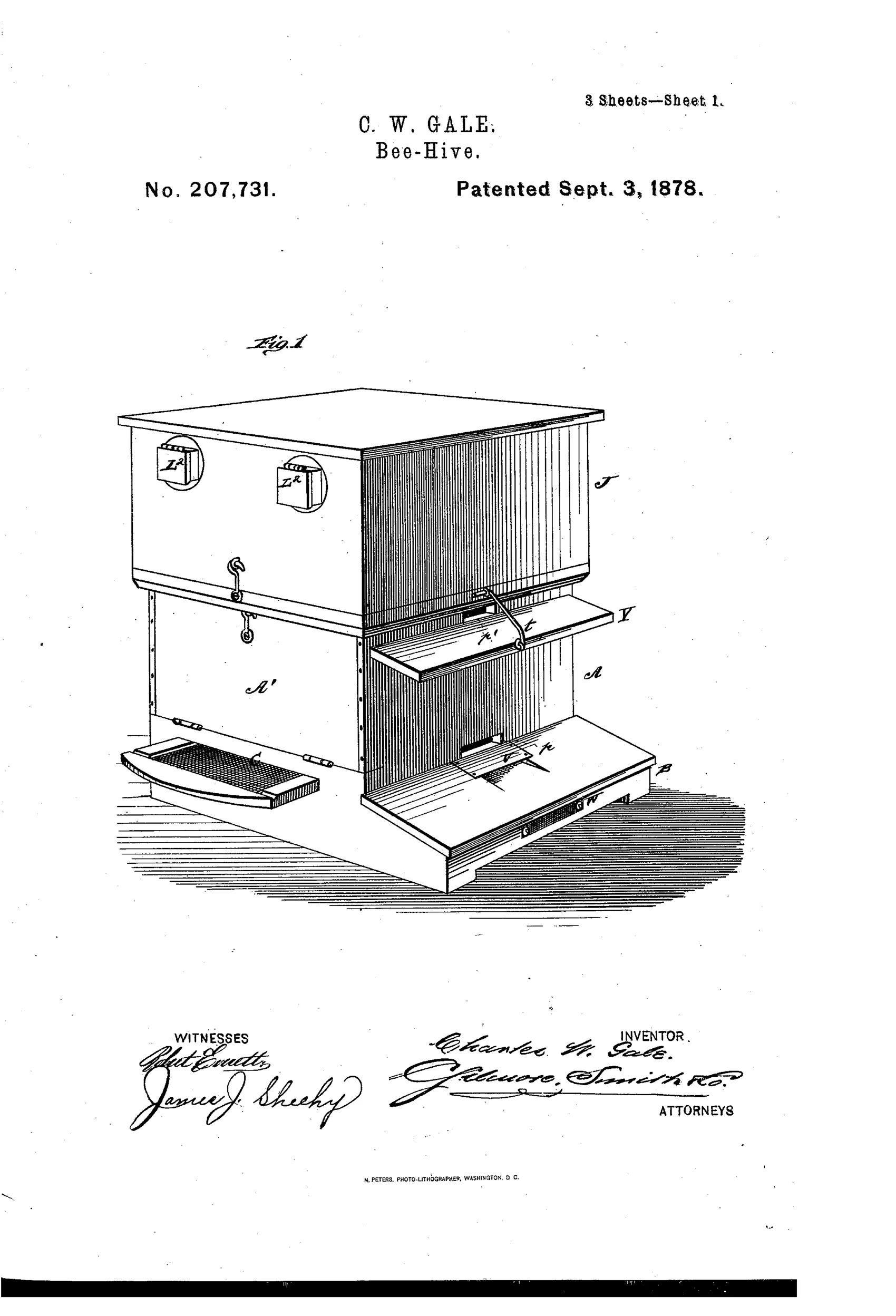
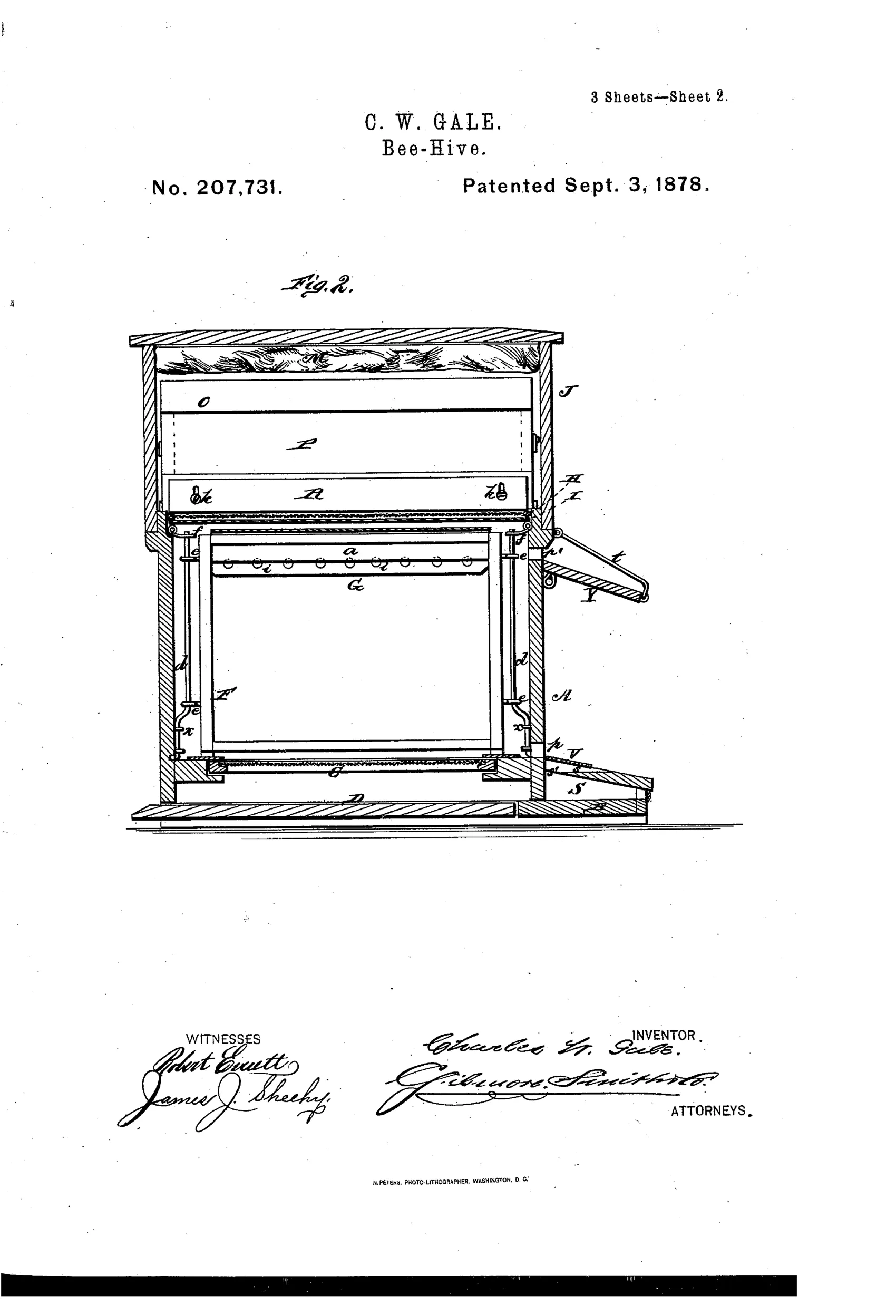
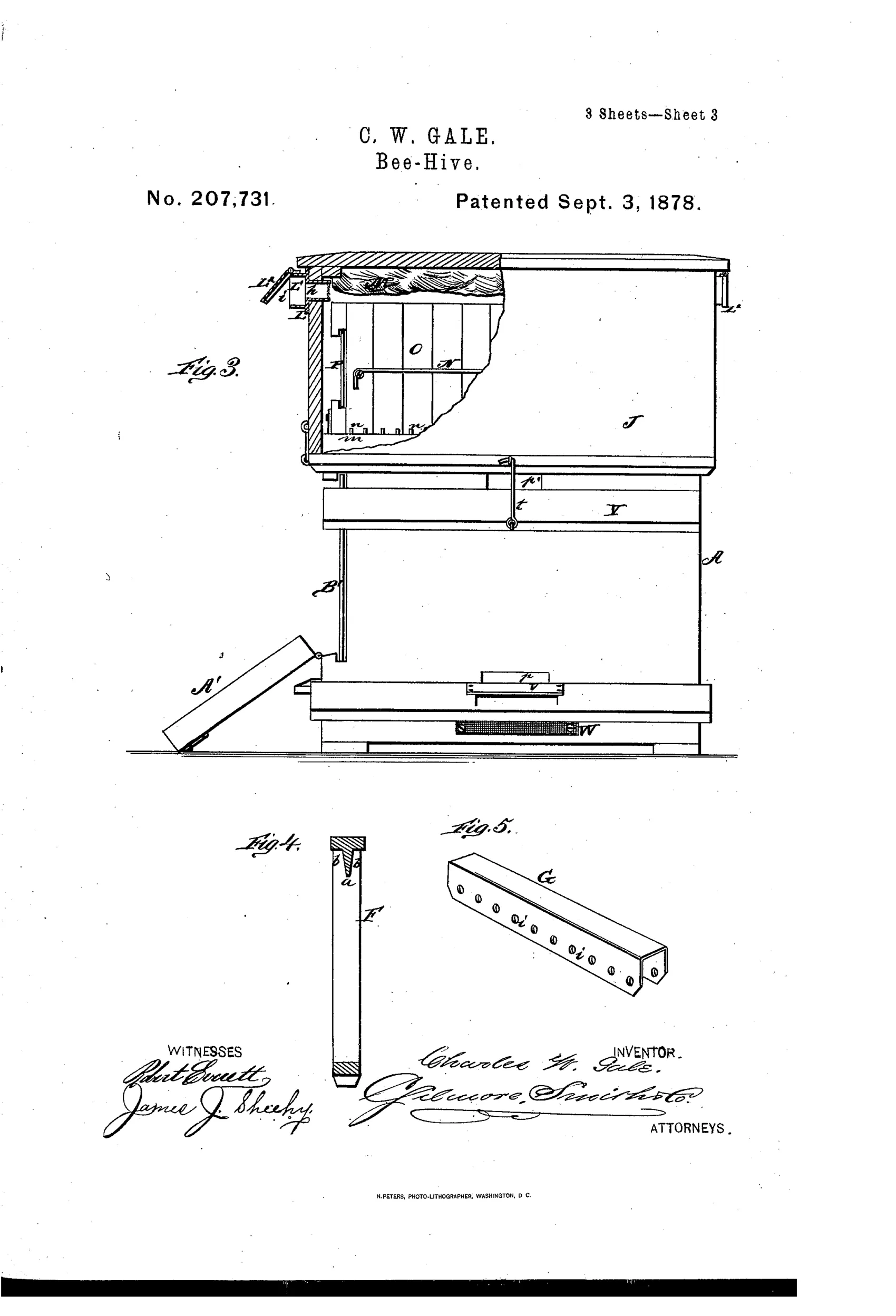
A movable-frame bee-hive with ventilation and miller-trap
⬡ How it works
The hive body holds removable comb-frames F hung on vertical rods d, secured at top by hinged plates f, so frames can slide sideways and be lifted out without becoming fastened to the hive. Each frame carries a removable comb-line cap G that forces bees to build straight comb and avoid drone-comb, with apertures i letting bees pass through. The hive bottom uses a sliding screen C over a sliding drawer D so the keeper can feed, air, or clean the colony without exposing it to robber bees or vermin. A honey-box of stacked rectangular frames O sits atop the brood chamber under a cap J with ventilating tubes and a wool mat M, while a front miller-trap chamber S lures wax-moth millers through a narrow slot too small for bees.
⬡ What was claimed
“1. The combination of the comb-frames F, having eye-screws e in their side pieces, the vertical rods d, staples x, and the hinged plates f, substantially as and for the purposes herein set forth.”
In plain English: The claim covers the specific combination of frames with side eye-screws hung on vertical rods held by staples and locked in place with hinged plates, allowing easy removal without the frames sticking to the hive.
⬡ In the inventor’s words
“By these means the bee-keeper is enabled to clean, air, and feed his colony with safety, and without endangering it to robber-bees, millers, mice, or any other vermin that would otherwise infest or destroy it.”— Charles W. Gale, from the specification
Paper patent — likely never produced
The rod-and-eye-screw frame suspension adds cost and propolis problems the standard Langstroth frame avoided, and no manufactured example or trade listing of Gale's hive is known to me.
⬡ Commentary
Twenty-six years after Langstroth, most inventors had accepted that the bee space — that 3/8-inch gap — was the cure for frames gluing themselves to the hive. Gale takes a more mechanical route: his frames carry eye-screws threaded onto vertical rods, locked at the top by hinged plates, so a frame can slide sideways and lift out like a file on a rail. It's a hardware solution to a problem Langstroth had already solved with geometry, and that's what makes it interesting. Bees propolize everything they touch; rods and eye-screws in a working hive would gum up fast, and the extra ironmongery adds cost to every frame.
The drawing rewards a close look. That louvered front panel is a sliding screen over a drawer, letting the keeper feed and clean without opening the entrance to robber bees — genuinely thoughtful husbandry for a Kansas summer. The small chamber at the front is a miller trap, a slot sized to admit wax-moths but not bees, which places Gale squarely in the great 19th-century moth-anxiety tradition. The 'comb-line cap' meant to force straight worker comb is chasing the same goal comb foundation was already winning commercially.
So: a workmanlike entry, over-built where simplicity had won, but earnest about ventilation and colony protection. A refinement pointed down a path the industry didn't take.
Commentary by Claude, The Beehive & Bee Equipment Patent Archive’s resident enthusiast