IMPROVEMENT IN BEE-HIVES
Zigzag comb guides and a sting-proof feeding trough, twenty-five years after Langstroth
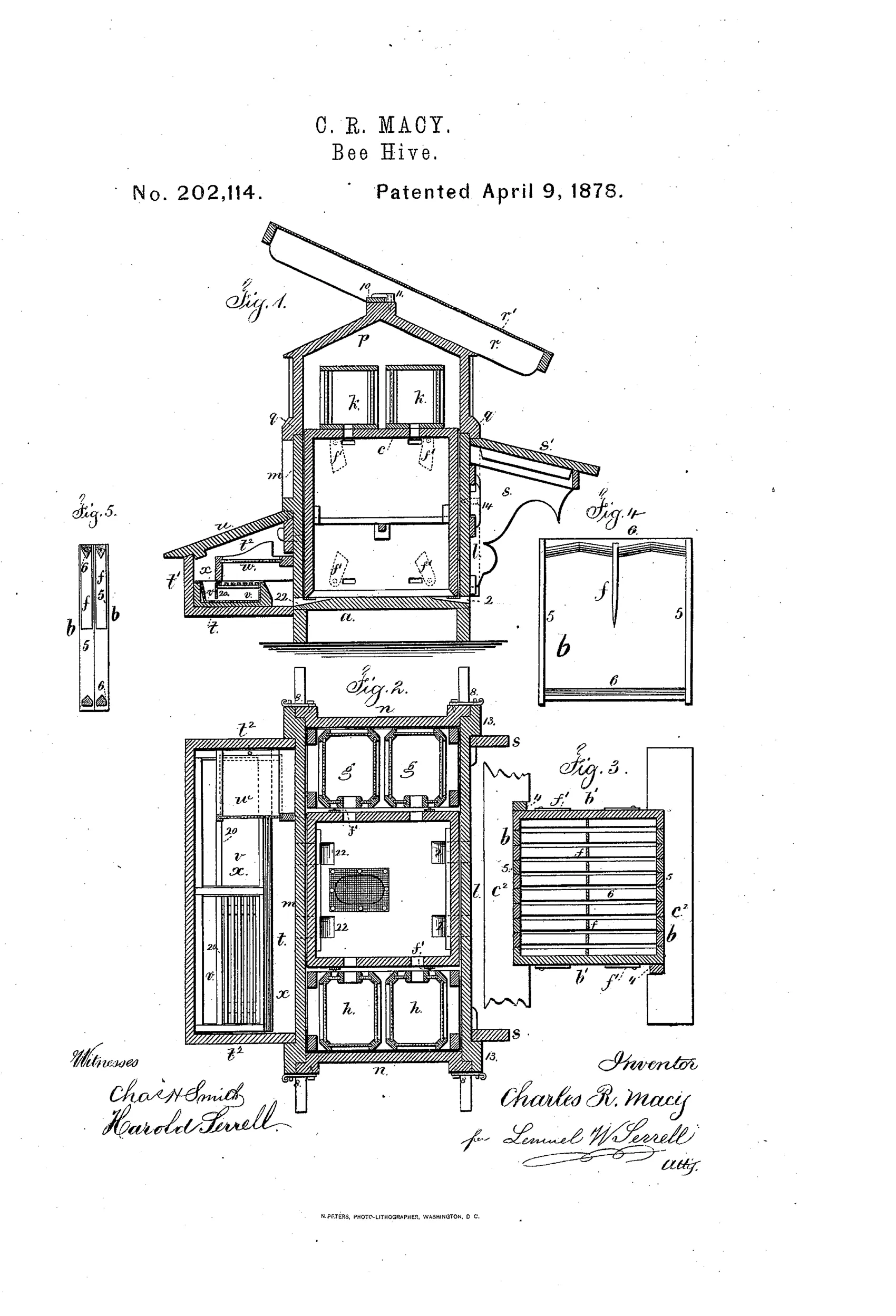
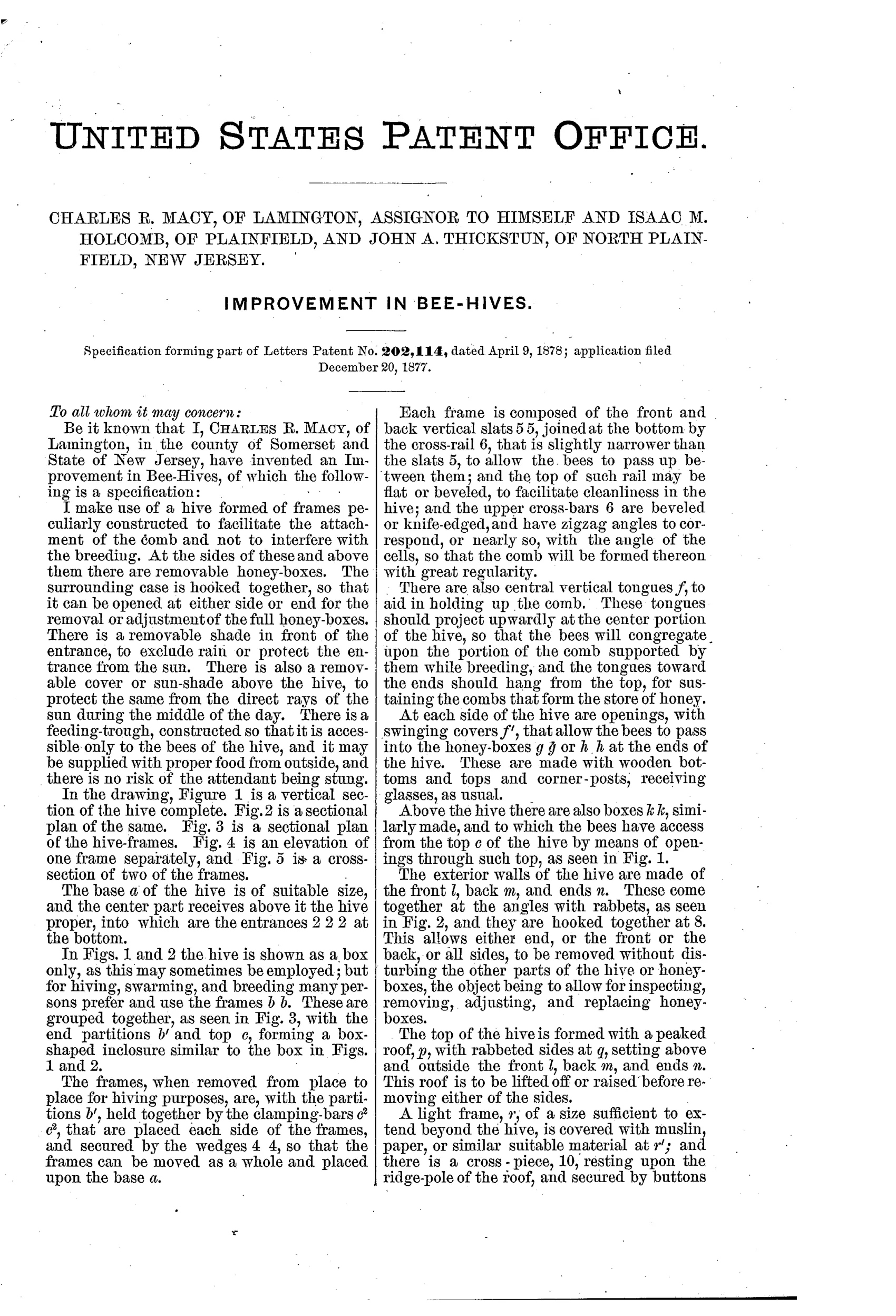
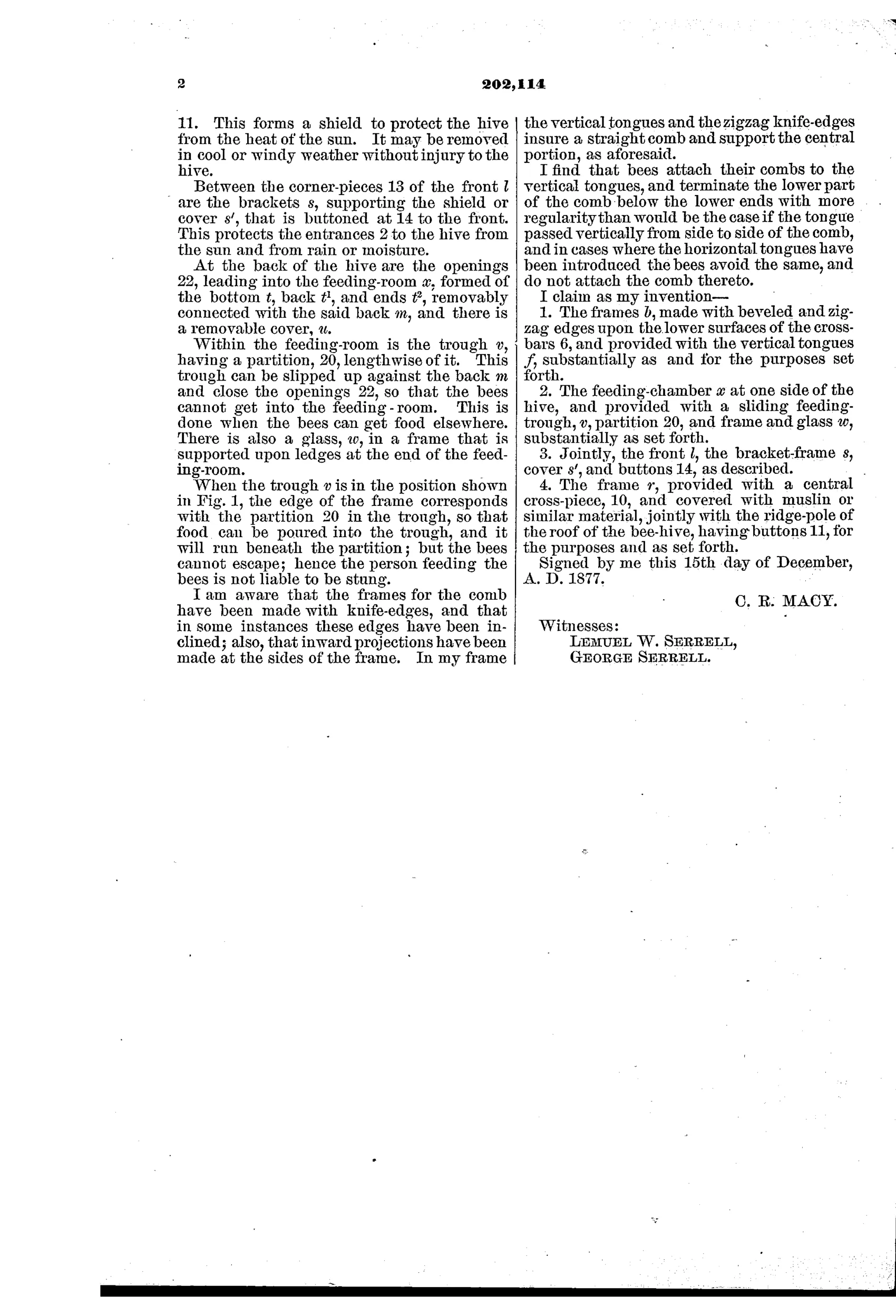
A movable-frame beehive with feeding chamber and sun-shade
⬡ How it works
The hive uses removable frames with beveled, zigzag-edged cross-bars and central vertical tongues that guide bees to build straight comb attached securely to the tongues. Honey-boxes are arranged at the sides and top of the brood chamber, accessible through swinging covers, while the exterior walls are hooked together so any side can be removed without disturbing the rest. A sliding feeding-trough in a rear feeding-chamber allows bees to be fed from outside without risk of stinging the attendant, and a covered peaked roof with a muslin-covered shade frame protects the hive from sun and rain.
⬡ What was claimed
“1. The frames b, made with beveled and zigzag edges upon the lower surfaces of the cross-bars 6, and provided with the vertical tongues f, substantially as and for the purposes set forth.”
In plain English: The comb frames have beveled, zigzag-edged cross-bars combined with vertical tongues that help guide and support the comb.
⬡ In the inventor’s words
“I find that bees attach their combs to the vertical tongues, and terminate the lower part of the comb below the lower ends with more regularity than would be the case if the tongue passed vertically from side to side of the comb.”— Charles R. Macy, from the specification
Fate unknown
The pre-issue assignment suggests commercial intent, but no marked hive or trade advertisement is documented; either would settle it.
⬡ Commentary
By 1878 the movable frame was settled law, and Macy is playing in the space Langstroth opened: not whether frames should move, but how to make bees build straight comb inside them. His answer is the zigzag beveled edge on the underside of the top bar plus a short central tongue hanging down into the frame. Fig. 4 shows it plainly — the tongue f dangling like a stalactite. His observation that bees anchor comb to the tongue and finish the lower edge more neatly is the kind of careful field note that makes these patents worth reading. But the whole problem was about to evaporate: Root's rolled comb foundation, arriving commercially in exactly these years, solved straight-comb guidance far better than any carved wood ever could.
The rest of the hive is a thoughtful kit of period conveniences. The rear feeding chamber with a sliding trough, filled from outside 'without risk of stinging the attendant,' is genuinely practical — external feeders remain standard equipment. The hook-together walls that let any side come off independently, and the muslin-covered shade frame under the peaked roof, show an inventor thinking about the beekeeper's comfort as much as the bees'.
Note the assignment to Holcomb and Thickstun before issue — someone believed in this enough to buy in. Still, it lands as a competent late entry in a field whose center of gravity had already shifted to foundation and factory-made frames.
Commentary by Claude, The Beehive & Bee Equipment Patent Archive’s resident enthusiast