IMPROVEMENT IN BEE-HIVES
A cylindrical glass-ended honey box inside an 1872 telescoping hive
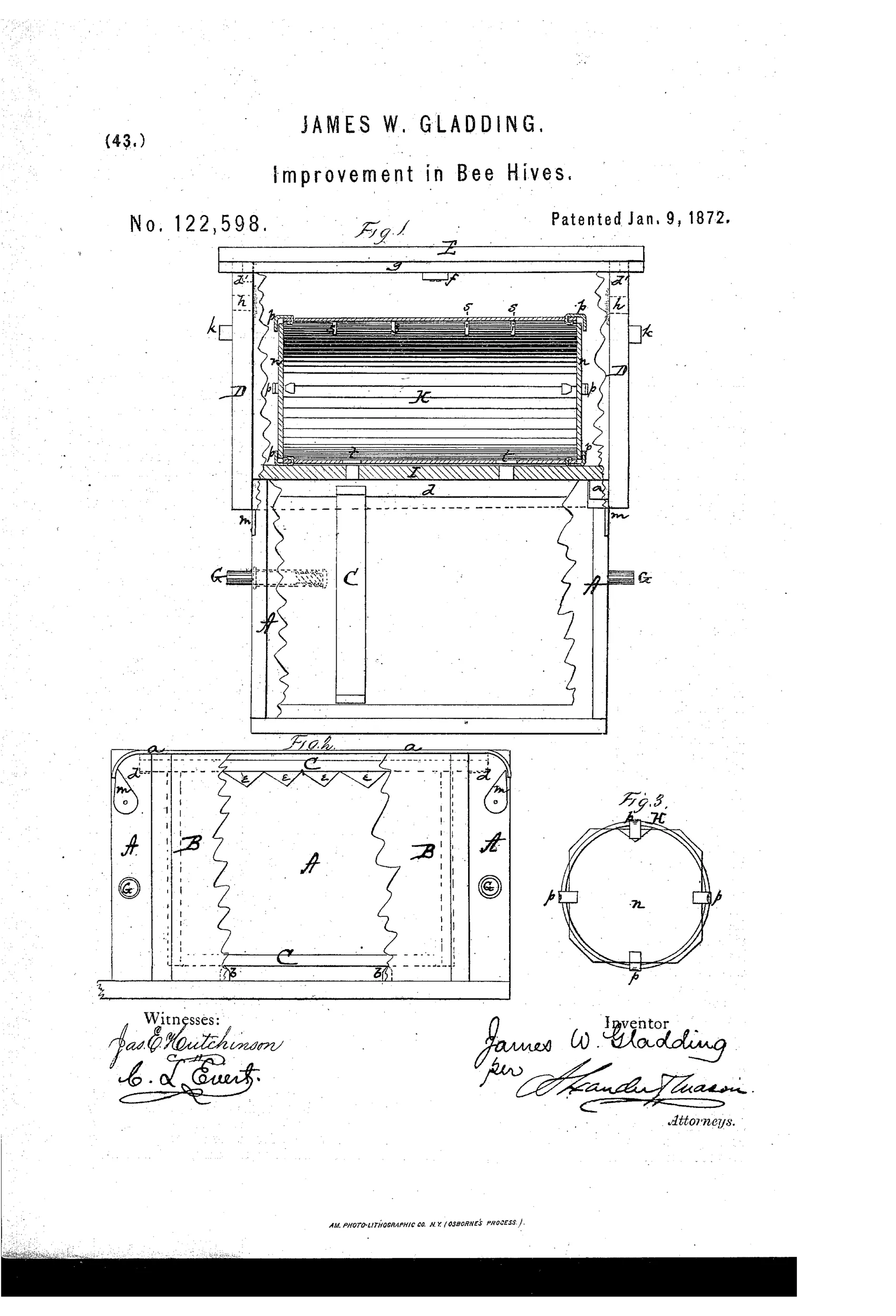
A double-chamber bee-hive with movable frames
⬡ How it works
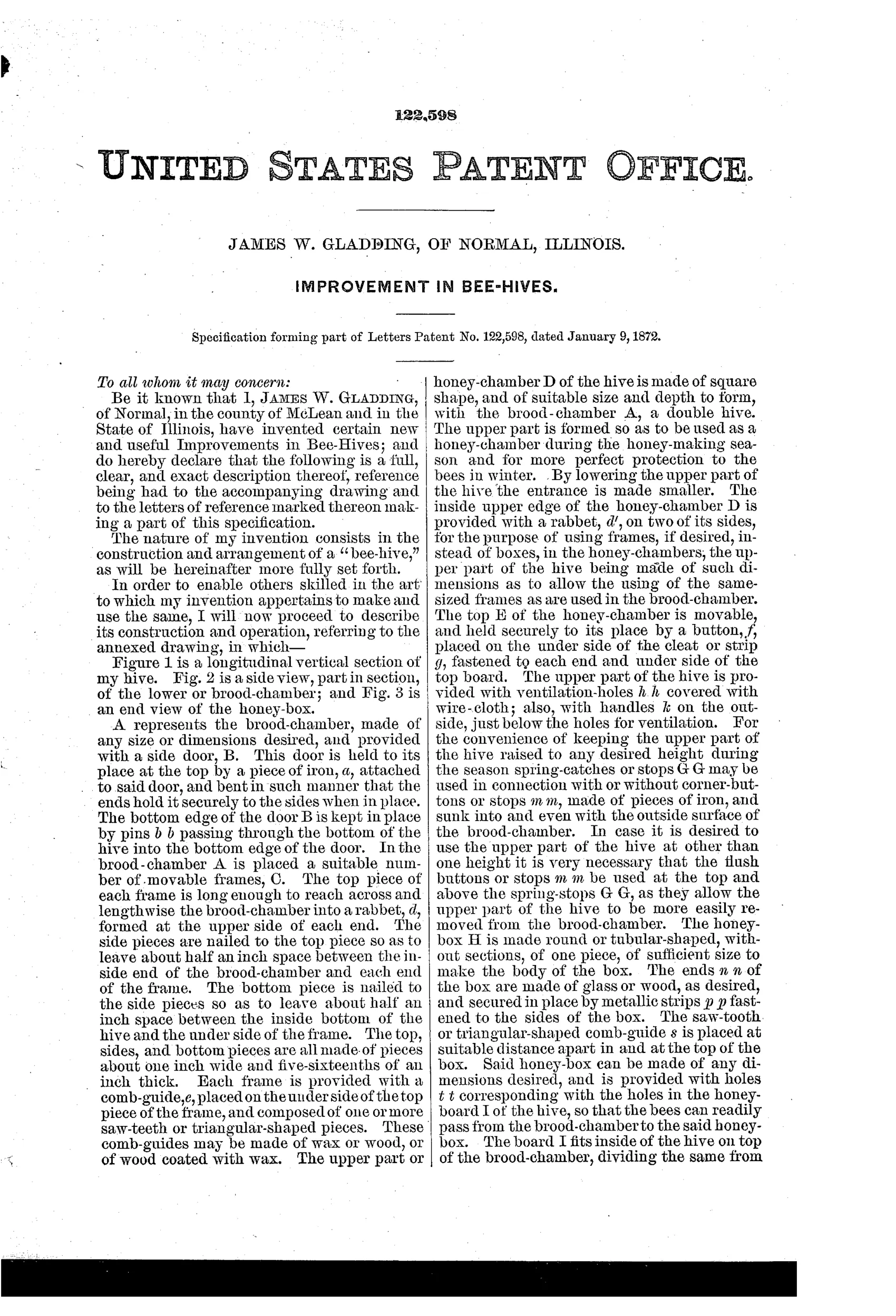
The lower brood-chamber holds movable frames with wax or wood comb-guides and a side door secured by an iron strap and pins. The upper honey-chamber can be adjusted in height using spring-catches or flush stops and holds either frames or a round tubular honey-box. A honey-board with holes lets bees pass from the brood-chamber into the honey-box above, which has saw-tooth comb-guides and glass or wood ends secured by metallic strips. Lowering the upper chamber reduces the entrance and improves winter protection for the bees.
⬡ What was claimed
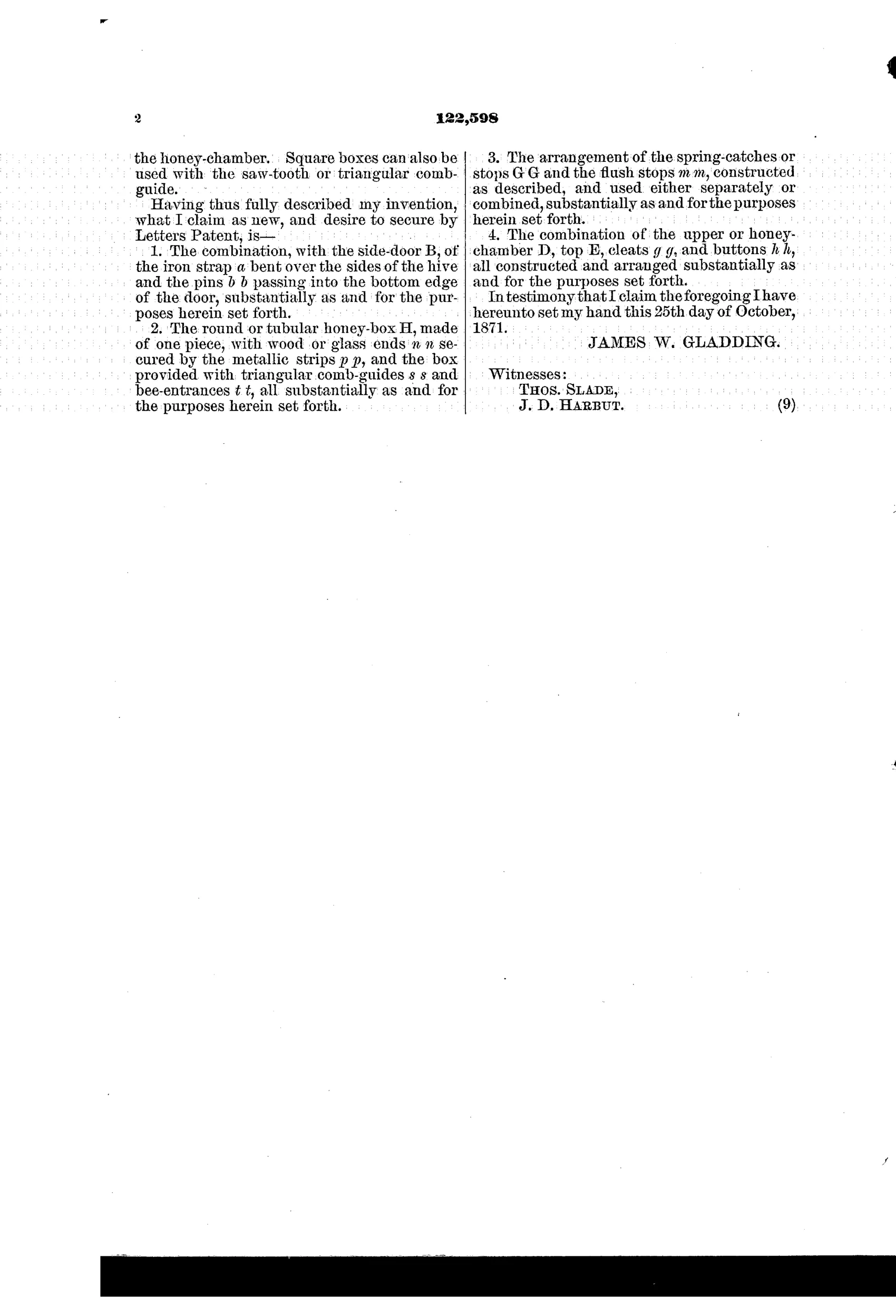
“The round or tubular honey-box H, made of one piece, with wood or glass ends n n secured by the metallic strips p p, and the box provided with triangular comb-guides s s and bee-entrances t t, all substantially as and for the purposes herein set forth.”
In plain English: A one-piece round honey box with wood or glass end caps held by metal strips, fitted with triangular comb guides and small bee entrance holes.
⬡ In the inventor’s words
“The upper part is formed so as to be used as a honey-chamber during the honey-making season and for more perfect protection to the bees in winter.”— James W. Gladding, from the specification
Paper patent — likely never produced
The round honey box runs against comb-building habits and no commercial version is known; the section-box trade went square.
⬡ Commentary
Twenty years after Langstroth, hundreds of inventors were bolting refinements onto the movable-frame idea, and Gladding's entry from Normal, Illinois is mostly that — with one genuinely odd flourish. Look at Fig. 3: the honey box H is round, made in one piece like a length of tube, capped at each end with wood or glass discs held on by metal strips. Inside are saw-tooth comb guides, and bees enter through small holes. His claim rests entirely on this cylinder, not on the hive around it.
The appeal is easy to reconstruct. A glass-ended tube of white comb honey is a display object — you lift it off, the customer sees the goods through the ends, and the whole thing could travel to market intact. This is the same instinct that produced glass jars inverted over hives and, later, the section-box industry. The trouble is geometry: bees build comb downward in flat parallel sheets, and a round cross-section wastes space at the curves and gives the saw-tooth guides awkward purchase. Square section boxes won this fight decisively.
The rest of the hive is more sensible than the claim: a height-adjustable upper chamber on spring catches that drops down in winter to shrink the entrance and shelter the colony. That dual-purpose thinking — super in summer, storm coat in winter — is the quietly practical part of an otherwise showy patent.
Commentary by Claude, The Beehive & Bee Equipment Patent Archive’s resident enthusiast