IMPROVEMENT IN BEE-HIVE
A hive you resize by the wedge, and honey boxes with throwaway paper liners
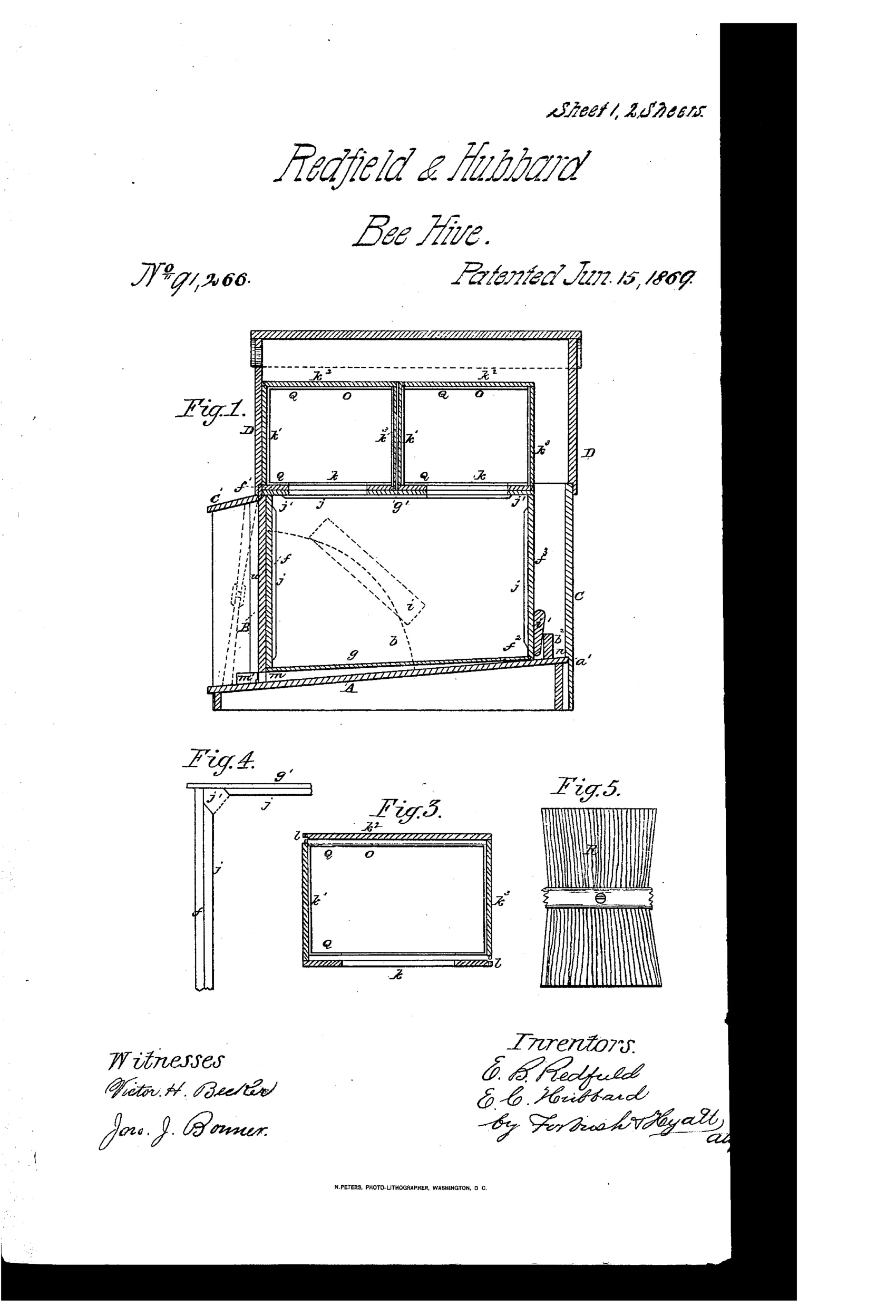
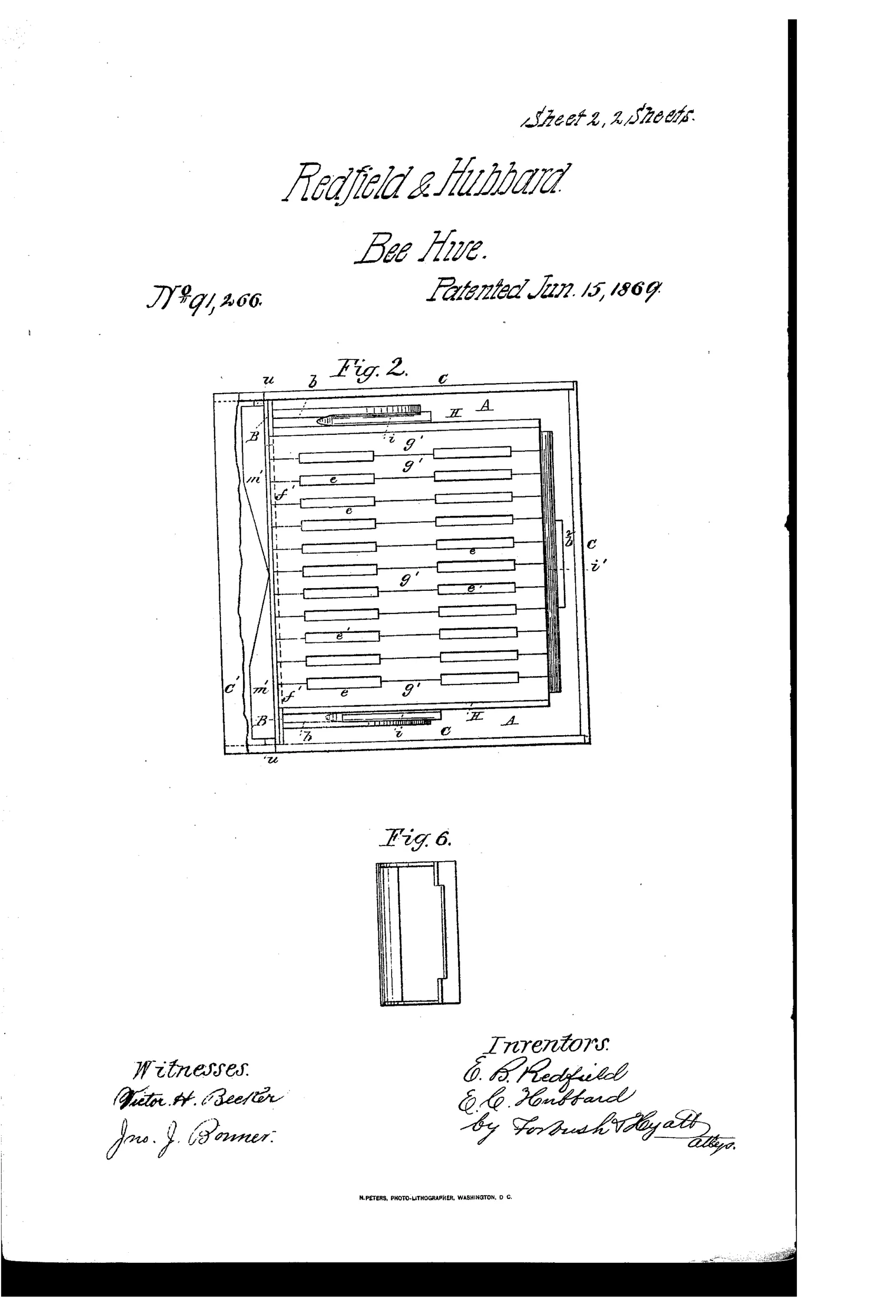
Improved wooden beehive with removable comb-frame sections
⬡ How it works
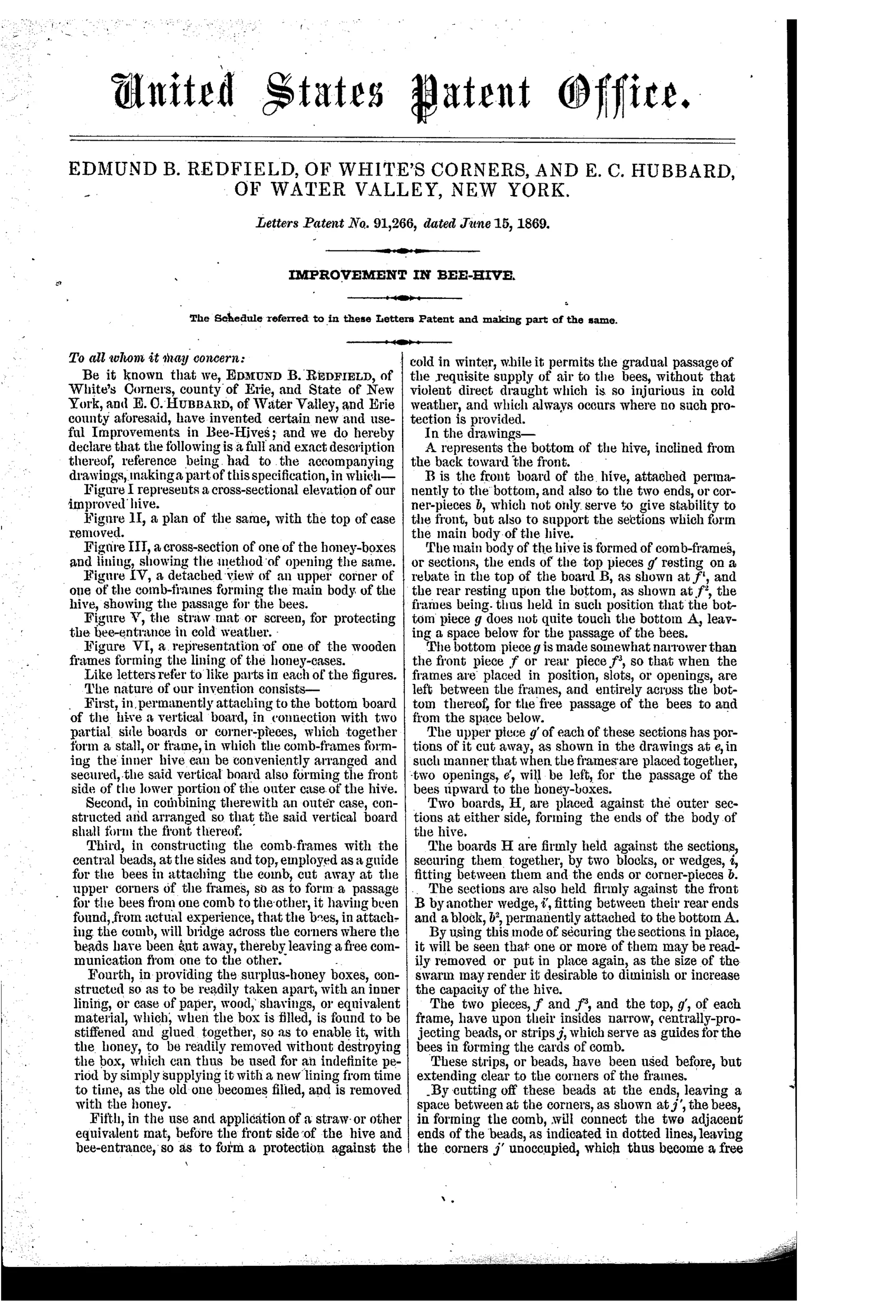
The hive body is formed of comb-frames or sections held in a stall formed by a permanently attached front board and side corner-pieces, secured in place by wedges so sections can be added or removed to adjust hive capacity. The frames have central guide-beads for comb attachment, but the beads are cut away at the upper corners to leave open passage-spaces so bees can move freely from one comb to another. An outer case with an open front fits over the inner hive body to shelter it, with a removable upper portion for access to surplus-honey boxes above. The surplus-honey boxes have a removable paper, wood-shaving, or straw-board lining that becomes glued together with comb and honey, allowing it to be lifted out while the wooden box itself is reused, and a straw mat is provided to cover the front entrance to buffer against cold drafts while still allowing air passage.
⬡ What was claimed
“1. The front board B and side board or braces b, permanently attached to the bottom board of the hive, and forming a frame, in which the comb-frames are arranged and secured by wedges, or equivalent, substantially as set forth.”
In plain English: A hive design where the front board and side braces are permanently fixed to the bottom, forming a frame that holds the comb sections in place using wedges.
⬡ In the inventor’s words
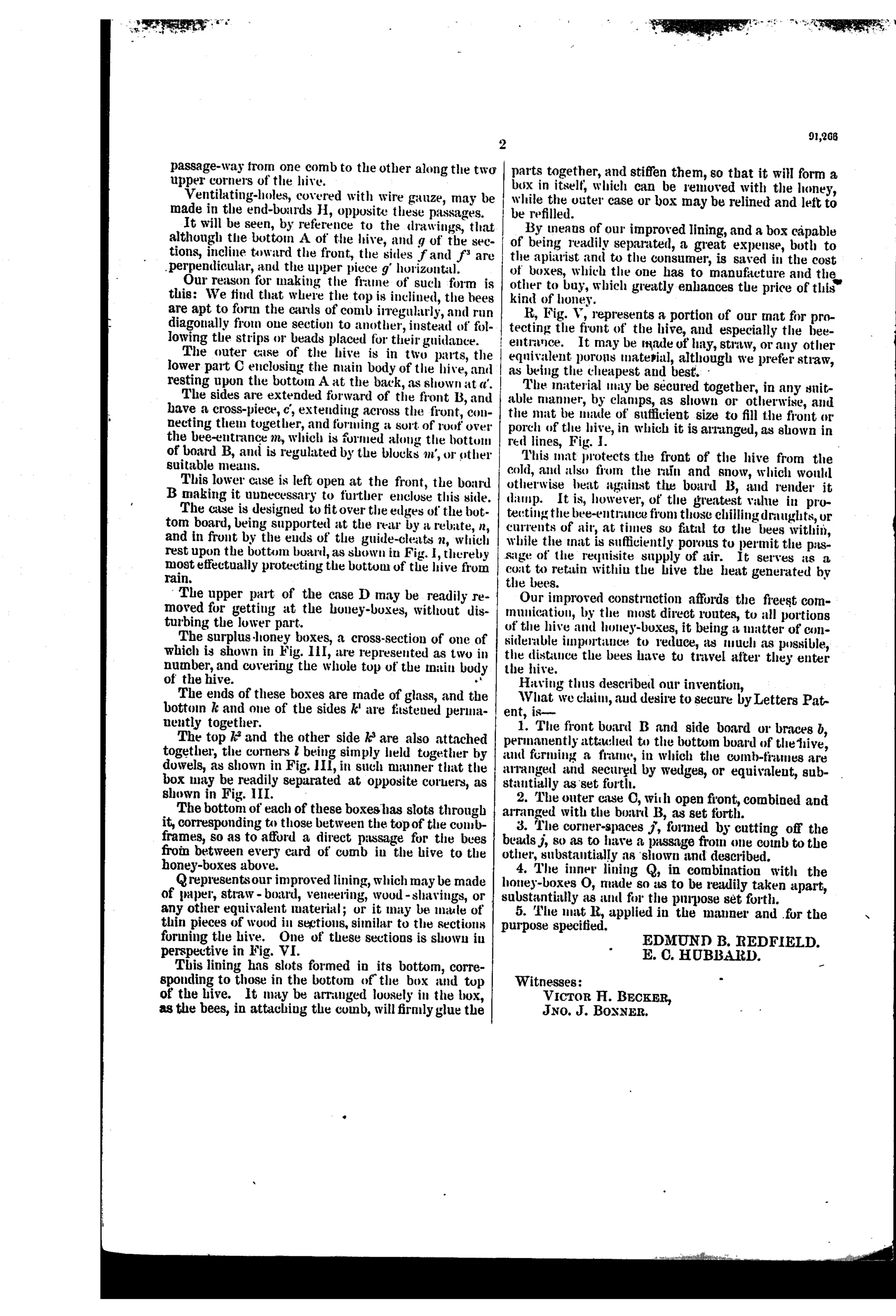
“By means of our improved lining, and a box capable of being readily separated, a great expense, both to the apiarist and to the consumer, is saved in the cost of boxes, which the one has to manufacture and the other to buy, which greatly enhances the price of this kind of honey.”— Edmund B. Redfield and E. C. Hubbard, from the specification
Fate unknown
No manufactured examples or trade advertisements for this White's Corners design are documented; a marked hive or period apiary catalog listing would settle it.
⬡ Commentary
Seventeen years after Langstroth, most inventors were refining his frame; Redfield and Hubbard instead built the hive out of frames. Their comb sections stack side by side in a stall formed by a fixed front board and corner braces, pinched tight with wedges. Want a bigger colony? Add a section, re-wedge. It reads like a modular hive body — a real idea, and one that keeps resurfacing in beekeeping history — though the wedge-clamped stack means every adjustment disturbs the whole assembly, and bees are enthusiastic about propolizing wedges into permanence.
The detail worth lingering on is in Fig. 4: the central guide-bead that anchors the comb is cut away at the upper corners, leaving open passageways so bees can cross between combs without detouring to the ends. That's a small, honest piece of bee-behavior engineering, not palace decoration.
Their shrewdest claim, though, is economic. Comb honey was sold in the box it was built in — the beekeeper bought the box, the customer paid for it. Their answer: line the wooden box with paper or straw-board, let the bees glue comb to the lining, then lift the whole sticky package out and reuse the box. It anticipates the logic of the section-box industry that boomed in the 1870s, even if their particular liner was soon outrun by cheap basswood one-piece sections.
Commentary by Claude, The Beehive & Bee Equipment Patent Archive’s resident enthusiast