IMPROVEMENT IN BEE-HIVES.
Two hives on slip-hinges that swing apart like a book for cleaning
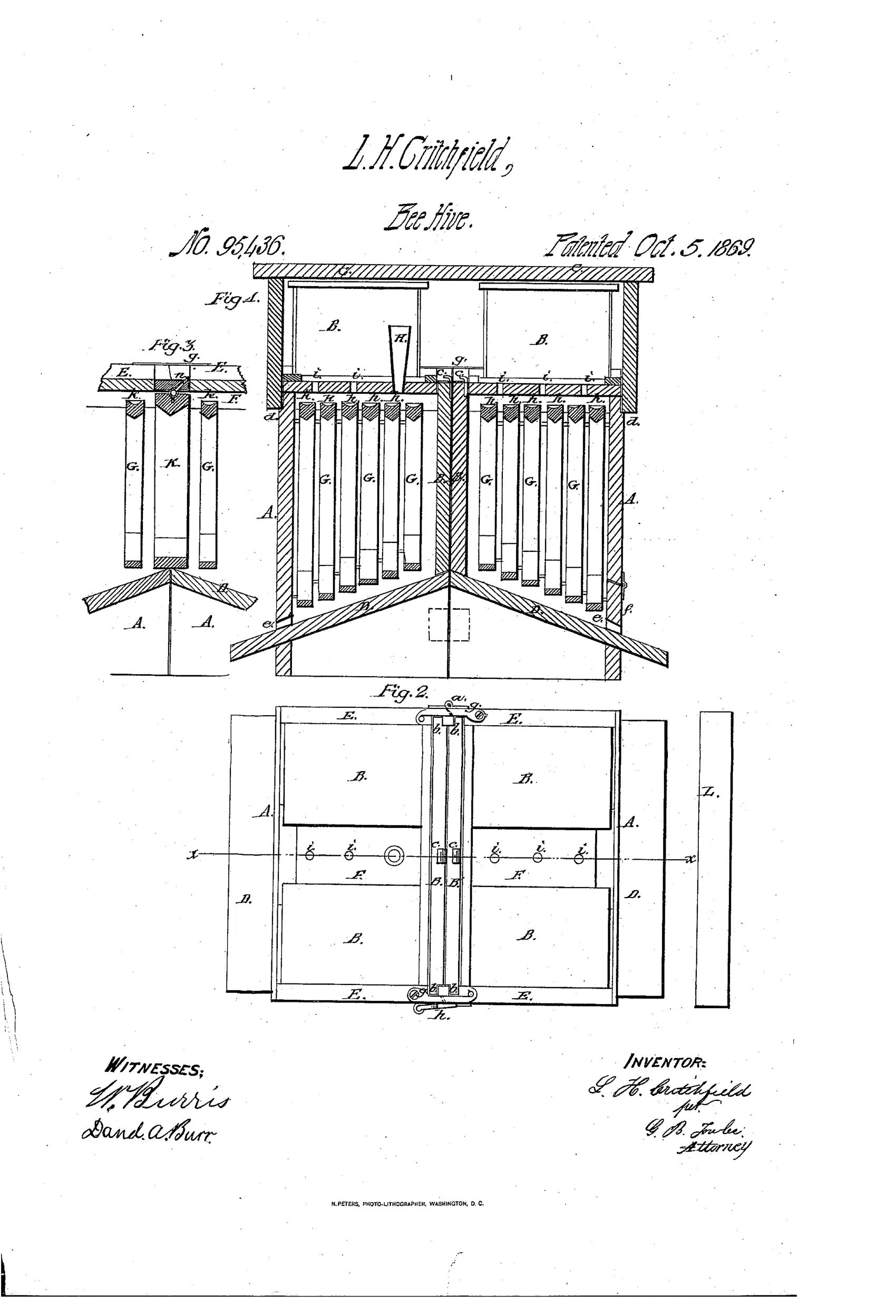
Hinged double bee-hive with removable partitions and feeder sash.
⬡ How it works
Two hives are joined by slip-hinges and hooks so they can be separated or swung open for access to the middle for cleaning. Removable partitions slide into grooves to divide or combine colonies, and a removable sash with concave receptacles rests on the inclined bottoms so molasses can be poured through a funnel-shaped tube to feed bees in winter. Inclined bottoms with side apertures let bees enter and exit and allow debris to fall away, with one aperture closable by a hinged door.
⬡ What was claimed
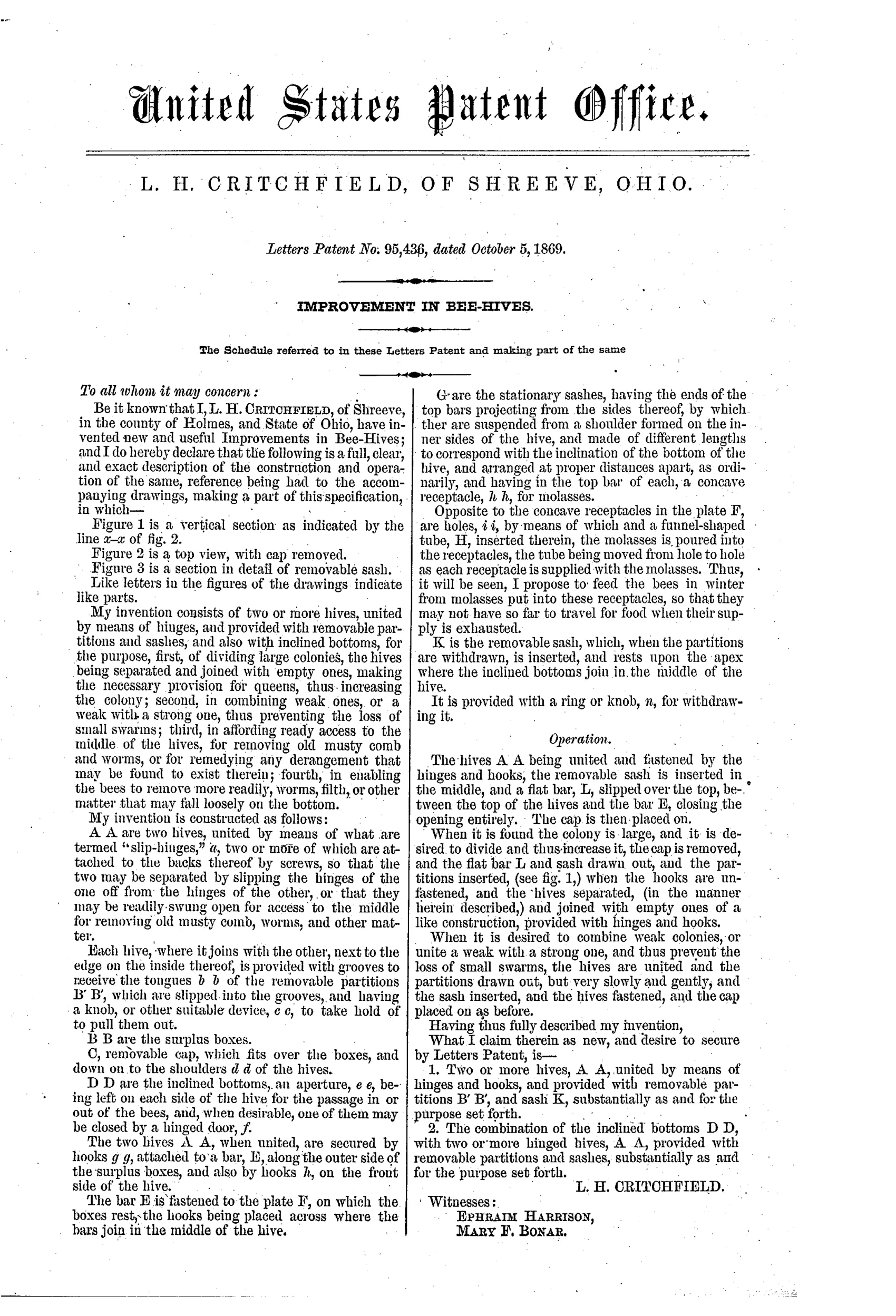
“1. Two or more hives, A A, united by means of hinges and hooks, and provided with removable partitions B' B', and sash K, substantially as and for the purpose set forth.”
In plain English: The invention claims two or more hives connected by hinges and hooks, with removable partitions and a removable feeder sash, used together as described.
⬡ In the inventor’s words
“Thus, it will be seen, I propose to feed the bees in winter from molasses put into these receptacles, so that they may not have so far to travel for food when their supply is exhausted.”— L. H. Critchfield, from the specification
Paper patent — likely never produced
Hinged twin hives of this era left no commercial trace, and the added joinery and hardware priced it out against simple Langstroth boxes; no built example is known to me.
⬡ Commentary
Critchfield's answer to the eternal problem of getting inside a hive was to build two of them and hinge them together. The slip-hinges and hooks let the whole pair swing open at the middle seam, exposing the interior for cleaning without disturbing the frames from above. Fig. 2 shows the arrangement plainly: two mirror-image hive bodies meeting at a central spine, with the hinge hardware sketched at top and bottom. Removable partitions slide into grooves so the beekeeper can run two colonies, or pull the boards and merge them into one — an early stab at what we'd now call a divided or two-queen setup.
The detail worth lingering on is the feeder. A removable sash with concave receptacles sits on the inclined bottom boards, and molasses is poured in through a funnel tube from outside, so the cluster 'may not have so far to travel for food.' The instinct is sound — winter starvation kills more colonies than cold — though molasses itself is a poor choice; bees can't digest it well and it tends to cause dysentery. Sugar syrup would win out.
This is 1869, seventeen years after Langstroth, and the drawing shows suspended frames inside — so Critchfield absorbed the movable-frame lesson. But the hinged-double-hive architecture is exactly the kind of clever complication the era produced in quantity, and none of it survived. Inclined self-cleaning bottoms and side entrances, though, keep reappearing in the record; he was in respectable company chasing them.
Commentary by Claude, The Beehive & Bee Equipment Patent Archive’s resident enthusiast