IMPROVEMENT IN BEE-HIVES.
One hive to fight moths, drones, and robber bees — an 1863 fortress from Iowa
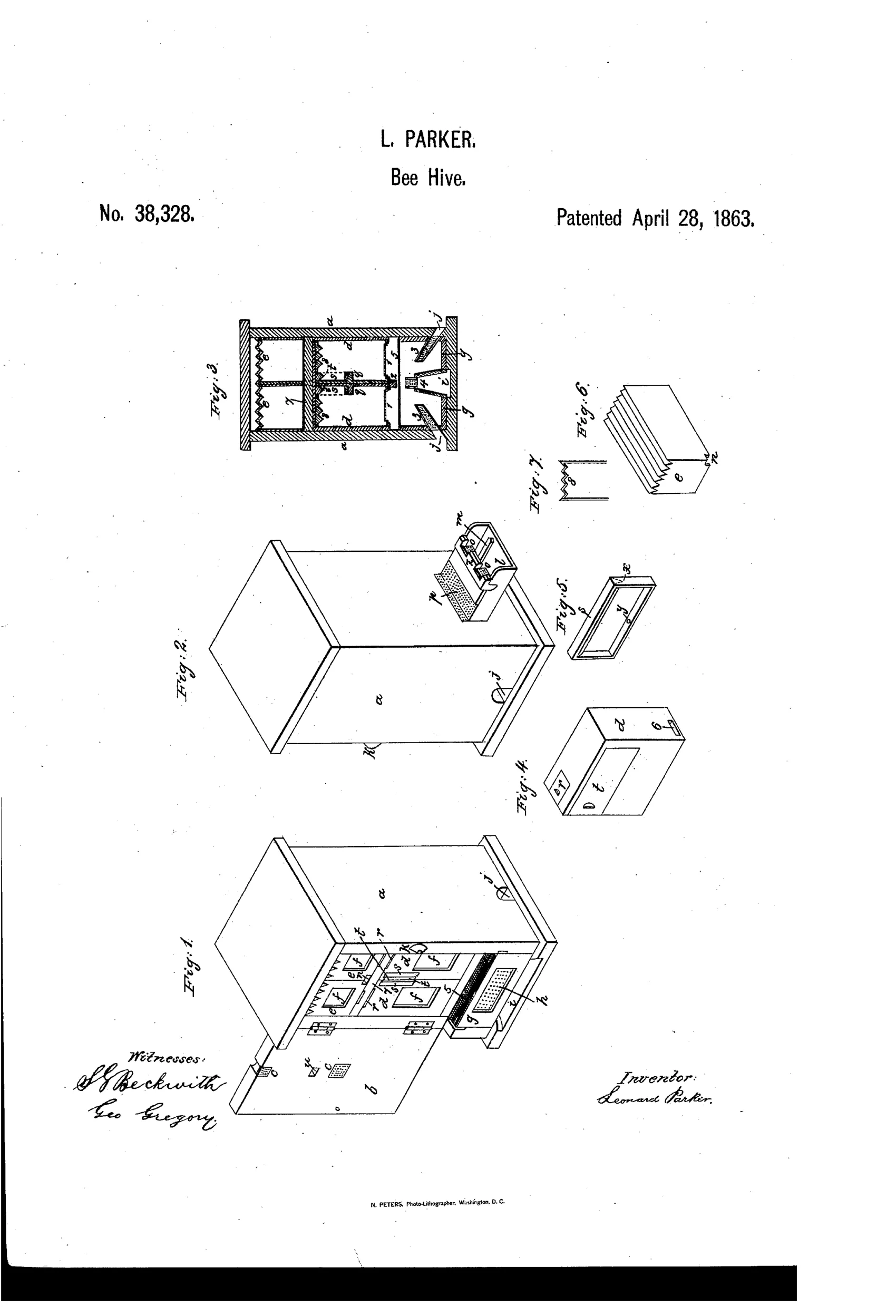
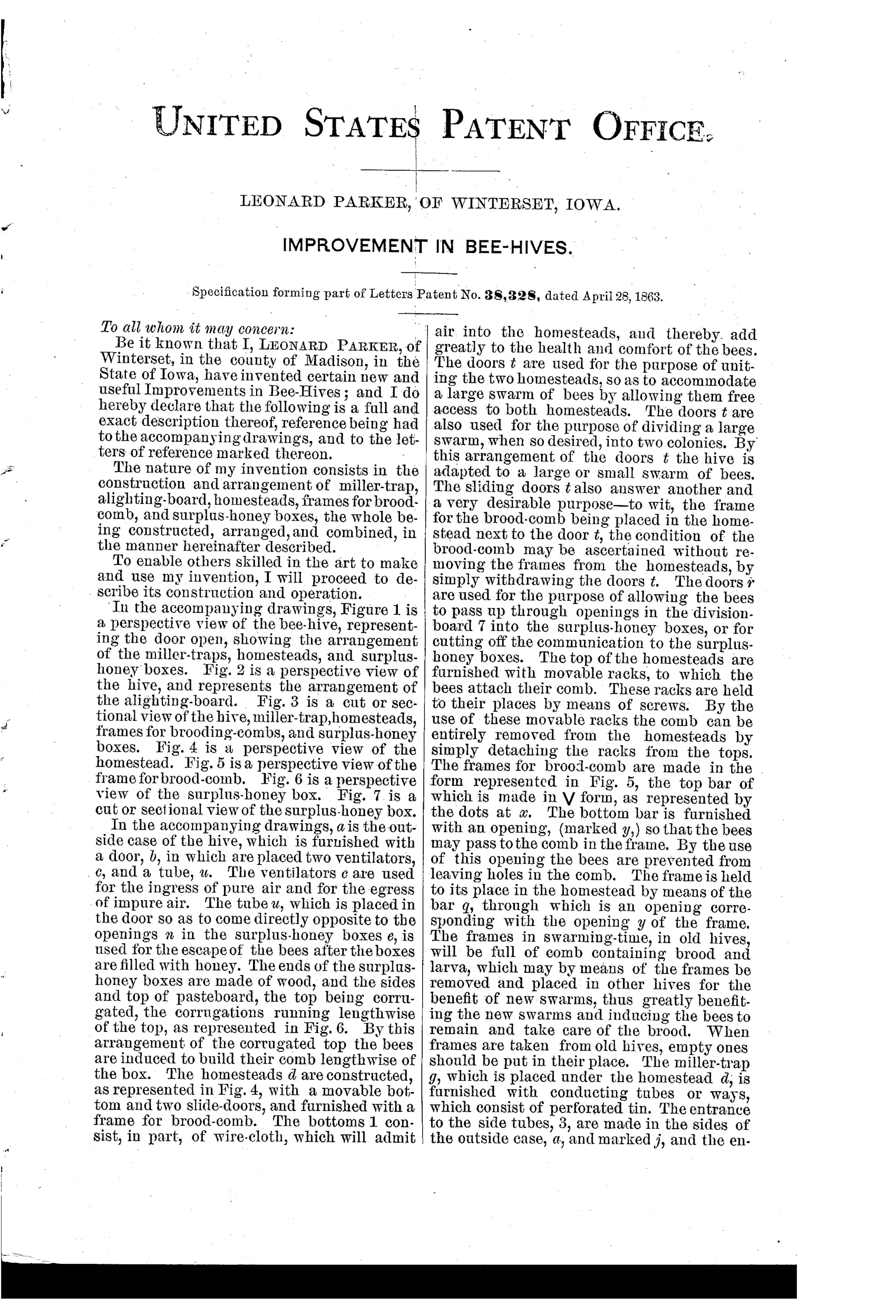
Beehive with miller-trap, homesteads, and honey boxes
⬡ How it works
The hive is divided into two 'homesteads' each fitted with a removable brood-comb frame held by a bar, and topped with detachable racks to which bees affix comb. A miller-trap beneath the alighting-board admits moths through perforated tubes and doors but prevents their escape, while a sliding guide directs bees to one or both homesteads and can restrict entry against robber bees. Sliding doors control passage between the brood chambers and pasteboard-and-wood surplus-honey boxes above, and drone-excluding trap-doors on the alighting-board are adjustable so only smaller worker bees may pass beneath them.
⬡ What was claimed
“1. The miller trap g, when arranged and constructed as herein described, for the purpose set forth. 2. The frame s, for brood-comb, when used in combination with the homestead d, as herein described, and for the purpose set forth. 3. The arrangement of the guide m, doors o, and perforated cover p, when used in combination with the alighting-board and entrance to the hive, as herein described, and for the purpose set forth.”
In plain English: The patent covers the miller-trap for catching moths, the removable brood-comb frame used with the homestead chamber, and the combined guide, drone-excluding doors, and ventilated cover on the alighting-board.
⬡ In the inventor’s words
“The drones in passing out can raise the doors, but cannot raise them to enter the hive, and, being shut out, they will try to enter the hive through the openings j and i, and will be ensnared in the miller-trap, and may be drowned or otherwise destroyed.”— Leonard Parker, from the specification
Paper patent — likely never produced
The multi-chamber construction and elaborate trap-work suggest at most local, short-run builds; no manufactured example or trade record is known to me.
⬡ Commentary
Leonard Parker's hive is a good example of what mid-war beekeeping patents were chasing: not honey yield, but defense. The wax moth (the "miller") was the terror of the era, and Parker devotes his first claim to a trap under the alighting-board — perforated tubes that let moths in and never out. Fig. 3, the sectional view, is where to look: you can see the funnel-shaped trap sitting below the two brood chambers he calls "homesteads," a whole basement dedicated to insect ambush.
The genuinely interesting part is the drone door. His trap-doors on the entrance swing one way, sized so workers pass under them freely while drones can lift them to exit but not to return. Locked out, the drones blunder into the miller-trap and, in Parker's cheerfully grim phrase, "may be drowned or otherwise destroyed." That's a one-way bee valve and a size-based excluder in a single fitting, decades before the porter bee escape and queen excluder became standard separate tools.
What holds it back is the comb management. Parker is patenting eleven years after Langstroth, yet each homestead holds a single removable brood frame plus fixed racks the bees build to — a half-step toward movable-frame beekeeping. It's a defensive fortress bolted onto an essentially old-style hive, which is why designs like this became dead ends while the plain, inspectable Langstroth box won.
Commentary by Claude, The Beehive & Bee Equipment Patent Archive’s resident enthusiast