IMPROVEMENT IN BEE-HIVES.
A birdhouse-on-a-pedestal hive with a water moat against ants, from Washington Territory
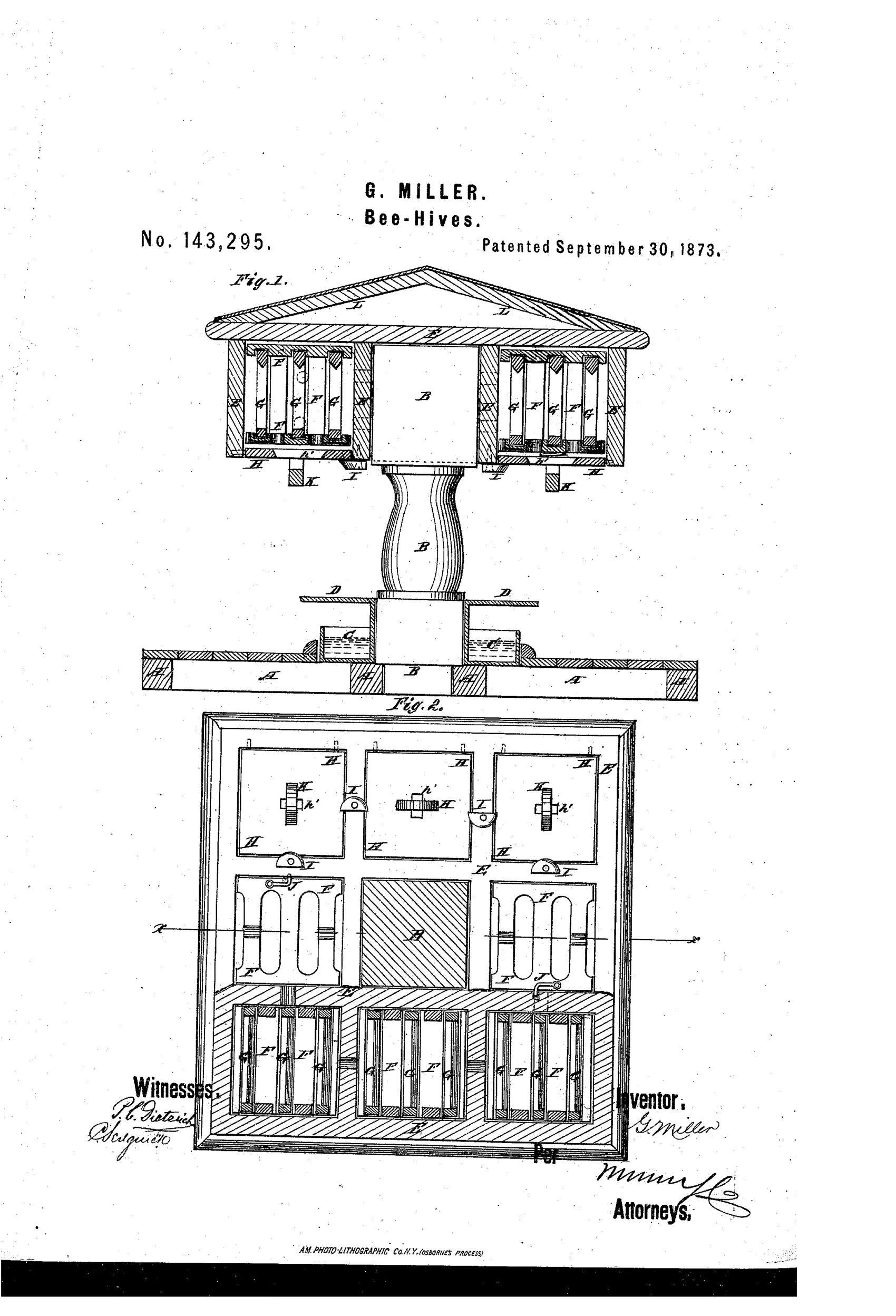
A multi-cell, post-supported cottage-style beehive.
⬡ How it works
The hive rests on a base with a central socket that receives a single carved post, which supports an upper cell chamber at its top via a matching socket. Around the post's foot sits a water vessel topped by a cover, keeping ants and crawling insects from reaching the hive above. The upper chamber is divided into multiple cells, each containing main frames with grooved top and bottom plates that hold detachable single frames, allowing comb to be removed without breaking it or disturbing the bees. Bottom openings of the cells are closed by pivoting semicircular buttons that hold plates in place, and holes between partition walls let smoke driven into one cell push bees into adjacent cells; the whole assembly is capped by a ridged, open-gabled roof faced east-west to catch the morning sun.
⬡ What was claimed
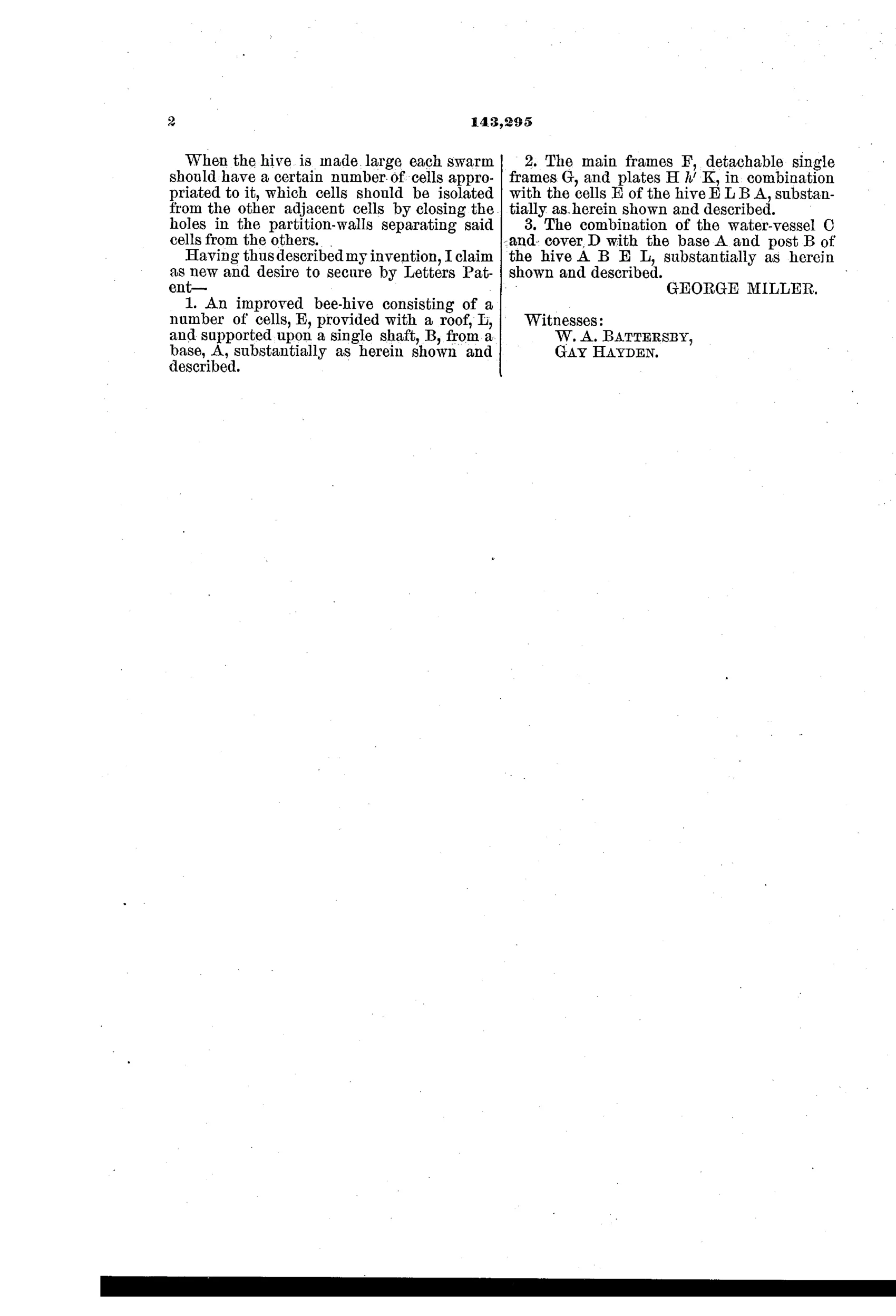
“The main frames F, detachable single frames G, and plates H h' K, in combination with the cells E of the hive E L B A, substantially as herein shown and described.”
In plain English: The claim covers the combination of the main frames, removable single frames, and closing plates working together with the hive's cell chamber, post, base, and roof.
⬡ In the inventor’s words
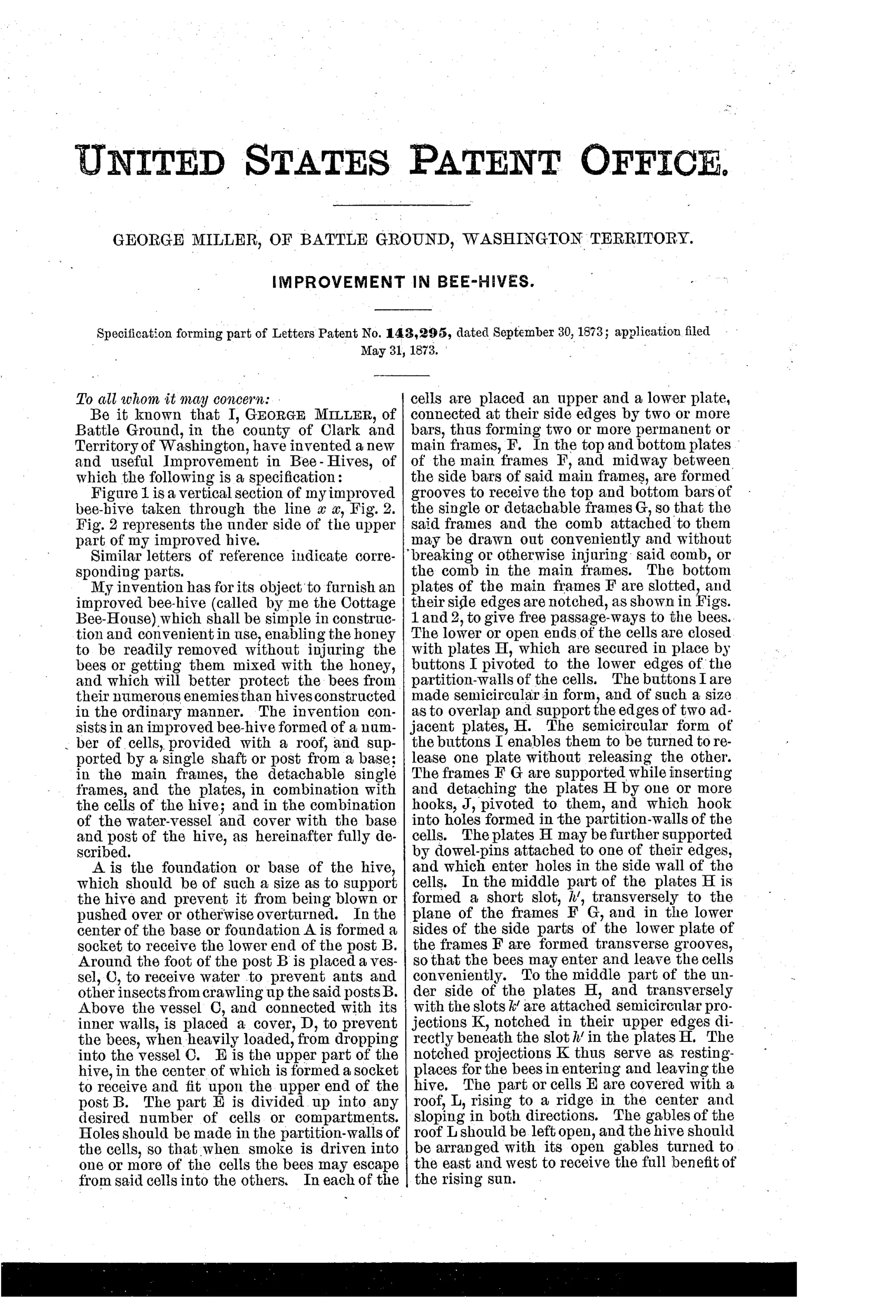
“My invention has for its object to furnish an improved bee-hive (called by me the Cottage Bee-House) which shall be simple in construction and convenient in use, enabling the honey to be readily removed without injuring the bees or getting them mixed with the honey, and which will better protect the bees from their numerous enemies than hives constructed in the ordinary manner.”— George Miller, from the specification
Paper patent — likely never produced
The nested frames, nine-cell partitioning, and pedestal mount would have been costly to build and awkward to work; no manufactured example or trade listing is known to me.
⬡ Commentary
George Miller's "Cottage Bee-House" perches an entire nine-cell hive on a single carved post, like an outsized birdhouse. The clever bit is at the bottom: a water vessel ringing the post's foot, so ants and other crawling raiders drown before they climb. That moat idea is genuinely sound — hive stands with oil or water cups are still sold today for exactly this purpose — and it's the most durable thought in the patent.
The rest is more strained. Look at Fig. 2, the underside view: the chamber is carved into nine separate cells, each with 'main frames' whose grooved plates hold smaller detachable frames — frames within frames, secured by pivoting semicircular buttons. Miller's goal was honorable, removing comb without breaking it or crushing bees, but Langstroth had solved that twenty years earlier with one frame size and a 3/8-inch gap. Miller's nested carpentry multiplies joints, and every extra groove is a place bees will glue with propolis.
The smoke passages between partition walls, meant to herd bees from cell to cell, show a beekeeper who actually handled bees and thought about their movement. But a colony wants one large contiguous brood nest, not nine parlors. This is a late entry in the palace-hive tradition — earnest, observant in details, and pointed away from where the industry was already going. The gable roof faced east for morning sun is a nice touch of practical husbandry, though.
Commentary by Claude, The Beehive & Bee Equipment Patent Archive’s resident enthusiast