IMPROVEMENT IN MOTH-TRAPS.
One-way moth doors, decoy paint spots, and triangular frames — 23 years too late
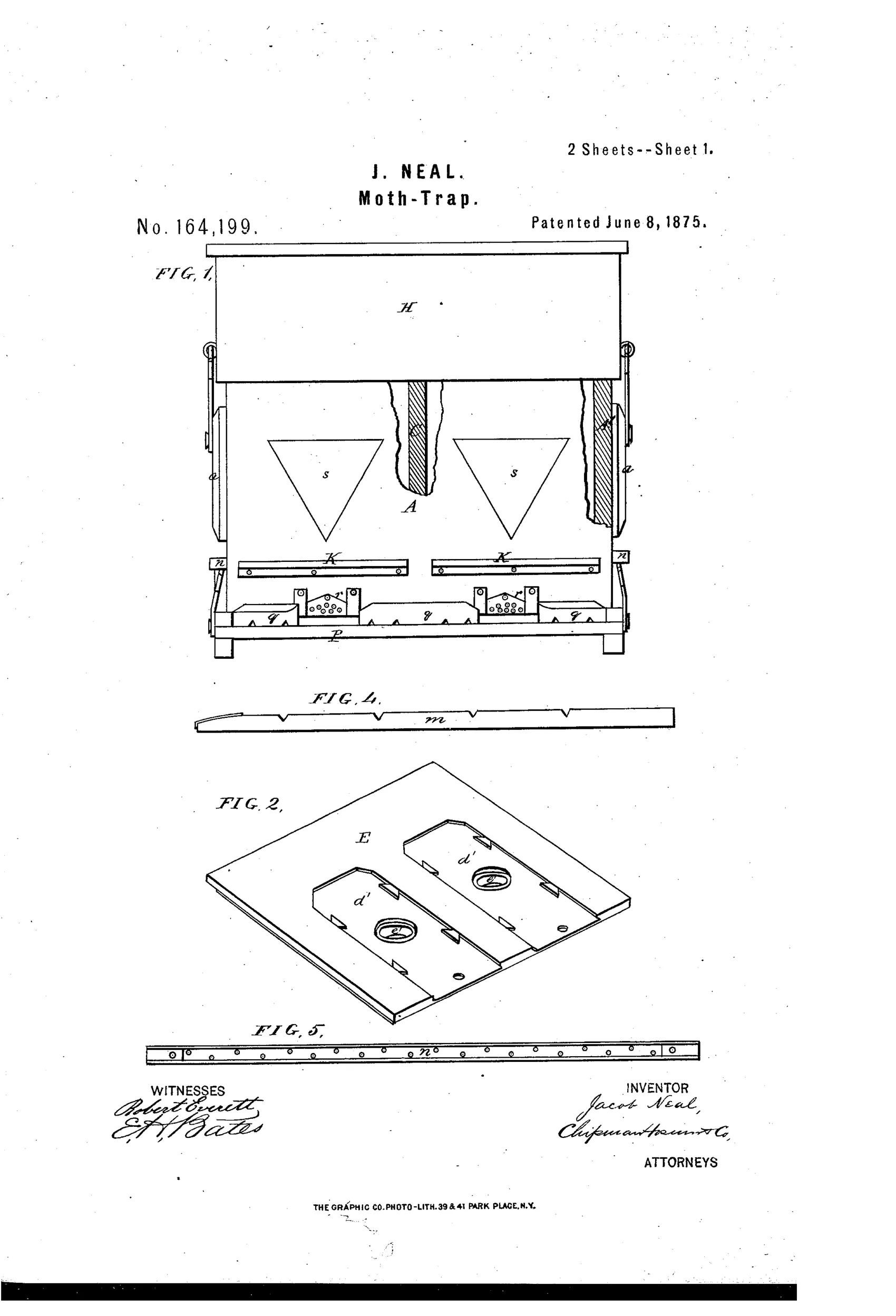
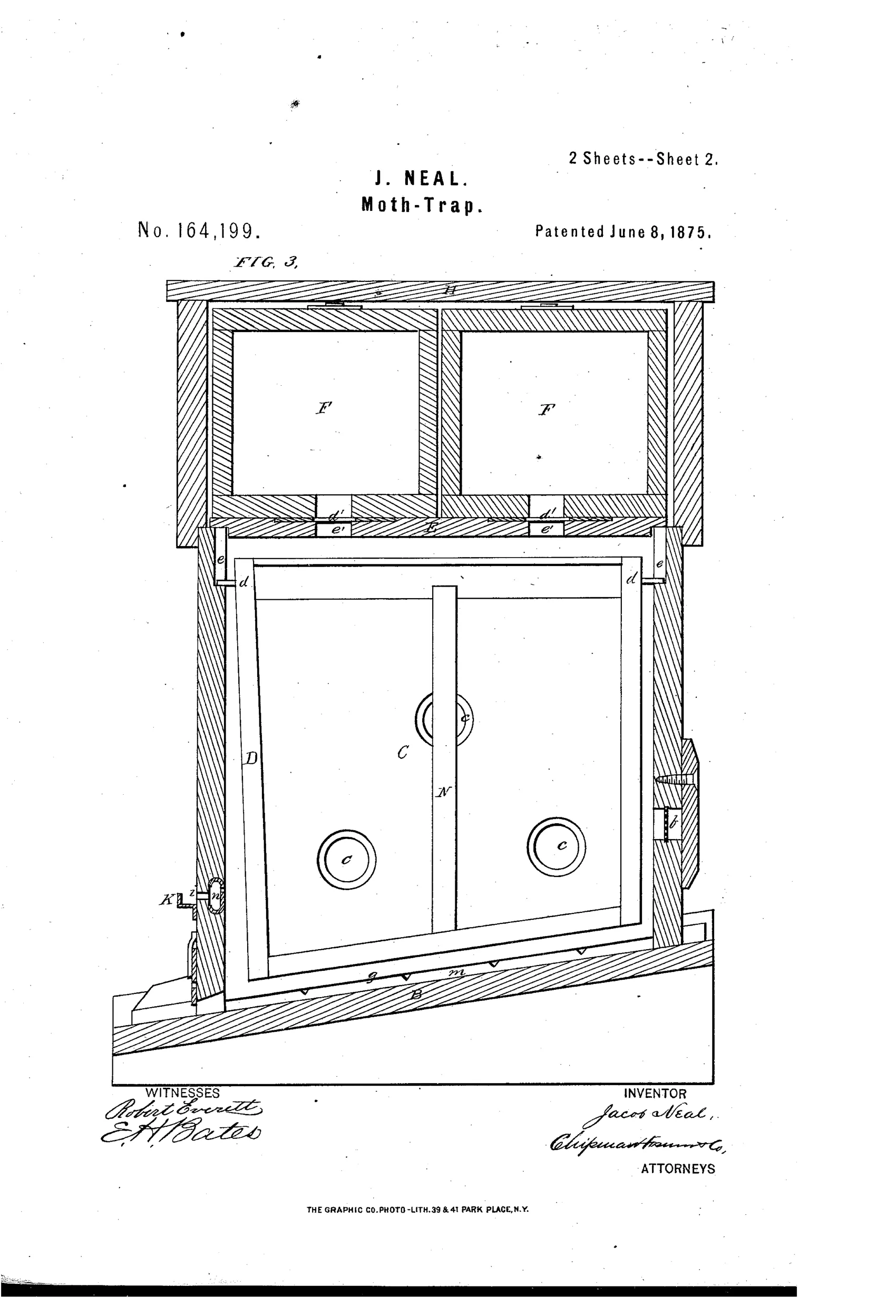
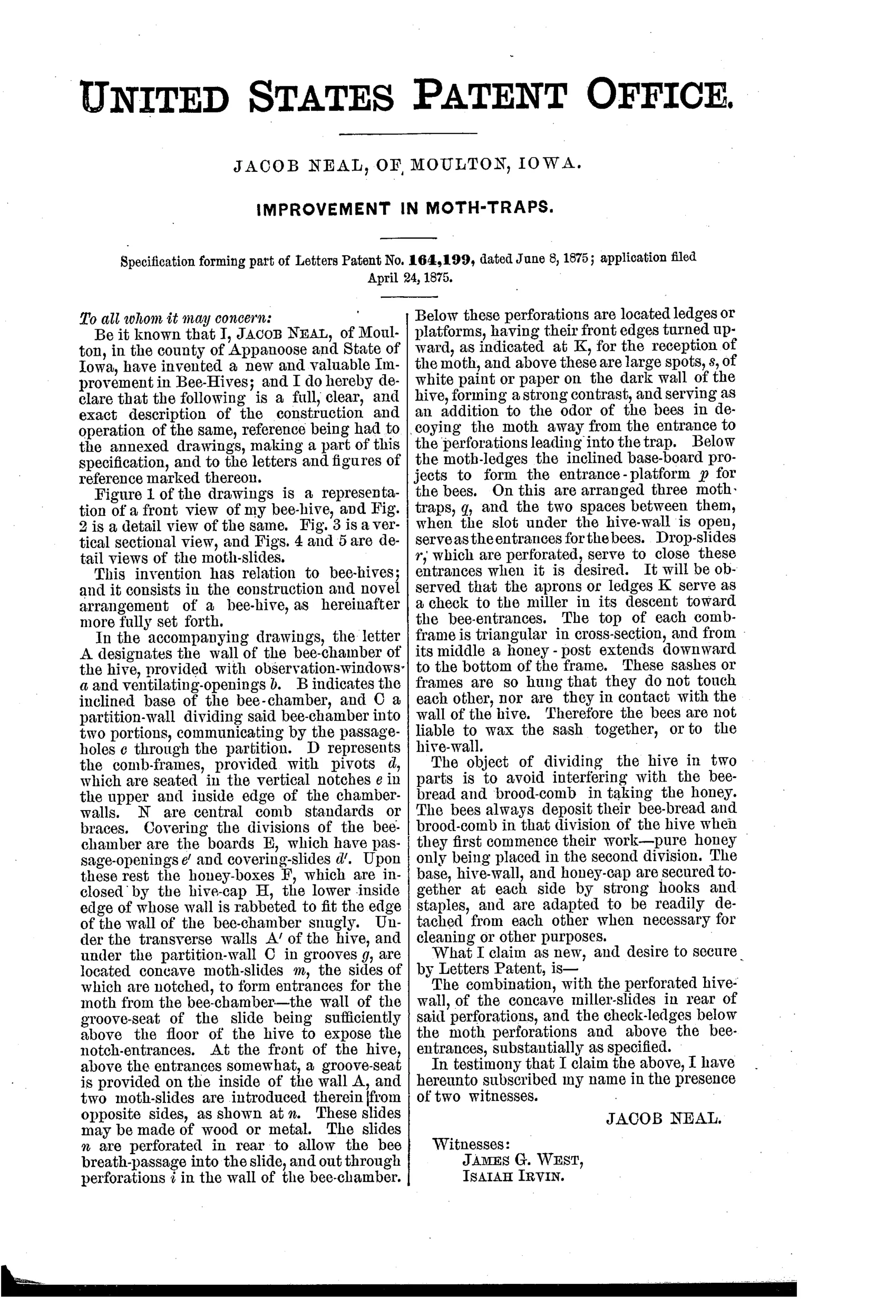
Combination bee-hive with built-in moth (miller) trap
⬡ How it works
The bee-chamber is divided by a partition wall with passage holes, and holds pivoted, triangular-section comb-frames that never touch each other or the hive wall. Perforations in the hive-wall lead rearward into concave, notched moth-slides that let millers pass out of the bee-chamber but not back in. Below these slides are upturned check-ledges (K) that catch the descending miller before it can reach the bee entrances, aided by white paint spots on the dark wall that lure the moth away from the hive entrance. The inclined base-board below forms an entrance platform for the bees, separate from the moth-trap boxes (q) mounted along its front edge.
⬡ What was claimed
“The combination, with the perforated hive-wall, of the concave miller-slides in rear of said perforations, and the check-ledges below the moth perforations and above the bee-entrances, substantially as specified.”
In plain English: The hive's perforated wall works together with curved rear slides that trap moths and ledges positioned above the bee entrances to catch millers before they can reach the bees.
⬡ In the inventor’s words
“The bees always deposit their bee-bread and brood-comb in that division of the hive when they first commence their work—pure honey only being placed in the second division.”— Jacob Neal, from the specification
Fate unknown
No manufactured example or trade-catalog listing is documented; a surviving marked hive or an Iowa agricultural-press advertisement would settle it.
⬡ Commentary
By 1875 the wax-moth problem had a known answer: Langstroth's movable frames, which let a keeper open the hive and simply cut out infested comb. Jacob Neal of Moulton, Iowa, went the other direction, engineering the hive itself to fight the moth. His wall is perforated so millers can crawl out through concave, notched slides that work like one-way valves — passable outbound, baffling on return. Below them sit upturned check-ledges to intercept any moth descending toward the bee entrance, and along the base, trap boxes wait for the stragglers.
The detail a casual reader will miss is the white paint spots on the dark hive wall: Neal is using the moth's own phototropism against it, luring it toward the traps and away from the doorway. That is genuinely observant entomology for a mechanical patent, whatever you think of the rest.
The rest is where it strains. The pivoted triangular comb-frames that touch neither each other nor the wall are an odd hybrid — frame-like, but without the standardized bee-space geometry that made Langstroth's system work. And the whole premise inverts the real lesson of the era: a strong colony in an inspectable hive defends itself against moths. Neal built an elaborate fortress against a symptom. It sits squarely in the moth-trap folly tradition the category is famous for, executed with more care than most.
Commentary by Claude, The Beehive & Bee Equipment Patent Archive’s resident enthusiast