BEEHIVE.
A two-queen bureau hive, ten years before Langstroth changed everything
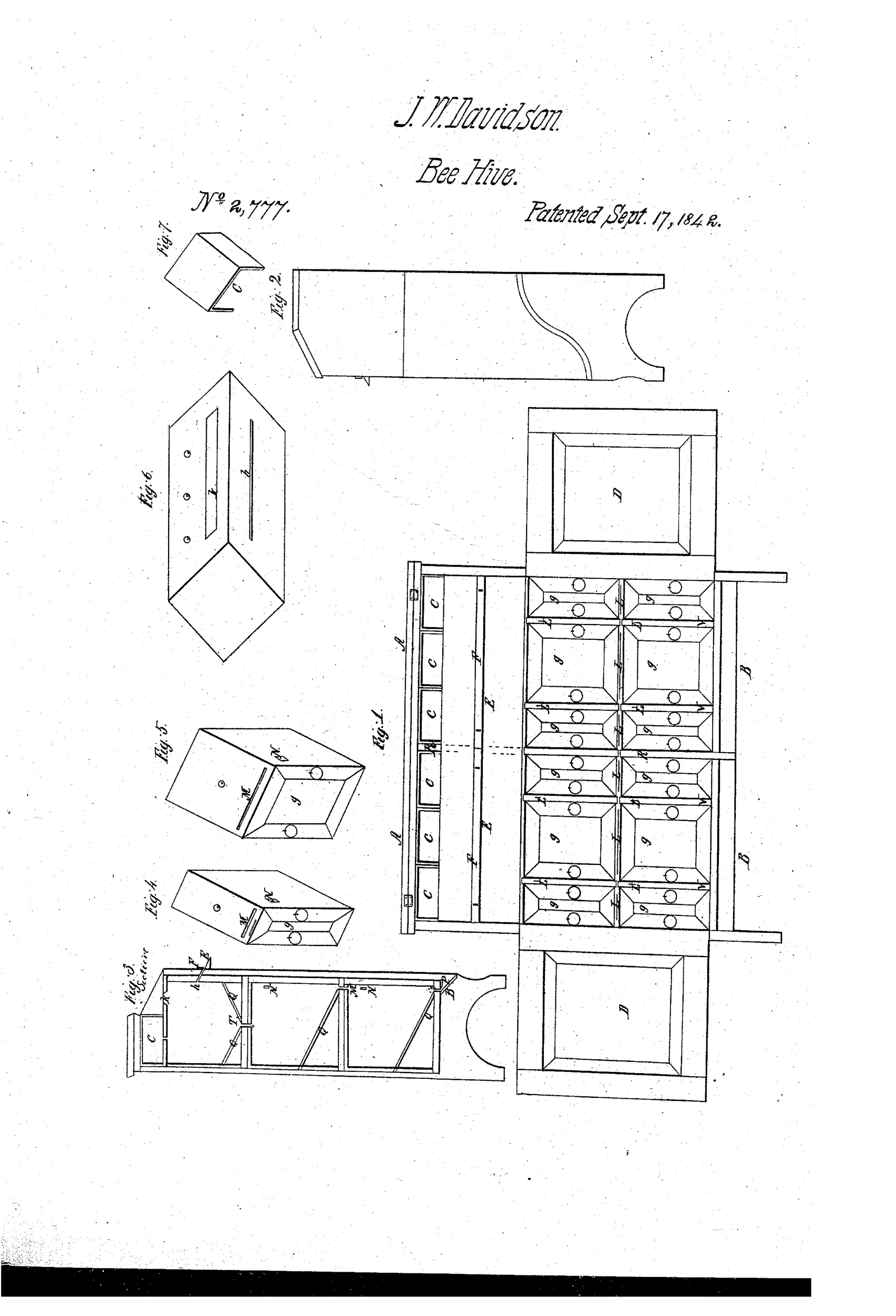
A multi-story wooden bee house with drawers
⬡ How it works
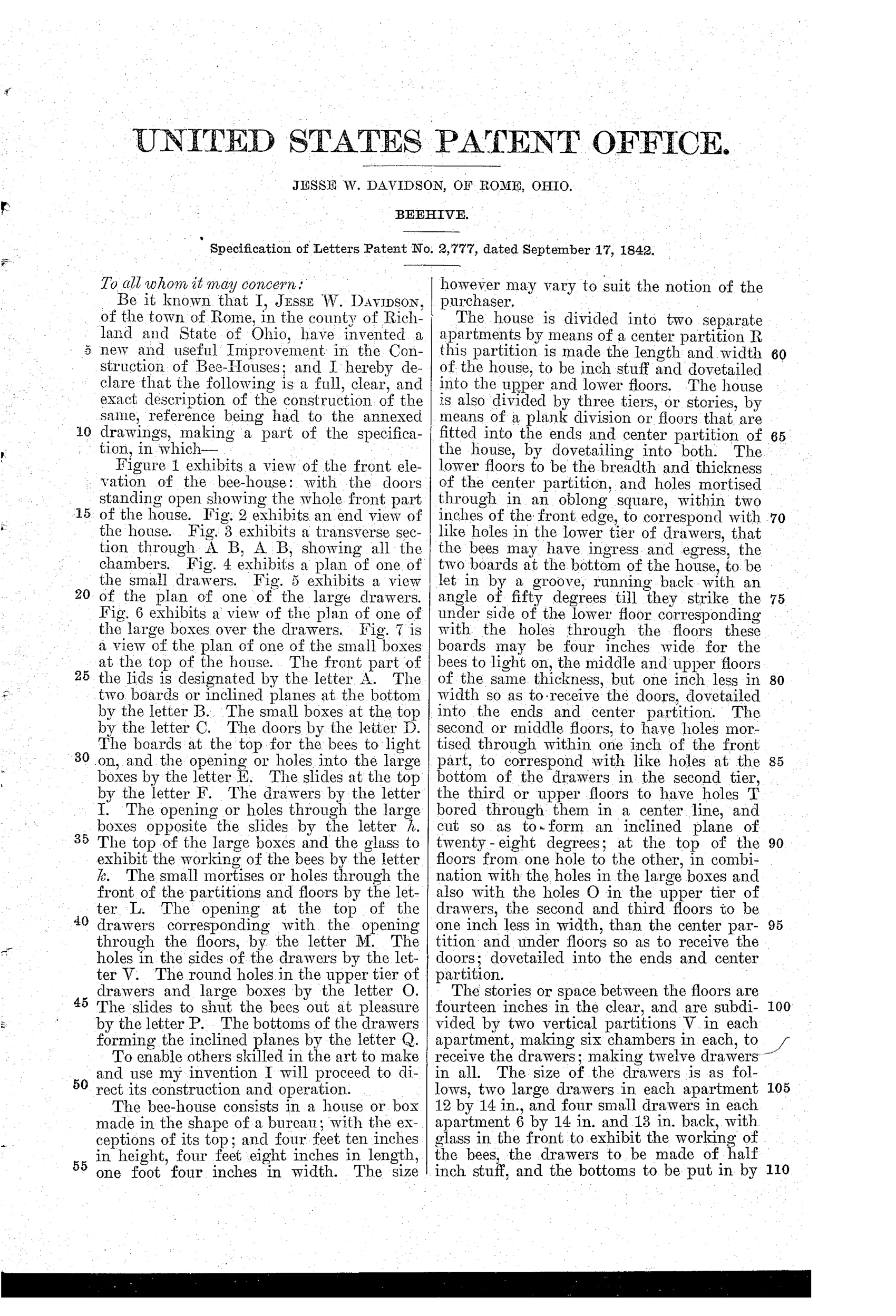
The bee-house is built like a large bureau, divided by a center partition into two separate apartments so two queens may be kept in the same house. Each apartment is further divided into three stories or tiers holding drawers and boxes, with holes mortised through the floors and partitions on inclined planes so bees can travel upward from the entrance boards at the bottom to the honey drawers and swarming boxes above. Small honey boxes with glass fronts sit atop large drawers so the beekeeper can observe when they are full, and a hinged, lockable lid on top like a desk roof allows access to the uppermost swarming boxes. Sliding panels (F) can shut the bees into a given chamber at pleasure, and colored alighting boards help bees find their own entrance.
⬡ What was claimed
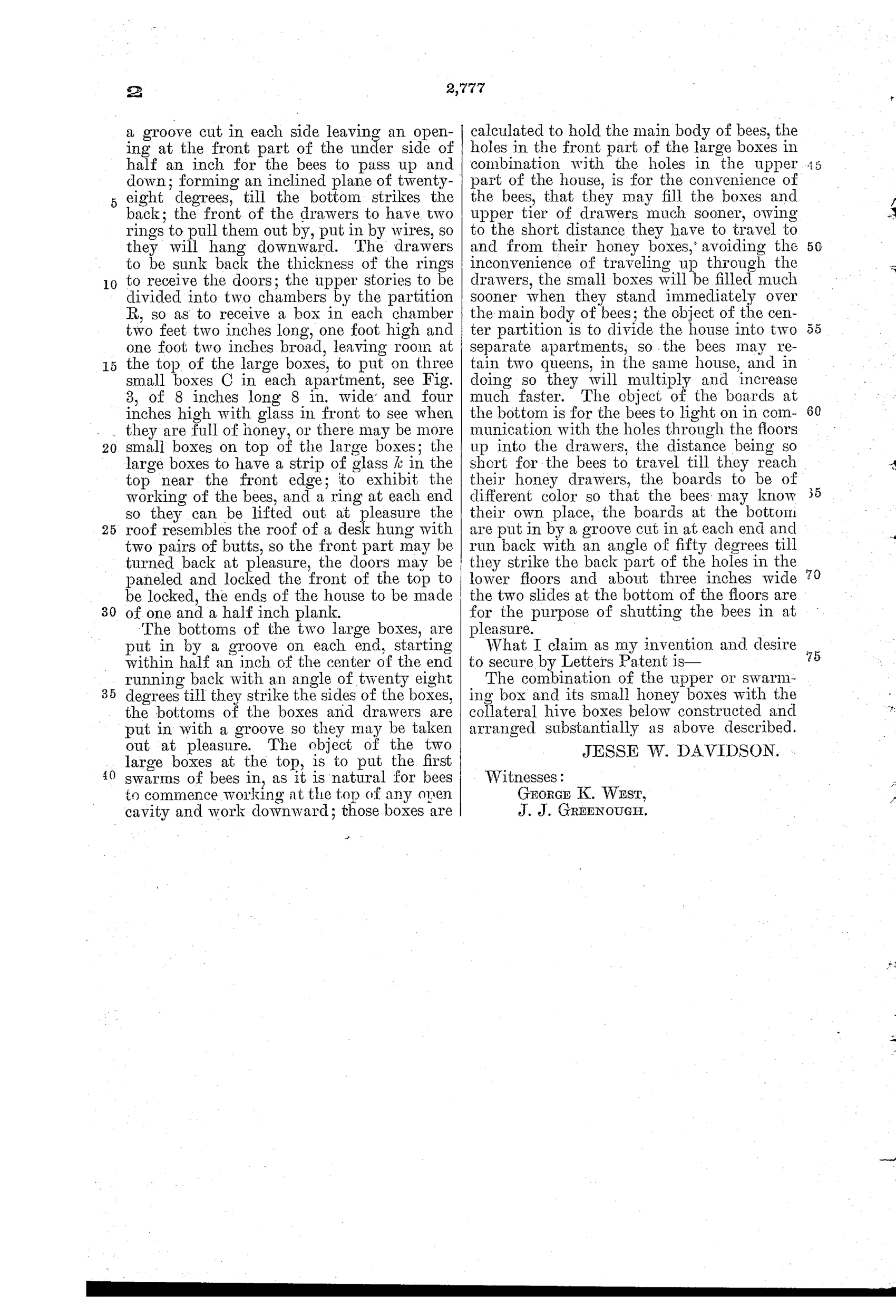
“The combination of the upper or swarming box and its small honey boxes with the collateral hive boxes below constructed and arranged substantially as above described.”
In plain English: The invention claims the specific combination of an upper swarming box with small honey boxes, paired with the connected hive boxes below it, built and arranged as described in the patent.
⬡ In the inventor’s words
“The object of the two large boxes at the top, is to put the first swarms of bees in, as it is natural for bees to commence working at the top of any open cavity and work downward.”— Jesse W. Davidson, from the specification
Fate unknown
Davidson may well have built his own bee house in Rome, Ohio, but no manufactured examples or period advertisements are documented; a surviving marked specimen or local record would settle it.
⬡ Commentary
Davidson's 1842 bee house is a proper piece of pre-Langstroth furniture: a chest-of-drawers for bees, split down the middle so two colonies live under one roof, each stack of drawers connected by holes mortised through the floors on inclined planes. The drawing rewards a close look — that grid of paneled squares in Fig. 1 isn't decoration, it's dozens of individual honey drawers and glass-fronted boxes, each one a little harvestable unit. The hinged desk-lid on top, lockable, tells you something about rural Ohio in the 1840s: honey was worth stealing.
The mechanically interesting bit is the reasoning behind the swarm boxes. Davidson knows bees start comb at the top of a cavity and build downward, so he hives new swarms in the big upper boxes and lets the colony work down toward the drawers. That's real bee sense, and the glass fronts for judging fullness anticipate the observation windows that stayed popular for decades. Sliding panels to isolate any chamber are the era's standard answer to managing bees you can't actually reach.
What's missing, of course, is what nobody had yet: any way to get at the comb itself. Every drawer is a fixed-comb box; inspection means destruction. This is a thoughtful, earnest specimen of the collateral-hive school — the tradition Langstroth's bee space would make obsolete ten years later. As joinery it's ambitious; as beekeeping it's a dead end, but an honest one.
Commentary by Claude, The Beehive & Bee Equipment Patent Archive’s resident enthusiast