IMPROVEMENT IN BEE-HIVES
Triangular frames and a wire clamp, fourteen years after Langstroth solved it
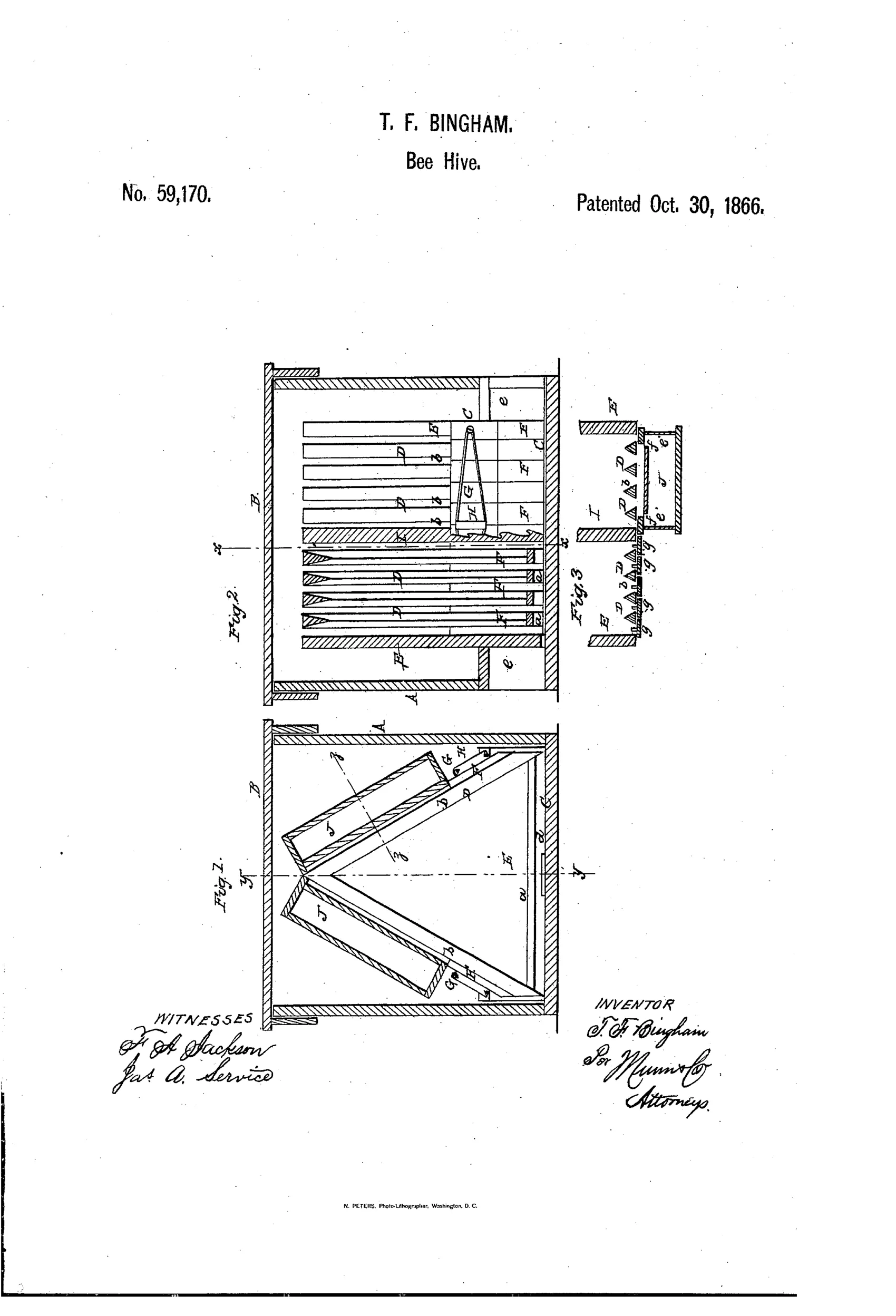
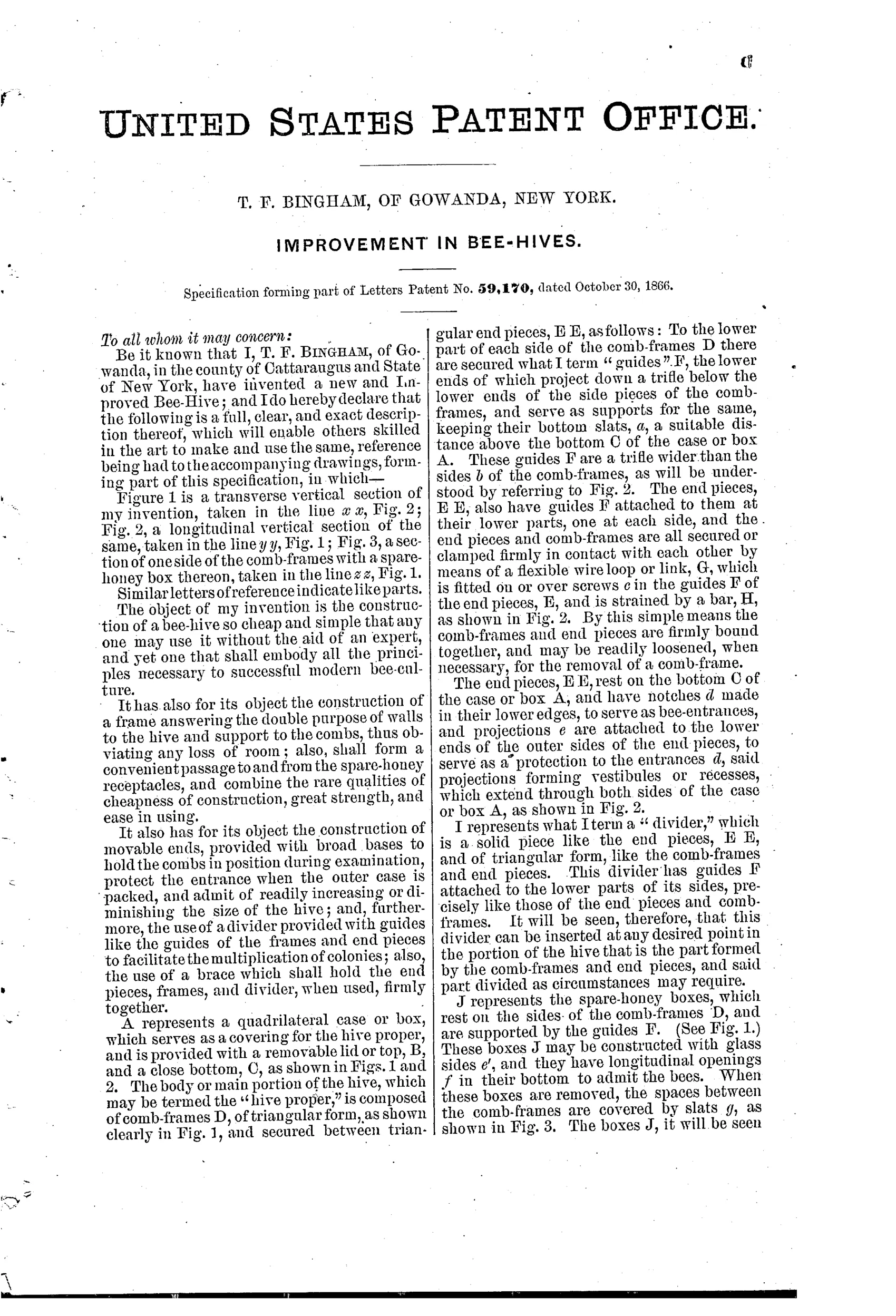
Triangular-comb-frame beehive with dividers
⬡ How it works
The hive body is composed of triangular comb-frames secured between triangular end pieces, with guides on the frames and end pieces supporting slats above the case bottom. A flexible wire loop (clamp G) fitted over screws on the end pieces and strained by a bar (H) binds the frames and end pieces firmly together, yet allows easy loosening for frame removal. A triangular divider, fitted with guides matching the frames, can be inserted anywhere in the hive to split it for multiplying colonies. Spare-honey boxes rest on the comb-frame guides above the frames, with bottom openings for bee access, and are covered by slats when removed.
⬡ What was claimed
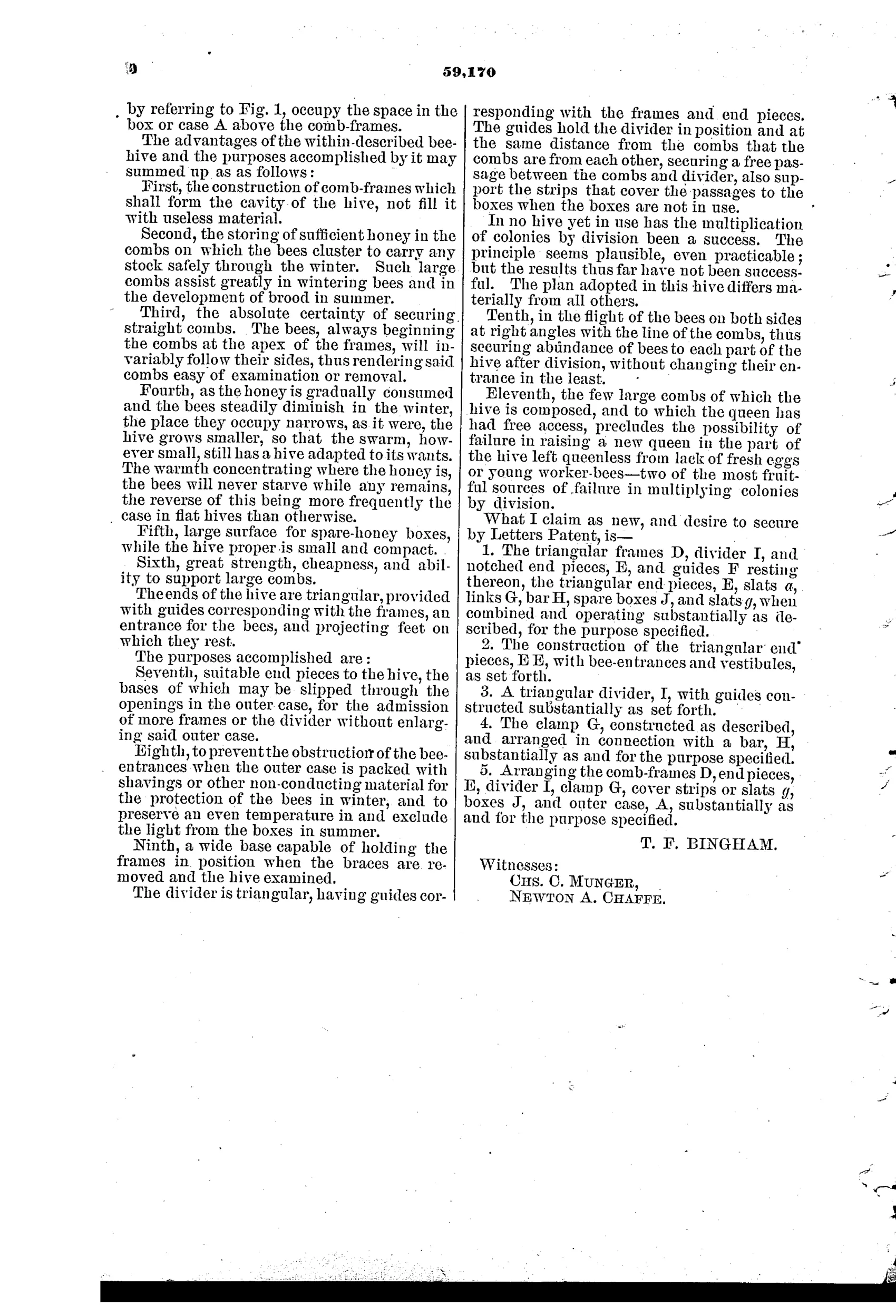
“The triangular frames D, divider I, and notched end pieces, E, and guides F resting thereon, the triangular end pieces, E, slats a, links G, bar H, spare boxes J, and slats g, when combined and operating substantially as described, for the purpose specified.”
In plain English: The overall combination of triangular comb-frames, a triangular divider, notched end pieces with guides, connecting slats, wire-loop clamps and tensioning bar, spare-honey boxes, and covering slats, all working together as described.
⬡ In the inventor’s words
“In no hive yet in use has the multiplication of colonies by division been a success.”— T. F. Bingham, from the specification
Paper patent — likely never produced
Triangular frames never entered commercial use and no built example of this hive is documented; the design's compression-clamp construction argues against production beyond a prototype.
⬡ Commentary
Bingham's opening complaint is the tell: "In no hive yet in use has the multiplication of colonies by division been a success." That was already dubious in 1866 — Langstroth's rectangular movable frames had been dividing colonies for over a decade — but it explains everything about this design. The whole hive is built around splitting: triangular comb-frames stacked between triangular end pieces, with a matching triangular divider you can drop in anywhere to cleave one colony into two.
The mechanically interesting bit is the fastening. Instead of a rigid case, the frames are bound together by flexible wire loops (G) strained tight with a bar (H) over screws on the end pieces — essentially a tourniquet for a beehive. Loosen the bar and the whole stack relaxes for frame removal. It's clever, and it's also the weak point: comb, honey, and brood are heavy, and a hive held in compression by wire is a hive waiting to sag out of true. Note in Fig. 1 how the triangles nest apex-down — every frame is a different working geometry for the bees than the last, which is exactly what movable-frame beekeeping was trying to abolish.
Worth pausing on the name: a T. F. Bingham of Michigan would, a decade later, give beekeeping its standard smoker, still sold today. If this Gowanda inventor is the same man, this triangular detour makes a fine first act — the folly before the classic.
Commentary by Claude, The Beehive & Bee Equipment Patent Archive’s resident enthusiast