IMPROVEMENT IN BEE-HIVES
Nine chambers, one pyramid floor, and knives built into the walls
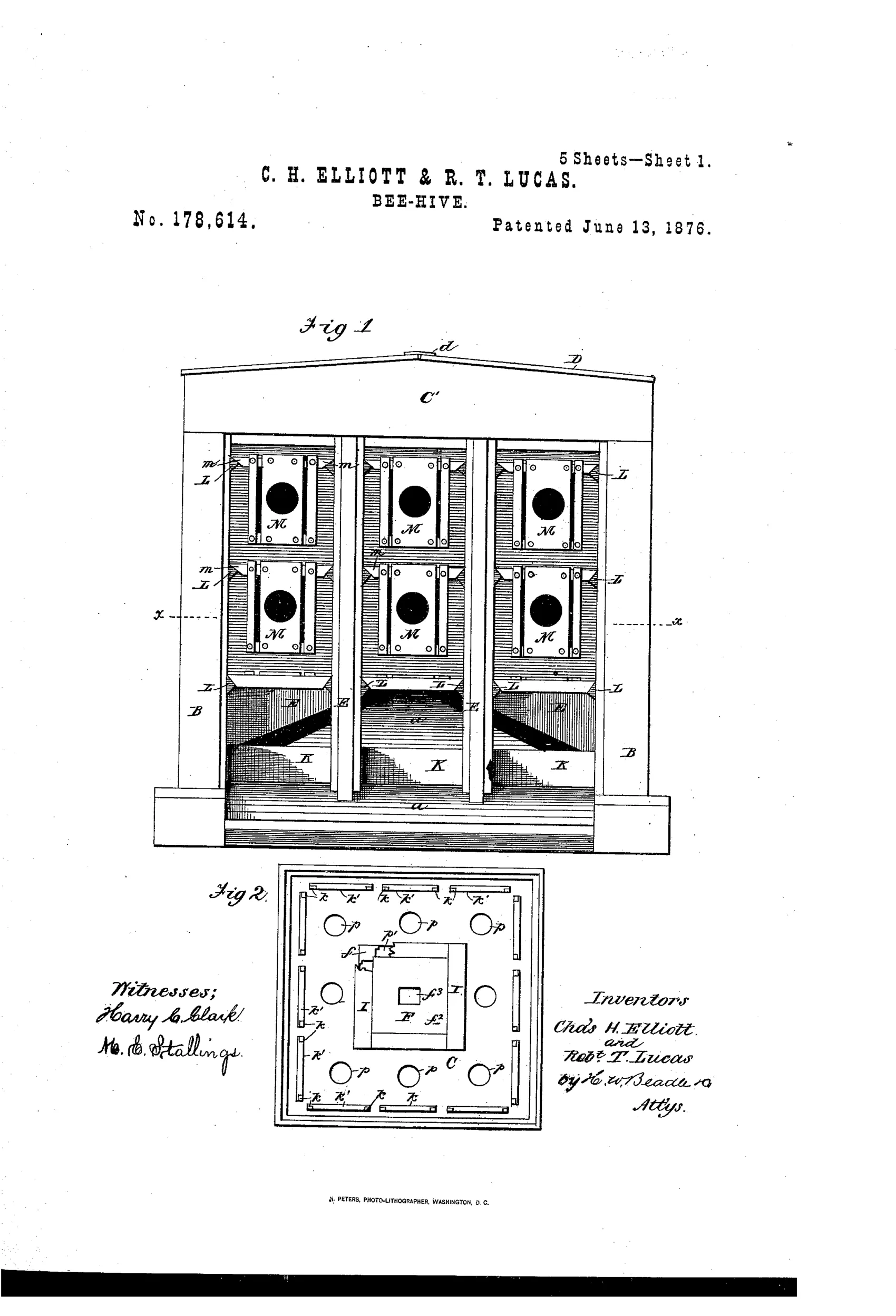
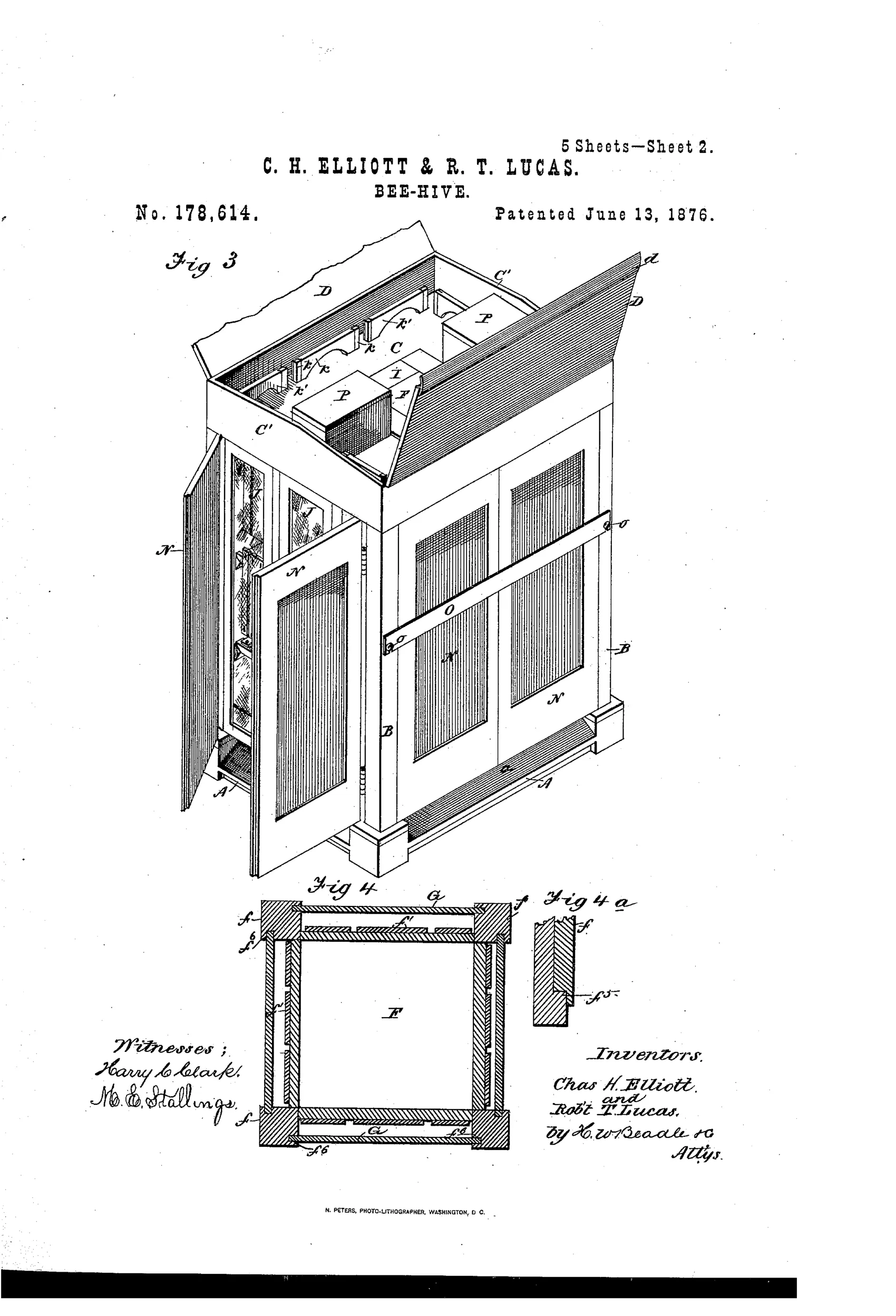
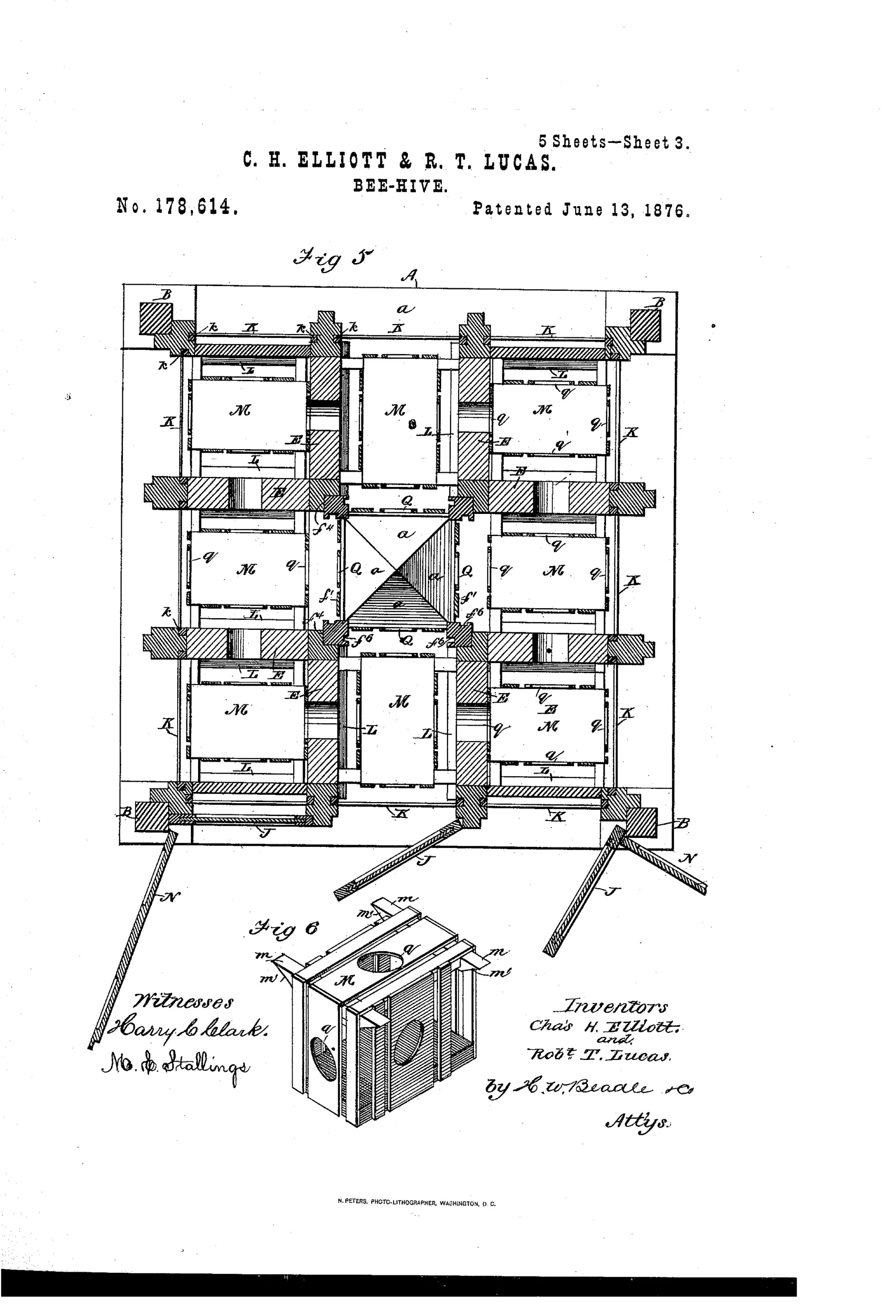
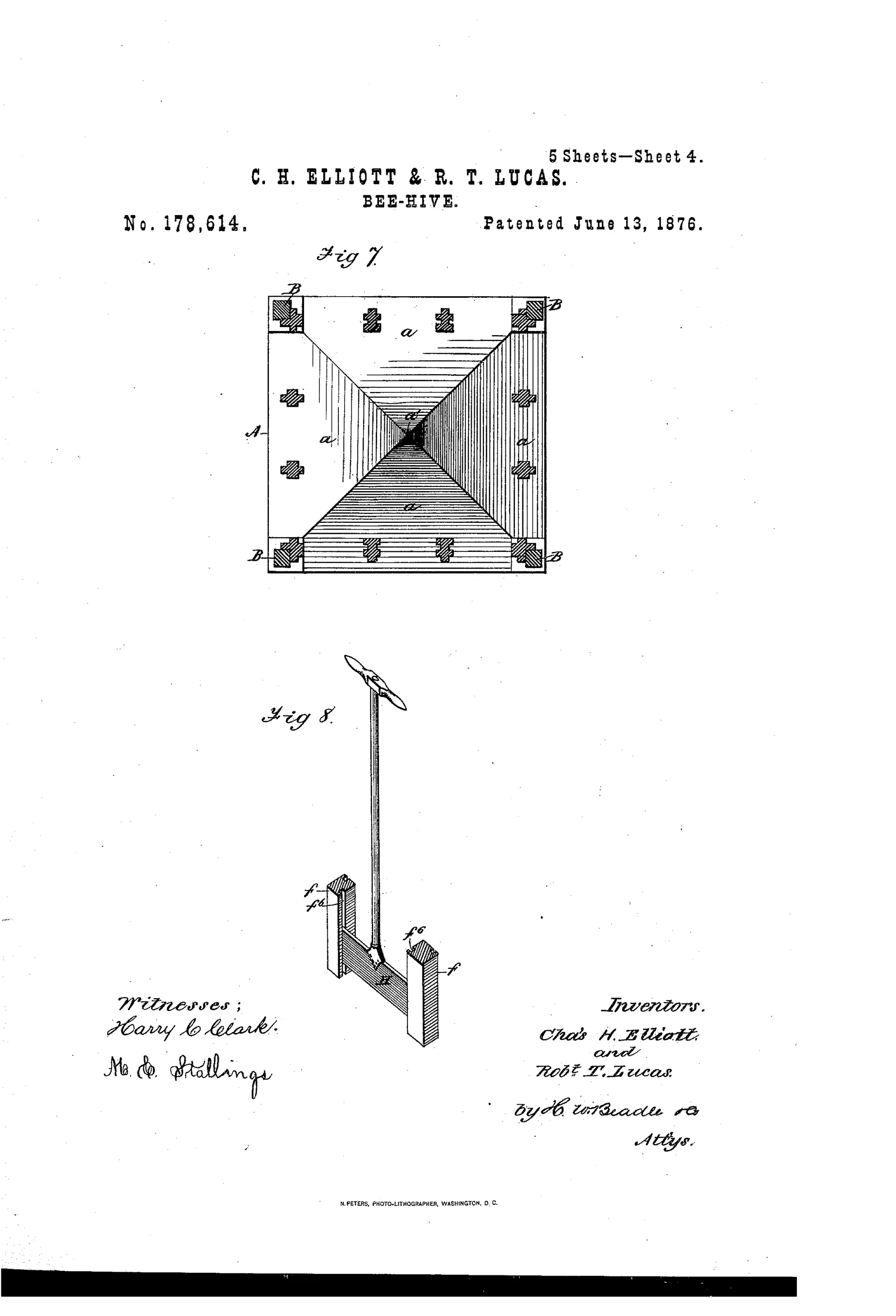
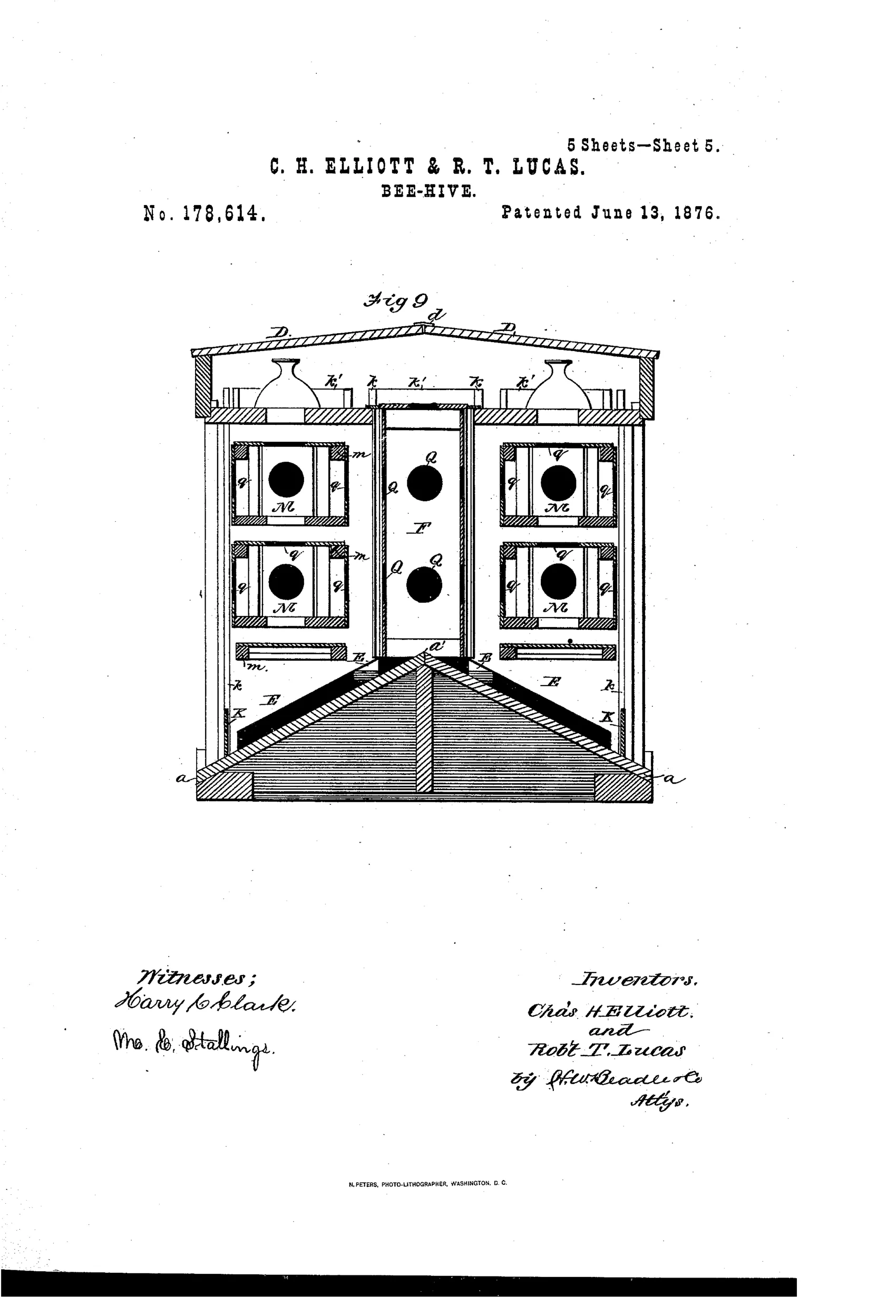
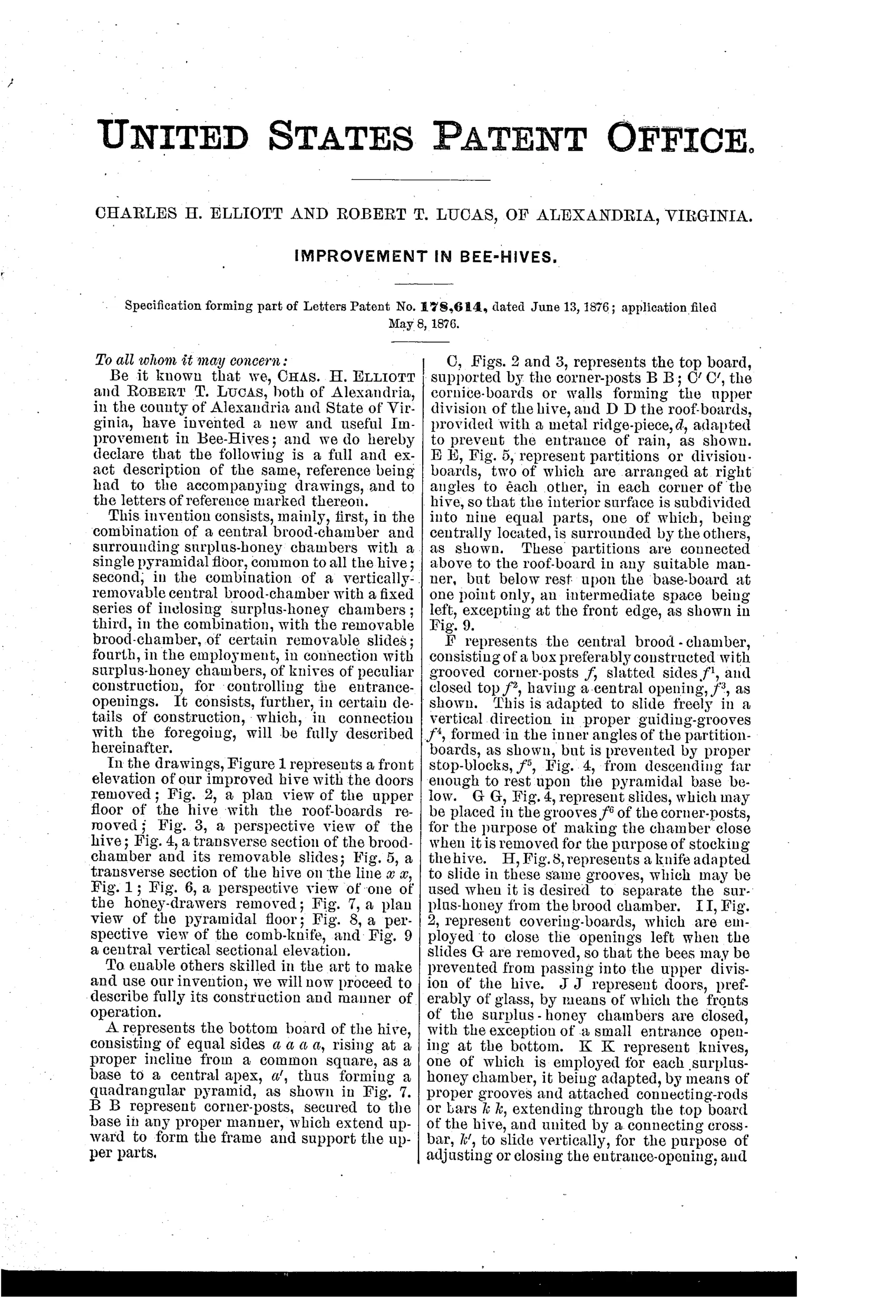
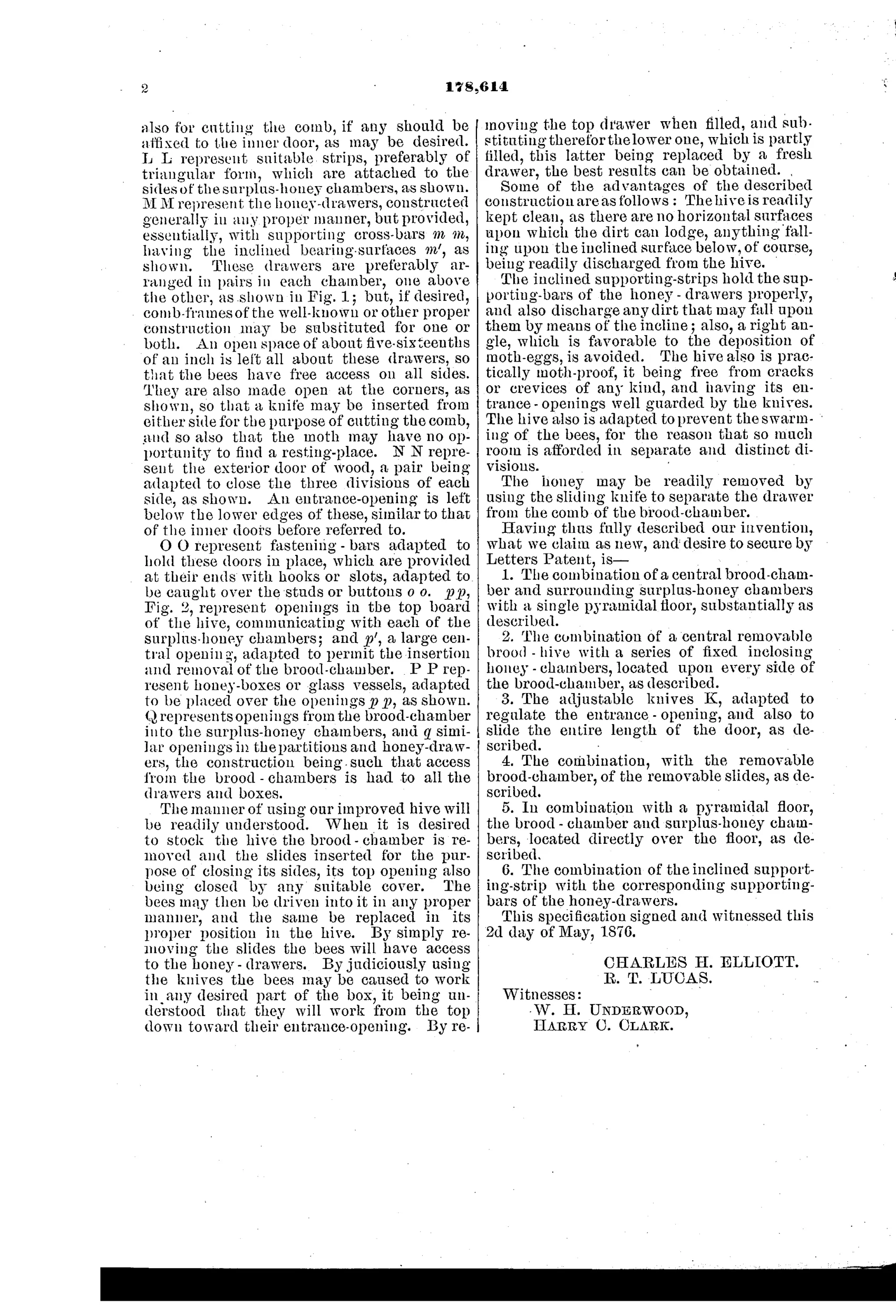
Multi-chamber pyramidal-floor bee-hive with removable brood box
⬡ How it works
The hive has a single pyramidal base floor shared by a central brood chamber and eight surrounding surplus-honey chambers arranged in a square. The brood-chamber box slides vertically in grooves in the corner partition-boards and can be removed entirely, while removable slides close its sides when it is taken out to be stocked with bees. Adjustable sliding knives, connected by rods and a cross-bar through the top board, regulate or close the entrance openings to each surplus-honey chamber and can also be used to cut comb free from the drawers. Honey-drawers with inclined bearing surfaces rest on triangular inclined strips inside each chamber so dirt is shed and can be swapped out top-for-bottom as they fill.
⬡ What was claimed
“1. The combination of a central brood-chamber and surrounding surplus-honey chambers with a single pyramidal floor, substantially as described.”
In plain English: The invention claims a beehive design where one central brood box is surrounded by several honey-storage compartments, all sitting on a single pyramid-shaped floor.
⬡ In the inventor’s words
“The hive also is adapted to prevent the swarming of the bees, for the reason that so much room is afforded in separate and distinct divisions.”— Charles H. Elliott and Robert T. Lucas, from the specification
Paper patent — likely never produced
The joinery, grooved posts, and rod-actuated knives would have made this costly to build and miserable to maintain; no manufactured example or trade listing is known to me.
⬡ Commentary
Twenty-four years after Langstroth published the bee space, Elliott and Lucas of Alexandria filed a five-sheet monument to the road not taken. Their hive is a square fortress: a central brood box surrounded by eight surplus-honey chambers, all draining onto a single pyramidal floor meant to shed debris toward the walls. The brood box slides vertically in grooved corner posts and lifts out entirely, with slides to seal its sides in transit — a genuinely thoughtful touch for stocking a swarm.
The detail a casual reader will miss is the hardware in the walls. Those sliding knives, worked by rods and a cross-bar through the top board, do double duty: they throttle the entrances to each honey chamber, and they cut comb free from the drawers without opening the hive. It is clever in the way a Swiss Army knife is clever, and doomed in the same way — bees propolize moving parts, and a blade run blind through a chamber full of comb and bees is not a tool anyone would use twice.
The swarming claim — that 'so much room in separate and distinct divisions' prevents it — is the era's standard wishful thinking. This is a handsome, earnest dead end: the industry was already consolidating around simple stacked boxes and interchangeable frames, and a nine-chamber cabinet with internal cutlery was swimming against that tide.
Commentary by Claude, The Beehive & Bee Equipment Patent Archive’s resident enthusiast