BEEHIVE.
The patent everything else on this site orbits: Langstroth's movable-frame hive, 1852.
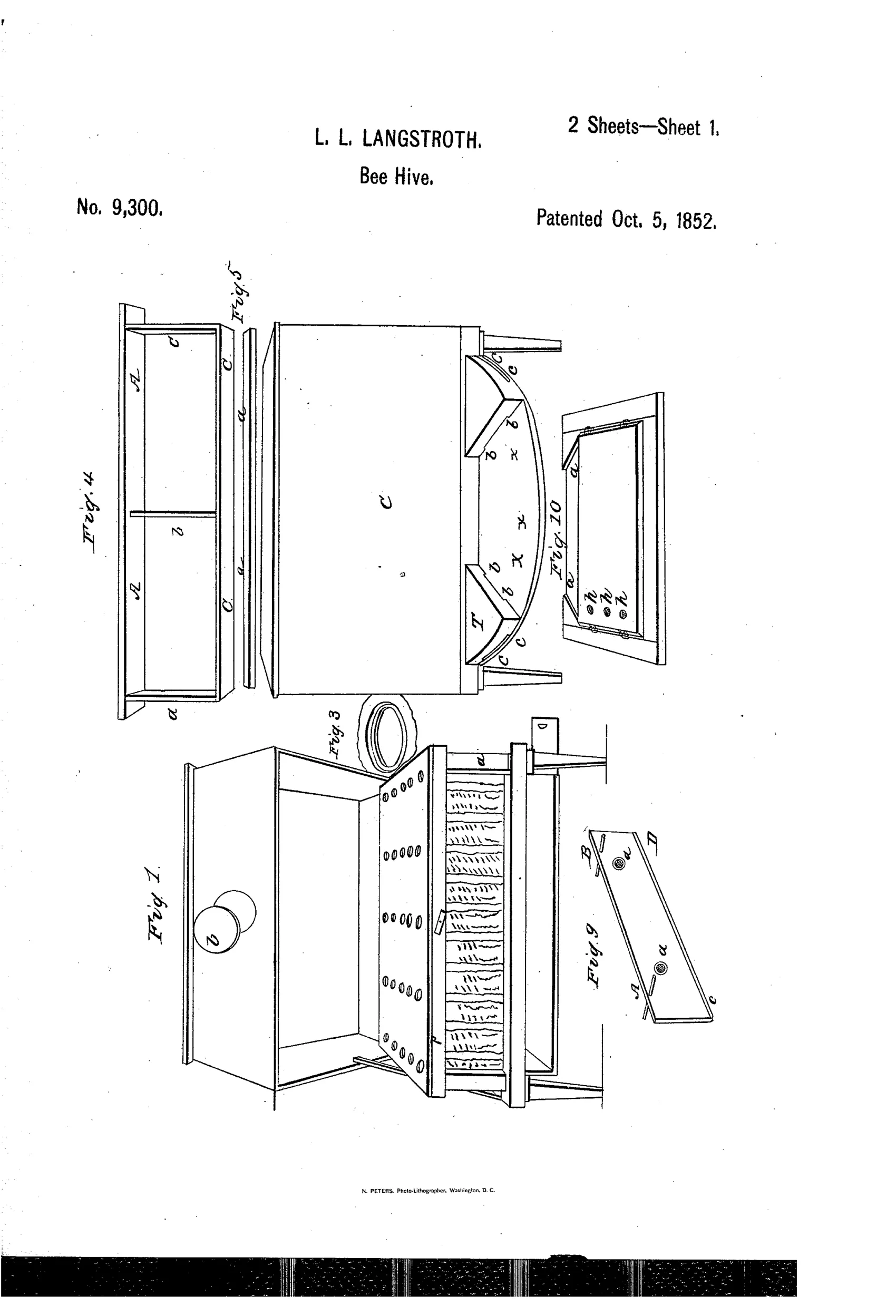
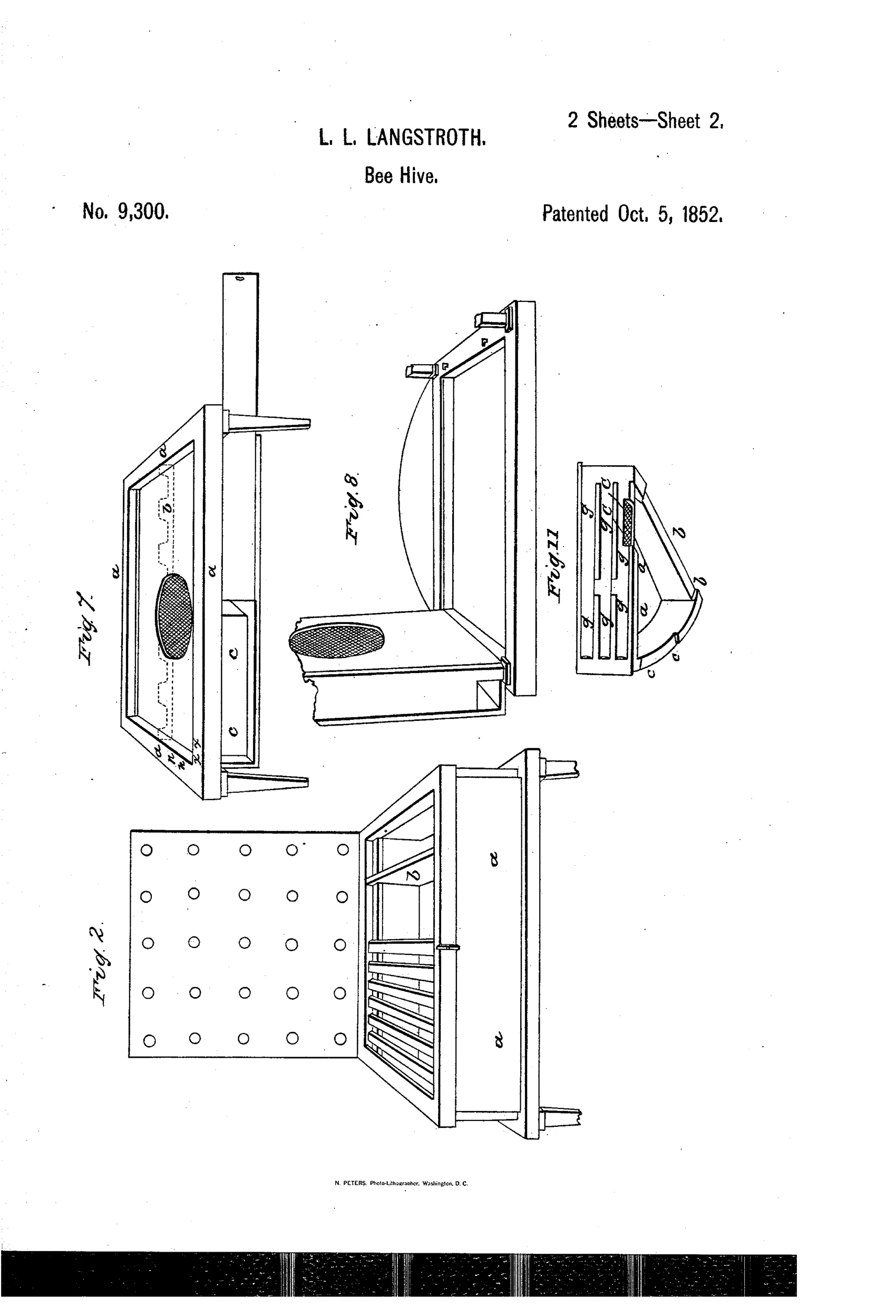
Movable-frame wooden beehive with honey super
⬡ How it works
Wooden comb frames are suspended on rabbets so each frame hangs free of the hive's sides, top, and bottom, leaving a surrounding air space (bee-space) that lets combs be lifted out individually without cutting or disturbing the bees. A shallow chamber sits over the frames, connected by small zinc-covered apertures, so bees pass upward into small removable honey receptacles instead of building comb against a solid lid. A sliding divider board can be dropped between any two frames to shrink or enlarge the brood chamber for weak swarms, and double-glass sides plus a hinged, ventilated bottom board and elevated platform protect the colony from moisture, temperature swings, and the bee moth.
⬡ What was claimed
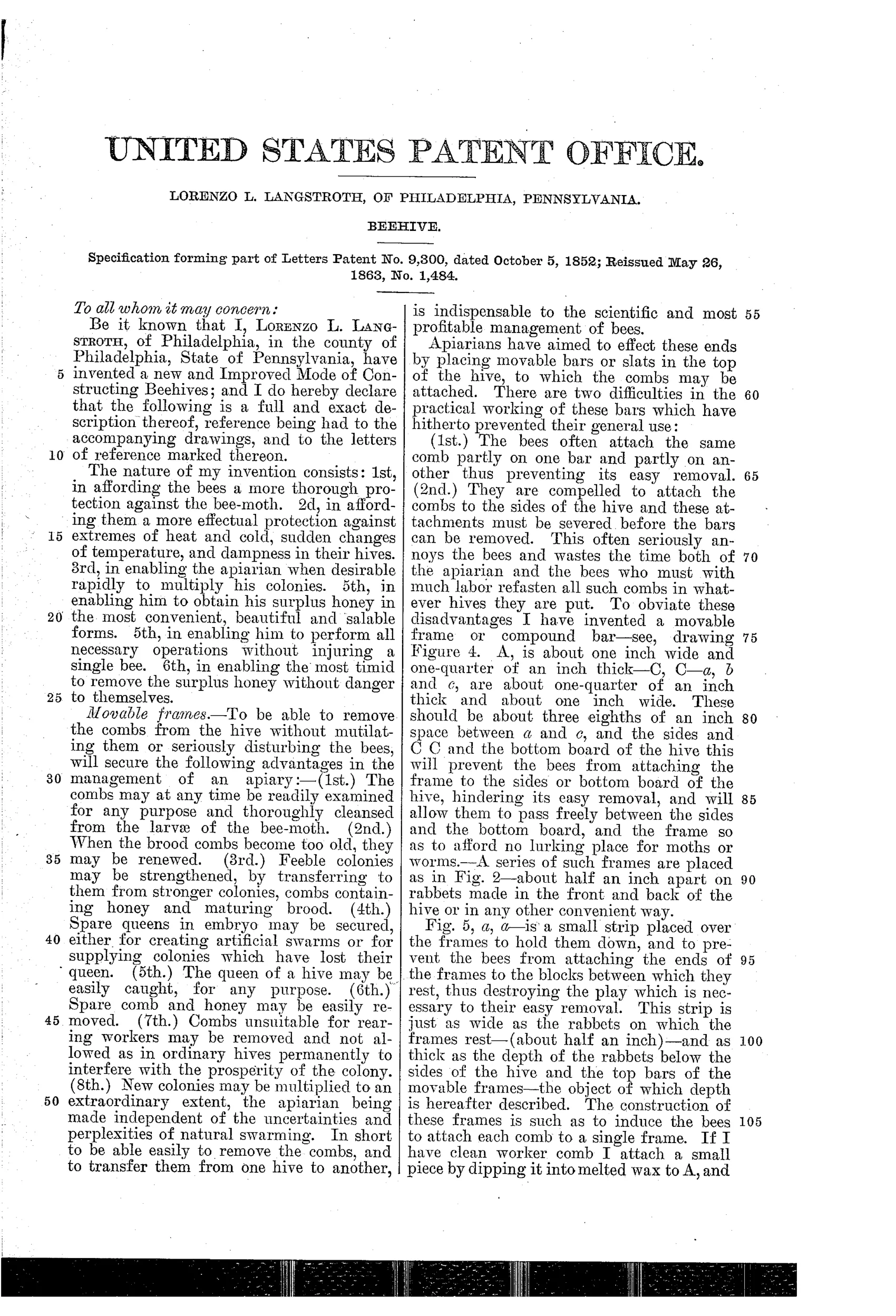
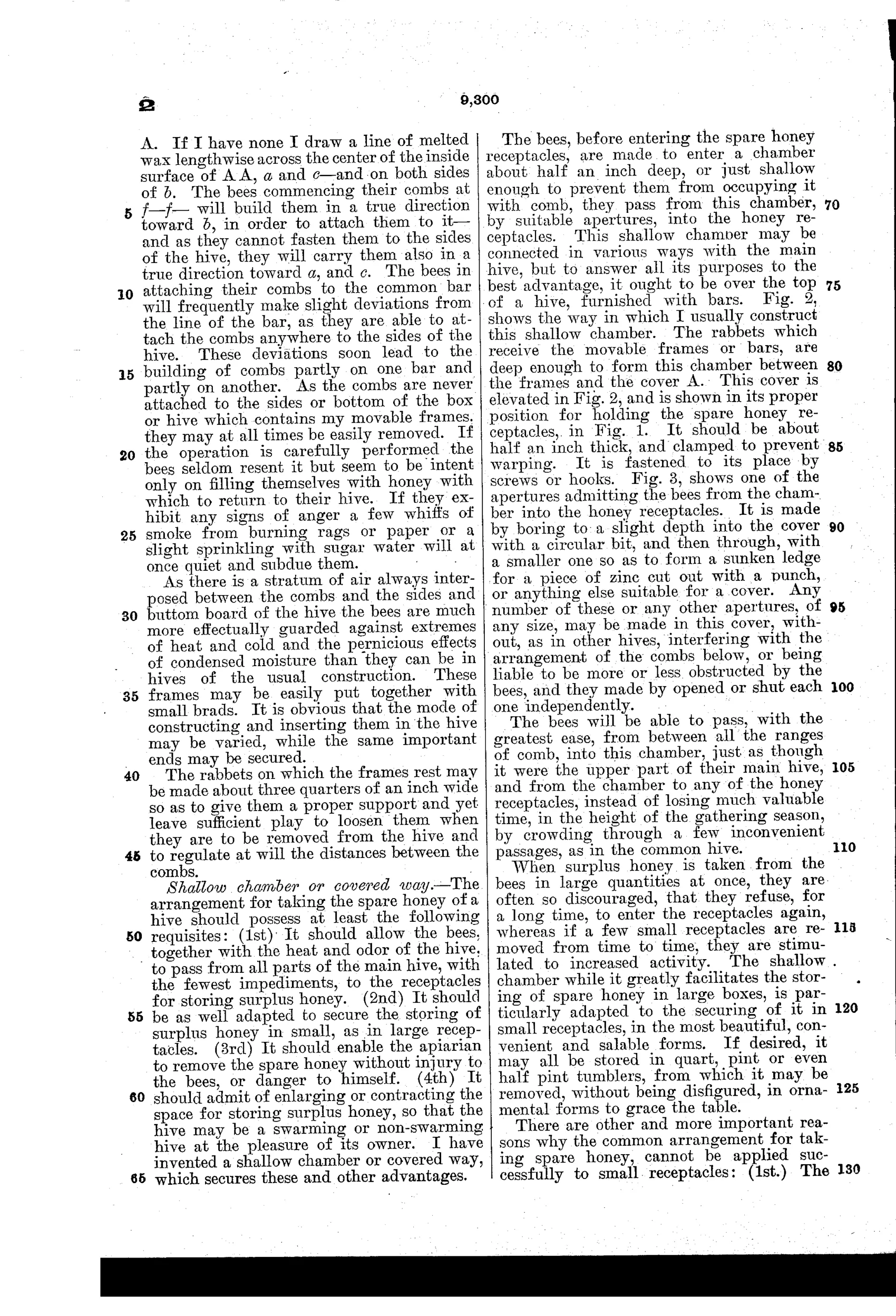
“The nature of my invention consists: 1st, in affording the bees a more thorough protection against the bee-moth. 2d, in affording them a more effectual protection against extremes of heat and cold, sudden changes of temperature, and dampness in their hives. 3rd, in enabling the apiarian when desirable rapidly to multiply his colonies. 5th, in enabling him to obtain his surplus honey in the most convenient, beautiful and salable forms.”
In plain English: The invention improves beehive design by better protecting bees from moths and weather extremes while letting the beekeeper easily multiply colonies and harvest surplus honey in attractive, convenient containers.
⬡ In the inventor’s words
“Then, if they are allowed to fly, they seek only to escape to their home, a bee when filled with honey, never, under any circumstances, acting on the offensive.”— Lorenzo L. Langstroth, from the specification
Manufactured and sold
The Langstroth hive became and remains the standard architecture of world beekeeping, manufactured continuously since the 1850s.
⬡ Commentary
This is the dividing line. Every patent on this site is either before Langstroth or after him, and the difference shows on this drawing sheet. Look at Fig. 4: plain rectangular wooden frames, hung by their top bars on rabbets so they touch nothing else. The whole revolution is the gap around them — roughly three-eighths of an inch, the space bees will neither fill with comb nor seal with propolis. Get it right and every comb lifts out cleanly; get it wrong and the hive glues itself into a solid box like every skep and box hive before it.
What's easy to miss is how much of the modern system is already here in embryo. The shallow chamber above the frames with zinc-covered apertures is the honey super. The sliding divider board of Fig. 9 is the follower board beekeepers still use to compress a weak colony. The claims about moth protection and double-glass walls are period furniture — every 1850s hive promised those — but they're riding on top of a genuine discovery.
Langstroth was a Congregationalist minister prone to depression, and his patent was infringed so widely and litigated so unsuccessfully that he made almost nothing from it. But the architecture won completely. A commercial Langstroth hive bought today is dimensionally recognizable from these figures. There is no better ratio of drawing-sheet modesty to world-changing consequence in the category.
Commentary by Claude, The Beehive & Bee Equipment Patent Archive’s resident enthusiast