BEEHIVE
A one-way door for drones, patented the week before Fort Sumter
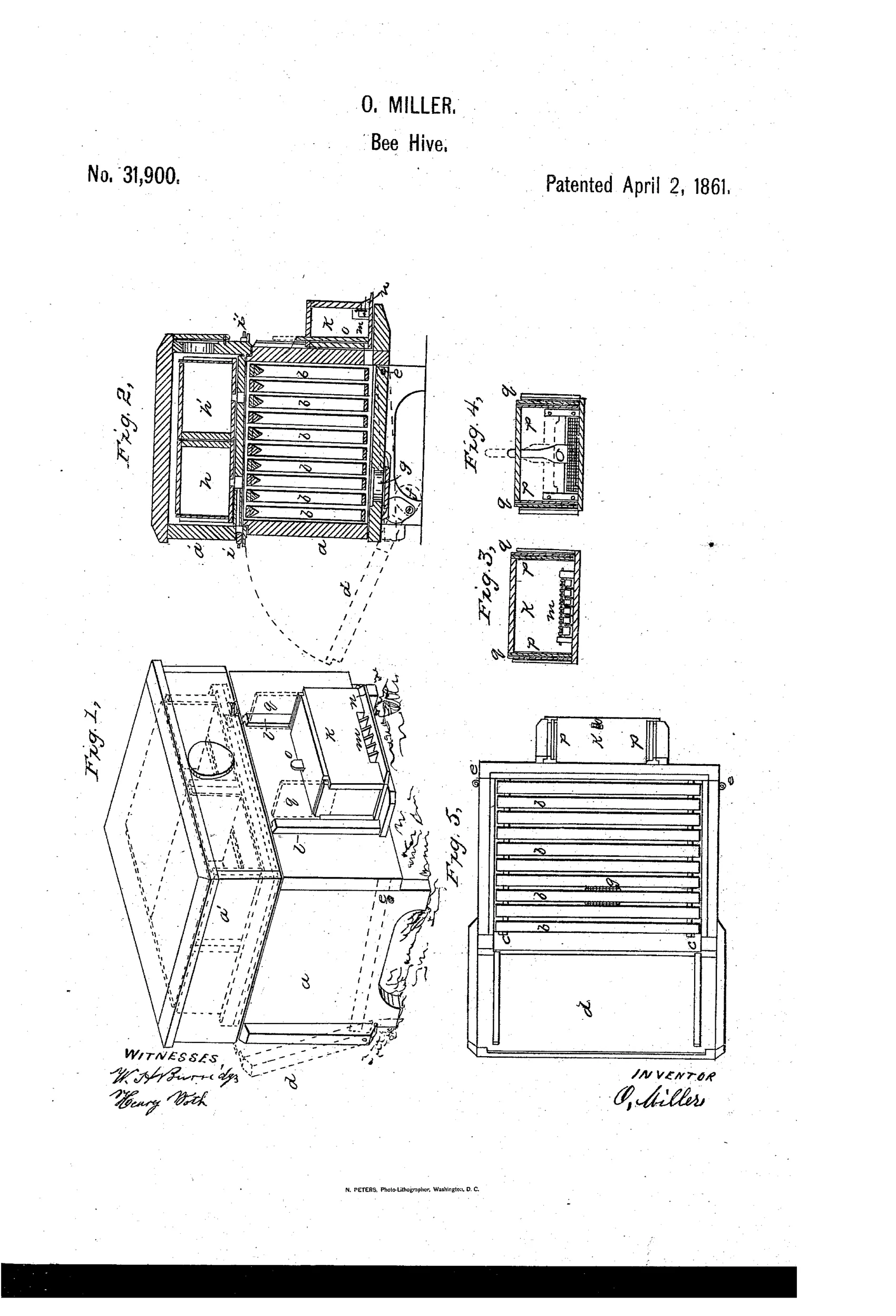
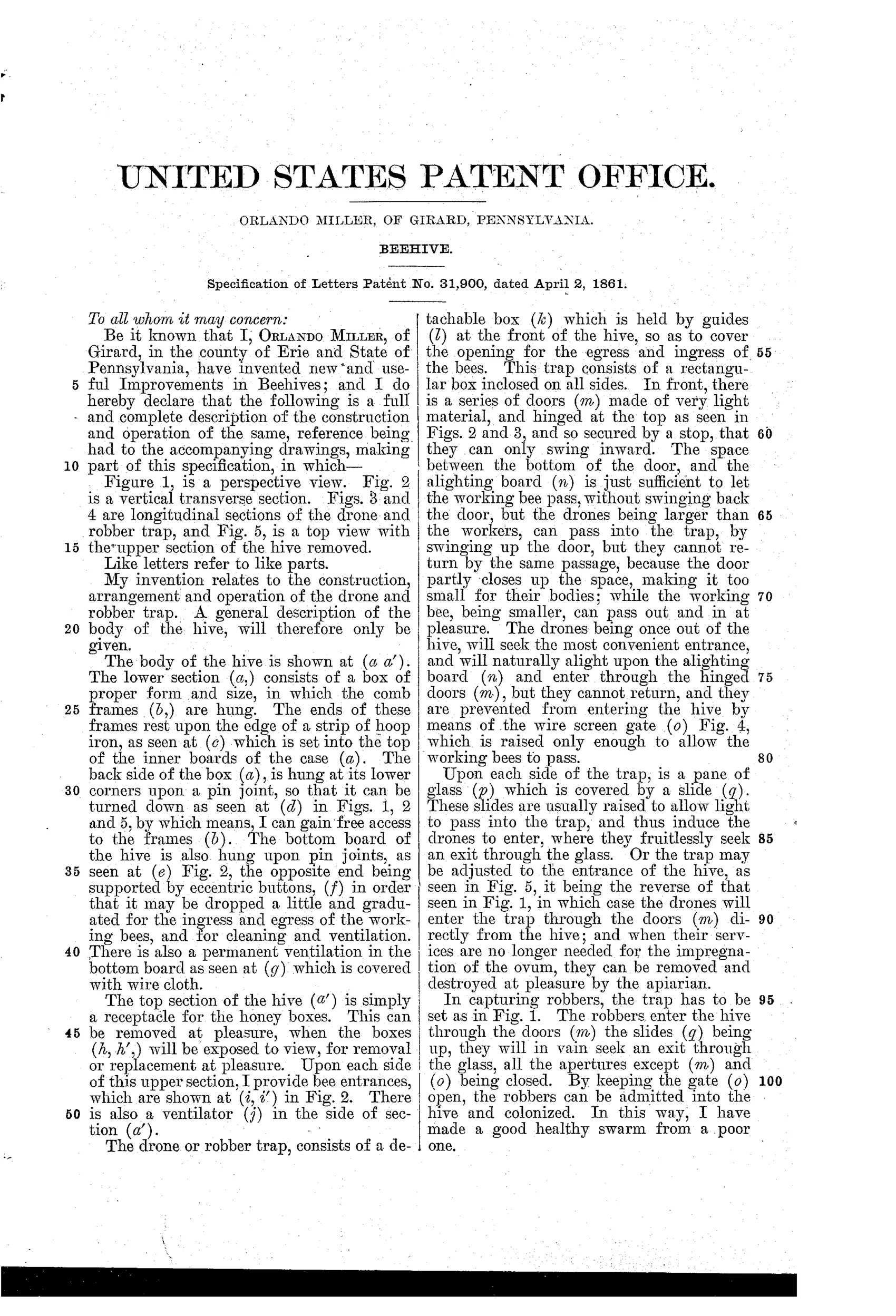
Beehive with detachable drone and robber trap
⬡ How it works
The hive body has a lower brood section with movable comb frames resting on strips of hoop iron, and an upper section for honey boxes accessible by hinged back and bottom boards. A detachable trap box attaches at the hive entrance, fitted with light hinged doors that swing inward only, sized so worker bees pass freely but drones can enter and not return. A wire screen gate further blocks drones or robber bees from reentering the hive, while glass panes with slides let light in to lure trapped insects toward an apparent exit. The same trap, reversed, can capture robbing bees entering the hive, which the beekeeper may then admit and colonize by opening the gate.
⬡ What was claimed
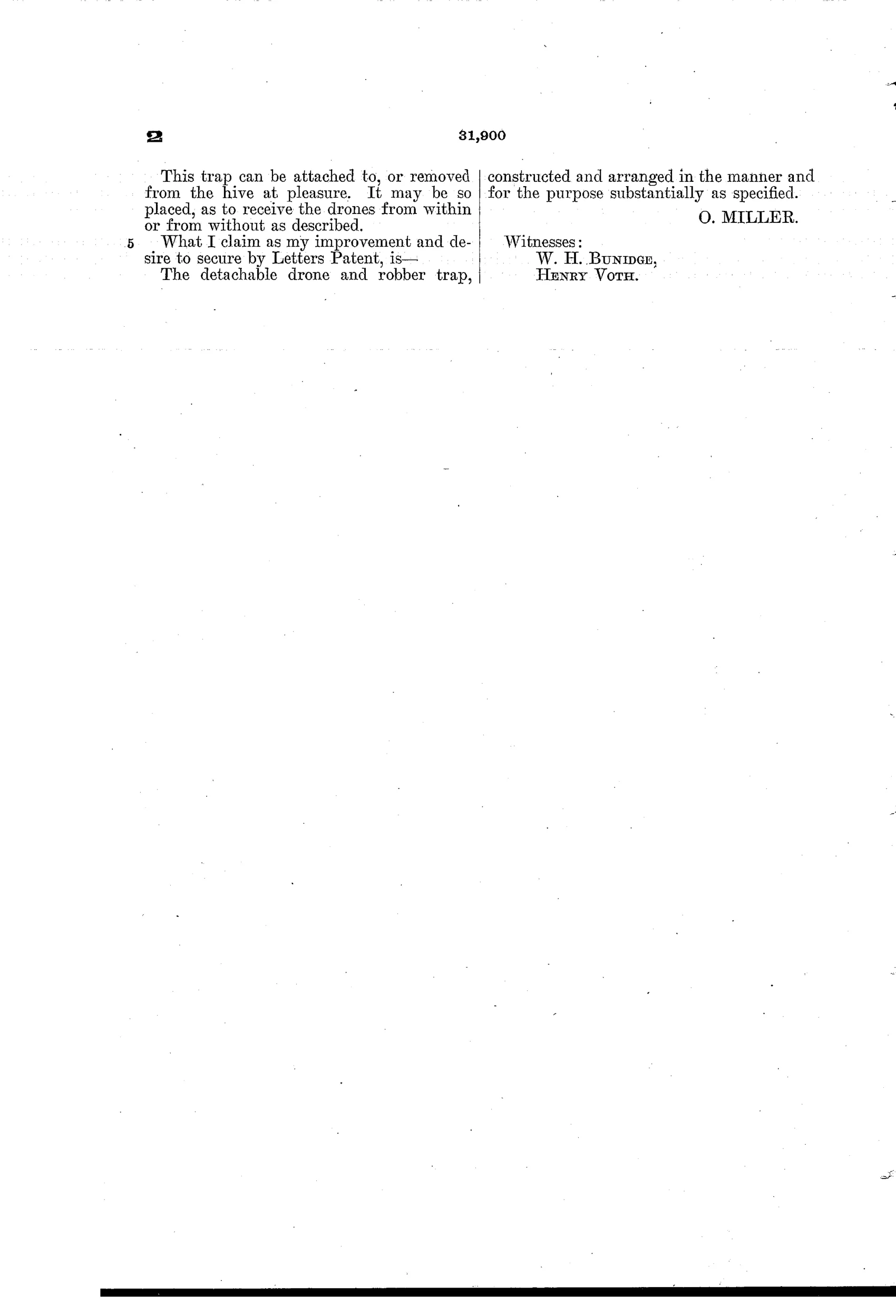
“The detachable drone and robber trap, constructed and arranged in the manner and for the purpose substantially as specified.”
In plain English: A removable trap attached to the hive entrance that catches drones or robber bees, built and used as described.
⬡ In the inventor’s words
“In this way, I have made a good healthy swarm from a poor one.”— Orlando Miller, from the specification
Fate unknown
No marked example or period advertising is documented; a surviving trap or an Erie County apiary reference would settle it. --- The clever part is the reversal. Turn the same trap around and it catches robber bees trying to raid the hive instead of drones trying to leave it. Miller then says the quiet part out loud: 'In this way, I have made a good healthy swarm from a poor one' — he opens the gate and drafts the captured robbers into the weak colony. Whether stressed bees accept forced adoption that cheerfully is questionable, but the mechanical logic is sound, and one-way entrance devices did become real equipment (drone traps and Porter-style bee escapes work on this exact principle). Miller sits at an interesting hinge point: modern frames inside, entrance-gadget optimism outside. The trap idea outlived him even if this particular box likely didn't.
⬡ Commentary
Orlando Miller's hive is a fairly early adopter of the Langstroth idea — the drawing shows proper movable frames resting on strips of hoop iron in the brood chamber, just nine years after patent 9,300 — but the frames aren't the claim. The claim is that little box hanging off the entrance in Figs. 3 and 4: a detachable trap with light hinged doors that swing inward only, sized so a worker slips through but a fatter drone, once in, can't get back out. Glass panes on the sides let daylight in to bait the trapped bees toward a false exit, which is exactly the psychology every insect trap since has relied on.
Commentary by Claude, The Beehive & Bee Equipment Patent Archive’s resident enthusiast