IMPROVEMENT IN BEE-HIVES
A hive hung like a plumb bob, with a decoy basement for moths
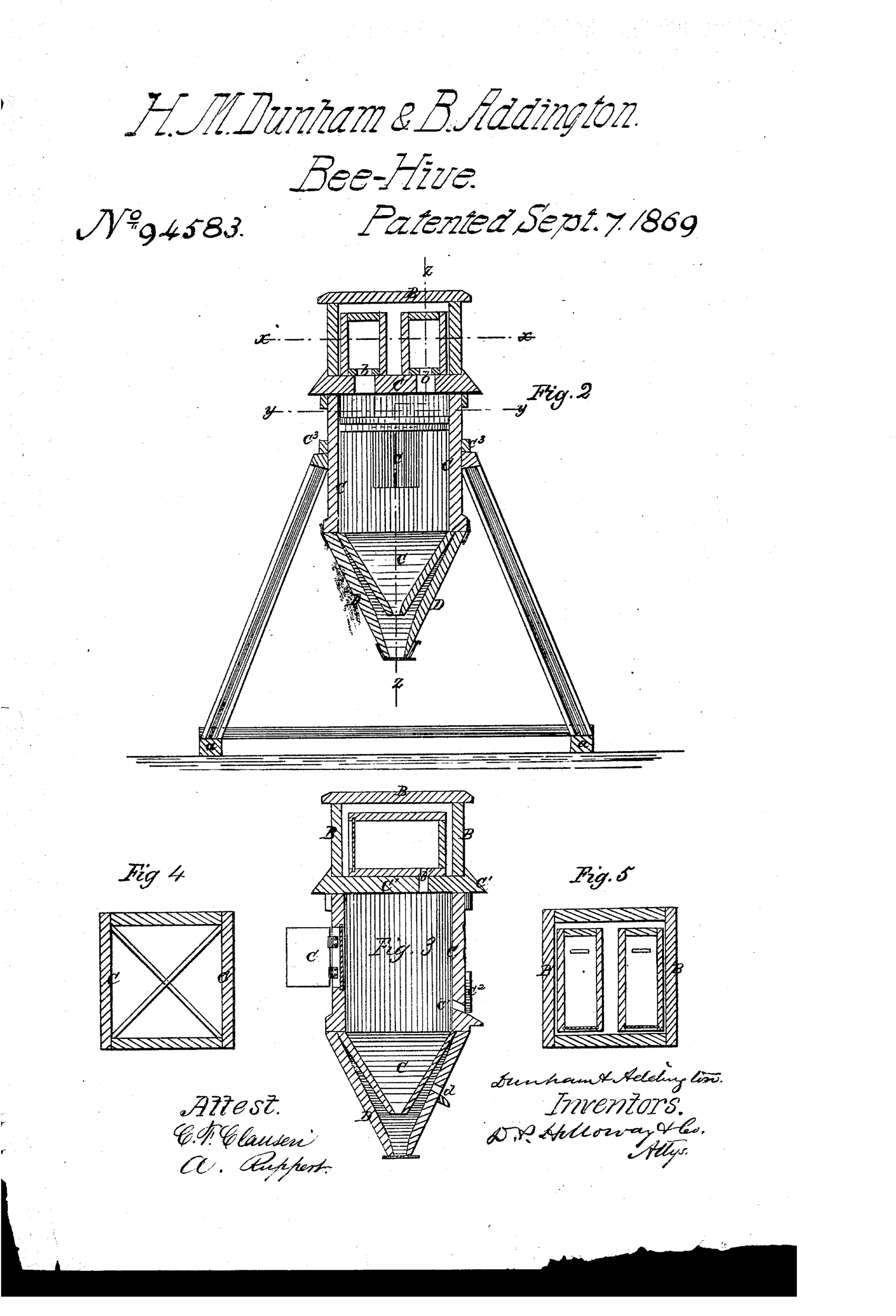
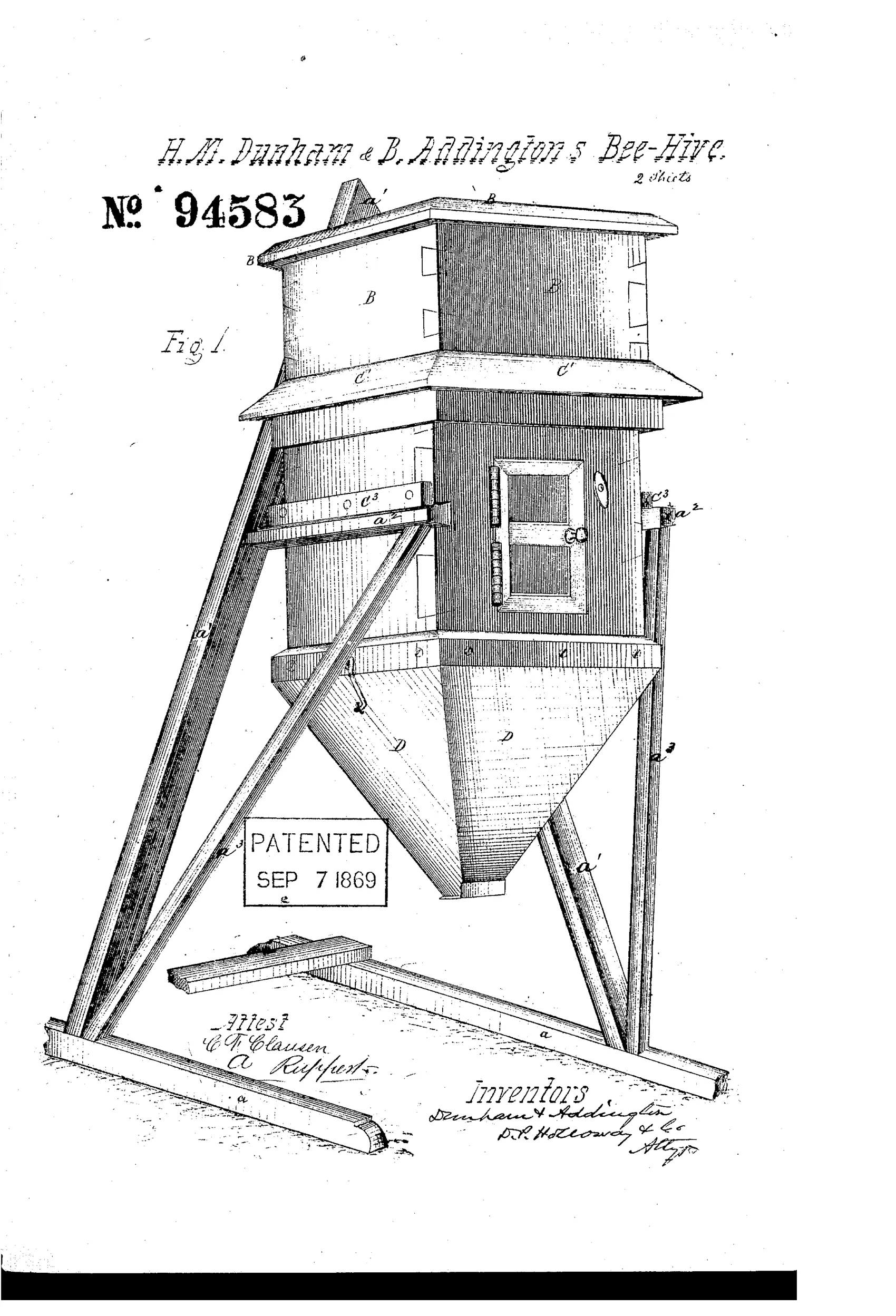
Suspended, insulated bee-hive with built-in miller-moth trap
⬡ How it works
The hive hangs suspended on a triangular wooden frame (A) via cleats and arms, keeping it off the ground and away from crawling pests. An upper chamber (B) holds removable honey-boxes accessed through passages, resting atop a main square chamber (C) where bees store honey for winter. The main chamber's lower end tapers to a point and is enclosed by a separate truncated box (D) that attaches below it, leaving an air gap between the two that insulates the hive from cold. Moths seeking entry are lured through a side opening in the truncated box, where they contact the hive's lower end and deposit eggs on a removable, hinged screened panel that can be periodically cleaned out.
⬡ What was claimed
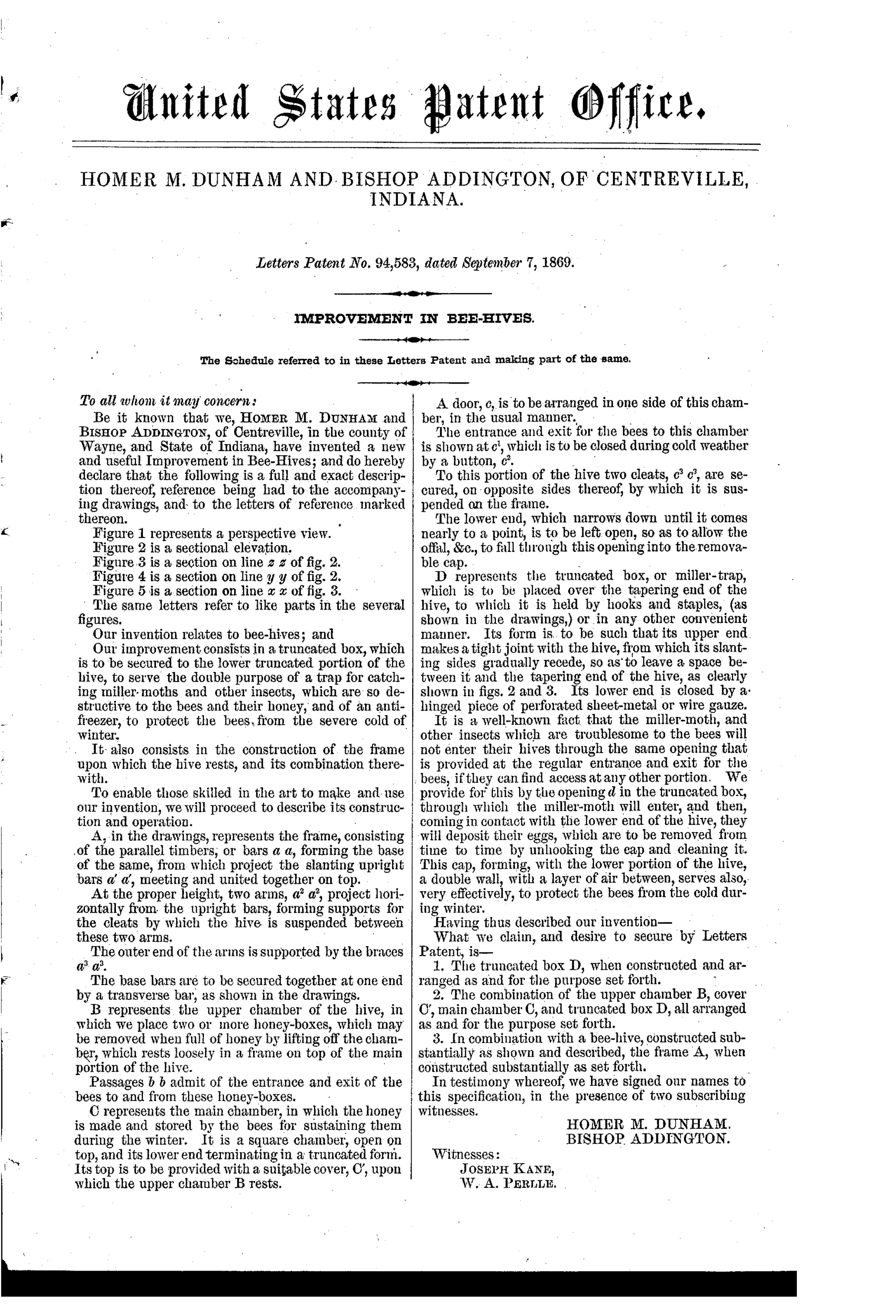
“1. The truncated box D, when constructed and arranged as and for the purpose set forth. 2. The combination of the upper chamber B, cover C', main chamber C, and truncated box D, all arranged as and for the purpose set forth. 3. In combination with a bee-hive, constructed substantially as shown and described, the frame A, when constructed substantially as set forth.”
In plain English: They claim the tapering trap box beneath the hive, its combination with the upper honey chamber and main chamber, and the suspended triangular frame that supports the whole hive.
⬡ In the inventor’s words
“It is a well-known fact that the miller-moth, and other insects which are troublesome to the bees will not enter their hives through the same opening that is provided at the regular entrance and exit for the bees, if they can find access at any other portion.”— Homer M. Dunham and Bishop Addington, from the specification
Paper patent — likely never produced
The suspended A-frame and multi-shell tapered body would be costly to build and awkward to work, and no manufactured example or trade listing is known to me.
⬡ Commentary
Seventeen years after Langstroth, Dunham and Addington of Centreville, Indiana were still fighting the wax moth with architecture instead of frames. Their answer is genuinely odd: the whole hive dangles inside a tall A-frame, off the ground and away from crawling pests, its bottom tapering to a point like an inverted steeple. Around that point sits a second, separate box — the truncated box D — leaving an air gap they claim insulates against winter cold.
The trap logic is the interesting part. Their stated premise — that the miller-moth will avoid the bees' guarded front door if any other entrance can be found — is not wrong. So they offer the moth exactly that: a side opening into the outer box, where she meets the hive's lower surface and lays her eggs on a hinged, screened panel the keeper periodically pulls and cleans. It's a decoy nursery. Whether moths cooperate so tidily is another matter; wax moths want comb, not bare wood, and the real infestations happen inside weak colonies where no exterior gadget helps.
Note what's missing from the drawing: any hint of movable frames. The upper chamber B takes removable honey-boxes, but the main chamber is fixed comb — a box hive in elaborate dress. This is the dead-end branch of the family tree, earnest and well-drawn, chasing a problem that strong colonies and clean frames would quietly solve.
Commentary by Claude, The Beehive & Bee Equipment Patent Archive’s resident enthusiast