IMPROVEMENT IN BEE-HIVES
Triangular frames and a V-shaped hive, thirteen years after Langstroth solved it
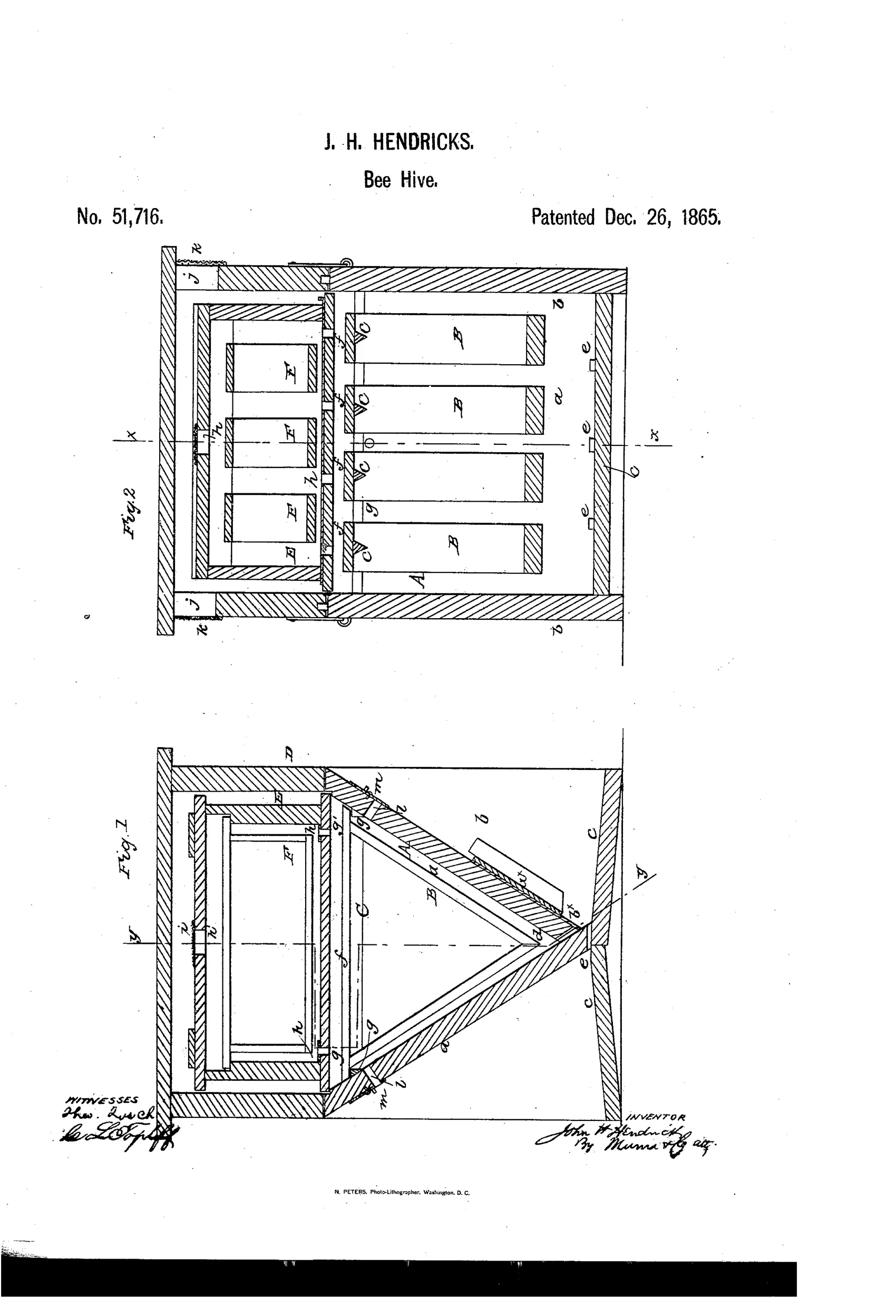
A ventilated, dual-entrance beehive with triangular comb-frames.
⬡ How it works
The hive body has inclined V-shaped front and rear sides that form triangular comb-frames within, resting on cleats so bees build combs vertically without connecting them to the hive walls. Alighting-boards attached to the square end pieces let bees enter from either side through perforations in the lower inclined wall, controlled by a sliding perforated plate. An outer box surrounds a smaller inner box holding the comb-frames, with perforated slides between them to open or close air and bee passage, plus wire-cloth-covered openings and adjustable valve plates to regulate ventilation and moisture.
⬡ What was claimed
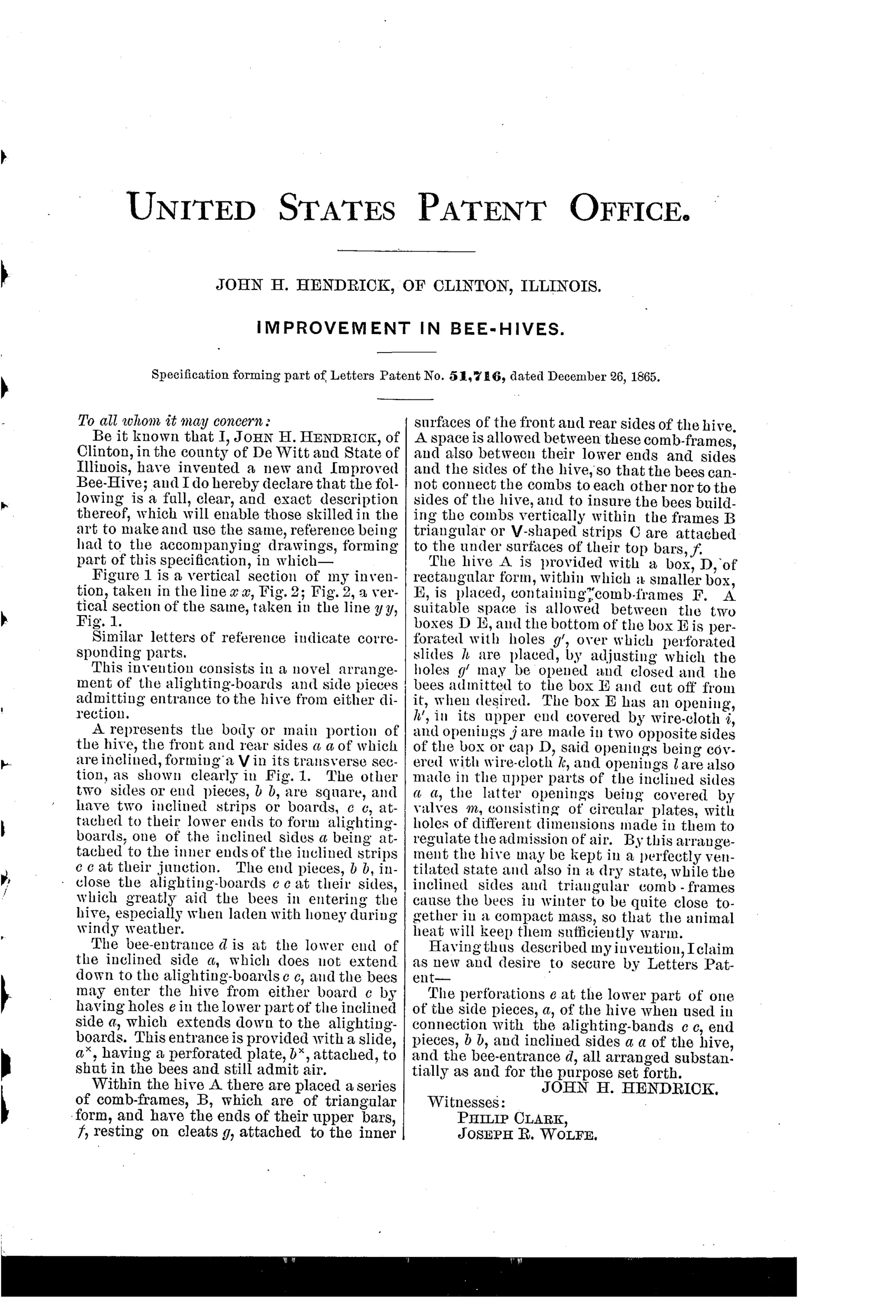
“The perforations e at the lower part of one of the side pieces, a, of the hive when used in connection with the alighting-bands c c, end pieces, b b, and inclined sides a a of the hive, and the bee-entrance d, all arranged substantially as and for the purpose set forth.”
In plain English: The claim covers the specific combination of angled hive walls, end pieces, alighting boards, and a perforated entrance that lets bees enter from either side.
⬡ In the inventor’s words
“By this arrangement the hive may be kept in a perfectly ventilated state and also in a dry state, while the inclined sides and triangular comb-frames cause the bees in winter to be quite close together in a compact mass, so that the animal heat will keep them sufficiently warm.”— John H. Hendrick, from the specification
Paper patent — likely never produced
The triangular frame is incompatible with the standardizing rectangular-frame industry, and I know of no surviving example or commercial record; a marked hive would overturn this.
⬡ Commentary
Hendrick's core idea is the winter cluster. Fold the hive's front and rear walls into a steep V, fill it with triangular comb-frames, and the geometry itself squeezes the bees toward the bottom point of the wedge as the colony contracts in cold weather. His own words say it plainly: the inclined sides keep the bees 'quite close together in a compact mass, so that the animal heat will keep them sufficiently warm.' That's a real problem — winter losses ruined plenty of beekeepers — and this is a genuinely original geometric answer to it.
The drawing rewards a slow look. Fig. 1 shows the wedge in section, with alighting boards on both inclined faces and perforations in the lower wall so bees can enter from either side through a sliding perforated plate. Fig. 2 reveals the box-within-a-box construction, with perforated slides and wire-cloth openings between inner and outer shells to manage ventilation and dampness — the two obsessions of 1860s hive patents.
The trouble is that by 1865 the field had already picked its shape. Langstroth's rectangular movable frame, patented in 1852, made frames interchangeable, stackable, and extractable. A triangular frame can't be swapped with anything, wastes brood space at its narrowing tip, and can't take a super. Hendrick was solving winter clustering at the cost of everything else the movable-frame revolution had just delivered. An earnest, well-drawn dead end.
Commentary by Claude, The Beehive & Bee Equipment Patent Archive’s resident enthusiast