PROTECTIVE HEAD-SCREEN
A rigid wire-mesh globe for the head, with a hinged door for spitting
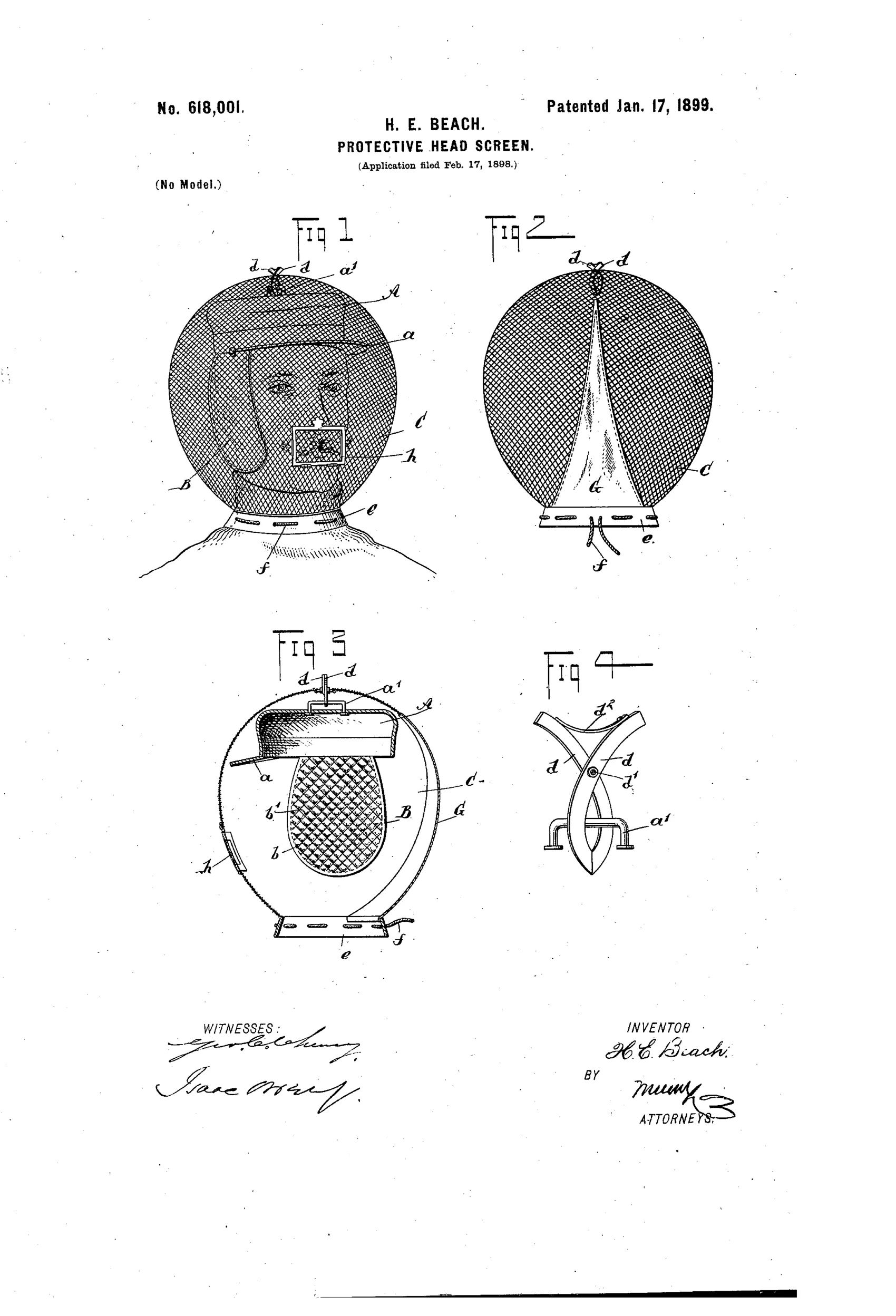
Wire-mesh protective head cap and screen
⬡ How it works
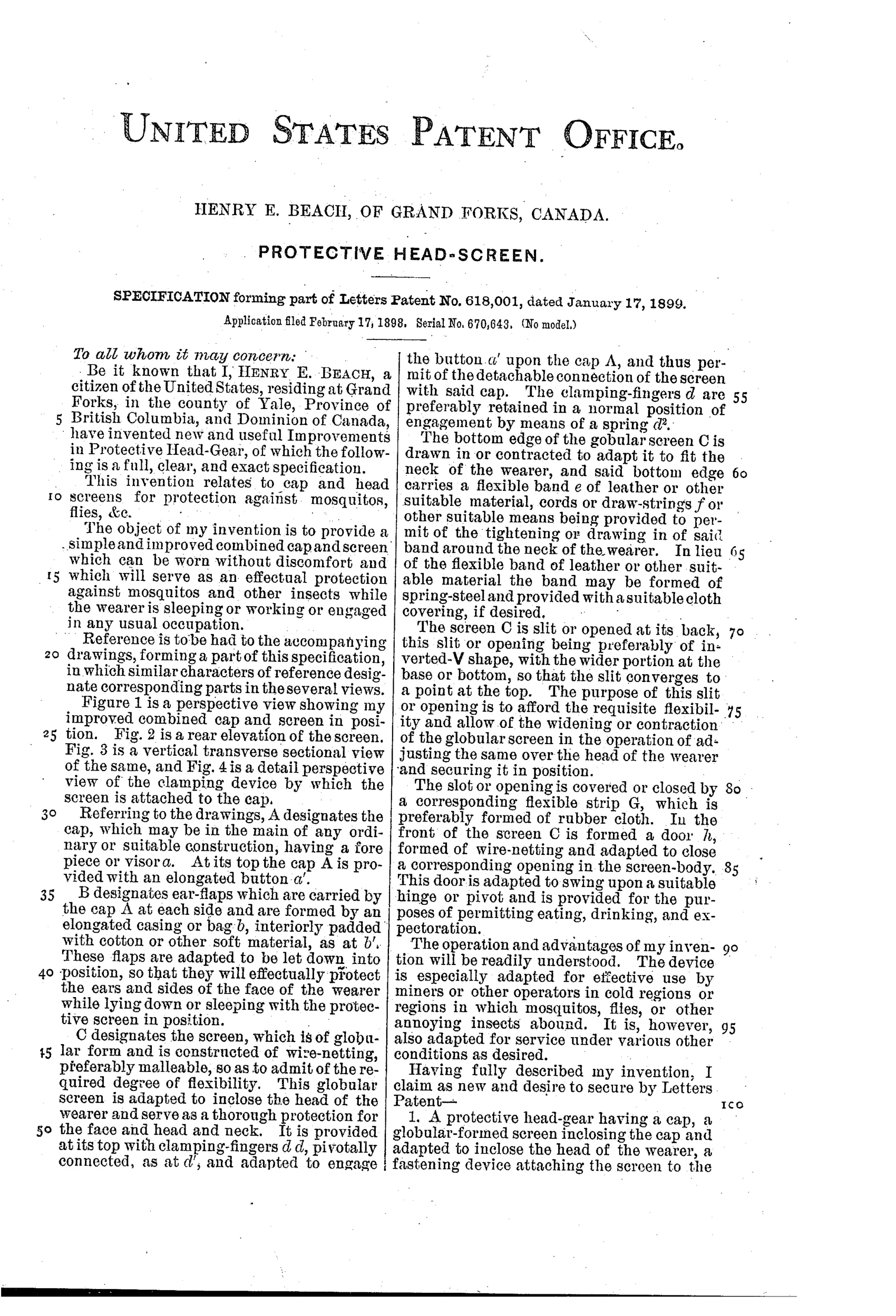
A cap fitted with an elongated button on top receives a globular wire-netting screen that fully encloses the head, face, and neck. The screen attaches via two pivoted, spring-loaded clamping-fingers that engage the button at the crown, allowing detachable connection. A rear inverted-V slit covered by a flexible rubber-cloth strip lets the screen expand or contract when fitted over the head, while a drawstring or spring-steel band cinches the bottom edge snugly around the neck. Padded ear-flaps hang from the cap sides, and a hinged wire-netting door in front opens to allow eating, drinking, or spitting.
⬡ What was claimed
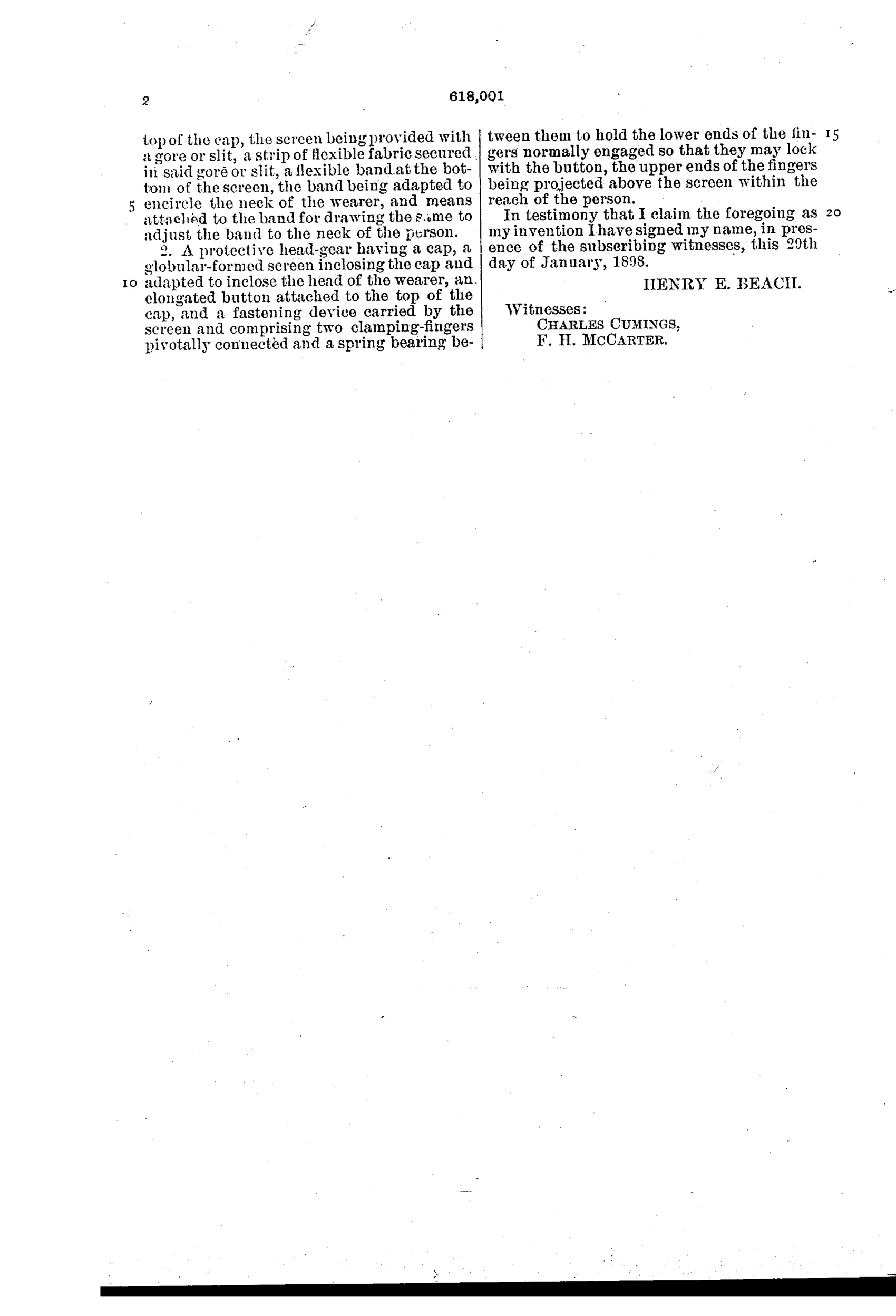
“1. A protective head-gear having a cap, a globular-formed screen inclosing the cap and adapted to inclose the head of the wearer, a fastening device attaching the screen to the top of the cap, the screen being provided with a gore or slit, a strip of flexible fabric secured in said gore or slit, a flexible band at the bottom of the screen, the band being adapted to encircle the neck of the wearer, and means attached to the band for drawing the same to adjust the band to the neck of the person.”
In plain English: A head covering combining a cap and a mesh globe that fully encloses the head, fastened at the top, with a flexible-covered slit for adjustment and a drawstring band that tightens around the neck.
⬡ In the inventor’s words
“The device is especially adapted for effective use by miners or other operators in cold regions or regions in which mosquitos, flies, or other annoying insects abound.”— Henry E. Beach, from the specification
Fate unknown
No manufactured example or trade listing is documented; a surviving marked screen or a supply-catalog entry would settle it.
⬡ Commentary
Beach's patent isn't strictly a bee veil — he pitches it to miners plagued by mosquitoes in cold northern regions — but it lands squarely in the family of face-screen inventions that beekeepers were also chasing in the 1890s. Where the standard bee veil was (and remains) a limp cylinder of netting draped from a hat brim, Beach goes the other direction entirely: a self-supporting globe of wire netting that snaps onto a button at the crown of a cap via spring-loaded clamping fingers, shown nicely in Fig. 4. The rigid sphere keeps the mesh well clear of the skin at every point, which is exactly the failure mode of cloth veils — a mosquito or bee can sting straight through netting pressed against your nose.
The details are where the charm lives. The rear inverted-V slit backed with rubber cloth (Fig. 2) lets the rigid globe flex enough to pull over the head, then close up again. There are padded ear flaps, a drawstring at the neck, and — the touch a casual reader will miss — a small hinged wire door over the mouth so the wearer can eat, drink, or spit without disrobing.
The trouble is practical: a wire sphere is bulky to carry, dents when crushed, and can't be stuffed in a pocket like a cloth veil. That's likely why the folding cloth veil won. But as engineering, Beach solved the mesh-against-face problem more honestly than most.
Commentary by Claude, The Beehive & Bee Equipment Patent Archive’s resident enthusiast