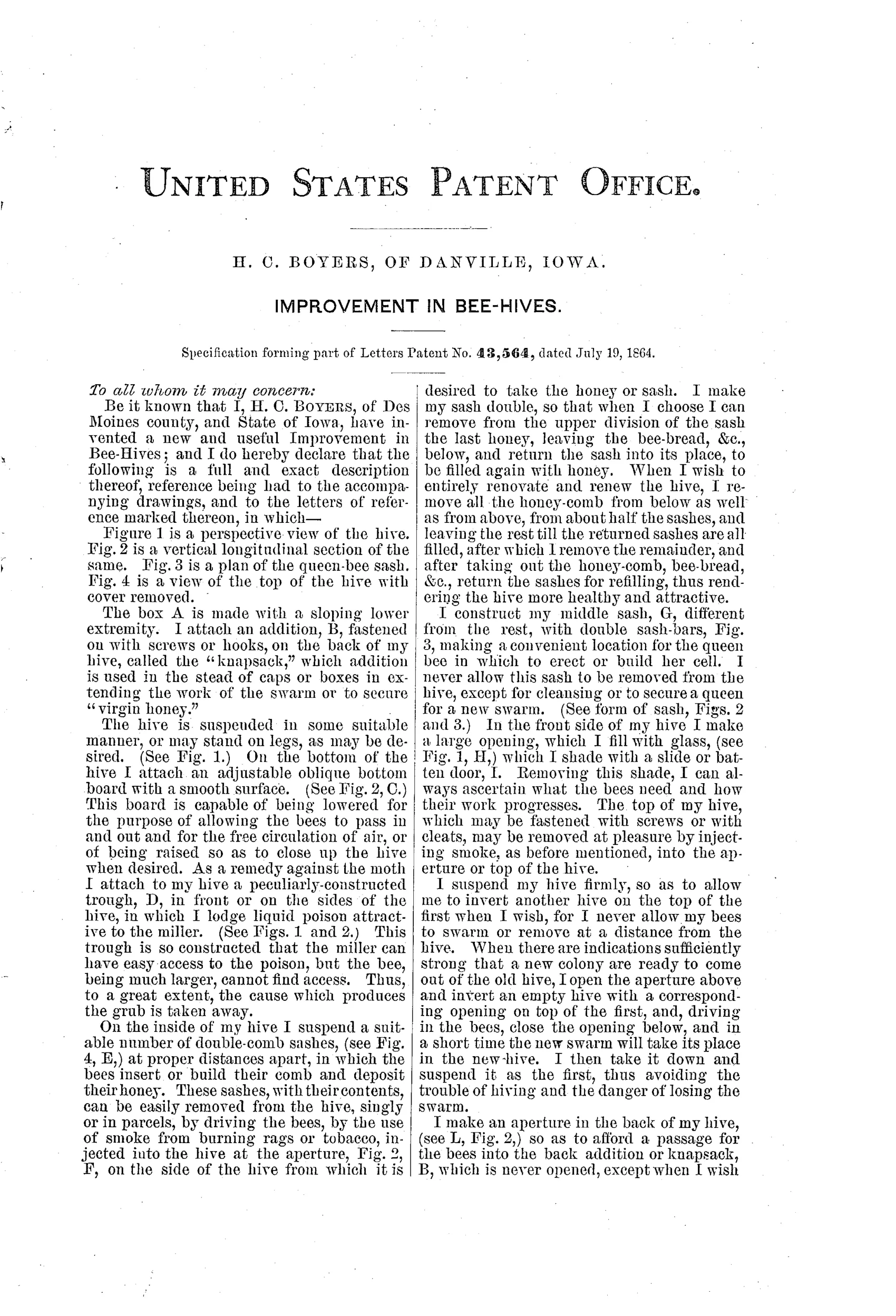
IMPROVEMENT IN BEE-HIVES.
A poison trough for moths — and an inventor who forbade his bees to swarm
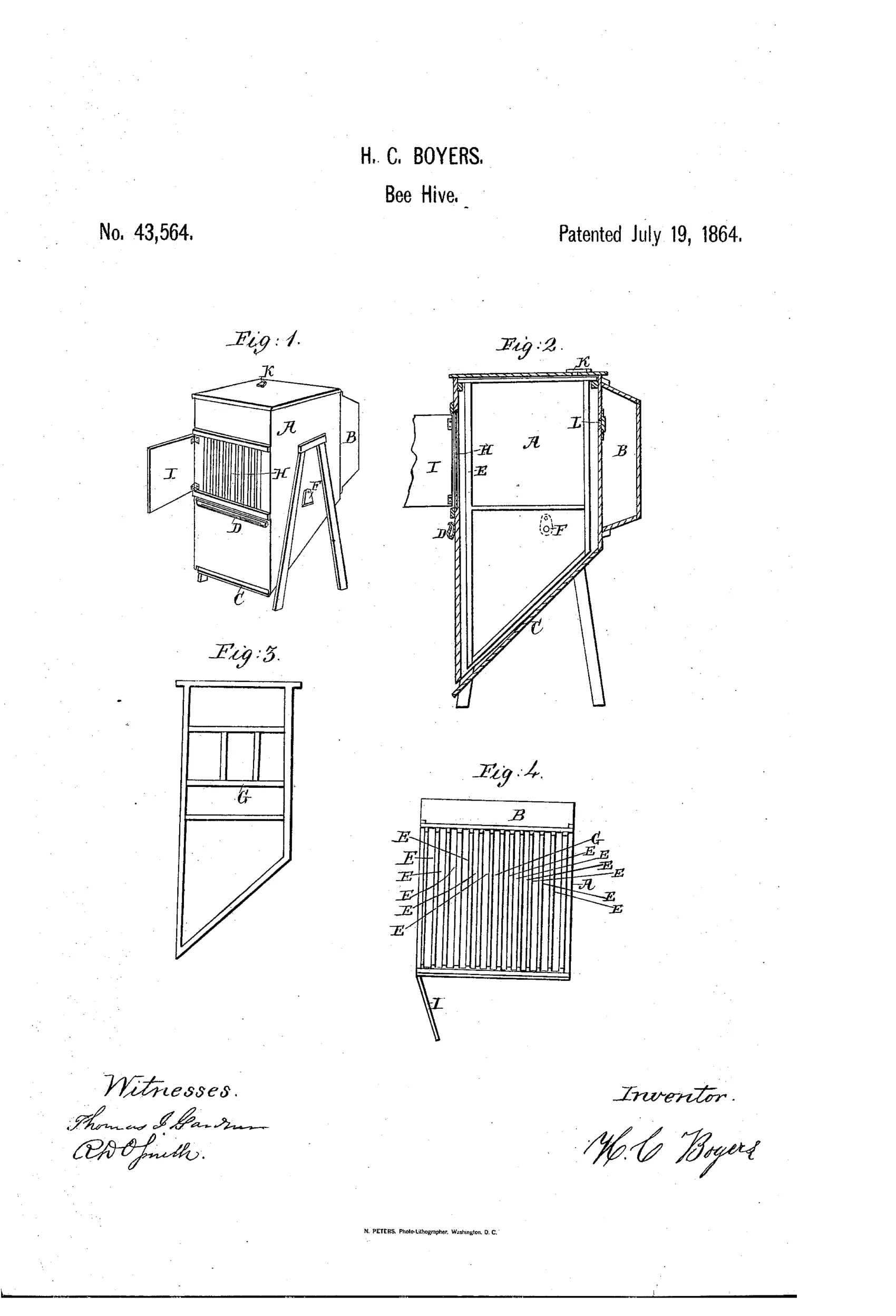
A wooden beehive with removable comb sashes.
⬡ How it works
The hive box A has a sloping bottom and a rear 'knapsack' addition B for extra honey storage, entered through a separate aperture L. An adjustable oblique bottom board C can be raised to close the hive or lowered for ventilation and bee passage, while a trough D holds poison accessible to moth millers but too small for bees to reach. Inside, a row of double-comb sashes E can be smoked out and removed individually through an aperture F, and a special double-barred sash G houses the queen bee and is removed only for cleaning or securing a new swarm. A glass-covered opening H, shaded by a sliding door I, lets the keeper inspect the colony's progress without fully opening the hive.
⬡ What was claimed
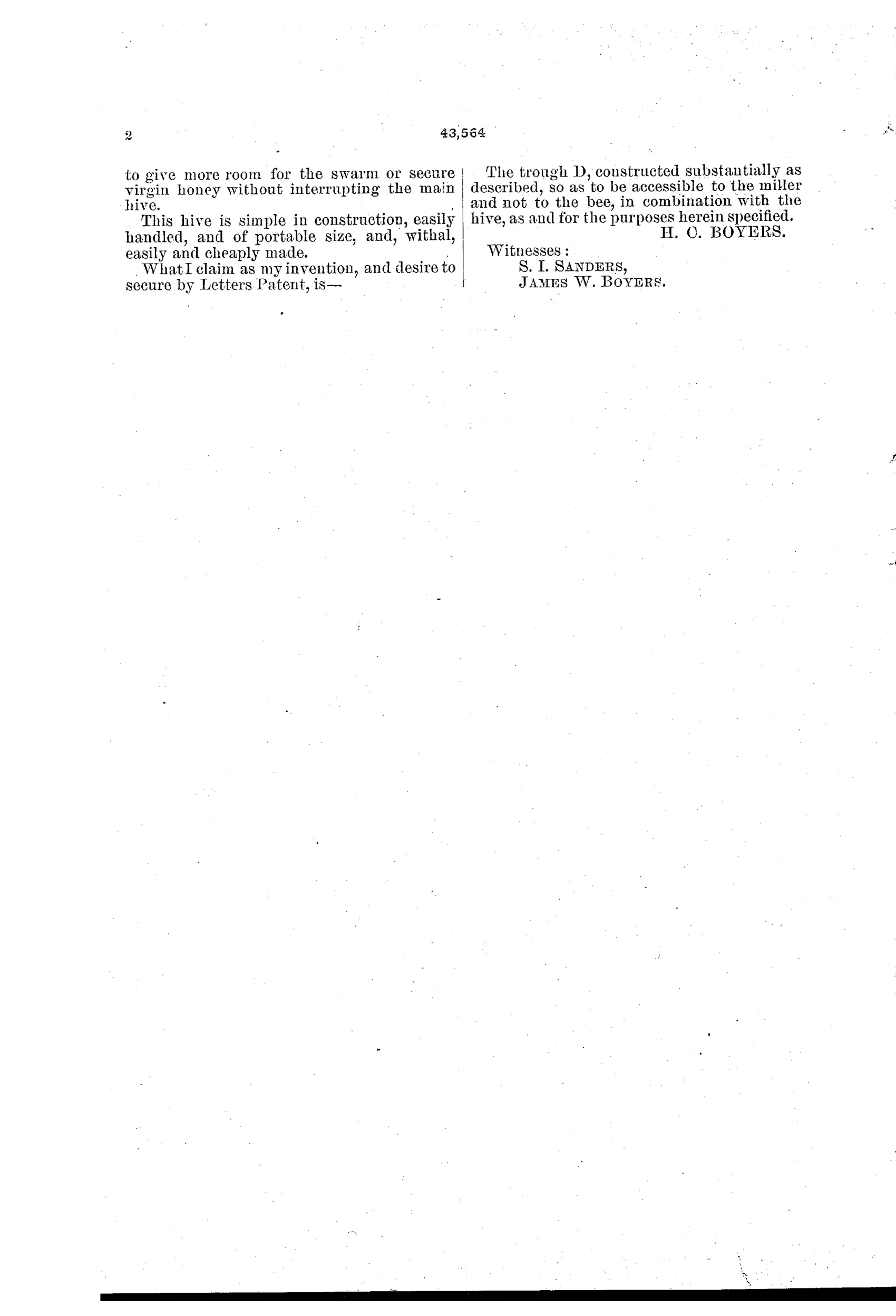
“The trough D, constructed substantially as described, so as to be accessible to the miller and not to the bee, in combination with the hive, as and for the purposes herein specified.”
In plain English: A poison trough built into the hive that moths can reach but bees cannot, used together with the hive to control wax-moth infestation.
⬡ In the inventor’s words
“I suspend my hive firmly, so as to allow me to invert another hive on the top of the first when I wish, for I never allow my bees to swarm or remove at a distance from the hive.”— H. C. Boyers, from the specification
Fate unknown
No manufactured Boyers hive or period advertising is documented; a marked specimen or an agricultural-press notice from the 1860s would settle it.
⬡ Commentary
Boyers filed this from Danville, Iowa, twelve years after Langstroth's movable-frame patent, and the drawing shows a man who absorbed half the lesson. The comb 'sashes' E in Fig. 4 are genuinely removable — smoked out one at a time through the side aperture F rather than lifted from the top — and there's even a dedicated double-barred sash G for the queen, an early gesture toward queen management. But withdrawing frames sideways through a hole is exactly the kind of arrangement the top-opening Langstroth hive made obsolete, because bees glue everything to everything and side extraction fights the propolis at every inch.
The claim he actually staked is the moth trough D: a poison reservoir sized so the wax-moth miller can enter but the bee cannot. Moth panic was the great sales engine of pre- and post-Langstroth patent hives, and this is one of the more mechanically specific answers to it — most rivals offered decoy chambers, not selective poisoning by body size. Whether millers would obligingly drink from it is another matter.
The best line in the specification is the confession that he suspends the hive so he can invert a second one on top, 'for I never allow my bees to swarm.' That fantasy of total control — no swarming, no full opening, inspection through a shaded glass window — is the signature of the 1860s patent hive. The sloping bottom and adjustable board C for ventilation are sensible touches on a design the industry was already walking away from.
Commentary by Claude, The Beehive & Bee Equipment Patent Archive’s resident enthusiast