IMPROVEMENT IN BEE-HIVES
Triple walls, moat-cup legs, and a one-bee door: ventilation as obsession
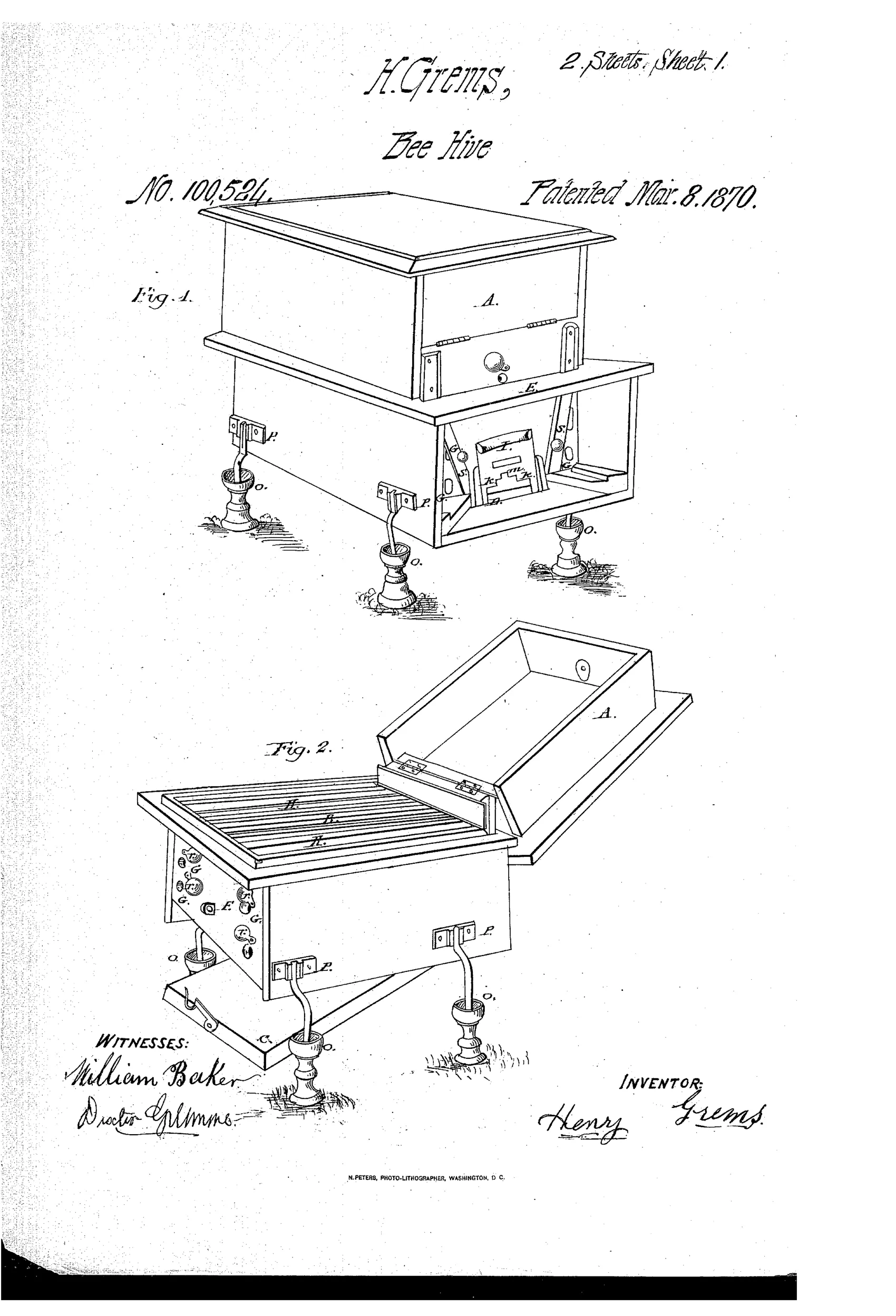
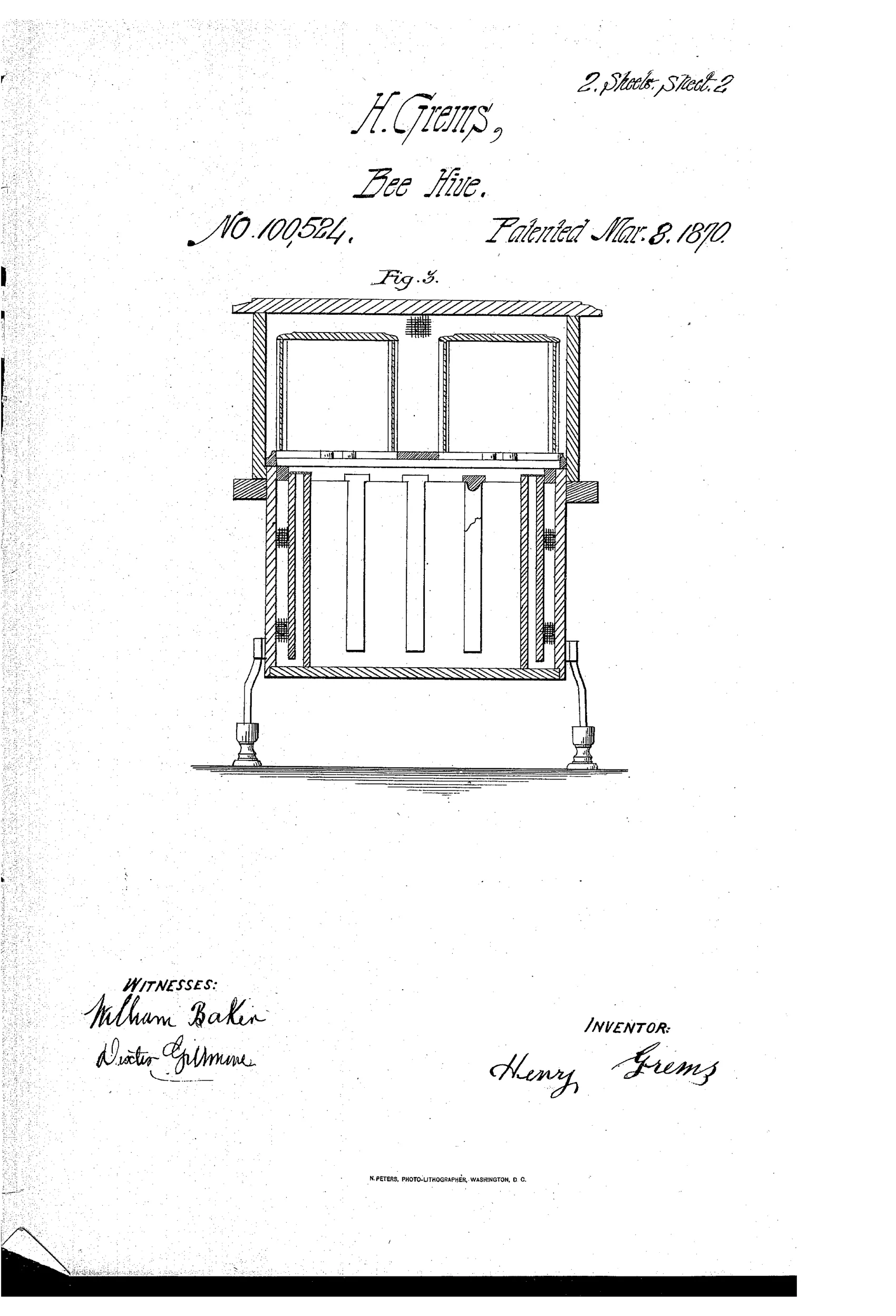
Ventilated beehive with air-passage walls and drop bottom
⬡ How it works
The hive has vertical triple walls on each side forming two connecting air-passages that carry air from bottom to top. The inner passage communicates with horizontal air-spaces between the comb-frames and the upper honey-boxes, while the outer passage admits air from outside through adjustable perforated openings at front and rear covered with wire gauze to keep out bees and insects. A hinged top folds back to expose the comb-frames and space for movable surplus honey-boxes, and a hinged drop bottom at the rear allows cleaning without disturbing the bees. An adjustable door at the front entrance narrows the opening to admit only one bee at a time, and cupped legs hold water to drown crawling insects.
⬡ What was claimed
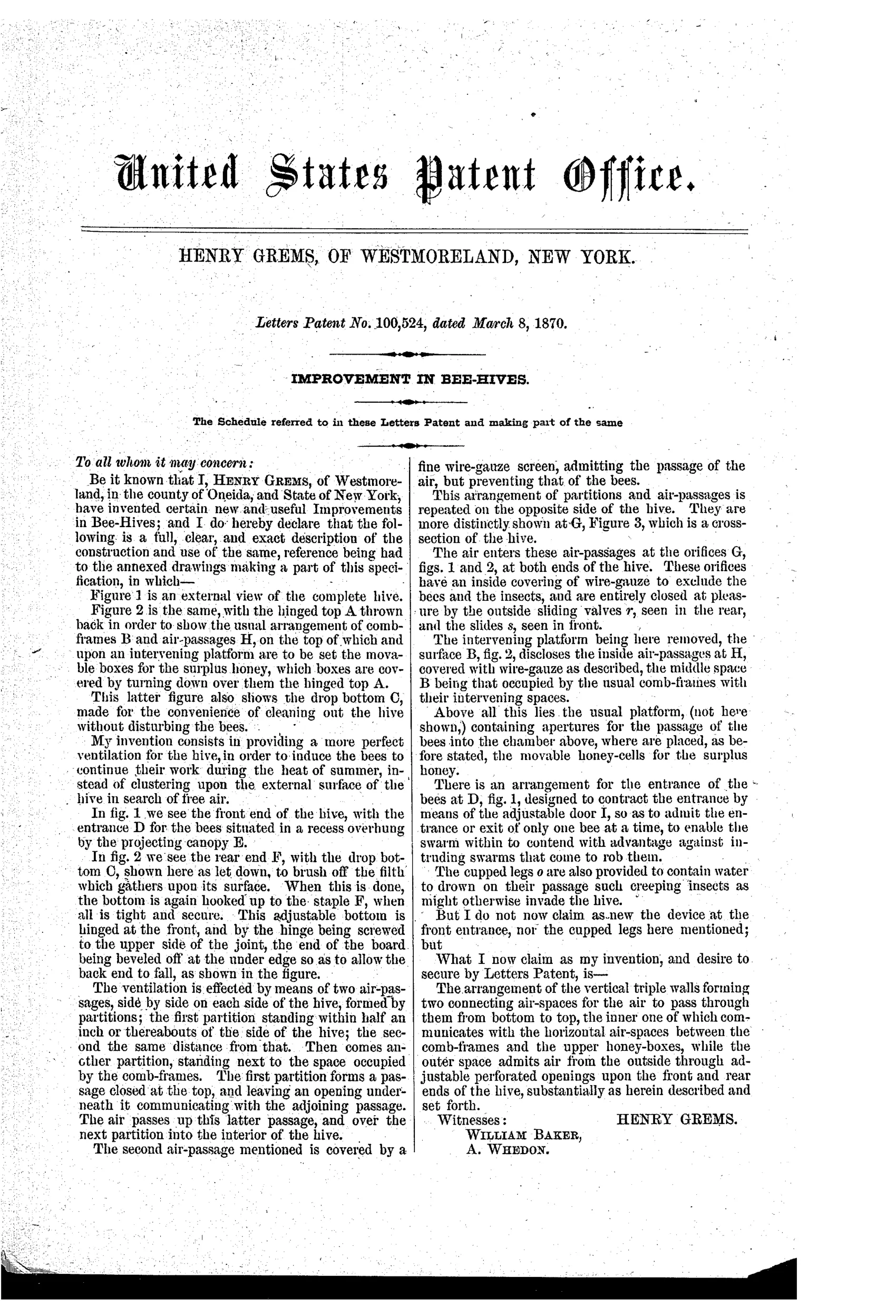
“The arrangement of the vertical triple walls forming two connecting air-spaces for the air to pass through them from bottom to top, the inner one of which communicates with the horizontal air-spaces between the comb-frames and the upper honey-boxes, while the outer space admits air from the outside through adjustable perforated openings upon the front and rear ends of the hive, substantially as herein described and set forth.”
In plain English: The hive's claimed invention is a double set of vertical air channels on each side that draw fresh air in from adjustable openings at the front and back and carry it up past the comb-frames to the honey boxes above, improving ventilation.
⬡ In the inventor’s words
“My invention consists in providing a more perfect ventilation for the hive, in order to induce the bees to continue their work during the heat of summer, instead of clustering upon the external surface of the hive in search of free air.”— Henry Grems, from the specification
Fate unknown
No marked example or trade listing is documented; a surviving hive or an ad in the period bee journals would settle it.
⬡ Commentary
Henry Grems was chasing a real problem. In hot weather bees stop working and hang in a beard on the front of the hive because they can't move enough air through it. His answer was to build the walls themselves as chimneys: each side is a triple wall enclosing two connected vertical passages, the outer one drawing air through gauze-covered adjustable ports front and rear, the inner one venting up past the frames into the space around the surplus honey boxes. It's a genuine convection system, not just a hole in the lid, and the wire gauze and adjustable shutters show he'd thought about robbing bees and moths, the twin terrors of the era.
Look at the legs in both figures — each one ends in a little cup, meant to be filled with water to drown ants and crawling insects on their way up. That detail, plus the front door that narrows to admit one bee at a time and the hinged drop bottom for cleaning out debris without opening the hive, marks this as a full-service 1870 patent hive: every known bee anxiety gets its own gadget.
The irony is that Grems built all this around movable frames — he'd absorbed Langstroth's lesson — but the industry went the other way, solving heat with thin single walls, screened bottoms, and simply giving bees room. Double-walled hives had a real run (the chaff hives of the 1870s-80s), but as insulation, not chimneys. This is a thoughtful dead end.
Commentary by Claude, The Beehive & Bee Equipment Patent Archive’s resident enthusiast