BEEHIVE
Seven years after Langstroth, San Francisco puts its frames on rails
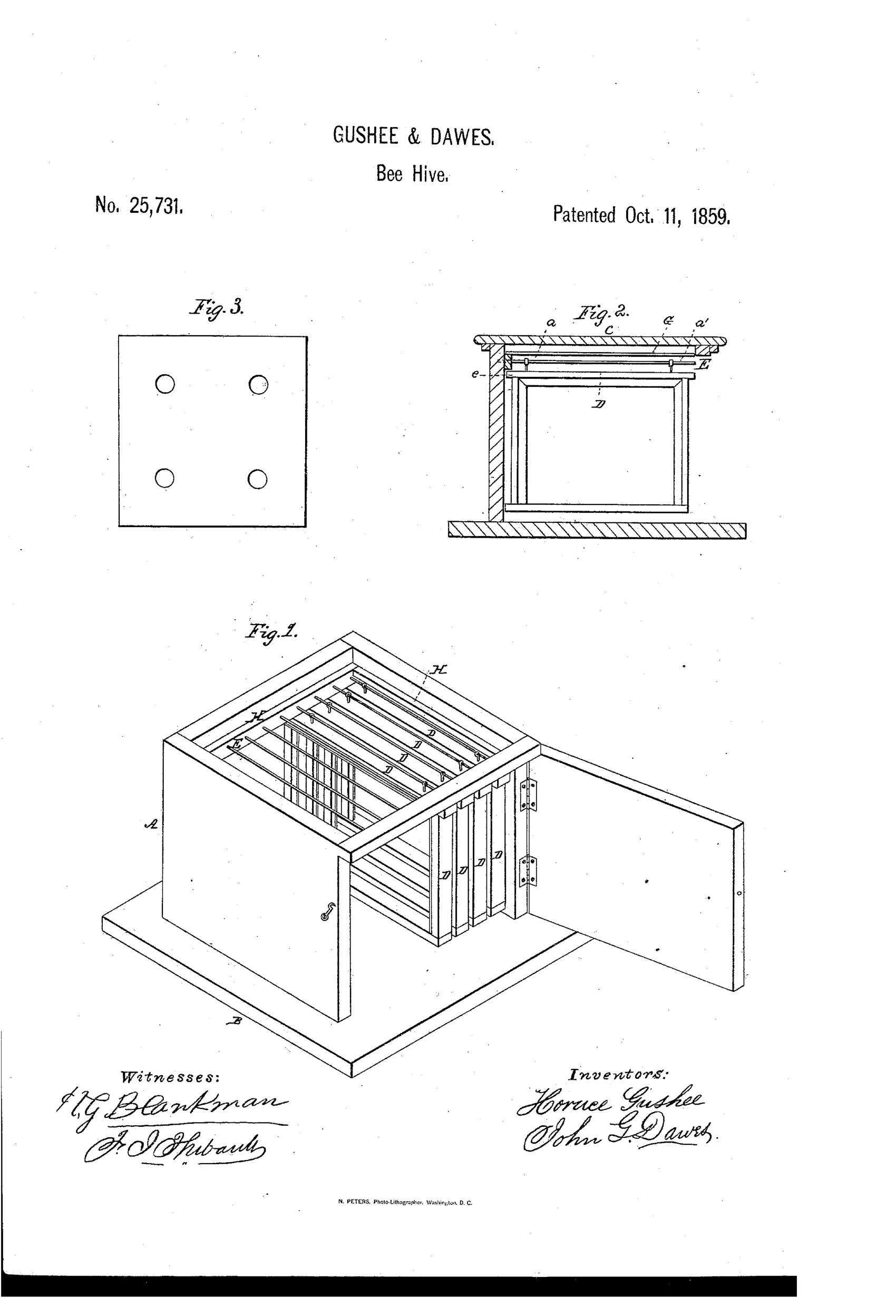
Movable-frame beehive with sliding comb-frames and observation glass
⬡ How it works
The hive body has a movable top and bottom, with comb-frames sliding on rods attached by staples. The shoulder of each frame rests against a cleat, preventing lateral motion, while the heel presses against the end of the hive to support the frame's weight. A glass panel rests on the cleats, letting the beekeeper watch comb-building without opening the hive, and a cut-off board can be inserted to force bees to straighten crooked comb. When making extra honey, the cover and glass are removed and a honey-board is placed on the cleats to receive an extra hive or common honey boxes.
⬡ What was claimed
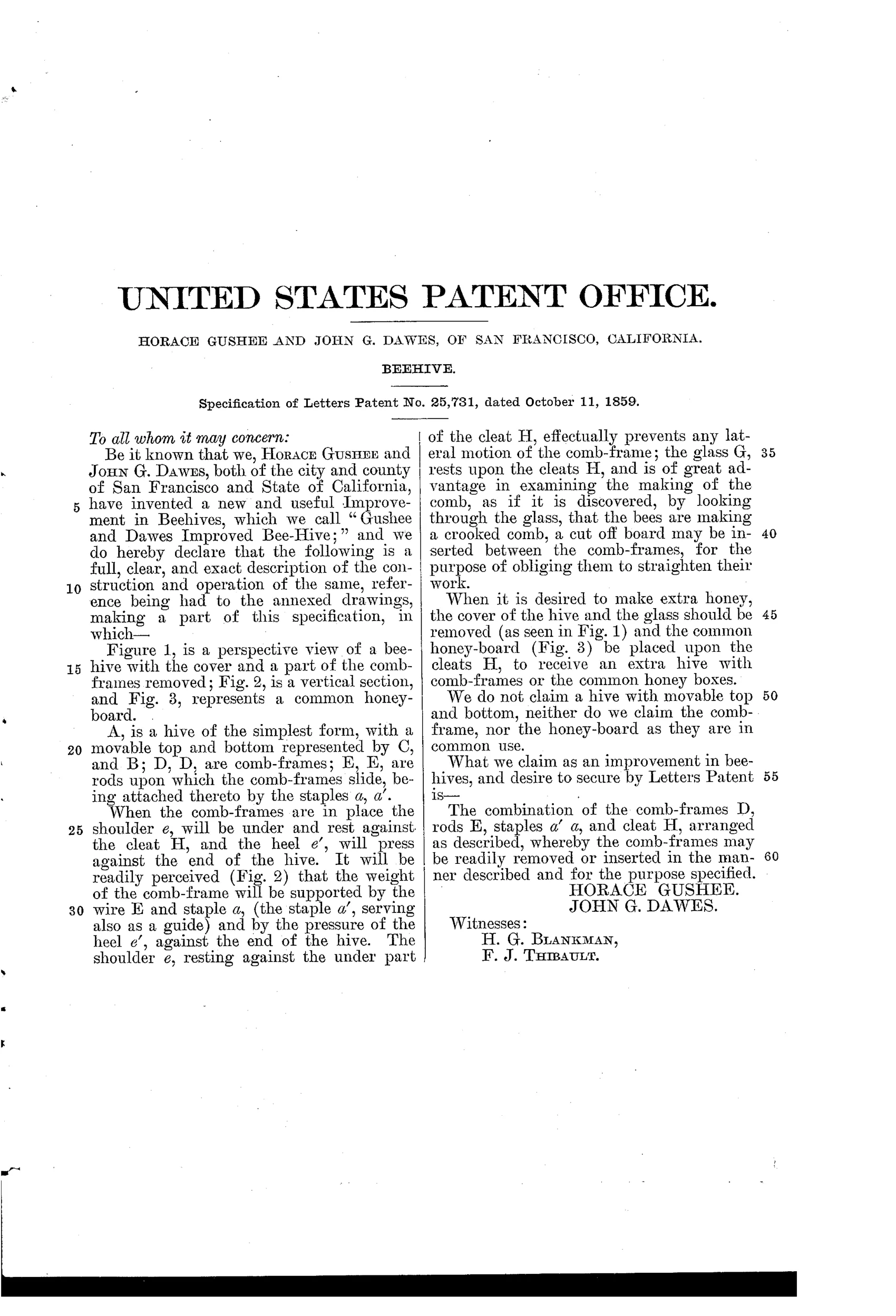
“The combination of the comb-frames D, rods E, staples a' a, and cleat H, arranged as described, whereby the comb-frames may be readily removed or inserted in the manner described and for the purpose specified.”
In plain English: The claim covers the specific arrangement of comb-frames, support rods, staples, and cleat that lets frames be easily inserted or removed from the hive.
⬡ In the inventor’s words
“as if it is discovered, by looking through the glass, that the bees are making a crooked comb, a cut off board may be inserted between the comb-frames, for the purpose of obliging them to straighten their work.”— Horace Gushee and John G. Dawes, from the specification
Fate unknown
No documented production or surviving example is known to me; a marked hive or a California trade advertisement would settle it.
⬡ Commentary
Gushee and Dawes were working the same problem Langstroth had cracked in 1852 — how to get combs out of a hive intact — but they attacked the suspension differently. Instead of frames hanging free with bee space on all sides, their frames slide on horizontal rods held by staples, with a shoulder butting against a cleat to stop lateral wobble and a heel bearing on the hive end to carry the weight. It's a drawer mechanism, essentially, and Fig. 1 shows it clearly: the frames ride the rods like files in a cabinet.
The glass panel resting on the cleats is the endearing part. The specification tells you exactly what it's for: if you spot the bees building crooked comb through the glass, you slip a cut-off board between frames to 'oblige them to straighten their work.' That's real beekeeping knowledge — crooked comb was the plague of every early frame hive before wax foundation gave bees a template in the 1870s.
The rod-and-staple system is the design's weakness, though. Bees propolize everything they touch, and a frame that must slide along a rod will glue itself fast in a season. Langstroth's hanging frames won precisely because they only need to be lifted, not slid. This is a thoughtful regional variant on the frame idea — one of many in the 1850s — that history routed around.
Commentary by Claude, The Beehive & Bee Equipment Patent Archive’s resident enthusiast