IMPROVEMENT IN BEE-HIVES
A hive plastered inside like a wall, chasing winter dampness with plaster-of-paris
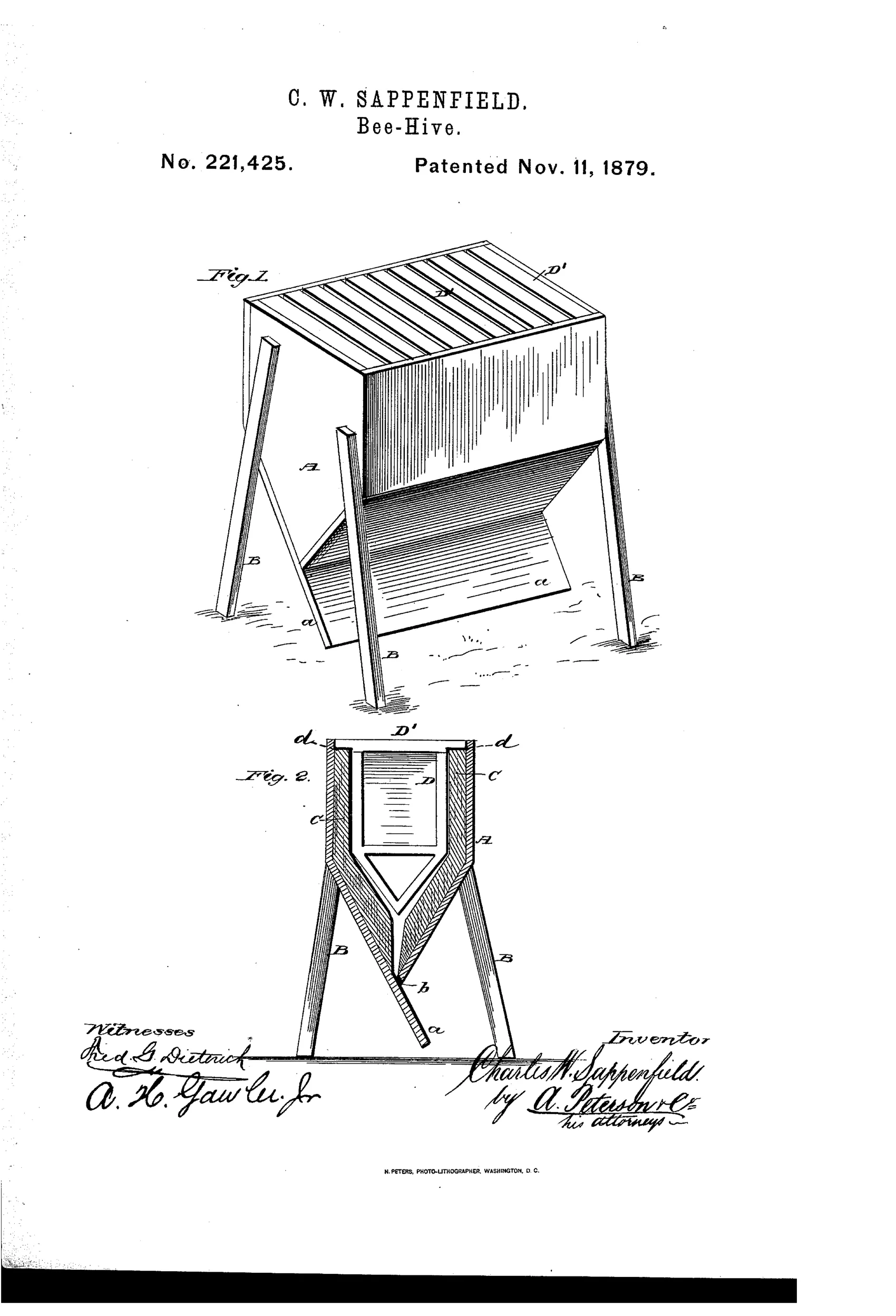
Wooden bee-hive with plaster-of-paris moisture-absorbing lining
⬡ How it works
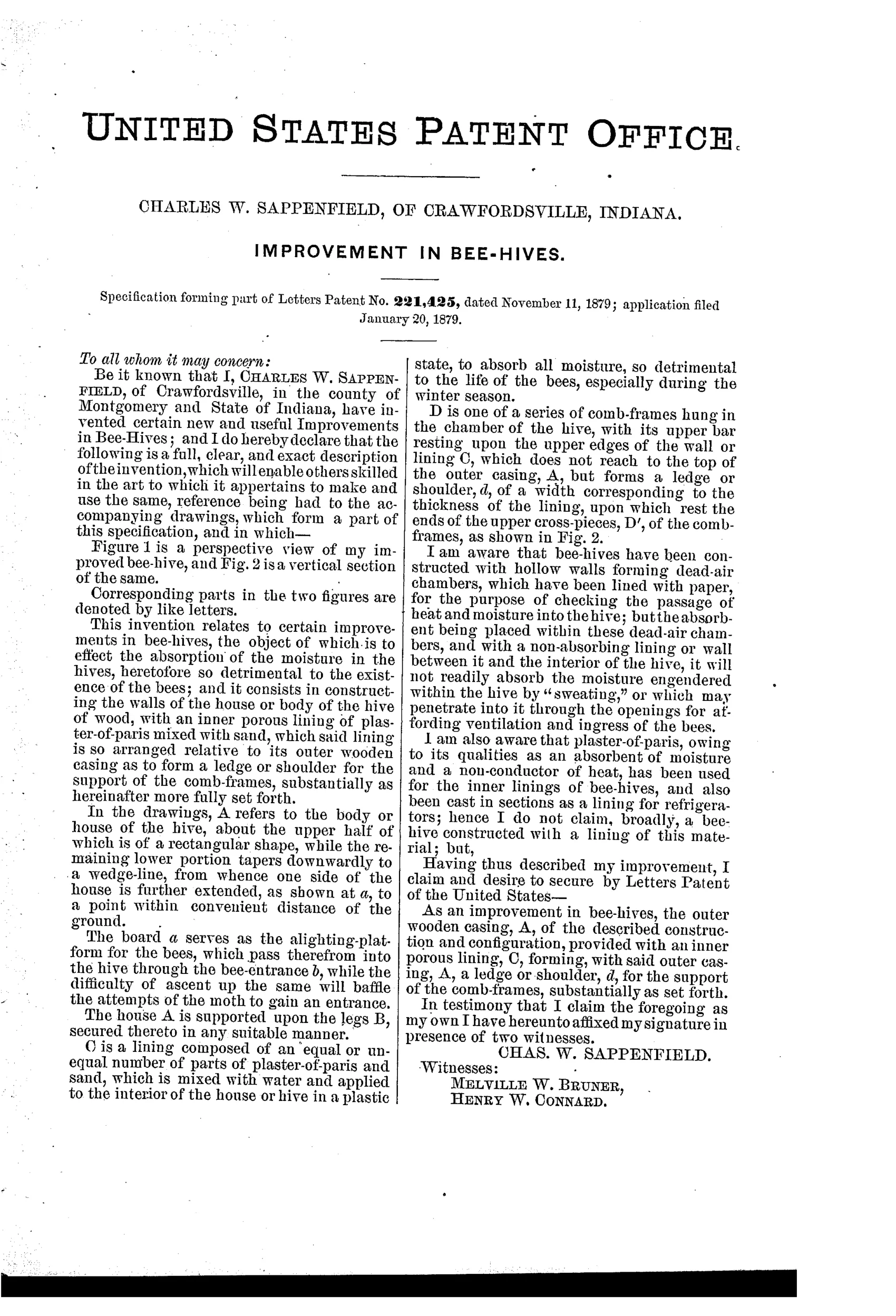
The hive body is built with wooden outer walls that are lined inside with a porous plaster-of-paris and sand mixture applied wet and allowed to set. This inner lining stops short of the top of the outer casing, forming a ledge or shoulder that supports the upper bars of the hanging comb-frames. The lower portion of the house tapers to a wedge shape with an extended alighting board leading to the bee entrance, the difficulty of ascent helping to keep moths out. The plaster lining absorbs moisture generated inside the hive by 'sweating' or entering through ventilation openings, protecting the bees, especially in winter.
⬡ What was claimed
“As an improvement in bee-hives, the outer wooden casing, A, of the described construction and configuration, provided with an inner porous lining, C, forming, with said outer casing, A, a ledge or shoulder, d, for the support of the comb-frames, substantially as set forth.”
In plain English: The claim covers a wooden bee-hive casing lined inside with a porous material so that the lining's edge forms a shoulder that holds up the comb-frames.
⬡ In the inventor’s words
“I am also aware that plaster-of-paris, owing to its qualities as an absorbent of moisture and a non-conductor of heat, has been used for the inner linings of bee-hives, and also been cast in sections as a lining for refrigerators; hence I do not claim, broadly, a bee-hive constructed with a lining of this material; but,”— Charles W. Sappenfield, from the specification
Fate unknown
No manufactured example or trade listing is documented; a surviving plaster-lined specimen or an ad in the 1880s bee journals would settle it.
⬡ Commentary
Sappenfield was aiming at a real enemy. Winter condensation kills more colonies than cold does — bees can handle frost, but water dripping onto the cluster is lethal. His answer was to trowel a wet mix of plaster-of-paris and sand onto the inside of the wooden casing and let it set into a porous lining that would drink up the 'sweating.' He is careful in the specification to admit plaster-lined hives already existed; his actual claim is narrower and rather elegant: the lining stops short of the top, and the exposed edge becomes the ledge that carries the hanging comb-frames. The absorbent material does structural double duty.
Fig. 2 is where the design gets strange. The whole brood chamber tapers to a wedge, funneling down between splayed legs to a small entrance at the point, with a steep alighting board bees must climb — the difficulty of ascent supposedly discouraging moths. That inverted-funnel bottom also means debris and dead bees fall straight out, which is genuinely sensible, though it makes the hive impossible to stack or super in the Langstroth manner.
The fatal flaws are practical: plaster is heavy, brittle, and once saturated in a hard Indiana winter it holds moisture rather than shedding it. Beekeeping went the other way — thin wood, top ventilation, and letting the hive breathe. A thoughtful dead end.
Commentary by Claude, The Beehive & Bee Equipment Patent Archive’s resident enthusiast