IMPROVEMENT IN BEE-HIVES
A bent entrance tube that marches moths straight through the bee cluster
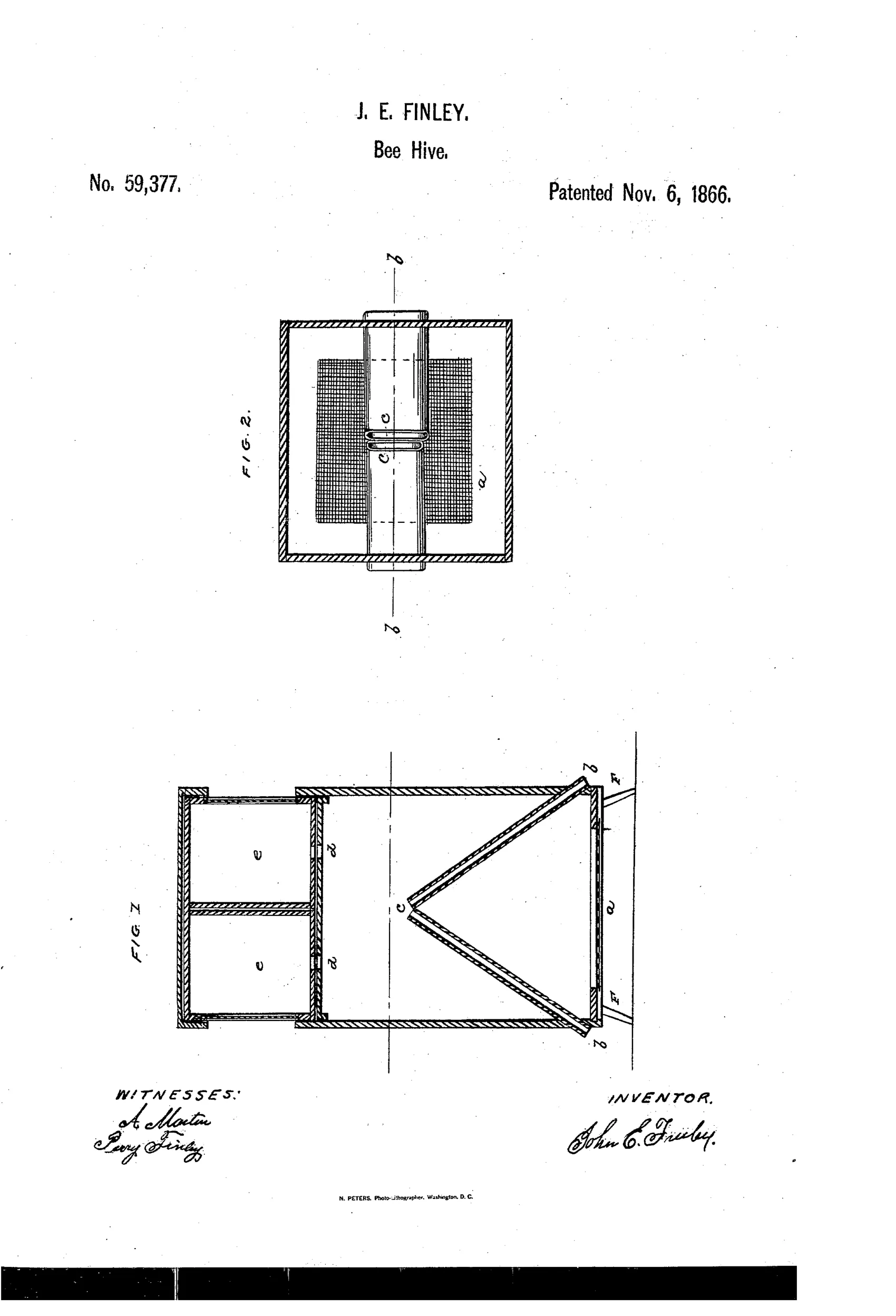
Ventilated bee-hive with insect-excluding entrance tubes
⬡ How it works
The hive is fitted with a ventilator A made of perforated tin that admits air but keeps out moths and worms. Two tubes, B and C, are arranged so that B sits at the lower part of the hive while C is centered, forming a bent passage that bees can traverse but that forces moths or other insects to penetrate deep into the colony to enter. The hive is elevated on uprights F F to keep moth deposits from reaching the entrance, and the top is divided into four separate compartments (E E) to make honey removal easier.
⬡ What was claimed
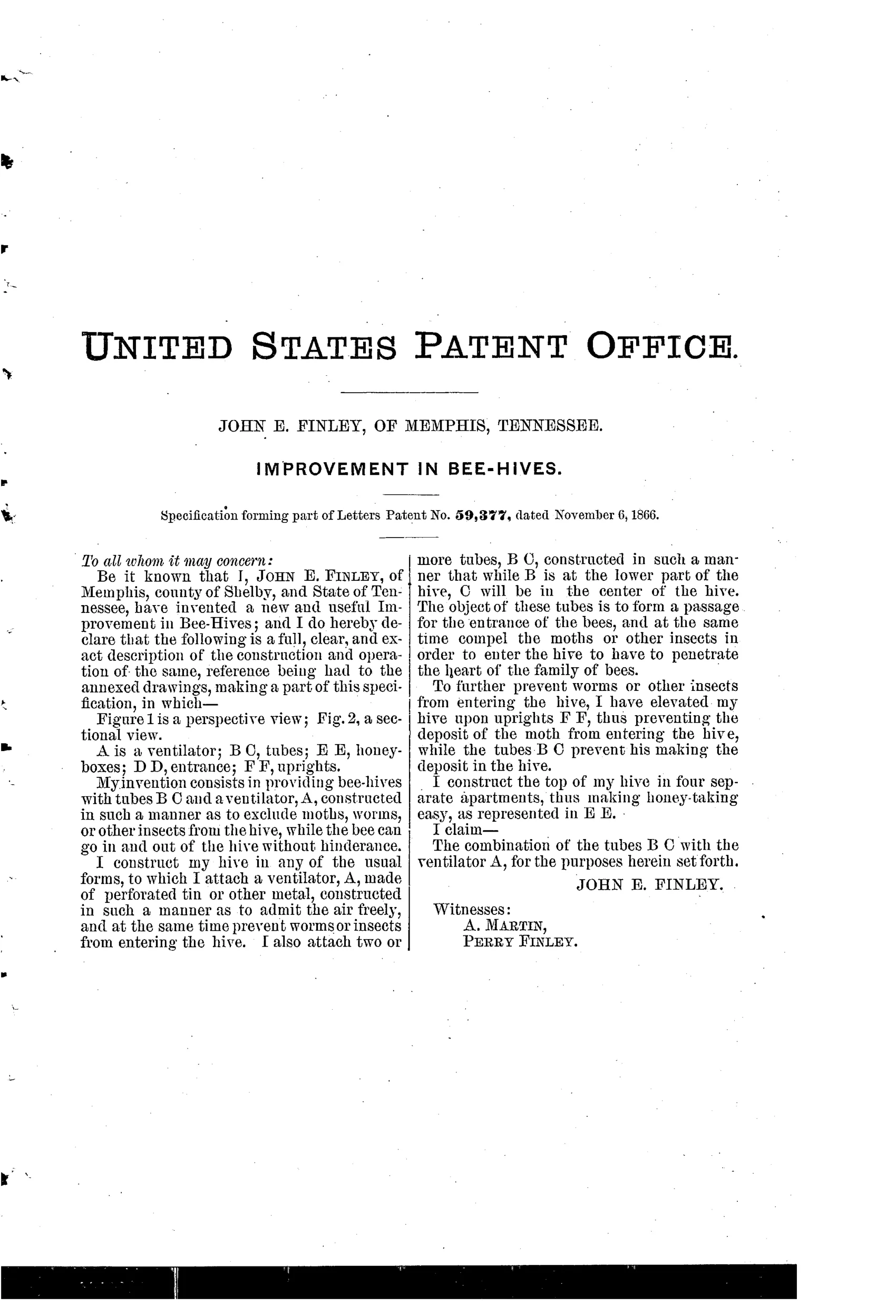
“The combination of the tubes B C with the ventilator A, for the purposes herein set forth.”
In plain English: The claim covers combining the bent entrance tubes with the perforated ventilator to let bees pass while blocking moths and other pests.
⬡ In the inventor’s words
“The object of these tubes is to form a passage for the entrance of the bees, and at the same time compel the moths or other insects in order to enter the hive to have to penetrate the heart of the family of bees.”— John E. Finley, from the specification
Fate unknown
No manufactured example or advertisement is documented; a surviving hive or a Memphis-area sales notice would settle it.
⬡ Commentary
Finley's answer to the wax moth — the great villain of 1860s beekeeping — is not a trap but a gauntlet. His two entrance tubes form a bent passage, visible as the big V driving into the heart of Fig. 1, so that any moth trying to sneak in must first crawl deep among the bees themselves. The bees are the weapon. It's a genuinely different logic from the dozens of contemporary patents that tried screens, drawers, and drowning pans: rather than keep the moth out, make her entry suicidal.
The trouble is what the geometry costs the bees. A long, narrow, doubled-back entrance is exactly what a foraging colony doesn't want in a honey flow — traffic jams at the door reduce yield and worsen ventilation. Finley clearly sensed this, because he pairs the tubes with a perforated-tin ventilator (the mesh cylinder of Fig. 2) to move air the entrance can't. The angled leg supports and the four-part honey compartment up top are sensible period touches, keeping the hive off moth-infested ground and letting the keeper rob one box at a time.
This is 1866, fourteen years after Langstroth, and there isn't a movable frame in sight. Like most Southern patent hives of the immediate postwar years, it's fighting yesterday's war with clever carpentry. The moth problem was ultimately solved by strong colonies in frame hives, not by architecture — but the gauntlet idea has a certain grim elegance.
Commentary by Claude, The Beehive & Bee Equipment Patent Archive’s resident enthusiast