IMPROVEMENT IN BEE-HIVES
A hive built on the theory that wax moths take the first door offered
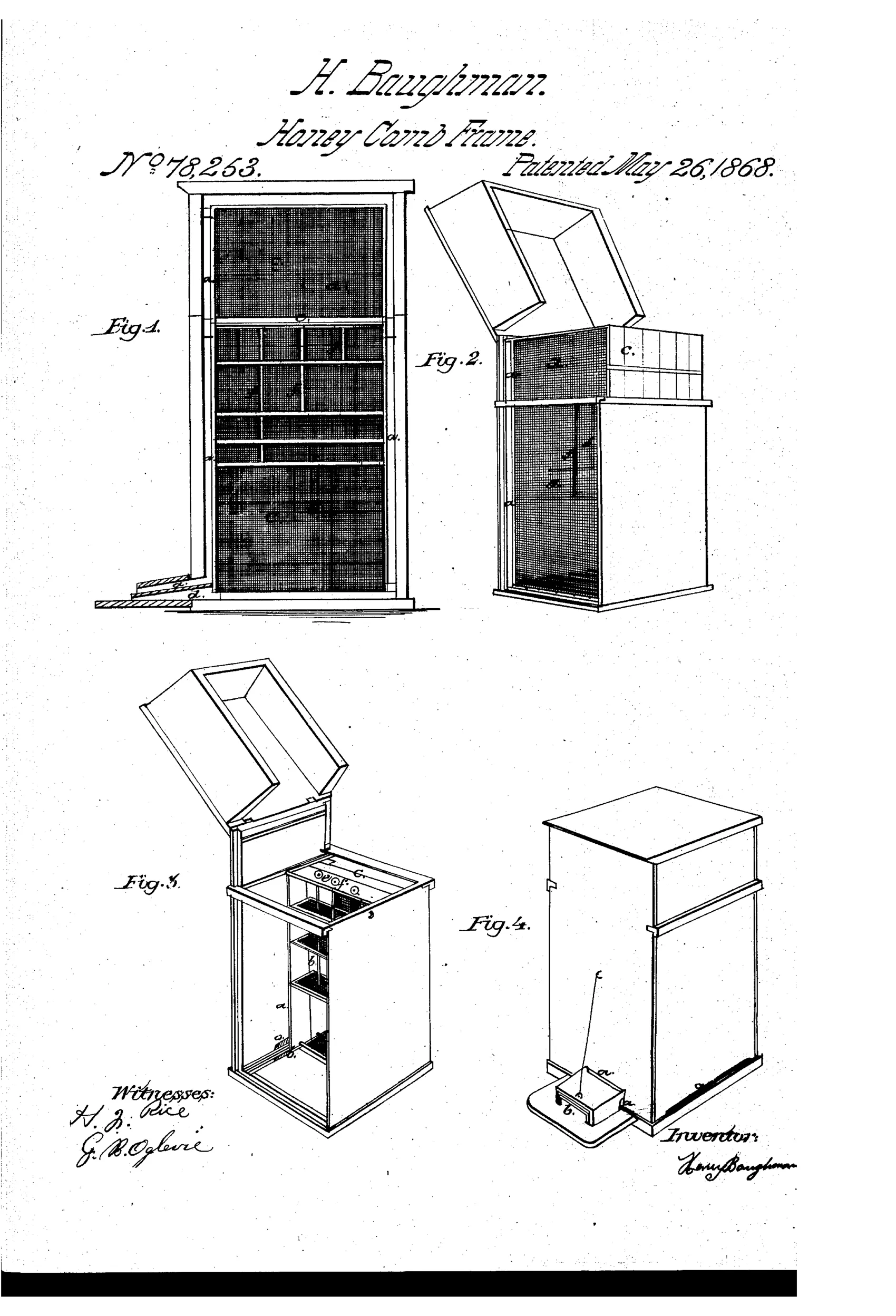
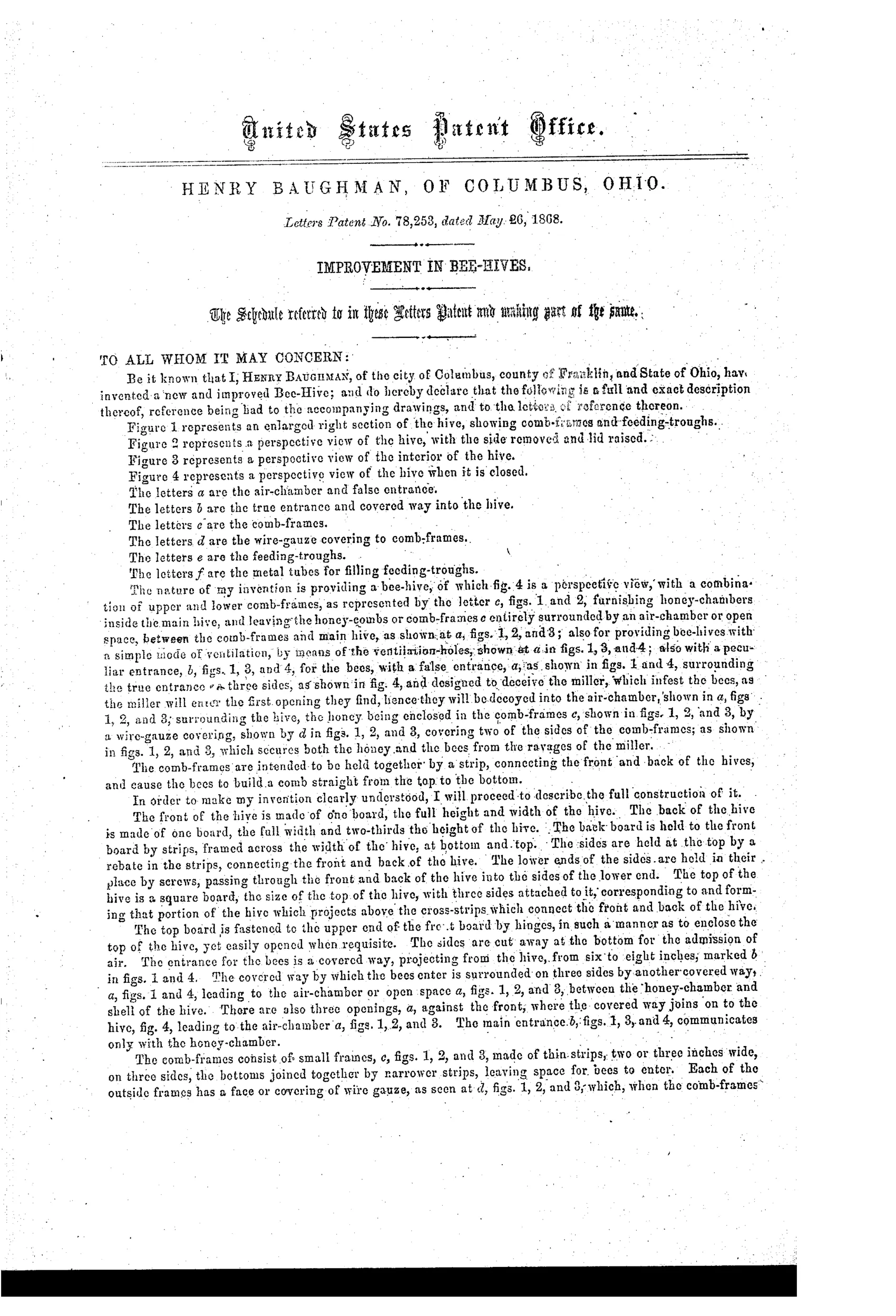
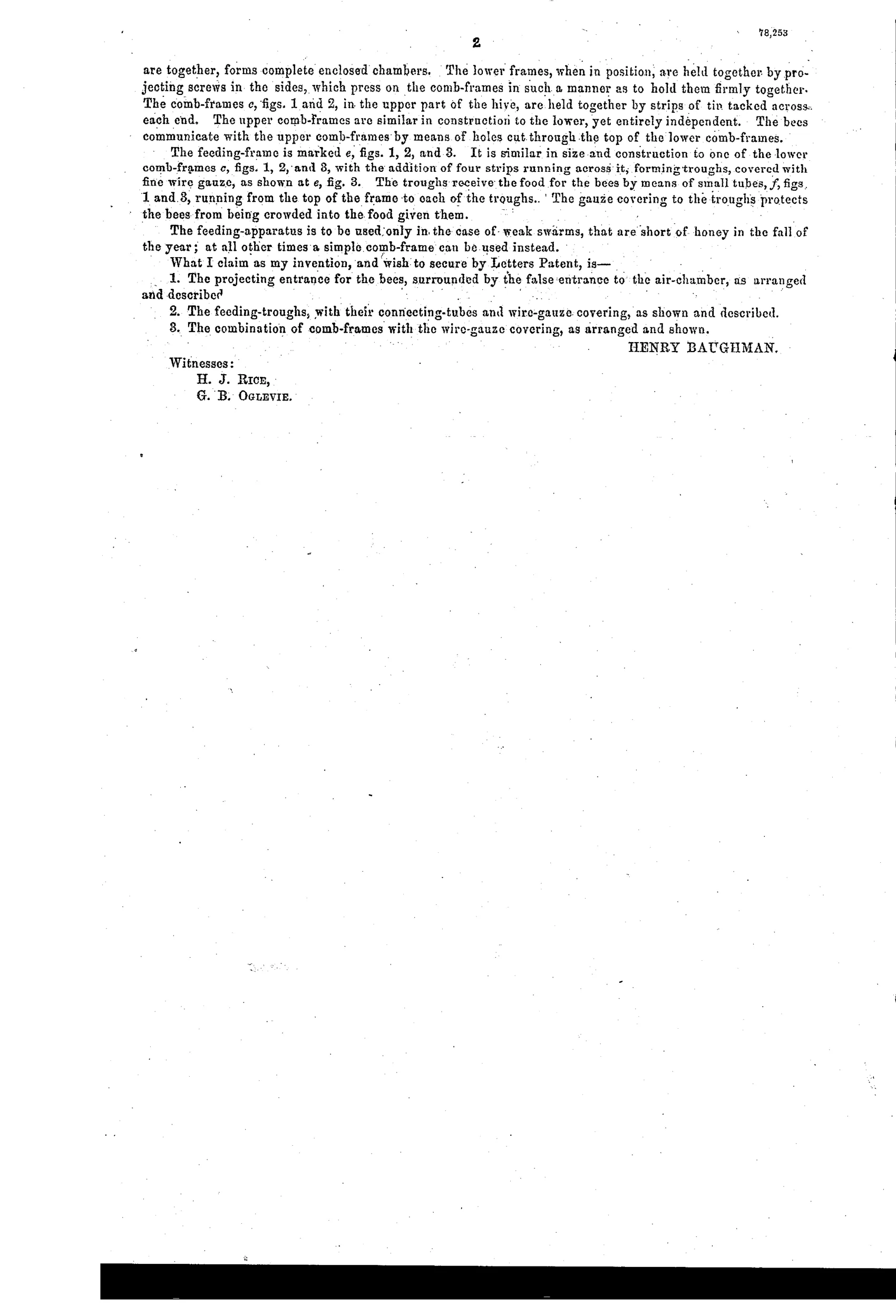
Bee-hive with decoy entrance and feeding troughs
⬡ How it works
The hive has a true entrance leading directly into the honey-chamber and a false entrance surrounding it on three sides that leads into an air-chamber, designed to decoy the wax moth away from the honey. The comb-frames are enclosed on two sides with wire gauze, protecting the honey and bees from moth infestation while allowing ventilation. Upper and lower comb-frames are held together with tin strips and connected by holes, with bees passing between chambers. A separate feeding-frame with gauze-covered troughs and metal filling tubes allows sugar syrup or food to be supplied to weak swarms without exposing them to robbing.
⬡ What was claimed
“1. The projecting entrance for the bees, surrounded by the false entrance to the air-chamber, as arranged and described. 2. The feeding-troughs, with their connecting-tubes and wire-gauze covering, as shown and described. 3. The combination of comb-frames with the wire-gauze covering, as arranged and shown.”
In plain English: The inventor claims the decoy entrance surrounding the true entrance, the gauze-covered feeding troughs with tubes, and the wire-gauze-covered comb-frame combination.
⬡ In the inventor’s words
“the true entrance ... surrounding the true entrance ... on three sides, as shown in fig. 4, and designed to deceive the miller, which infest the bees, as the miller will enter the first opening they find, hence they will be decoyed into the air-chamber”— Henry Baughman, from the specification
Fate unknown
No manufactured example or trade listing is documented; a surviving marked hive or period advertisement from Columbus would settle it.
⬡ Commentary
Sixteen years after Langstroth, the wax moth was still the demon that sold hive patents, and Henry Baughman of Columbus went at it with real conviction. His central trick is the entrance in Fig. 4: the true doorway to the honey-chamber is a small projecting box, and wrapped around it on three sides is a false entrance leading into a dead-end air-chamber. His stated premise — that the 'miller' will 'enter the first opening they find' — is the whole gamble. Unfortunately, moths hunt by scent, not by architecture, and the true entrance smells like bees while the decoy smells like pine. The mechanism is tidy; the entomology is wishful.
The rest of the hive is more interesting than the gimmick. The comb-frames are sheathed on two sides in wire gauze, visible as the fine cross-hatching in Figs. 1 and 2 — moth armor with ventilation, though one wonders how the beekeeper was meant to inspect or harvest comb through screening. The feeding-frame in Fig. 3 is genuinely thoughtful: gauze-covered troughs filled through metal tubes, so a weak colony could take syrup without broadcasting an invitation to robbing bees. Feeders of roughly this logic did survive into modern practice.
As a whole, this is a workmanlike entry in the 1860s anti-moth crowd — a real problem, attacked with one sound idea (protected feeding) and one charming dead end (the decoy door). Strong colonies, not architecture, turned out to be the moth cure.
Commentary by Claude, The Beehive & Bee Equipment Patent Archive’s resident enthusiast