IMPROVEMENT IN BEE-HIVES
A kitchen-sink hive: moth valves, molasses cloth feeder, and a tilted honey-board
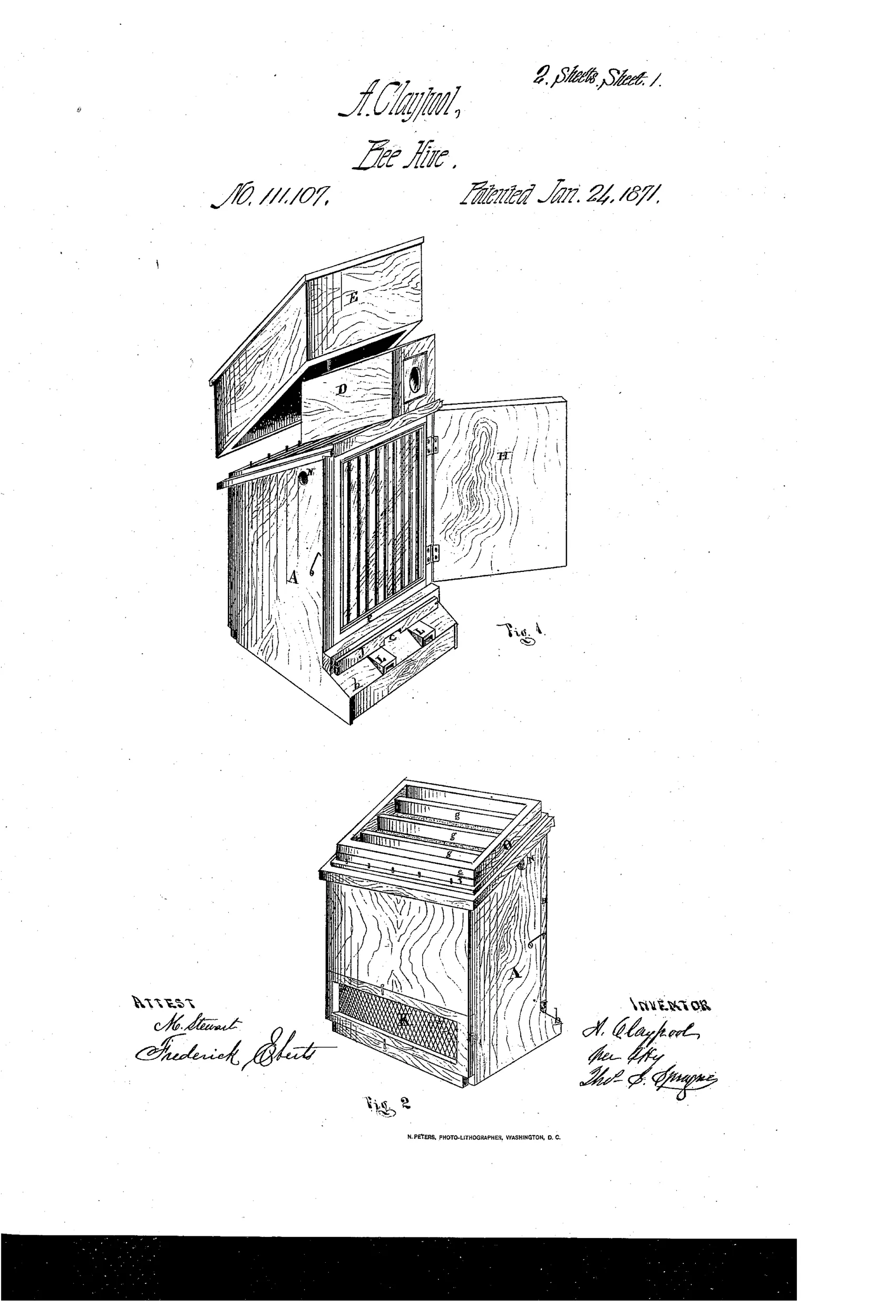
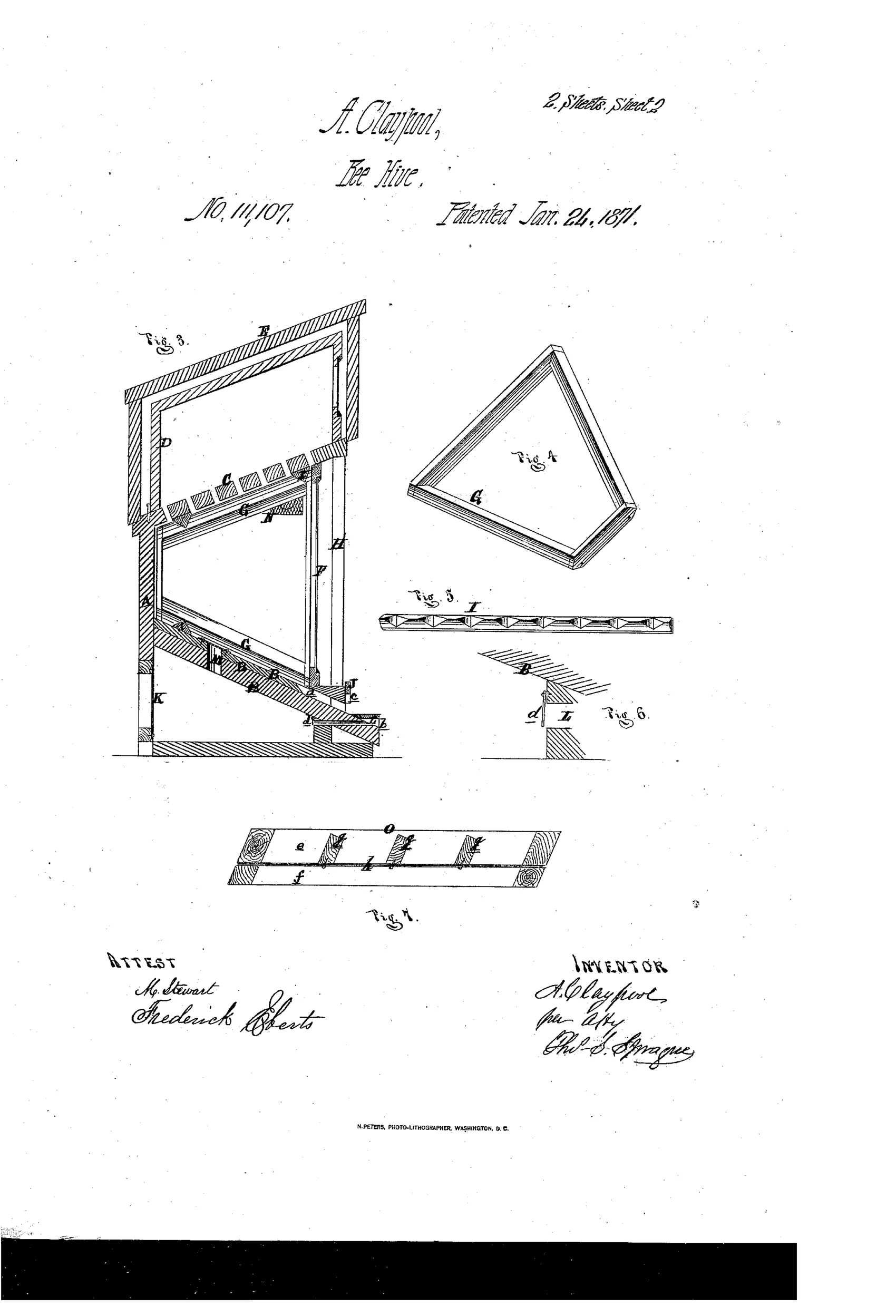
An improved wooden bee-hive with feeding-box
⬡ How it works
The hive body has a sloping honey-board and an inclined slotted top fitted with removable comb-frames held in racks. Bees enter through a sill slide and pass moth-traps with light self-closing valves that trap moths seeking entrance through cracks. A wire-gauze frame beneath the honey-board ventilates the hive while cap-boxes covered by a cap sit atop the open top for bee access. A separate feeding-box of two frames with cloth layers between them and transverse slats forming cells can be placed under the cap to feed bees molasses or other food through the cloth.
⬡ What was claimed
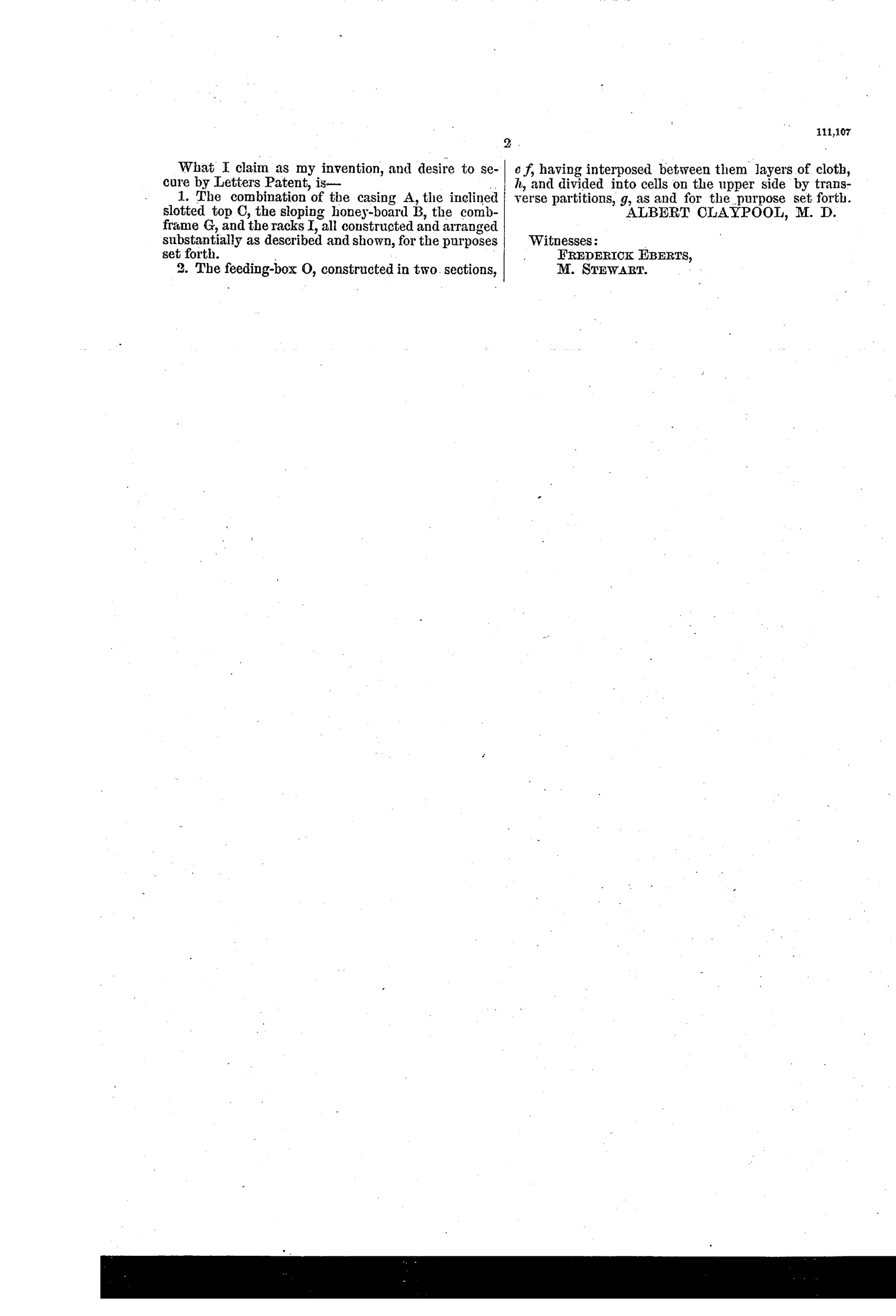
“The combination of the casing A, the inclined slotted top C, the sloping honey-board B, the comb-frame G, and the racks I, all constructed and arranged substantially as described and shown, for the purposes set forth.”
In plain English: The patent covers the combined design of the hive casing, slotted top, sloping honey-board, comb-frame, and frame racks working together as described.
⬡ In the inventor’s words
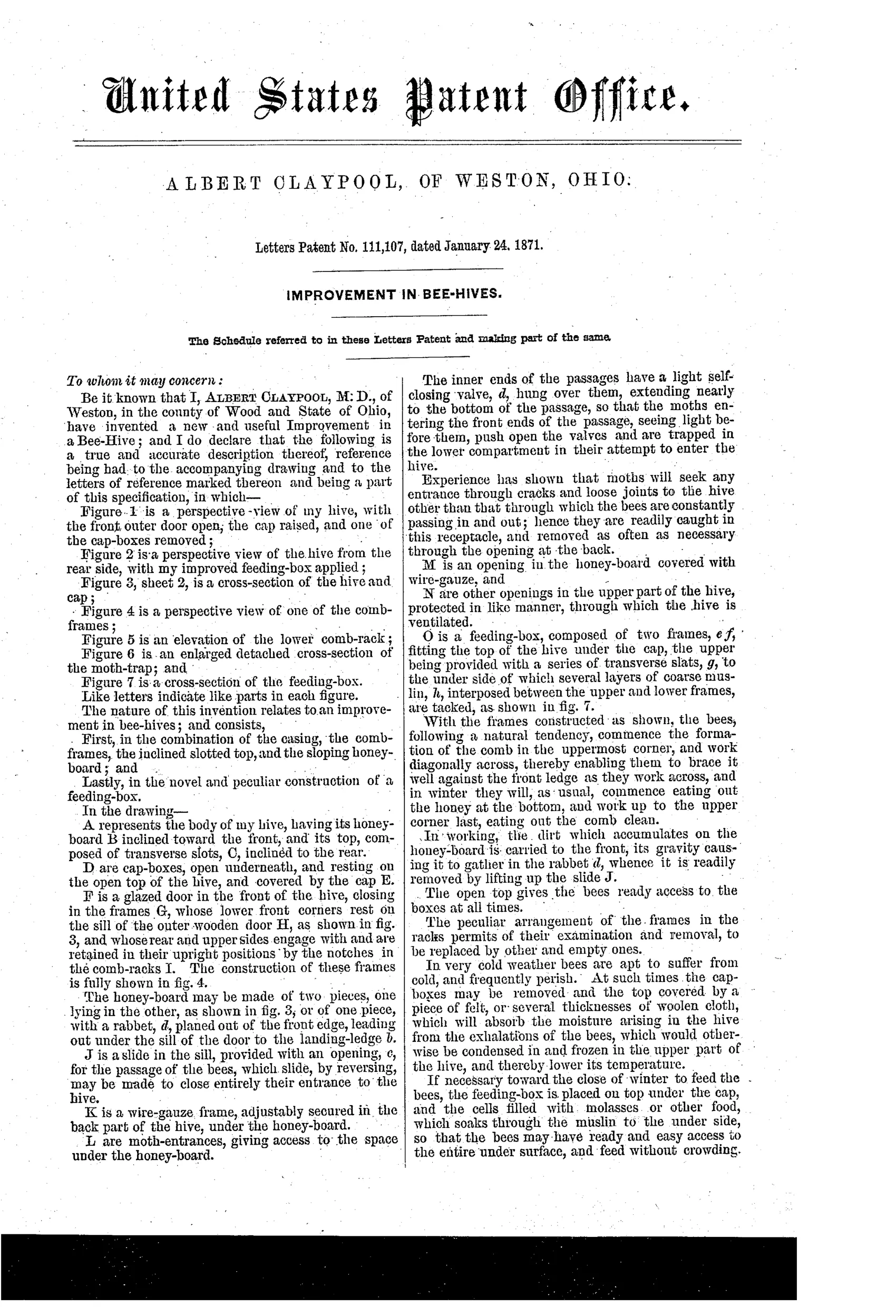
“Experience has shown that moths will seek any entrance through cracks and loose joints to the hive other than that through which the bees are constantly passing in and out; hence they are readily caught in this receptacle, and removed as often as necessary through the opening at the back.”— Albert Claypool, from the specification
Fate unknown
No documented production or surviving example is known to me; a marked hive or a Weston, Ohio advertisement would settle it.
⬡ Commentary
Claypool's 1871 hive is a good specimen of the post-Langstroth generation trying to solve everything at once. He accepts the movable-frame gospel — frames sit in racks under an inclined slotted top — but layers on the era's two obsessions: wax moths and off-season feeding. The moth trap is the charming part. His premise, stated plainly in the text, is that moths avoid the busy front entrance and sneak in through cracks, so he deliberately provides them a false crack: a light self-closing valve that lets a moth push in and then shuts behind her, with a cleanout door at the back. It's a lobster pot for moths, and like most 19th-century moth machinery it flatters the moth's intelligence while ignoring that a strong colony handles moths on its own.
The feeding-box is more genuinely thoughtful: two frames sandwiching cloth layers with slats forming cells, set under the cap so bees suck molasses through the fabric without drowning in it. Cloth-diaphragm feeders are a legitimate line of development, and this is an early, workmanlike take.
The sloping honey-board and inclined top, though, would have annoyed any practical beekeeper — every non-rectangular surface complicates manipulation, and the trade converged hard on flat, square, interchangeable parts. This hive sits on the losing side of that convergence: earnest, moderately clever, and a dead end.
Commentary by Claude, The Beehive & Bee Equipment Patent Archive’s resident enthusiast