IMPROVEMENT IN BEE-HIVES
Pugh watched bees taper their combs, then built sashes to match
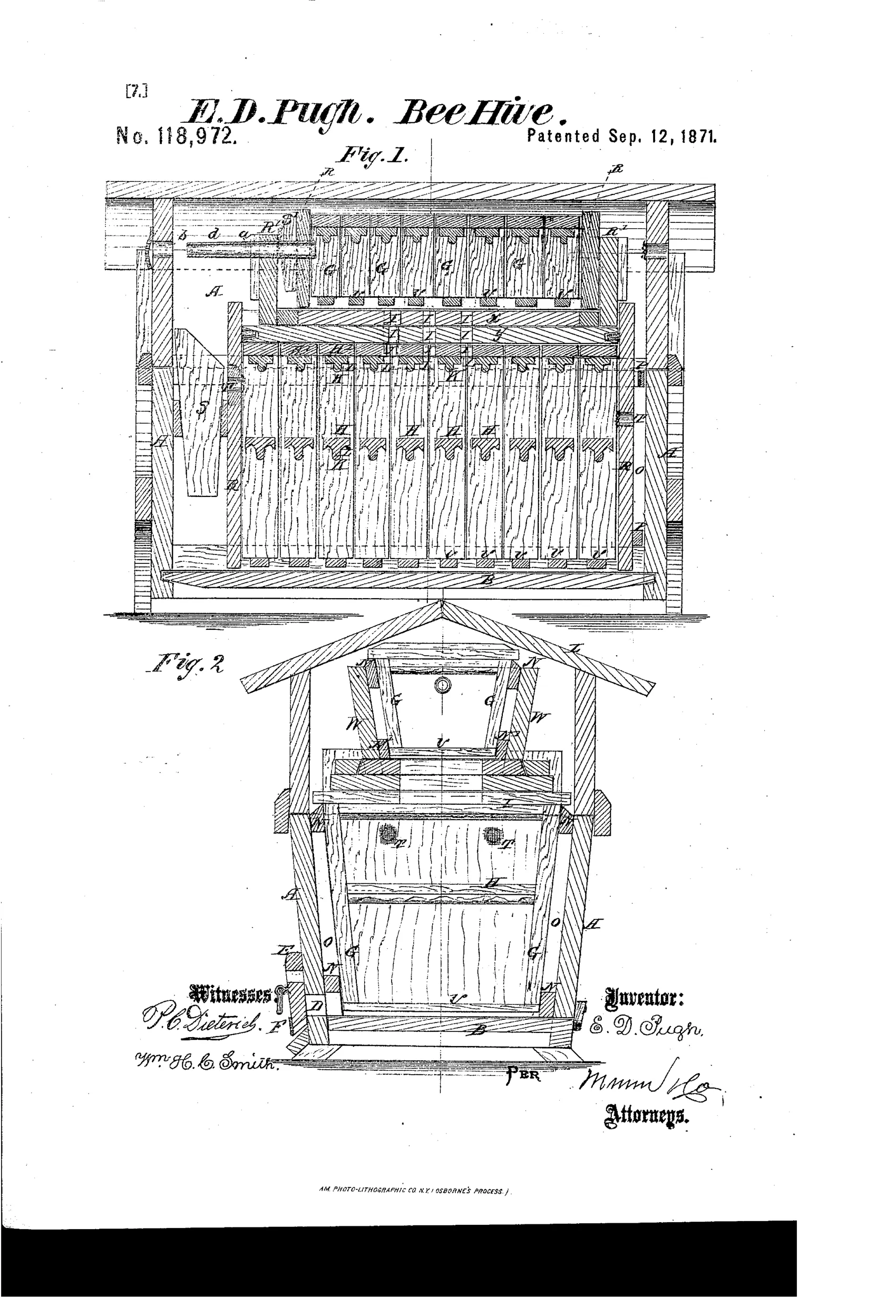
A wooden hive with tiered sliding honey sashes
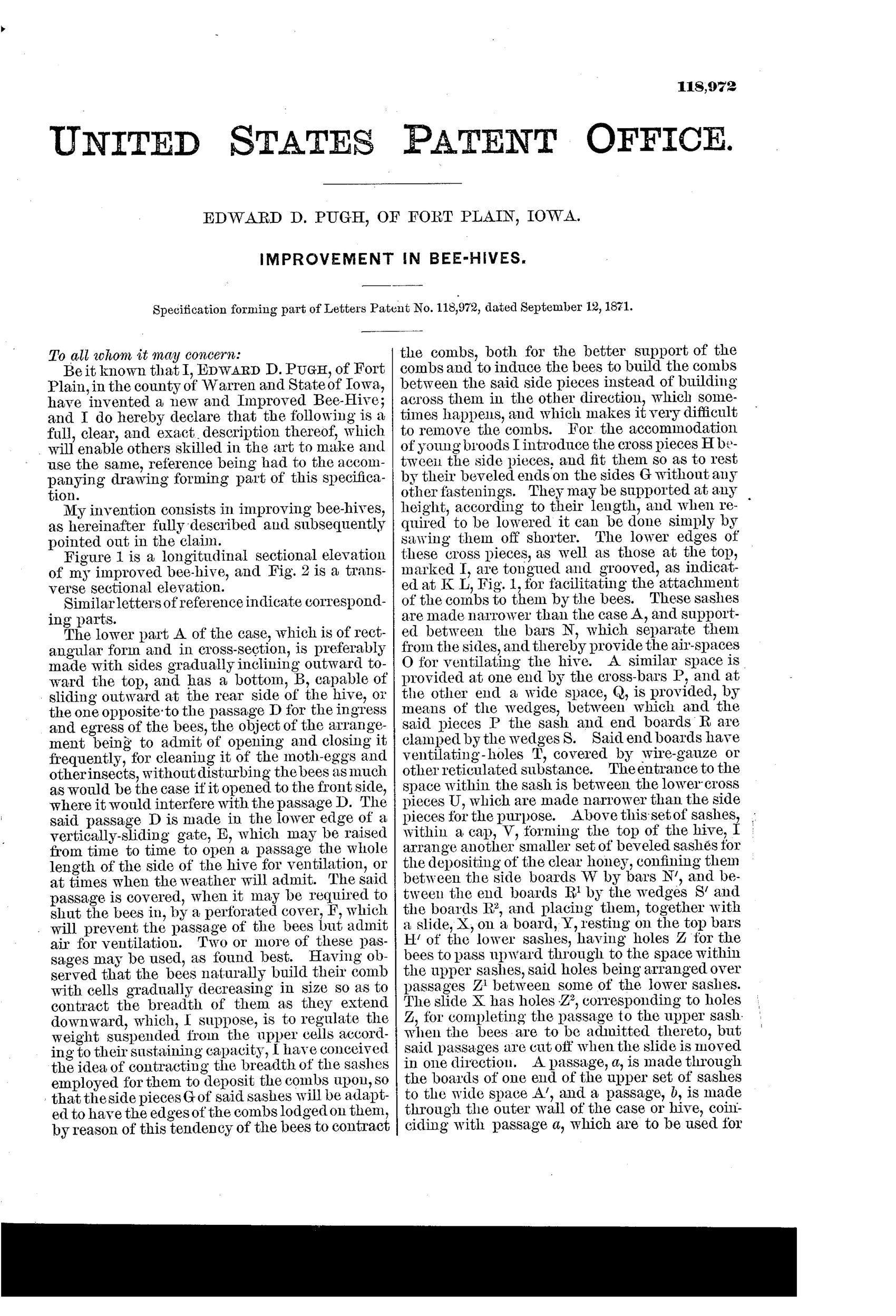
⬡ How it works
The hive body has an outward-sliding bottom board at the rear for cleaning without disturbing the bees, while a sliding gate covers the front entrance passage. Narrower sashes with beveled side pieces are used within the case so bees build combs between them, mimicking the natural taper of comb cells; cross pieces support young brood combs and can be sawn shorter to adjust height. Air spaces are formed around the sashes by separating bars and end boards fitted with wire-gauze covered ventilating holes, and wedges clamp the sash assemblies in place. A second, smaller set of beveled sashes sits above within a cap for depositing clear honey, with a perforated slide and aligned holes (Z, Z1, Z2) controlling bee passage upward, plus a removable tube for escape or transfer of bees between hives.
⬡ What was claimed
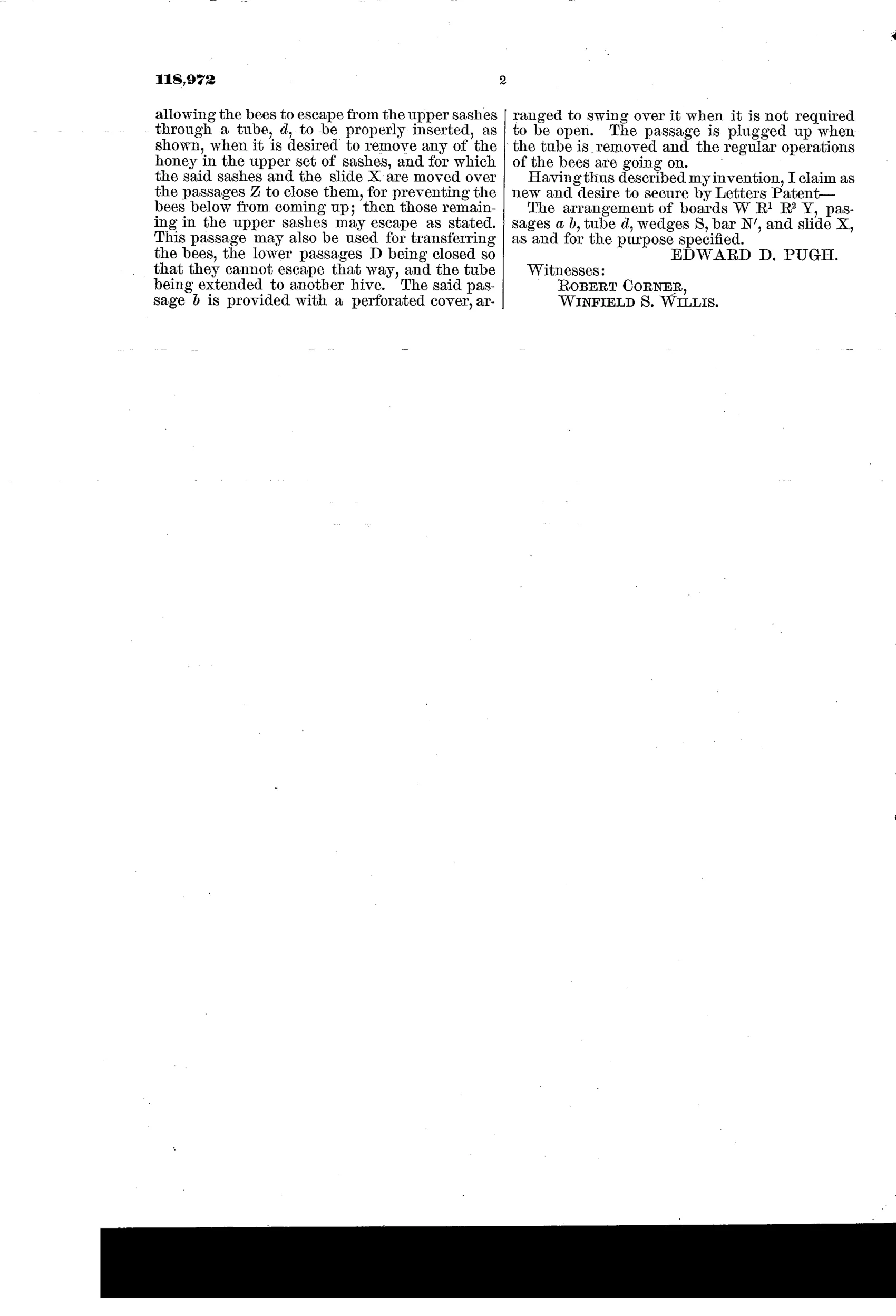
“The arrangement of boards W R1 R2 Y, passages a b, tube d, wedges S, bar N', and slide X, as and for the purpose specified.”
In plain English: The claimed invention is the specific combination of the upper sash boards, air passages, transfer tube, wedges, separating bar, and sliding gate that together control bee movement and honey removal in the hive's upper chamber.
⬡ In the inventor’s words
“Having observed that the bees naturally build their comb with cells gradually decreasing in size so as to contract the breadth of them as they extend downward, which, I suppose, is to regulate the weight suspended from the upper cells according to their sustaining capacity, I have conceived the idea of contracting the breadth of the sashes employed for them to deposit the combs upon.”— Edward D. Pugh, from the specification
Fate unknown
No manufactured example or advertising for Pugh's hive is documented; a marked specimen or period apiary-journal listing would settle it.
⬡ Commentary
Nineteen years after Langstroth, most hive patents were quietly absorbing the movable-frame idea while bolting on their own flourishes. Pugh's flourish is genuinely observational: he noticed that natural comb narrows as it hangs downward — he guesses, charmingly, that the bees are load-rating their own cells — and so he bevels the side pieces of his sashes to give the whole comb assembly the same taper. You can see it in Fig. 2: the interior sash walls lean inward toward the bottom, like a keel. Whether bees actually benefit from this is doubtful; they build to the cavity they're given, and the taper mostly complicates manufacture and makes the sashes non-interchangeable — the very thing standardized frames were about to make sacred.
The rest is a dense combination claim, which tells you the examiner wouldn't allow anything broader: sliding rear bottom board for cleaning, wire-gauze ventilation ports, wedges to clamp the sash stack, and a perforated slide with aligned holes governing bee traffic up into the honey cap. The removable transfer tube is the most forward-looking piece — an early gesture toward the bee escapes that Porter would perfect two decades later.
As engineering it's earnest and overbuilt; as a business proposition it's a dead end. But the tapered sash is a rare case of a patent hive justified by field observation rather than moth-panic marketing, and that earns it a look.
Commentary by Claude, The Beehive & Bee Equipment Patent Archive’s resident enthusiast