IMPROVEMENT IN BEE-HIVES
An overcoat for the hive: pivoted legs raise the shell in summer, lower it for winter
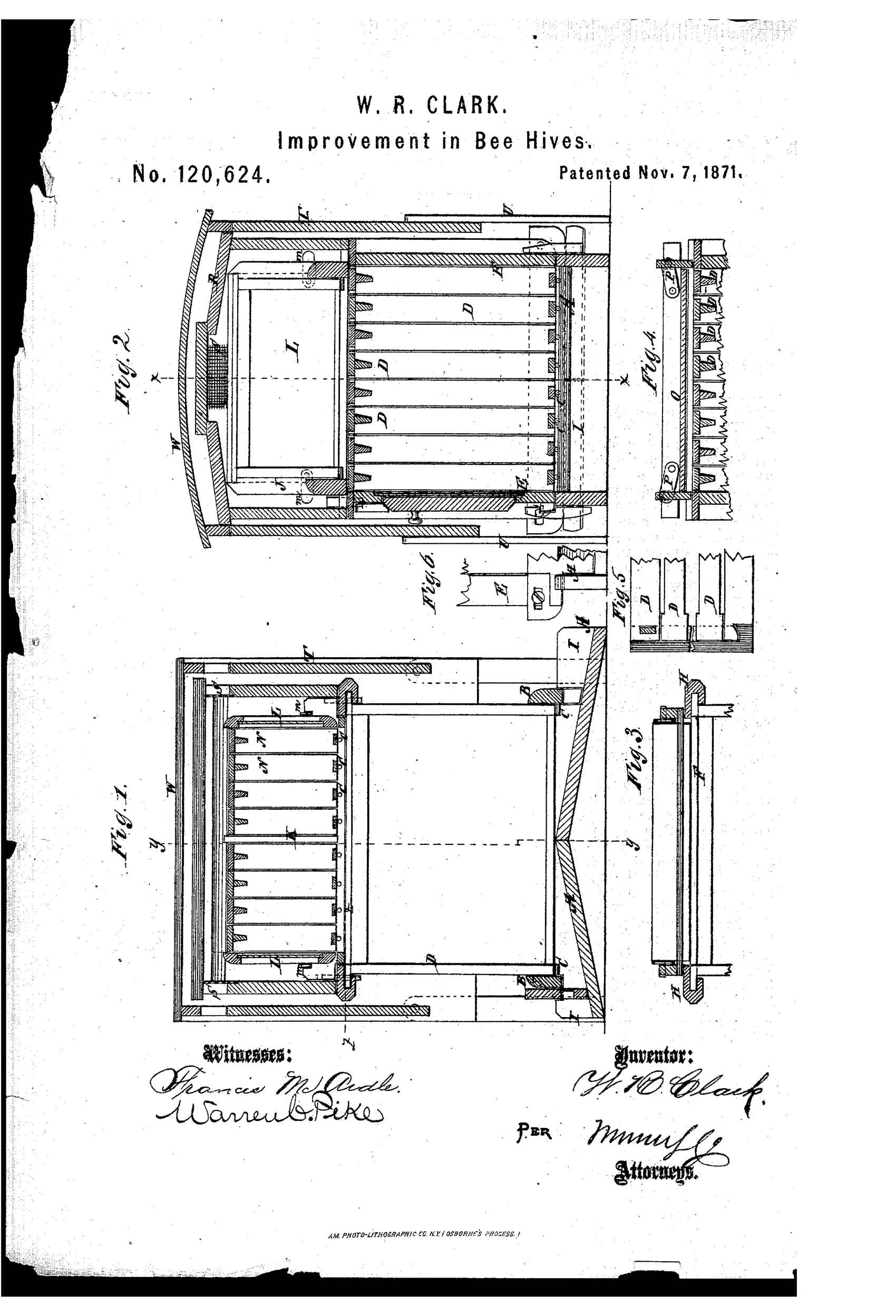
Two-part sectional bee-hive with adjustable outer casing.
⬡ How it works
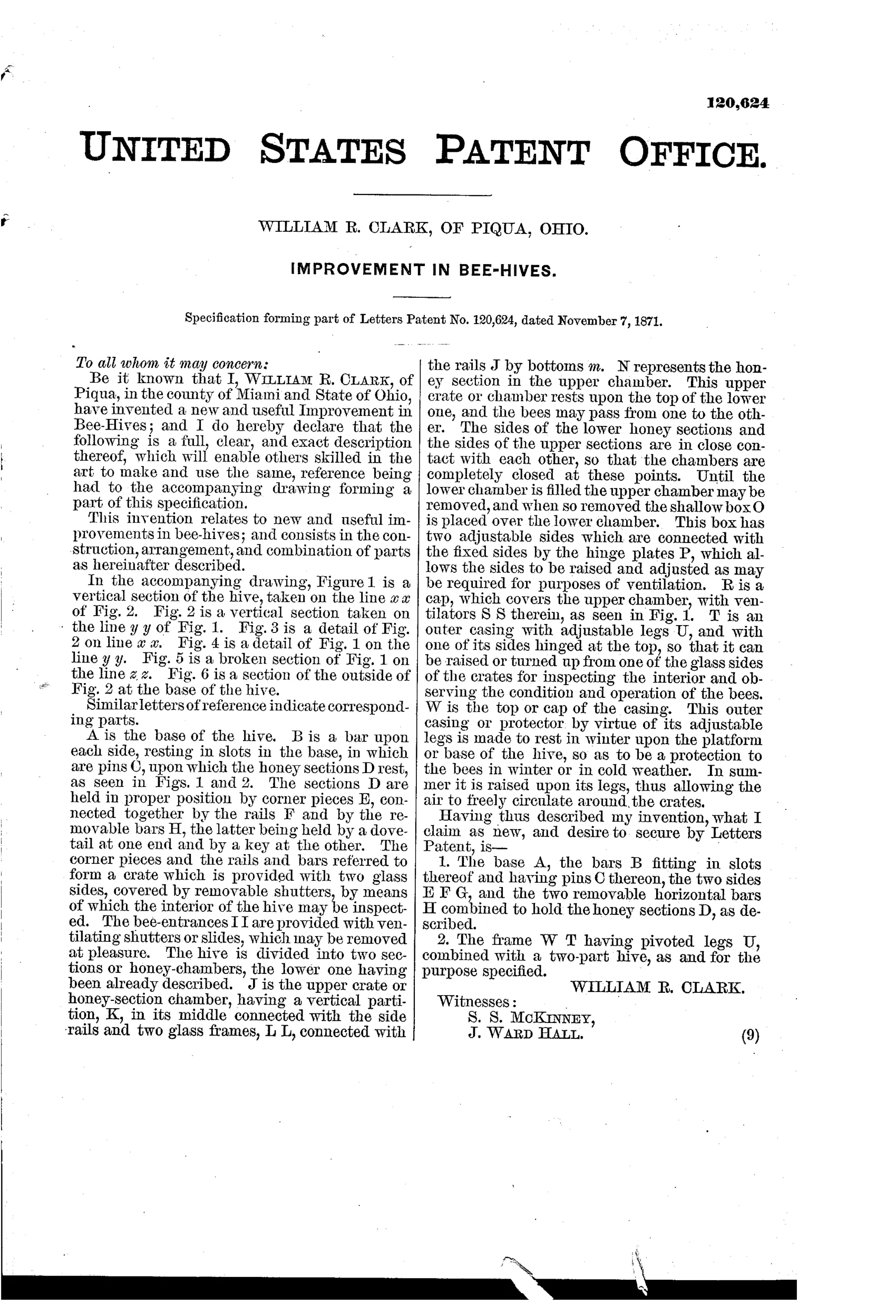
The hive rests on a base A with side bars B fitted into slots and pins C, which support removable honey sections D. Corner pieces E, rails F, and removable dovetailed bars H hold the sections together to form a crate with glass sides that can be inspected through removable shutters. The hive is divided into two honey chambers stacked so bees can pass between them, with the upper crate having a vertical partition K and glass frames L L, and a shallow ventilated box O that can replace the upper chamber. An outer casing T with adjustable pivoted legs U and a hinged side allows the frame to be raised in summer for air circulation or lowered onto the base in winter for protection.
⬡ What was claimed
“1. The base A, the bars B fitting in slots thereof and having pins C thereon, the two sides E F G, and the two removable horizontal bars H combined to hold the honey sections D, as described.”
In plain English: A hive base with slotted bars and pins, combined with side pieces and two removable horizontal bars, that together hold the honey sections in place.
⬡ In the inventor’s words
“This outer casing or protector by virtue of its adjustable legs is made to rest in winter upon the platform or base of the hive, so as to be a protection to the bees in winter or in cold weather.”— William R. Clark, from the specification
Paper patent — likely never produced
The joinery-heavy sectional construction and adjustable casing suggest a design too costly to compete with simple frame hives, and no manufactured example or trade listing is known to me.
⬡ Patented the same day
- IMPROVEMENT IN BEE-HIVES. — Burr Benton
- IMPROVEMENT IN BEE-HIVES — Abraham Mutersbaugh
⬡ Commentary
Clark's hive is really two inventions in one drawing. Inside is a fairly conventional two-story crate of removable honey sections D, held by slotted bars, pins, and dovetailed rails — a fussy but workable answer to the era's obsession with getting comb honey out in tidy salable boxes. Outside is the interesting part: a full outer casing T standing on pivoted, adjustable legs U, so the whole shell hovers clear of the base in summer for ventilation and drops down snug onto the platform when cold weather arrives. It's a double-walled hive you can convert with a leg adjustment instead of carpentry.
The glass sides behind removable shutters are pure 1870s fashion — every third patent hive of the decade promised you could watch the bees at work — but the winter-jacket idea was ahead of the pack. Wintering losses were the great unsolved problem of American beekeeping, and packing hives in chaff or double walls became standard advice in the following decades. Clark got the principle right even if his execution is over-jointed.
Look closely at Fig. 2 and you'll see how much precision woodwork this demands: corner pieces, rails, dovetailed bars H, a ventilated cap O that swaps for the upper chamber. That's a cabinetmaker's hive, priced accordingly, in the years when Langstroth's simpler frame architecture was quietly winning. A thoughtful dead end, but the wintering instinct was sound.
Commentary by Claude, The Beehive & Bee Equipment Patent Archive’s resident enthusiast