IMPROVEMENT IN BEE-HIVES
Split a colony by sliding boxes past each other — no bees escape, allegedly
Apparatus for dividing or colonizing bee-hives
⬡ How it works
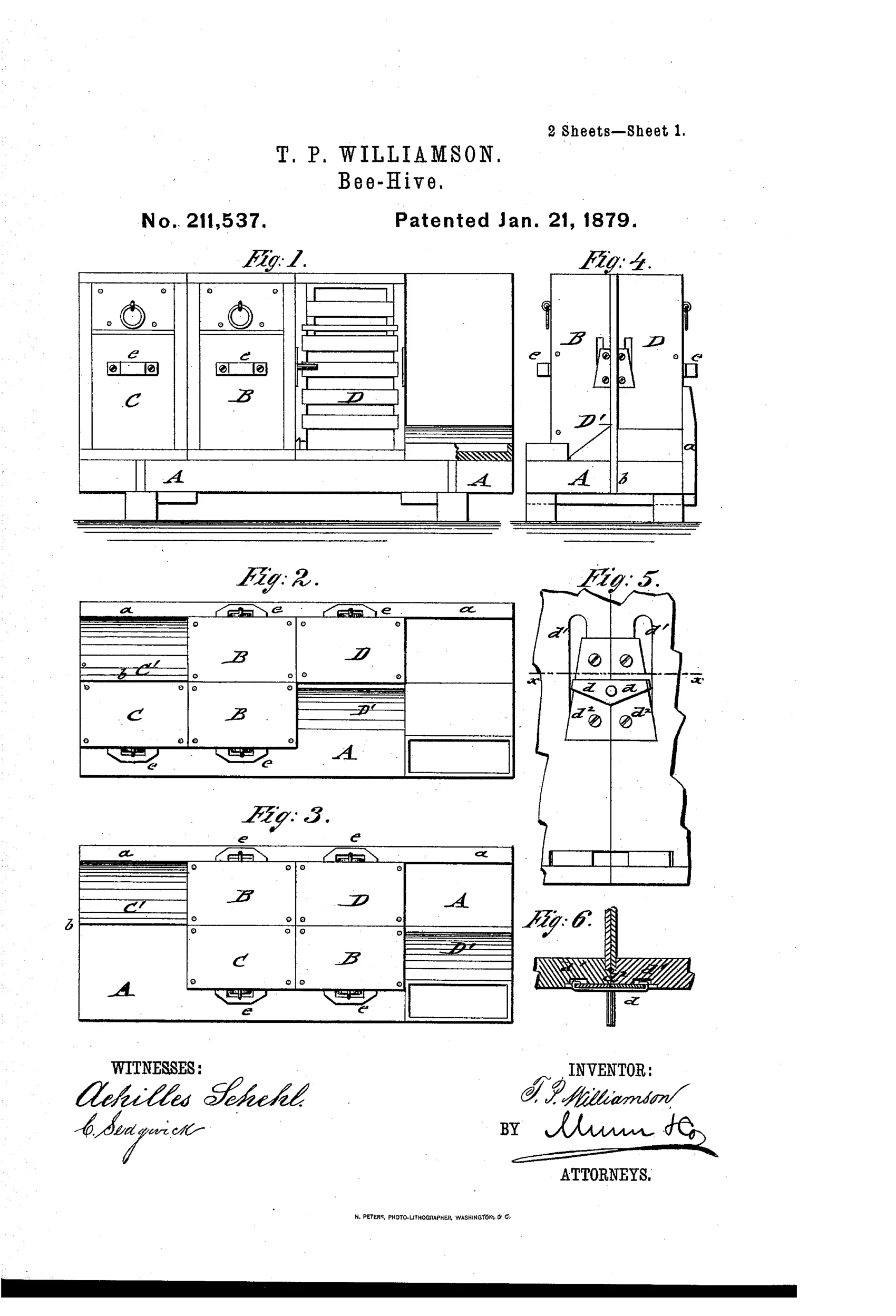
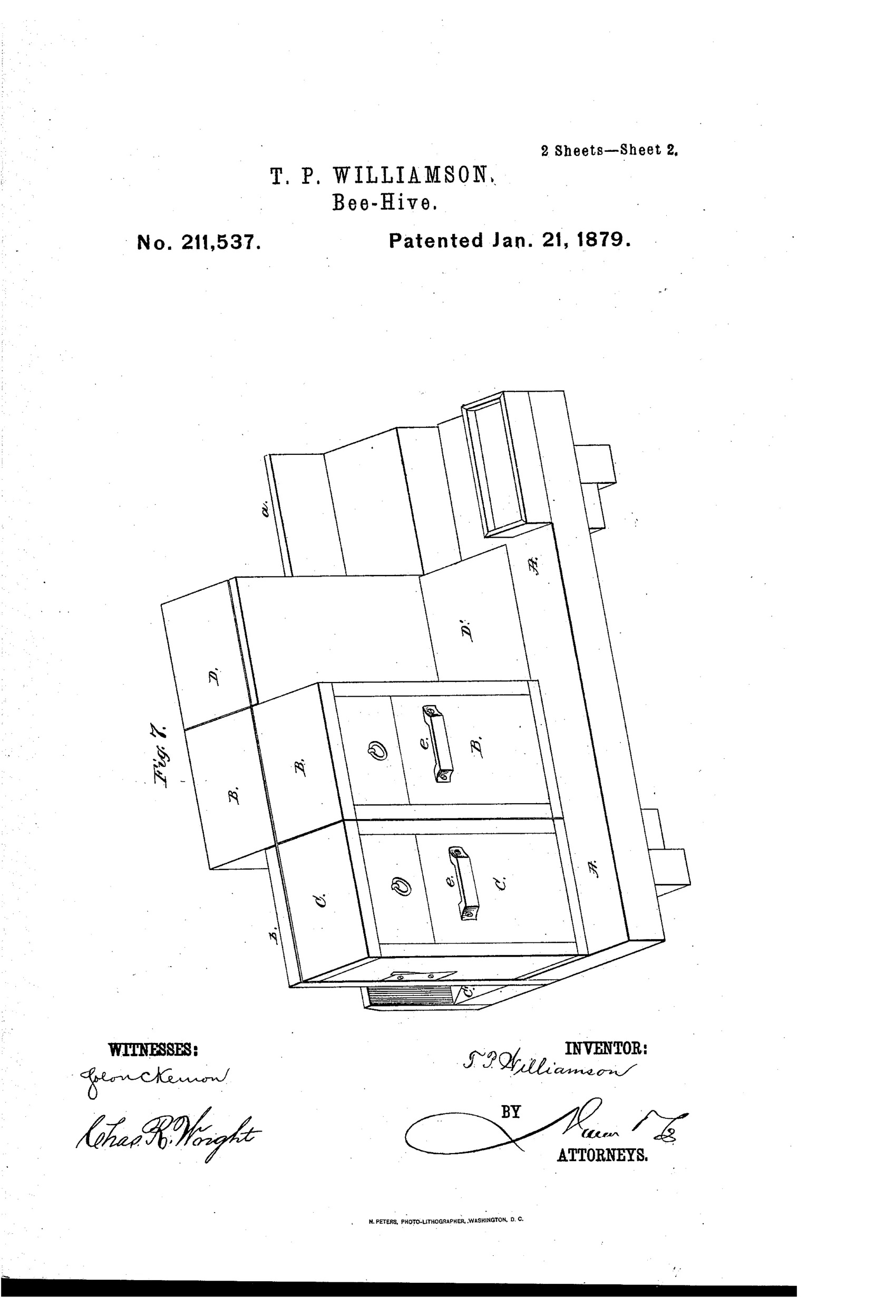
A double hive made of two connected sections is placed on a slotted guide-table with a rear guide-wall and slots of unequal length at opposite ends. Two empty semi-sections are placed on each side of the double hive, with their open sides covered by vertical movable walls that slide in the table's guide-slots. The front sections are slowly moved along the rear sections, which causes the movable walls to shift so that each empty section comes to cover a full hive section while the full sections cover the empty ones. During this motion the hive sections remain closed, preventing bees from escaping, and once aligned the semi-sections are locked together by hook-and-wedge locking devices, separated, and then opened to form two independent hives.
⬡ What was claimed
“1. The apparatus herein described for dividing or colonizing bees, consisting of two hives, each made in two sections, a slotted guide-table, and vertical movable walls, substantially as specified.”
In plain English: The invention is a device for splitting or starting new beehives that uses two two-part hives, a table with slots, and sliding walls to move the sections together.
⬡ In the inventor’s words
“As the hive-sections are all kept closed during the motion, partly by the action of the movable walls C' and D', and partly by their overlapping each other, the bees have no chance to escape, so as to endanger the apiarist or get lost.”— Thomas Porter Williamson, from the specification
Paper patent — likely never produced
No manufactured example or trade listing is known, and the dedicated slotted table plus the design's indifference to queen placement make commercial production very hard to credit.
⬡ Commentary
Williamson's problem is real: dividing a colony to make increase was (and is) the cheap alternative to buying bees, and doing it in 1878 meant opening hives and shaking bees around while they objected. His answer is a piece of pure mechanism — two double hives sitting on a slotted guide-table, with sliding vertical walls riding in slots of unequal length. Push the front sections along the rear ones and the walls shift automatically, so each empty half comes to seal against a full half at the same instant the full sections cover the empties. Compare Fig. 2 and Fig. 3 and you can watch the shuffle happen: it is essentially a sliding-block puzzle for beehives, and the geometry is genuinely worked out, down to the hook-and-wedge locks in Figs. 5 and 6 that clamp the recombined halves before separation.
The trouble is that the mechanism solves the wrong half of the problem. Keeping bees enclosed during a split is a convenience; the hard part is biology. A division only succeeds if each half ends up with a queen or the means to raise one, and Williamson's apparatus divides bees the way a card cut divides a deck — blind. The queen goes wherever she happens to be, and one half is likely queenless with no guarantee of eggs.
It is an honest engineer's answer to a beekeeper's question, arriving just as the trade was learning that splits are managed with frames and judgment, not furniture.
Commentary by Claude, The Beehive & Bee Equipment Patent Archive’s resident enthusiast