IMPROVEMENT IN BEE-HIVES
A hive that expects wax moths to lose their grip and fall off
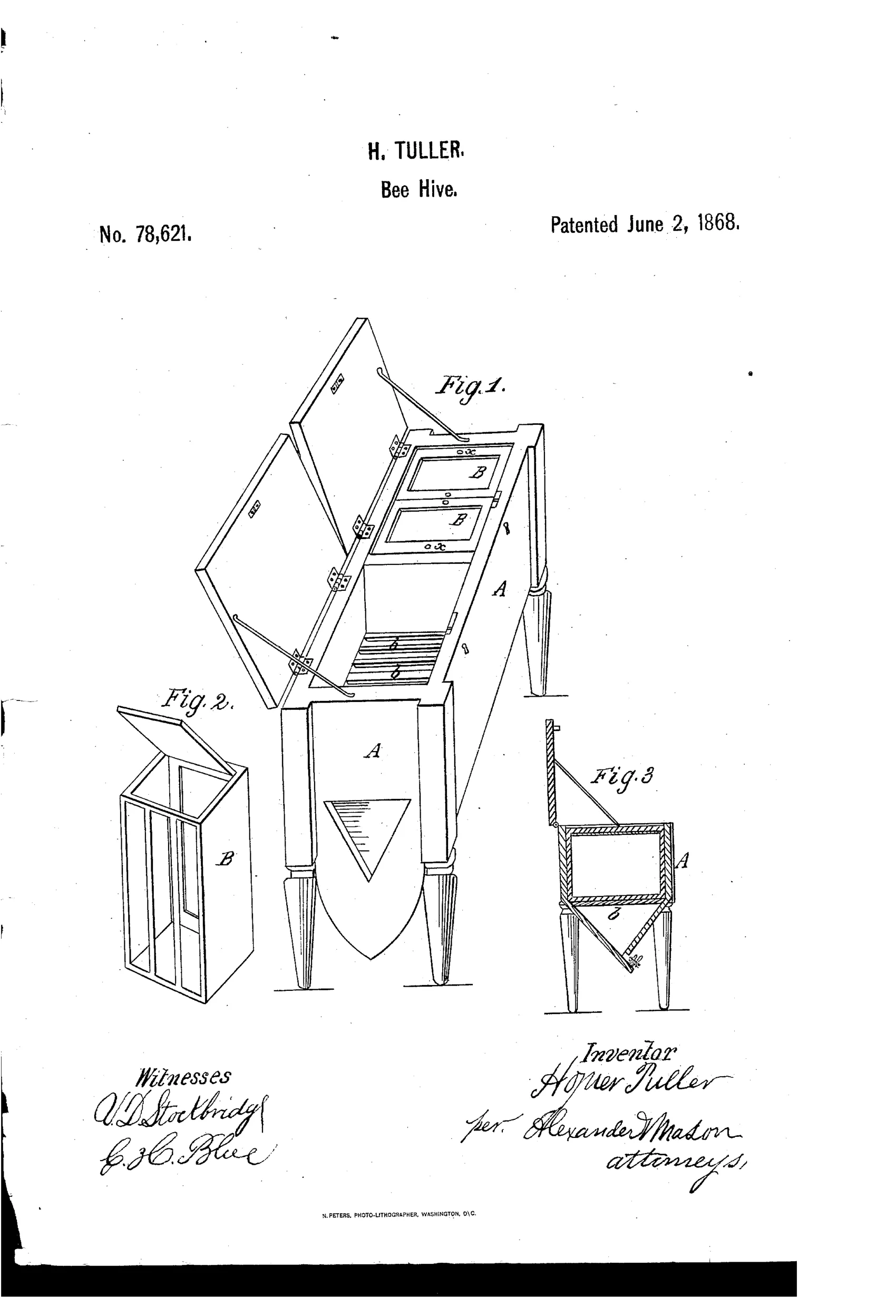
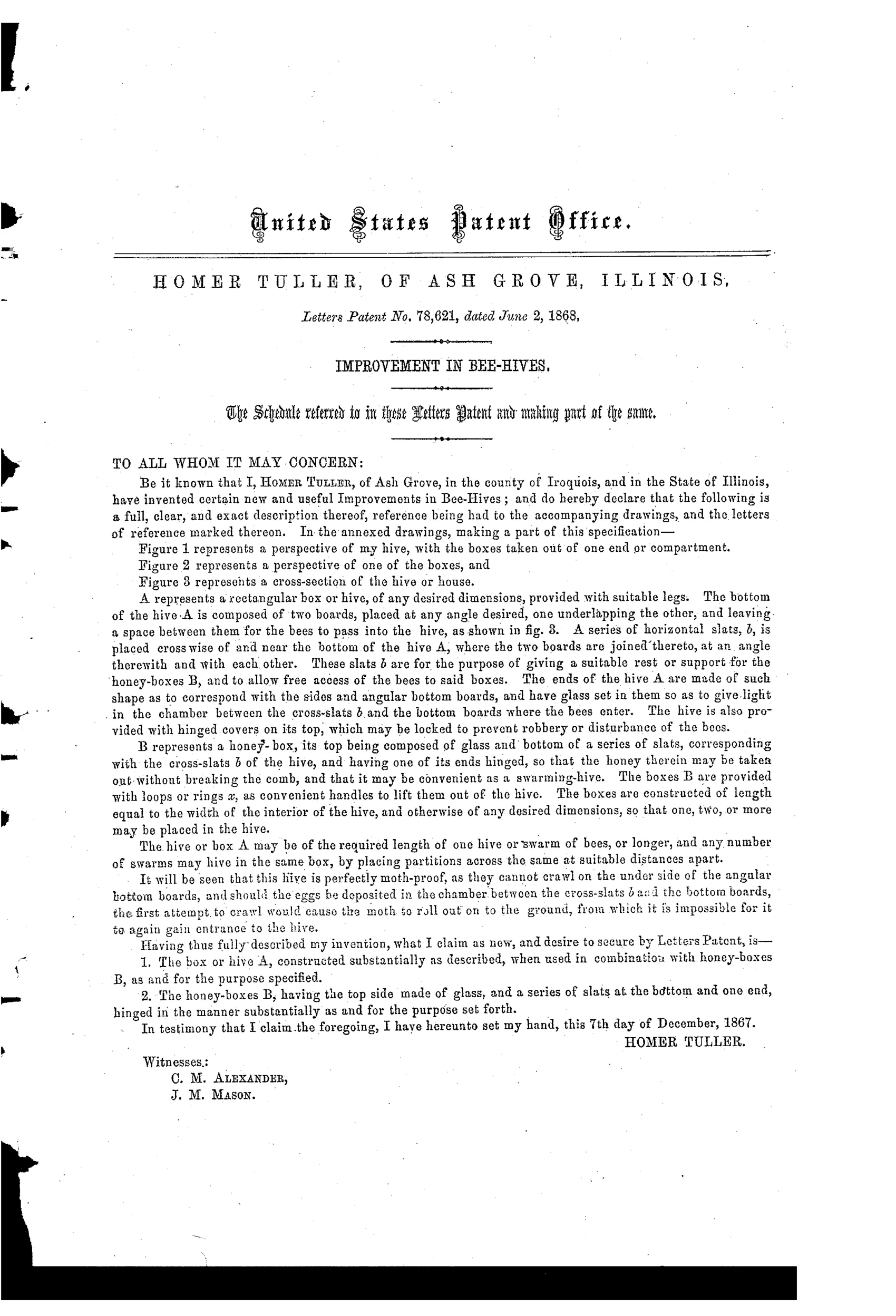
Moth-proof bee-hive with removable honey boxes
⬡ How it works
The hive is a rectangular box with an angled, overlapping double-board bottom that leaves a slot for bees to enter, and horizontal cross-slats near the bottom support removable honey-boxes above a lower brood chamber. The hive ends are glazed to admit light into the chamber between the slats and the bottom boards, and hinged, lockable covers on top protect against robbing bees or disturbance. The honey-boxes have glass tops and slatted, hinged-end bottoms so comb honey can be removed without breaking the comb, and loop handles allow them to be lifted out; multiple boxes can be placed side by side or the hive lengthened with internal partitions for several swarms. The angled bottom boards prevent moth larvae from crawling up into the hive, since any attempt to climb the underside causes them to roll off onto the ground.
⬡ What was claimed
“1. The box or hive A, constructed substantially as described, when used in combination with honey-boxes B, as and for the purpose specified. 2. The honey-boxes B, having the top side made of glass, and a series of slats at the bottom and one end, hinged in the manner substantially as and for the purpose set forth.”
In plain English: The inventor claims the angled-bottom hive box used together with glass-topped, slat-bottomed honey boxes that hinge open at one end for easy honey removal.
⬡ In the inventor’s words
“It will be seen that this hive is perfectly moth-proof, as they cannot crawl on the under side of the angular bottom boards, and should the eggs be deposited in the chamber between the cross-slats b and the bottom boards, the first attempt to crawl would cause the moth to roll out on to the ground, from which it is impossible for it to again gain entrance to the hive.”— Homer Tuller, from the specification
Paper patent — likely never produced
No manufactured example or trade record is known, and the fixed-comb, lock-lidded design was already obsolete against Langstroth-frame hives; a marked specimen would change the call.
⬡ Commentary
Tuller's hive belongs squarely to the great moth panic of the 1860s, when the wax moth was blamed for every dead colony and half the patents in this category promised to defeat it. His weapon is geometry: the bottom of the hive is two overlapping boards set at an angle, so bees fly in through the slot but a moth larva trying to crawl up the underside supposedly tumbles off onto the ground. The specification says this flatly makes the hive 'perfectly moth-proof,' which is optimistic — moths fly in the same entrance the bees use, and the real defense against wax moths is a strong colony, something no bottom board can supply.
The honey boxes are the better idea, and worth a look in Fig. 2. Glass tops let the beekeeper check when comb is capped without opening the hive, and the slatted bottom hinges open at one end so the comb can be lifted out unbroken. That's a genuine attempt at the problem section boxes would eventually solve — getting comb honey to market intact — five years before one-pound sections became standard.
Notice too the locking hinged lids in Fig. 1, guarding against 'robbing bees or disturbance,' meaning two-legged robbers as much as six-legged ones. What the design lacks is any movable brood frame; sixteen years after Langstroth, the brood chamber here is still a fixed-comb box on stilts. A handsome piece of furniture aimed at the wrong enemy.
Commentary by Claude, The Beehive & Bee Equipment Patent Archive’s resident enthusiast