IMPROVEMENT IN BEE-HIVES
An Iowa hive with a funnel bottom that flushes debris out a tube
An improved beehive with removable comb-holders
⬡ How it works
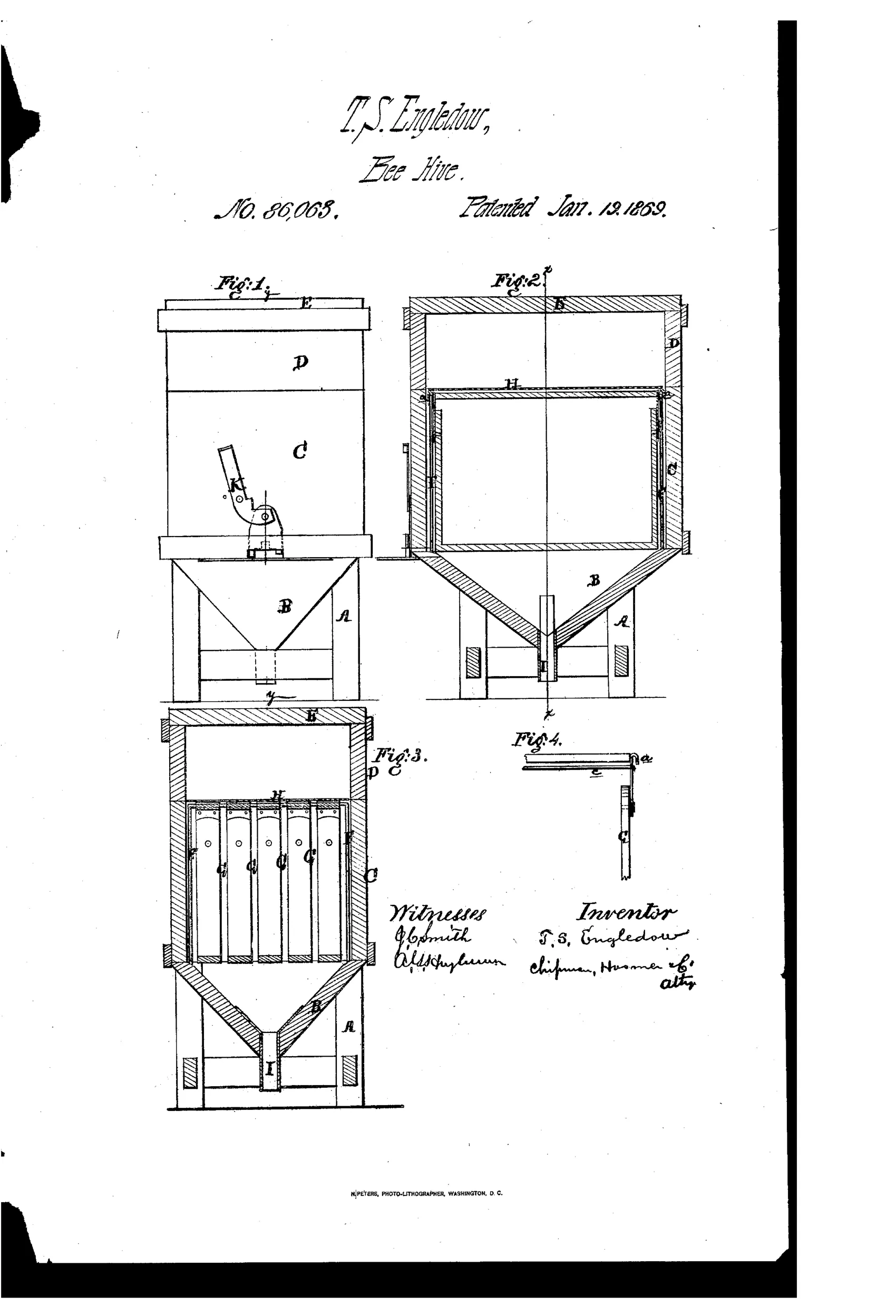
The hive consists of a frame A, a hollow inverted pyramid B, a box C resting atop the pyramid, and a removable cover D with lid E. Wire frames F support the box and also serve as bearings for pendent comb-holders G, which hang from pivoted hooks a. A rod c passes through the comb lengthwise and into openings in the hooks, allowing combs to be transported from hive to hive and hung securely in the comb-holders. A perforated plate H atop the comb-holders provides ventilation, a tube I beneath the pyramid serves as a waste-way for debris while blocking moths and robbers, and a pivoted thumb-piece K adjusts the size of the bee entrance to guard against robbing.
⬡ What was claimed
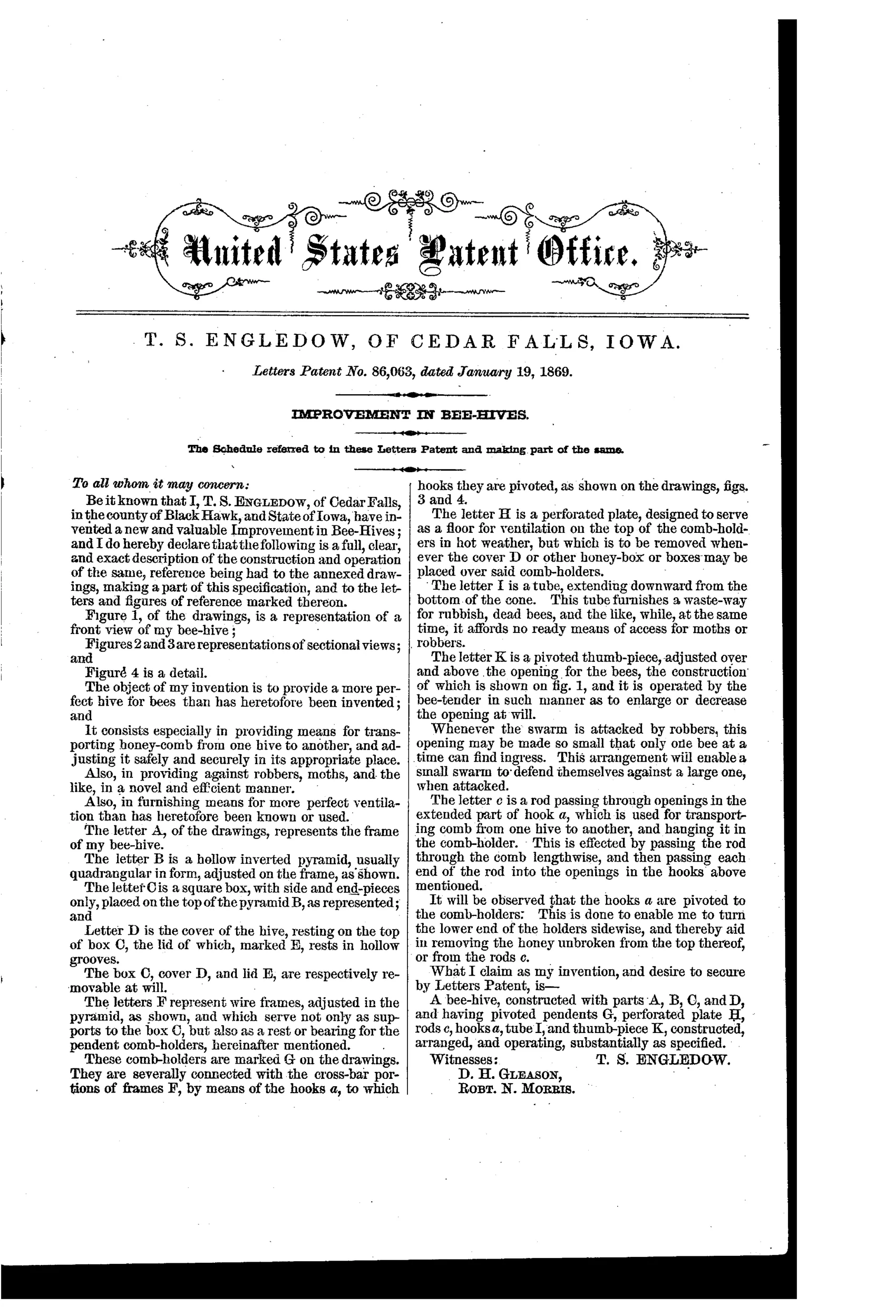
“A bee-hive, constructed with parts A, B, C, and D, and having pivoted pendents G, perforated plate H, rods c, hooks a, tube I, and thumb-piece K, constructed, arranged, and operating, substantially as specified.”
In plain English: The invention is a beehive made of frame, pyramid box, cover, and lid parts, combined with hanging comb-holders, a ventilation plate, transport rods, pivoted hooks, a debris tube, and an adjustable entrance thumb-piece, all working together as described.
⬡ In the inventor’s words
“This arrangement will enable a small swarm to defend themselves against a large one, when attacked.”— T. S. Engledow, from the specification
Paper patent — likely never produced
The rod-through-comb suspension and funnel bottom are impractical against the already-established Langstroth frame, and no manufactured example or trade record is known; a marked specimen would overturn this.
⬡ Commentary
Seventeen years after Langstroth, inventors were still trying to out-engineer the bees, and Engledow's hive is a good specimen of the impulse. The most striking feature in the drawings is the inverted pyramid B under the brood box: instead of a flat bottom board, everything that falls from the combs slides down the funnel and out through tube I, which the patent frames as both a self-cleaning waste-way and a moth defense. It's a genuinely tidy idea on paper — wax moth larvae thrive in floor debris, and a hive with no floor debris has less for them to eat. In practice, bees would likely propolize the funnel, and losing the flat bottom sacrifices the easy inspection a bottom board gives you.
The comb-handling deserves a look at Fig. 4. Rather than Langstroth's rigid rectangular frame, Engledow hangs each comb from a rod c passed lengthwise through the comb itself, caught in pivoted hooks a. That makes combs transportable between hives, which he plainly cares about — but a rod skewered through soft comb is far more fragile than a frame surrounding it, and the pendent holders swing where frames sit still.
The pivoted thumb-piece K, shrinking the entrance so 'a small swarm to defend themselves against a large one,' is the one feature here that survives today: it's an entrance reducer, standard equipment ever since. The rest is an earnest dead end.
Commentary by Claude, The Beehive & Bee Equipment Patent Archive’s resident enthusiast