BEE-HIVE.
A basement moth-drowning parlor with glass shutters, three decades after Langstroth solved it
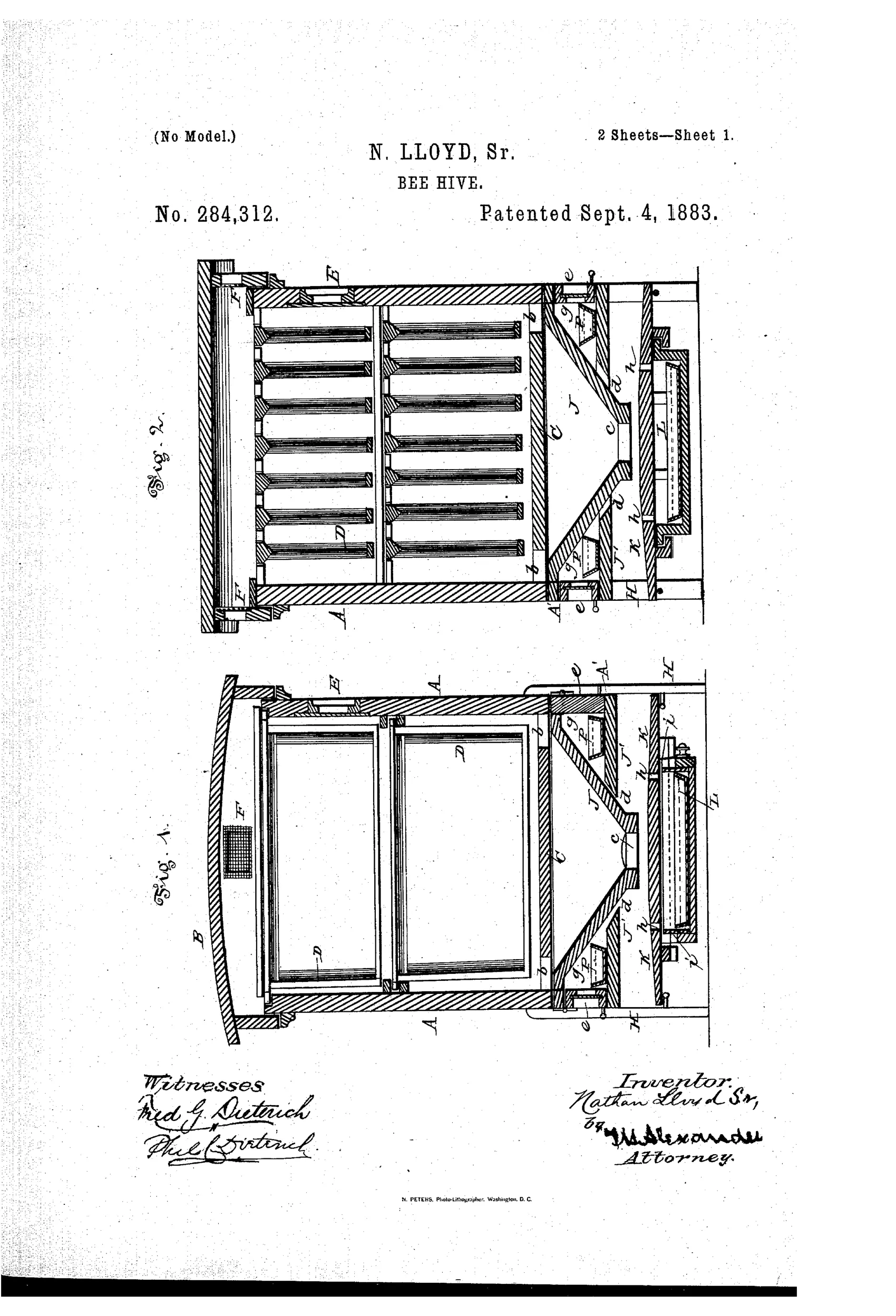
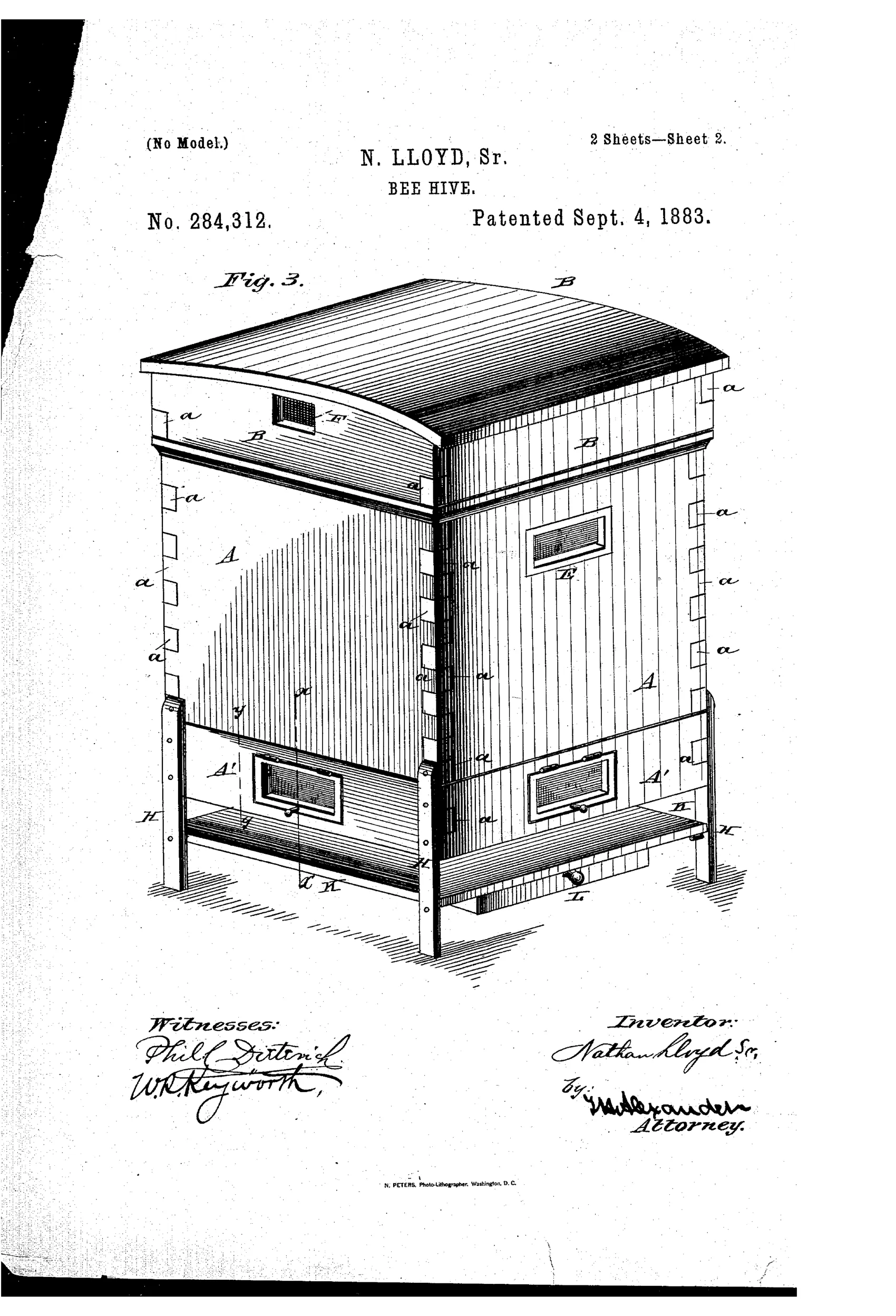
A bee hive with built-in moth trap.
⬡ How it works
The hive body holds two stacked series of removable comb-frames, brood below and honey racks above, so combs can be pulled without disturbing bees. A detachable bottom section has a hopper-shaped inverted-pyramid floor with a central hole leading bees inward while dirt and debris roll down its inclined sides. Below this is a chamber with illuminated glass shutters and liquid-filled pans that attract and drown moths trying to escape the light, plus a perforated inclined table beneath that funnels crawling moths into a removable, glass-windowed moth-trap drawer. Ventilated wire-gauze openings and a convex, water-shedding removable top complete the hive's climate and pest control.
⬡ What was claimed
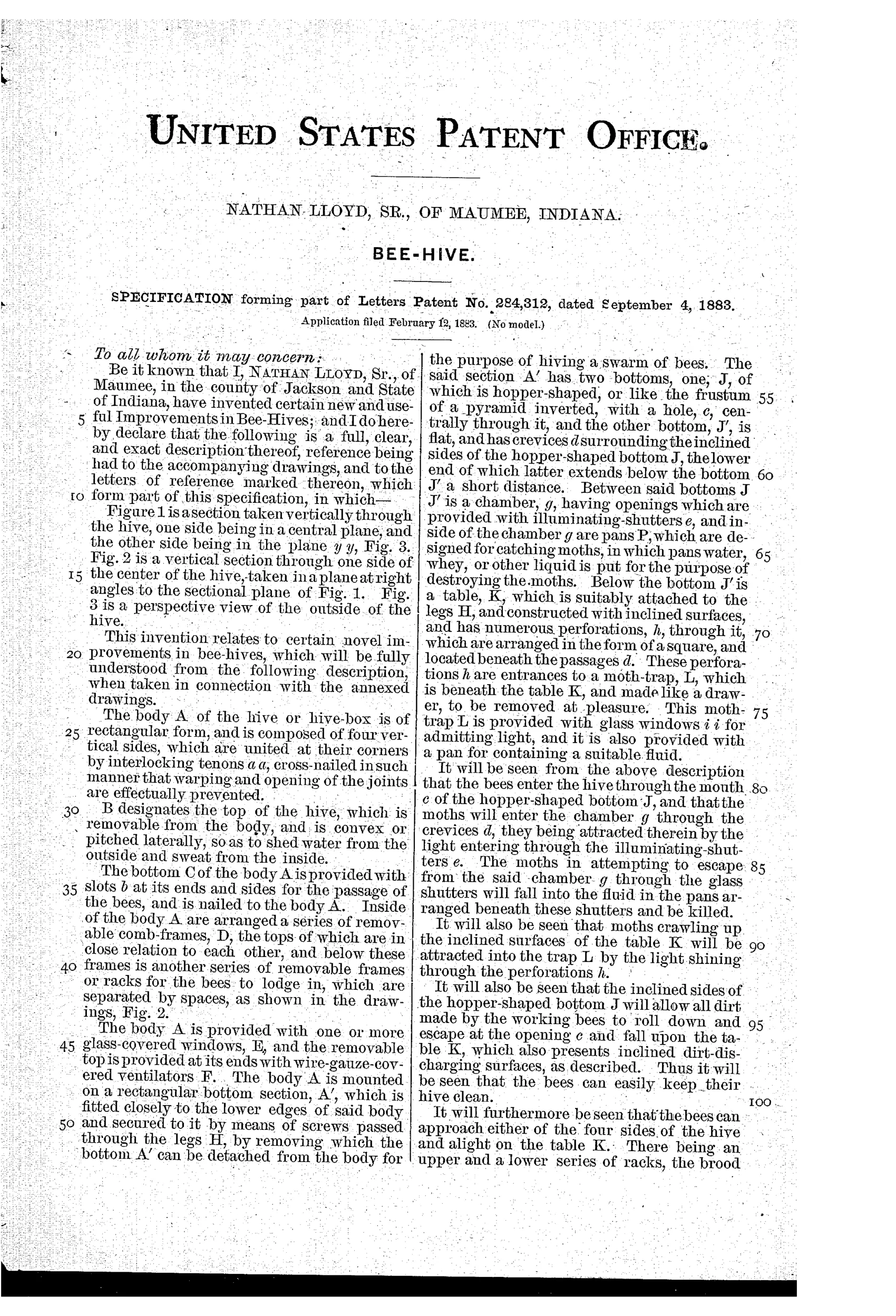
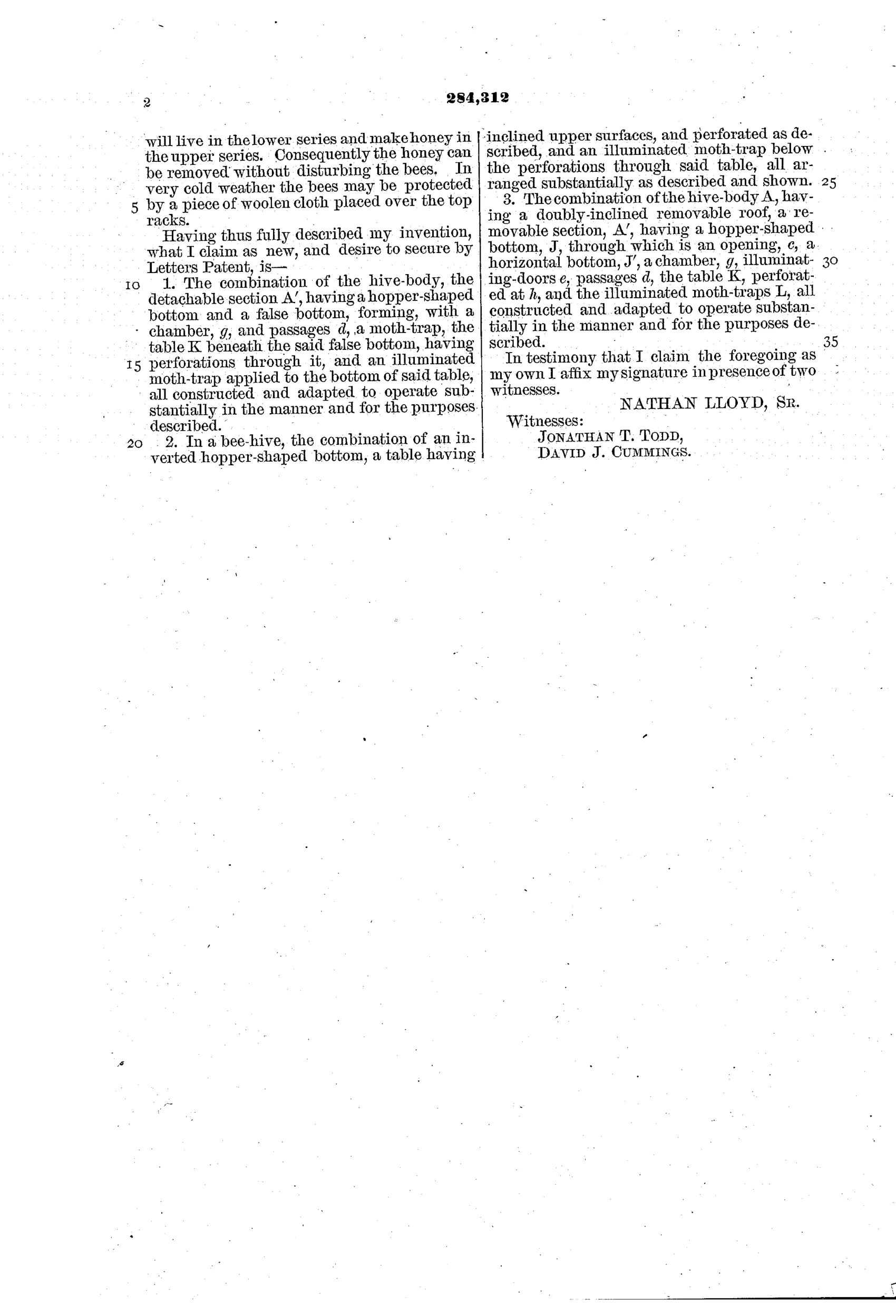
“The combination of the hive-body, the detachable section A', having a hopper-shaped bottom and a false bottom, forming, with a chamber, g, and passages d, a moth-trap, the table K beneath the said false bottom, having perforations through it, and an illuminated moth-trap applied to the bottom of said table, all constructed and adapted to operate substantially in the manner and for the purposes described.”
In plain English: The hive combines a detachable hopper-bottom section with a chamber and passages to form a moth trap, plus a perforated table below it leading to a second illuminated moth trap, working together to catch and kill moths.
⬡ In the inventor’s words
“The moths in attempting to escape from the said chamber g through the glass shutters will fall into the fluid in the pans arranged beneath these shutters and be killed.”— Nathan Lloyd, Sr., from the specification
Paper patent — likely never produced
The multi-chamber trap with glass shutters and fluid pans is costly to build and solves a problem the trade had already dismissed; no manufactured example or advertisement is known to me.
⬡ Commentary
By 1883 the movable frame had been settled law for thirty years, and Lloyd dutifully includes stacked removable frames — brood below, honey racks above. But that's not where his heart is. The bottom half of this hive is an elaborate multi-stage execution chamber for wax moths: a hopper floor that rolls debris toward the center, a chamber lit through glass shutters, pans of liquid positioned so a moth flying toward the light drops in and drowns, and beneath all that a perforated inclined table funneling crawling stragglers into a slide-out drawer with its own little glass windows so you can inspect the catch.
Look at the sections and you'll see the hive proper is almost an afterthought perched on top of the trap. The mechanical logic is real — moths are phototactic, and drowning pans under lit glass is a genuine pest-control idea. The trouble is the premise. Langstroth and his followers had already shown that wax moths are a symptom, not a cause: a strong colony polices its own comb, and a weak one falls to moths no matter how ornate the basement. All that joinery adds cost, crevices, and cleaning without addressing colony strength.
So this is a late, well-drawn entry in the moth-trap tradition that dominated pre-1852 quackery and lingered stubbornly after. Earnest, buildable, and aimed at the wrong enemy.
Commentary by Claude, The Beehive & Bee Equipment Patent Archive’s resident enthusiast