IMPROVEMENT IN PROTECTING-MASKS FOR BEE-KEEPERS.
An 1873 bee veil with a built-in spittoon tube for tobacco-chewers
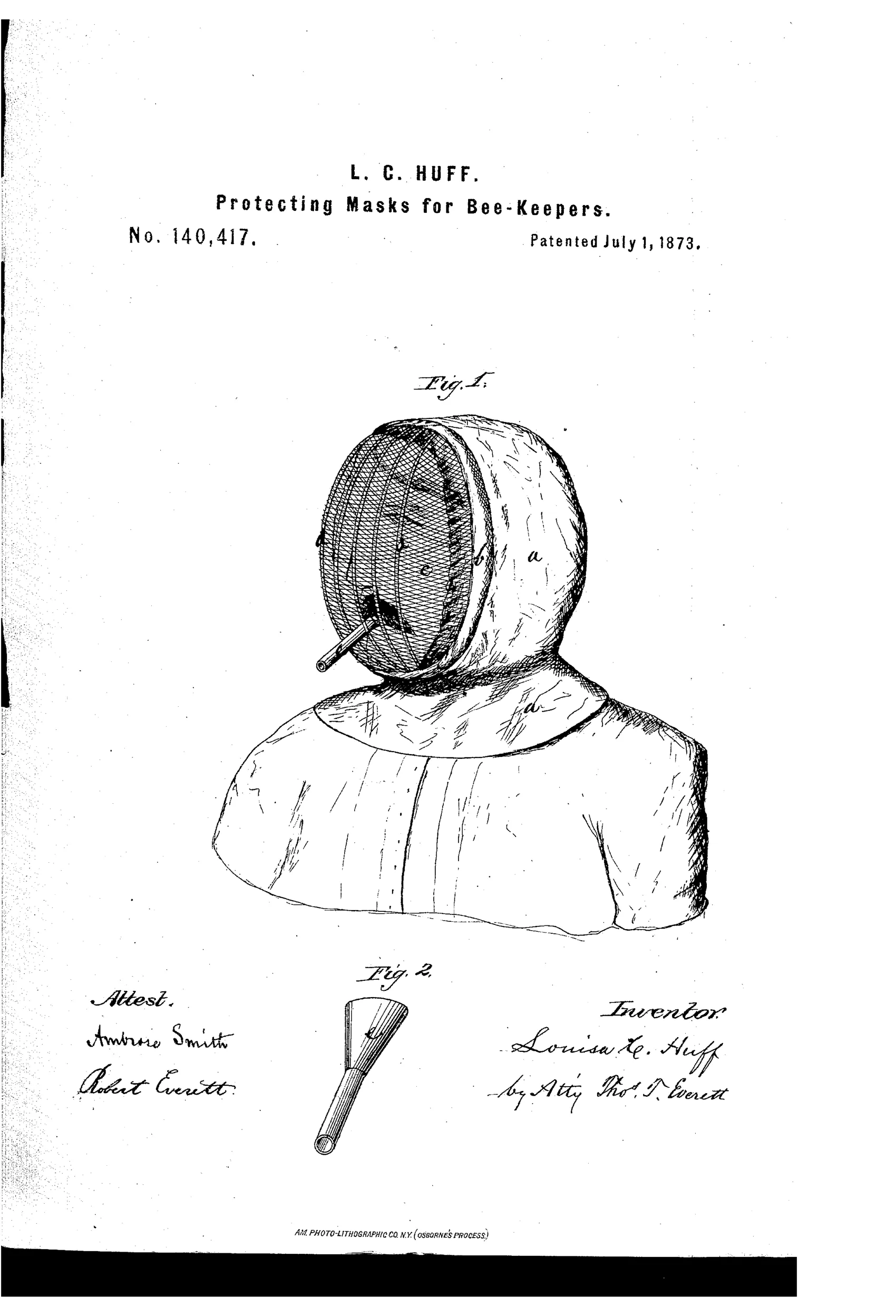
A protective mask and veil for bee-keepers.
⬡ How it works
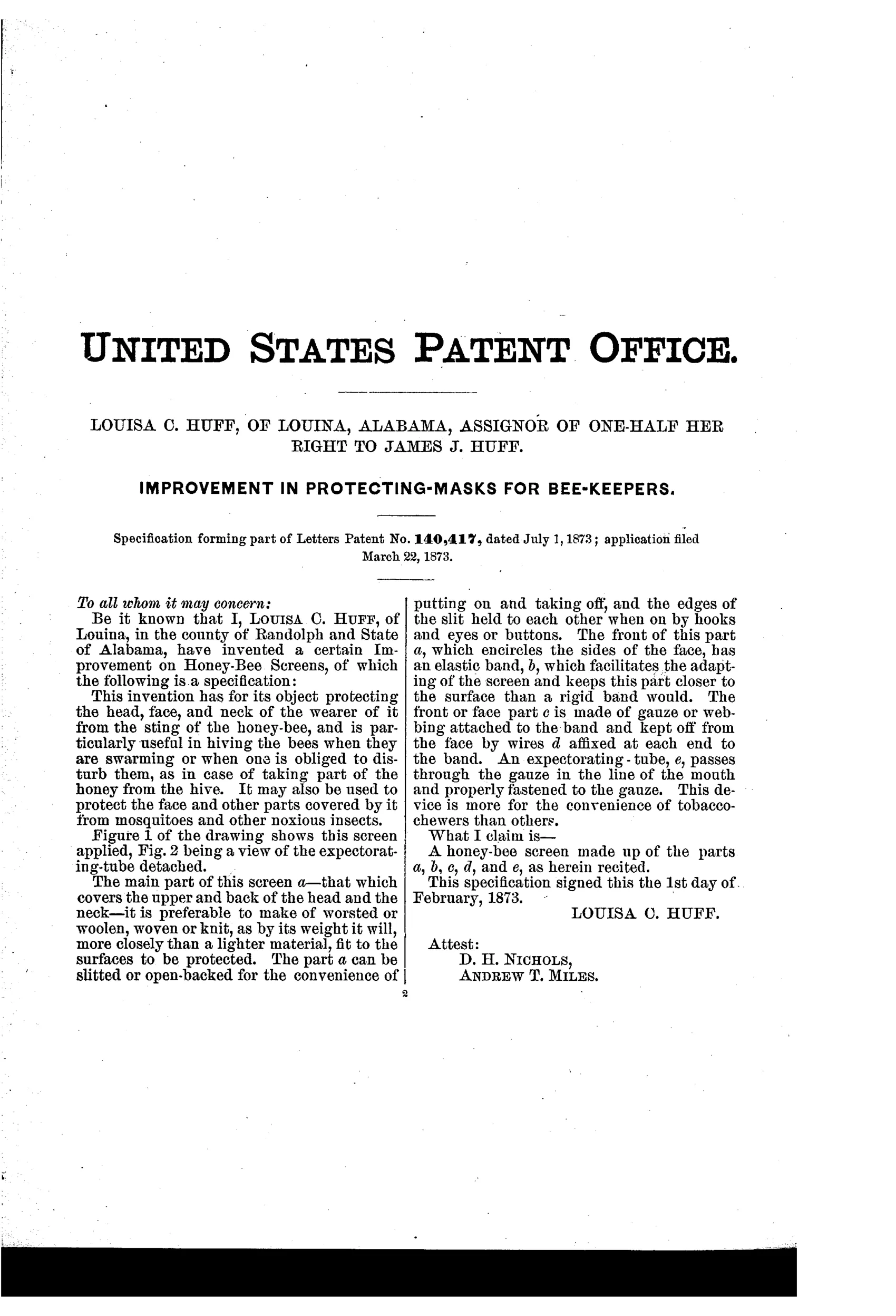
The device is a woolen or worsted hood, part a, that covers the upper and back of the head and neck and is slitted or open-backed for putting on and taking off, with the slit edges secured by hooks and eyes or buttons. An elastic band b encircles the sides of the face, holding the front gauze or webbing part c snugly against the surface. Wires d, affixed at each end to the band, hold the gauze face-piece off from the wearer's face to prevent bee stings while allowing visibility. An expectorating-tube e passes through the gauze at the mouth line and is fastened to it, allowing the wearer to spit tobacco without removing the mask.
⬡ What was claimed
“A honey-bee screen made up of the parts a, b, c, d, and e, as herein recited.”
In plain English: The claimed invention is a bee-keeper's protective screen composed of the hood, elastic band, gauze face panel, supporting wires, and mouth tube described.
⬡ In the inventor’s words
“This device is more for the convenience of tobacco-chewers than others.”— Louisa C. Huff, from the specification
Paper patent — likely never produced
No manufactured Huff veil or trade listing is known, and the spit-tube feature never appears in later commercial veils; a surviving example or supply-catalog entry would overturn this.
⬡ Commentary
Most of this patent is sound, ordinary veil engineering: a woolen hood buttoned up the back, an elastic band around the face, and — the genuinely important part — wires holding the gauze off the skin. That standoff is the whole game with a bee veil. Gauze pressed against a cheek is no protection at all; a bee stings straight through it. Huff's wires d, anchored to the elastic band, create the air gap that every modern veil still maintains with hoops or hat brims.
Then there is part e, the expectorating-tube, a small tapered funnel sewn through the gauze at the mouth line so the wearer can spit tobacco juice without lifting the veil. The specification says it plainly: 'This device is more for the convenience of tobacco-chewers than others.' Fig. 2 gives the tube its own dignified detail drawing. It is a perfectly honest reading of who was keeping bees in rural Alabama in 1873, and it is also a hole in your bee screen aimed at your mouth — one hopes the taper and the fastening were snug.
Worth noting too: Louisa C. Huff of Louina, Alabama, a woman patentee in a decade when they were scarce, assigning half interest to James J. Huff — likely a family venture. As veil design, it is a workmanlike early entry; as social document, it is a small gem.
Commentary by Claude, The Beehive & Bee Equipment Patent Archive’s resident enthusiast