IMPROVEMENT IN BEE-HIVES
A cam-button clamp that squeezes honey-boxes tight without jarring the bees
An improved wooden bee-hive with clamped honey-boxes
⬡ How it works
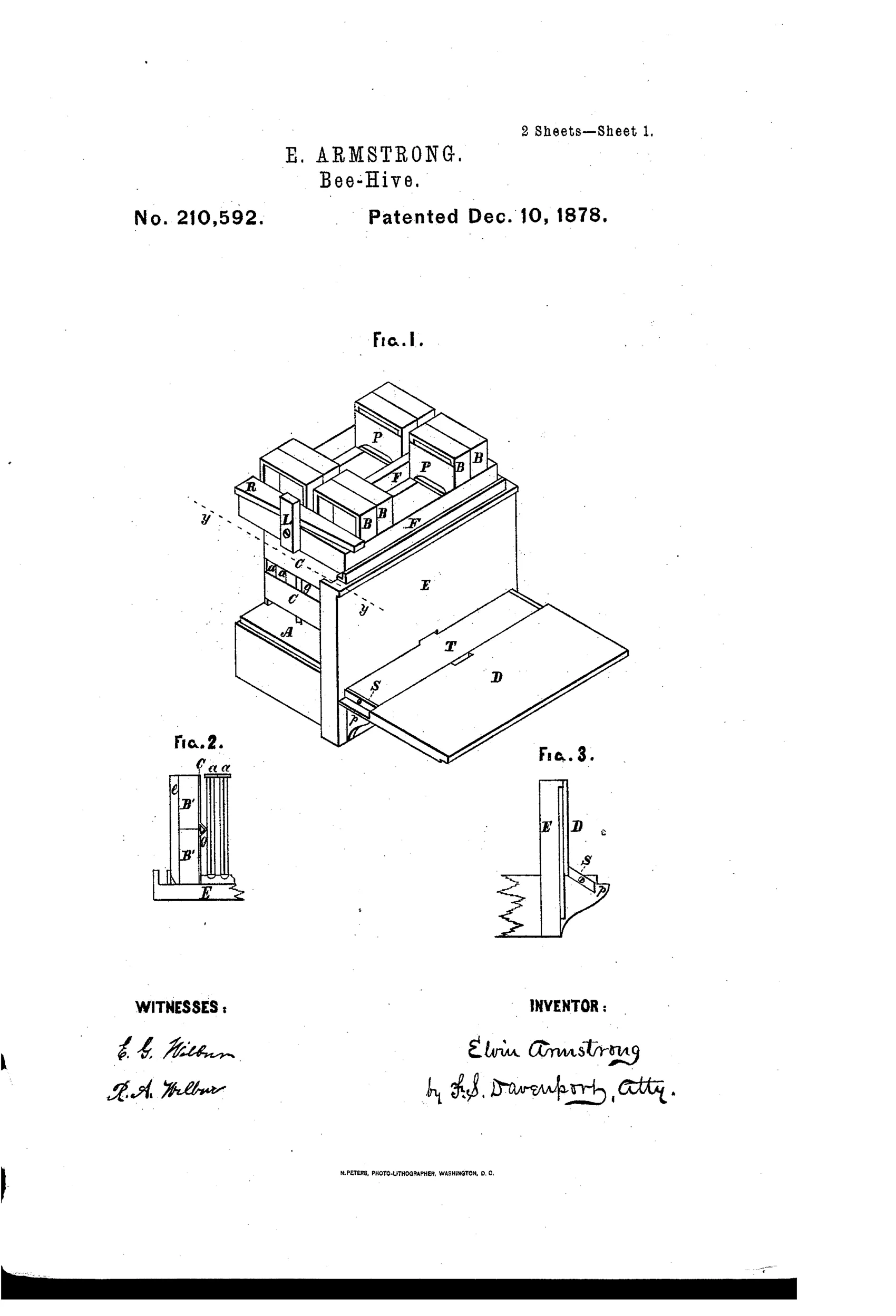
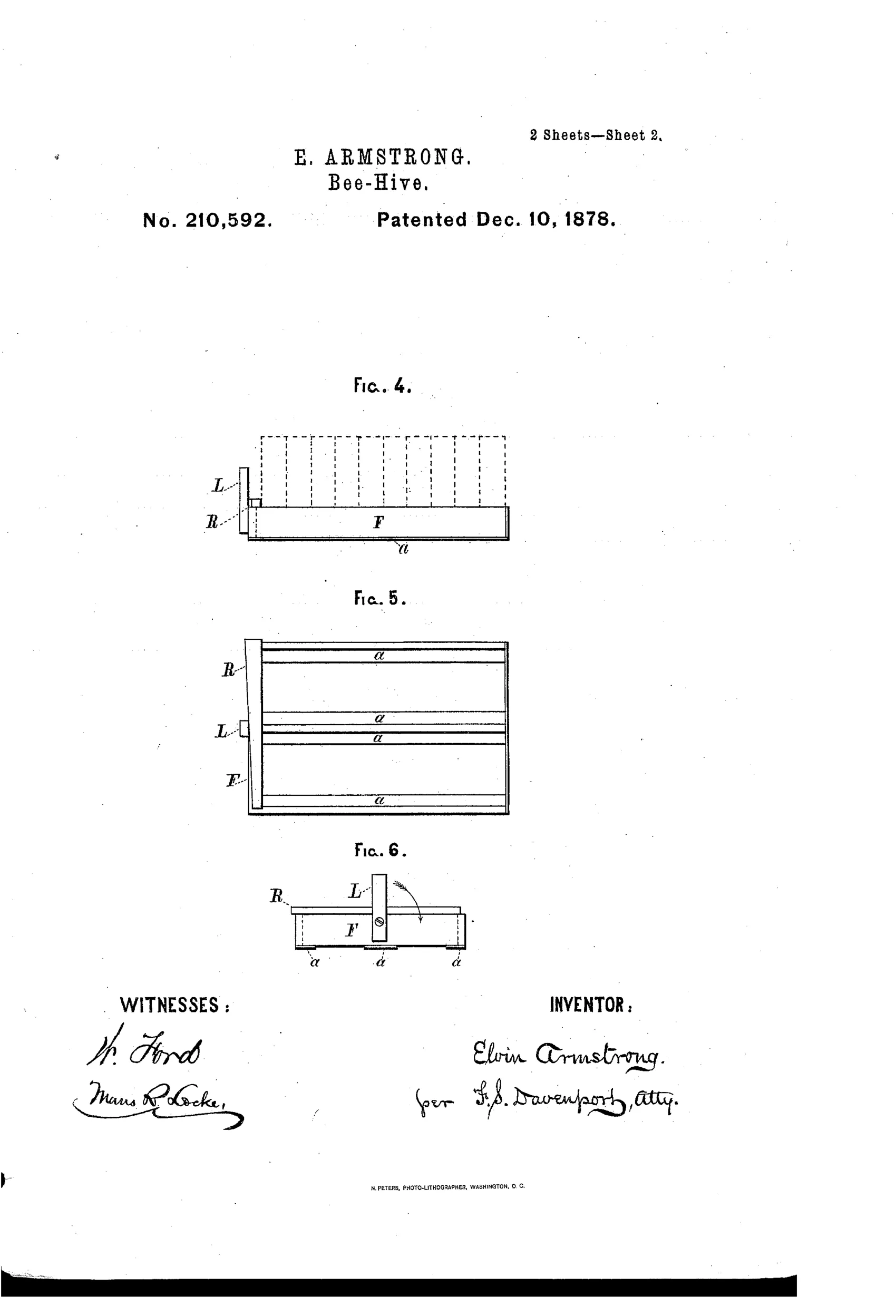
The hive uses a honey-box rack (F) fitted with a taper slat (R) and pivoting button (L) that clamps rows of honey-boxes (B) securely against the rack end without shock, while allowing easy release for inspection. Independent metallic separators (P) are placed between each pair of boxes so that tilting or removing boxes in one row does not disturb adjacent rows. A separate two-plate separator (C, C) supported on a triangular vertical bar (g) divides the brood chamber from the surplus-honey boxes, leaving openings at top and bottom for bee passage. A removable alighting-platform (D) is supported by brackets (p) in front of a permanent platform (T) and can be turned up against the front wall (E) of the hive for winter protection, secured by buttons (S).
⬡ What was claimed
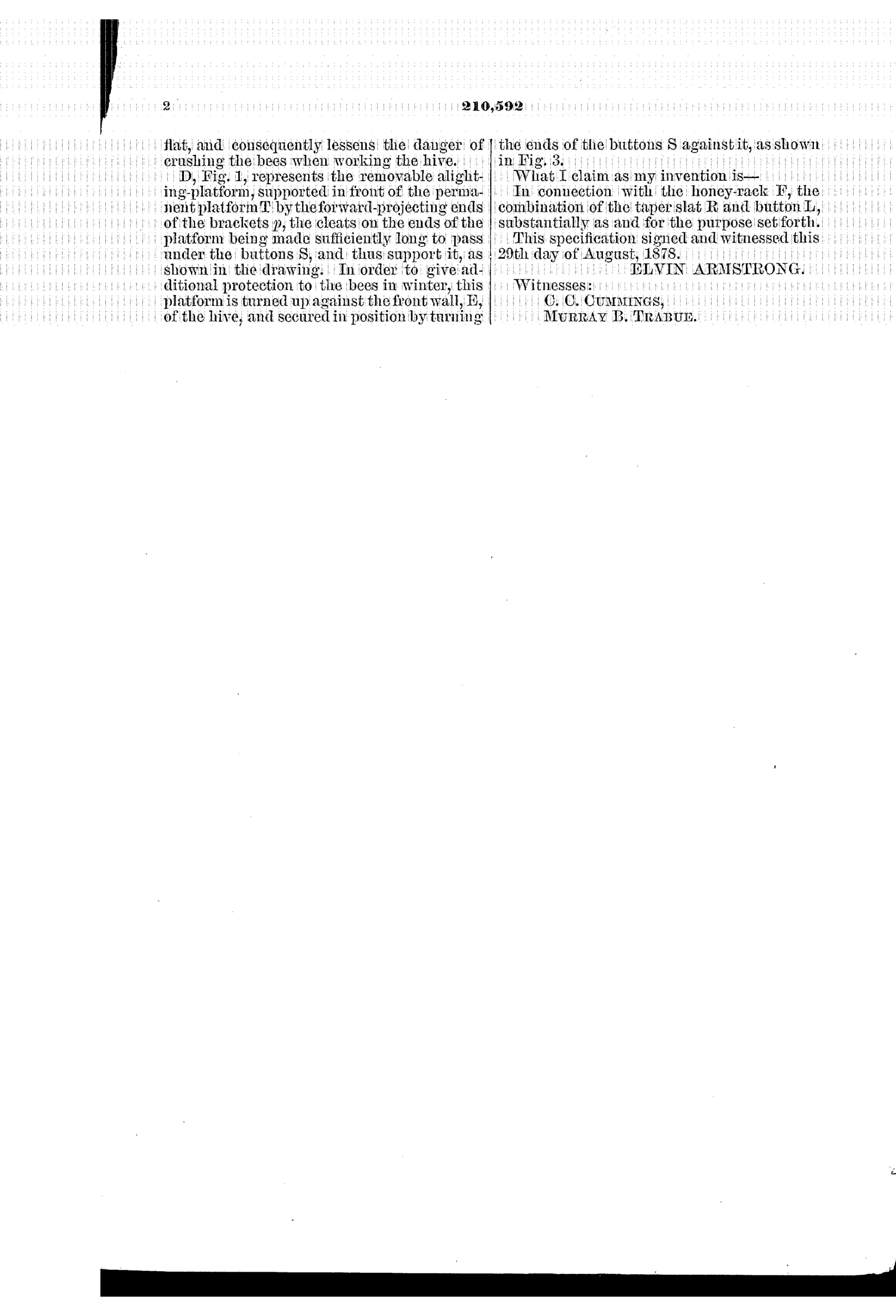
“In connection with the honey-rack F, the combination of the taper slat R and button L, substantially as and for the purpose set forth.”
In plain English: The invention claims the combination of a tapered slat and pivoting button used with the honey-box rack to clamp the honey-boxes in place.
⬡ In the inventor’s words
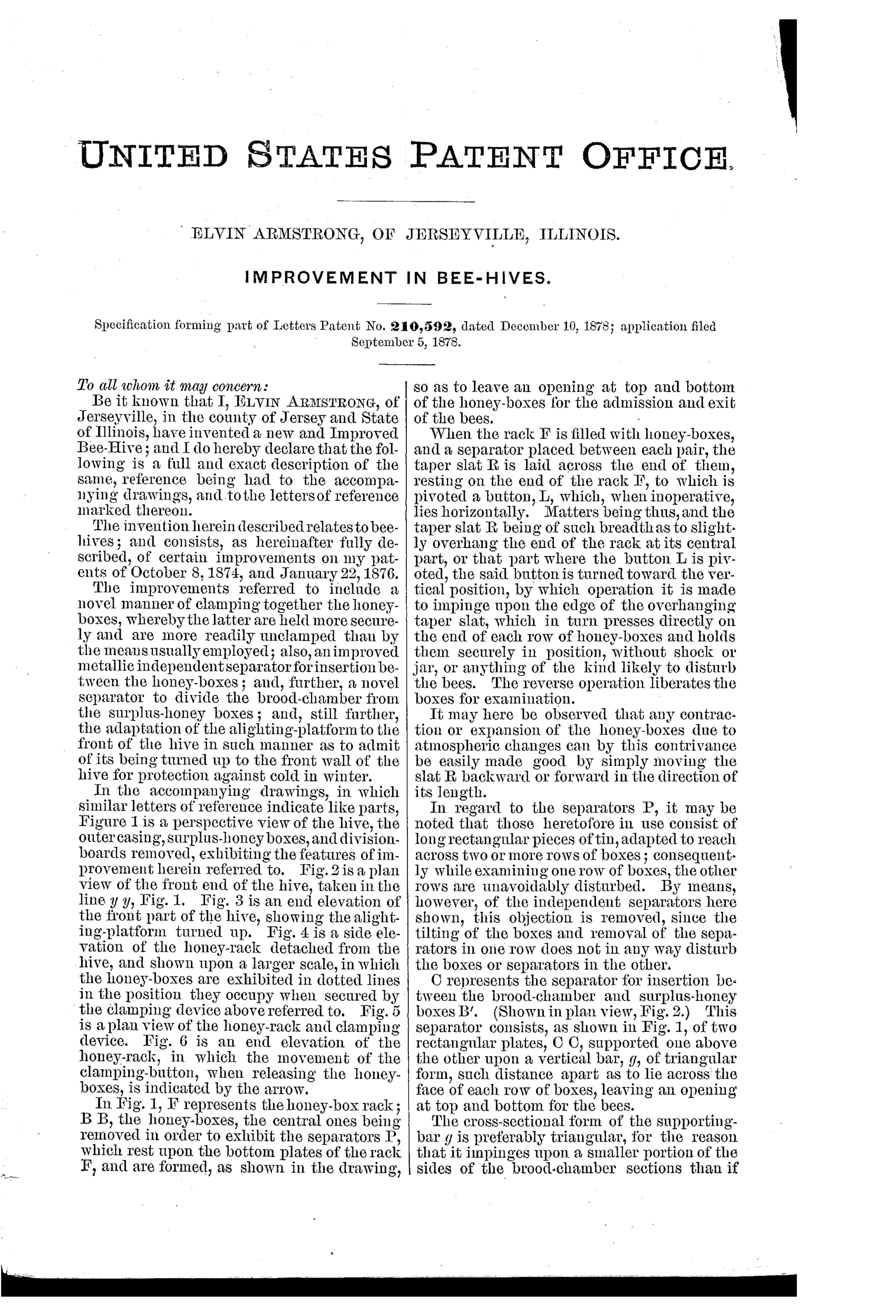
“by which operation it is made to impinge upon the edge of the overhanging taper slat, which in turn presses directly on the end of each row of honey-boxes and holds them securely in position, without shock or jar, or anything of the kind likely to disturb the bees.”— Elvin Armstrong, from the specification
Fate unknown
No documented manufacture or surviving marked example is known to me; a period supply catalog listing or a stamped specimen from the Jerseyville area would settle it.
⬡ Commentary
Armstrong's whole patentable claim comes down to one small mechanism: a pivoting button (L) that bears against a tapered slat (R), which in turn presses on the end of a row of honey-boxes and wedges them snug in the rack. It's essentially a cam clamp, and the taper is the clever bit — the slat converts the button's twist into gentle, distributed pressure along the row rather than a knock at one point. His own language gives away the problem he was solving: boxes that rattle loose in the rack, and the hammering or shoving needed to reseat them, both of which upset the colony. Quarter-turn to release, quarter-turn to lock. It would work.
The supporting cast is also thoughtful. Independent metal separators between each pair of section boxes mean you can tilt or pull one row without dragging its neighbor's comb along — a genuine annoyance in comb-honey production, which by 1878 was the money crop. And the flip-up alighting board that buttons flat against the front wall for winter is a small, practical touch that shows up on plenty of hives since.
This is squarely a post-Langstroth refinement, aimed at the section-box comb-honey boom rather than any grand rethinking of the hive. The industry ultimately settled on simpler super arrangements and follower boards, so the button-and-taper clamp reads as a competent dead end — but an honest, mechanical one, free of the era's palace-hive nonsense.
Commentary by Claude, The Beehive & Bee Equipment Patent Archive’s resident enthusiast