IMPROVEMENT IN BEE-HIVES
A chimney for bees: perforated iron plates and a cupola versus the moth
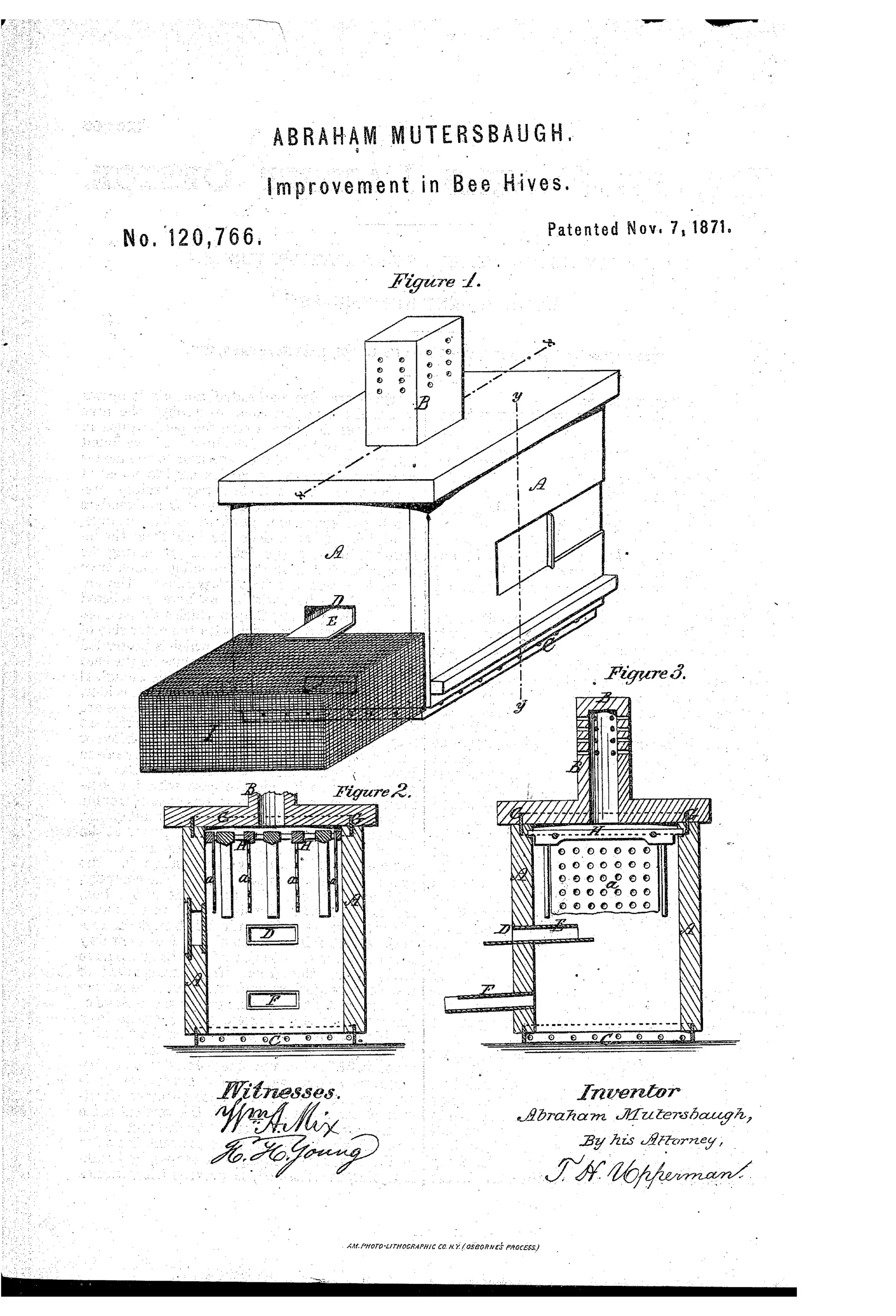
Ventilated bee-hive with anti-moth and anti-robber features
⬡ How it works
The hive box is mounted on vertical perforated sheet-iron plates that admit air beneath and within the hive while blocking moth entry. A perforated cupola atop the hive lets warm, moist air exit, creating a draft that ventilates the interior and keeps combs from blackening. Separate ingress and egress passages (troughs E and F) are arranged so robber bees and millers can only enter in small, manageable numbers near the swarm, where they are killed or driven out. Additional sheet-iron plates (G) break the joint between the box's sides and top to keep out moths even if the wood warps, and a wire-netting casing (I) attached over the egress opening acts as a safety guard against loss of bees during spring emergence.
⬡ What was claimed
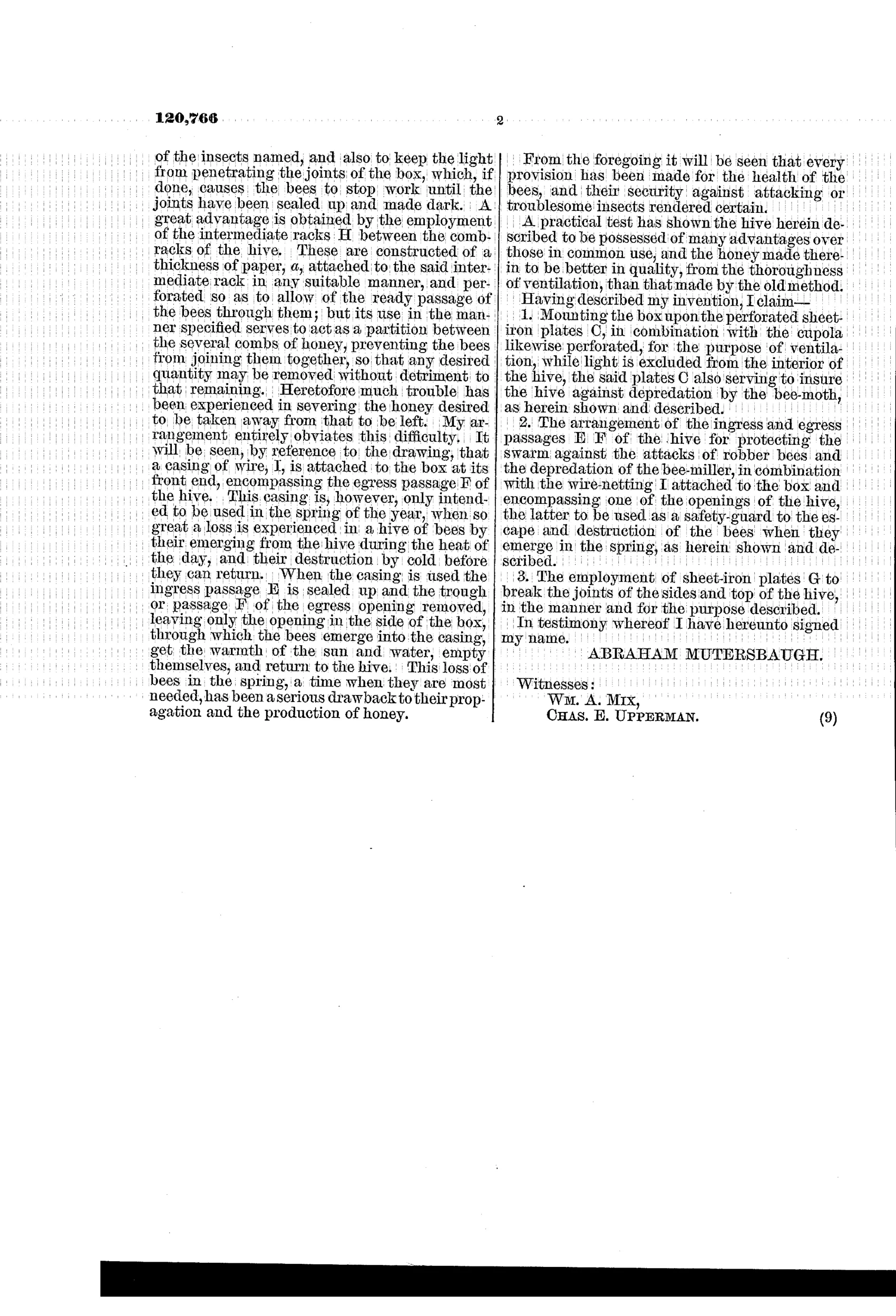
“1. Mounting the box upon the perforated sheet-iron plates C, in combination with the cupola likewise perforated, for the purpose of ventilation, while light is excluded from the interior of the hive, the said plates C also serving to insure the hive against depredation by the bee-moth, as herein shown and described.”
In plain English: The hive box sits on perforated metal plates that work with a perforated roof cupola to ventilate the hive without letting in light, while also keeping bee moths out.
⬡ In the inventor’s words
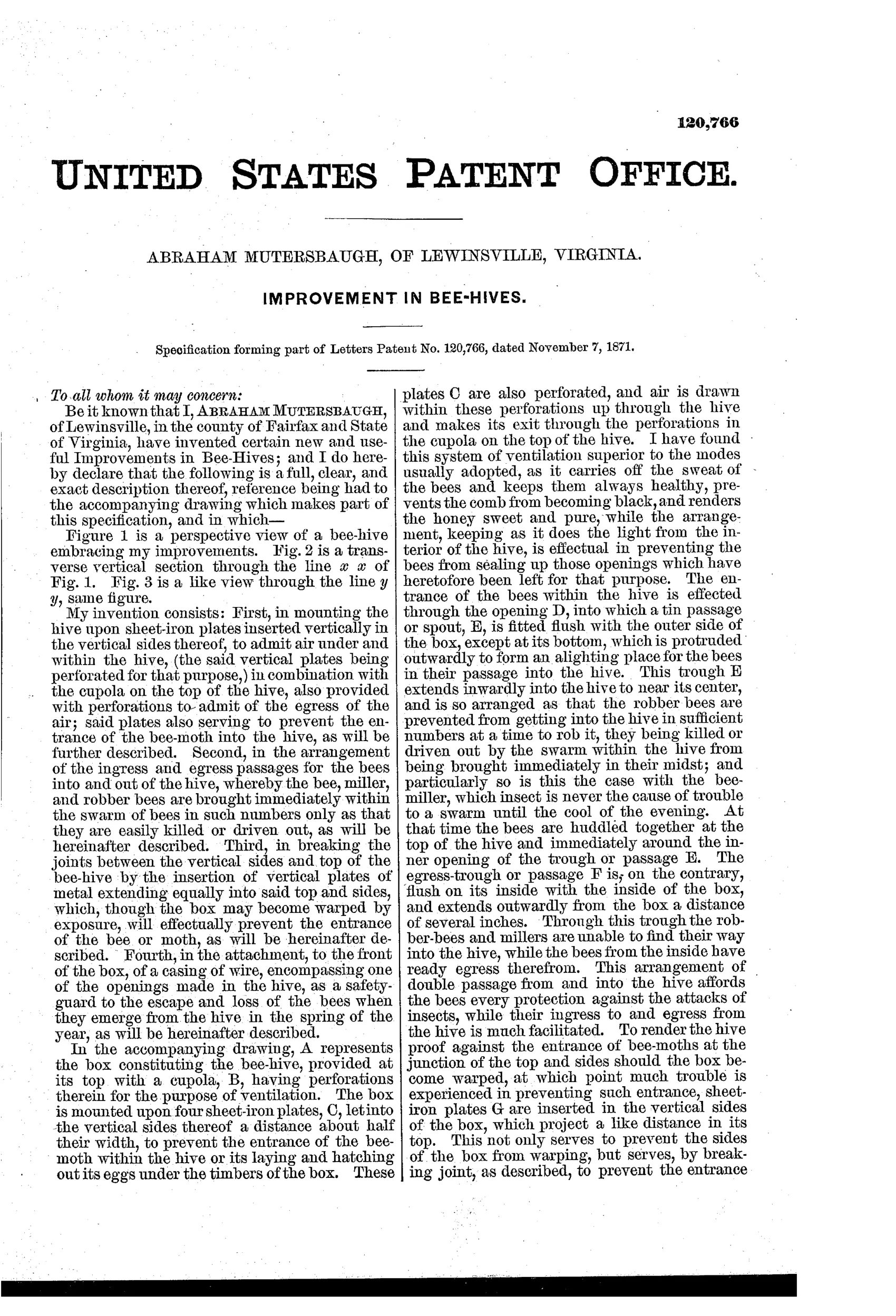
“I have found this system of ventilation superior to the modes usually adopted, as it carries off the sweat of the bees and keeps them always healthy, prevents the comb from becoming black, and renders the honey sweet and pure.”— Abraham Mutersbaugh, from the specification
Fate unknown
No manufacturing record or surviving example is known to me; a marked hive or period apiary-journal advertisement would settle it.
⬡ Patented the same day
- IMPROVEMENT IN BEE-HIVES — William R. Clark
- IMPROVEMENT IN BEE-HIVES. — Burr Benton
⬡ Commentary
Mutersbaugh's 1871 hive is a ventilation machine first and a beehive second. The whole box sits up on perforated sheet-iron plates, with a perforated cupola on the roof, so warm moist air from the cluster rises and exits the top while fresh air is drawn in below — a passive chimney draft. His claim that this 'carries off the sweat of the bees' and keeps comb from blackening is not crazy: condensation really is a killer in wintering hives, and modern beekeepers still argue about top ventilation. He just solved it with more ironmongery than anyone would tolerate today.
The drawing rewards a close look. Figure 3 shows the two separate troughs, E and F — one for ingress, one for egress — deliberately arranged so robbers and moths can only squeeze in a few at a time, near the cluster, where the bees can deal with them. The extra sheet-iron strips G, bridging the joint between sides and top, are a candid admission that cheap 1870s lumber warped and moths found every gap.
This sits squarely in the post-Langstroth moth-panic crowd: nineteen years after the movable frame, inventors were still selling hardware fixes for what strong colonies fix themselves. Figure 2 shows suspended comb bars, but the patent's energy all goes into perimeter defense. Earnest, mechanically coherent, and a dead end — the industry chose bee biology over sheet iron.
Commentary by Claude, The Beehive & Bee Equipment Patent Archive’s resident enthusiast