IMPROVEMENT IN BEE-HIVES
An 1878 Iowa hive with tar moats, revolving doors, and every anxiety answered
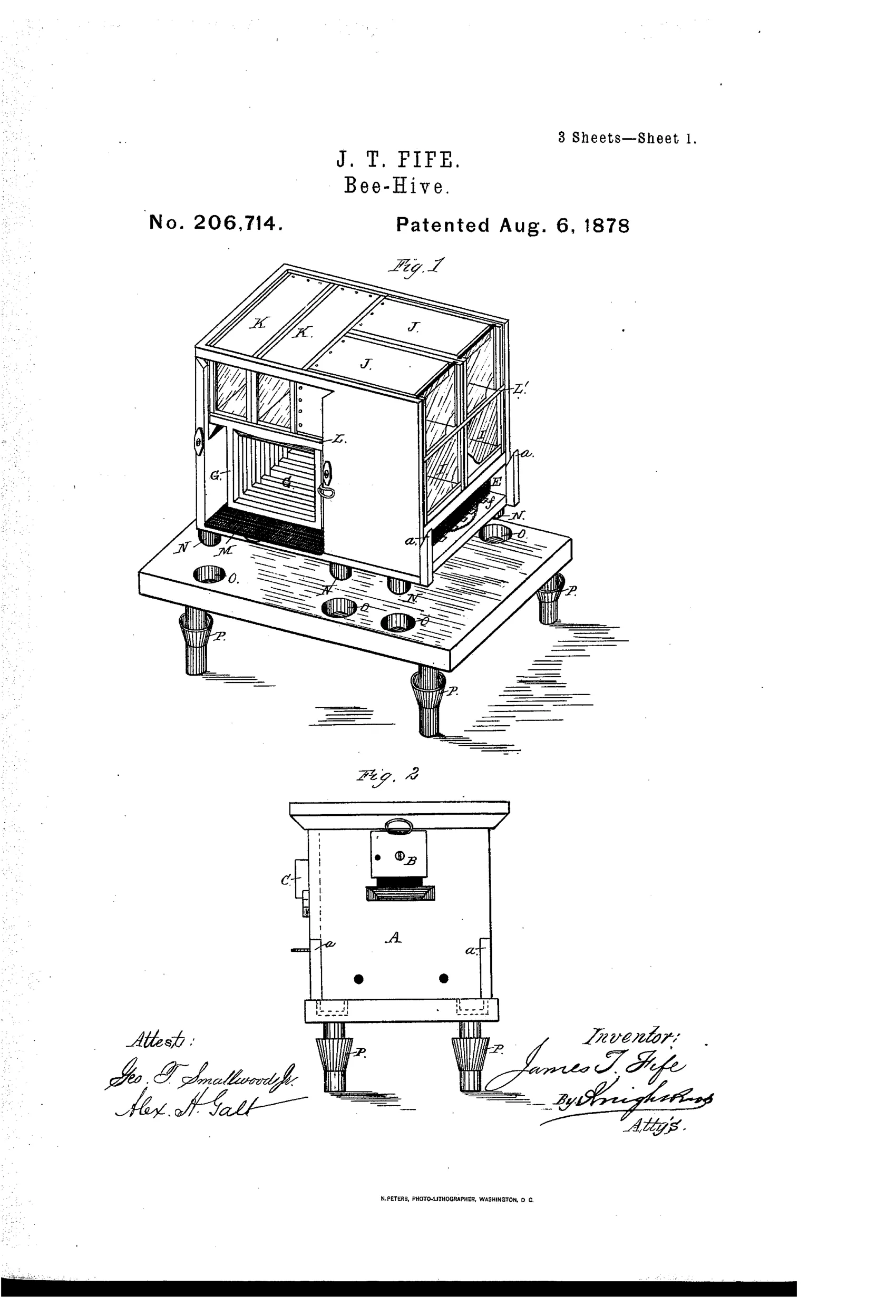
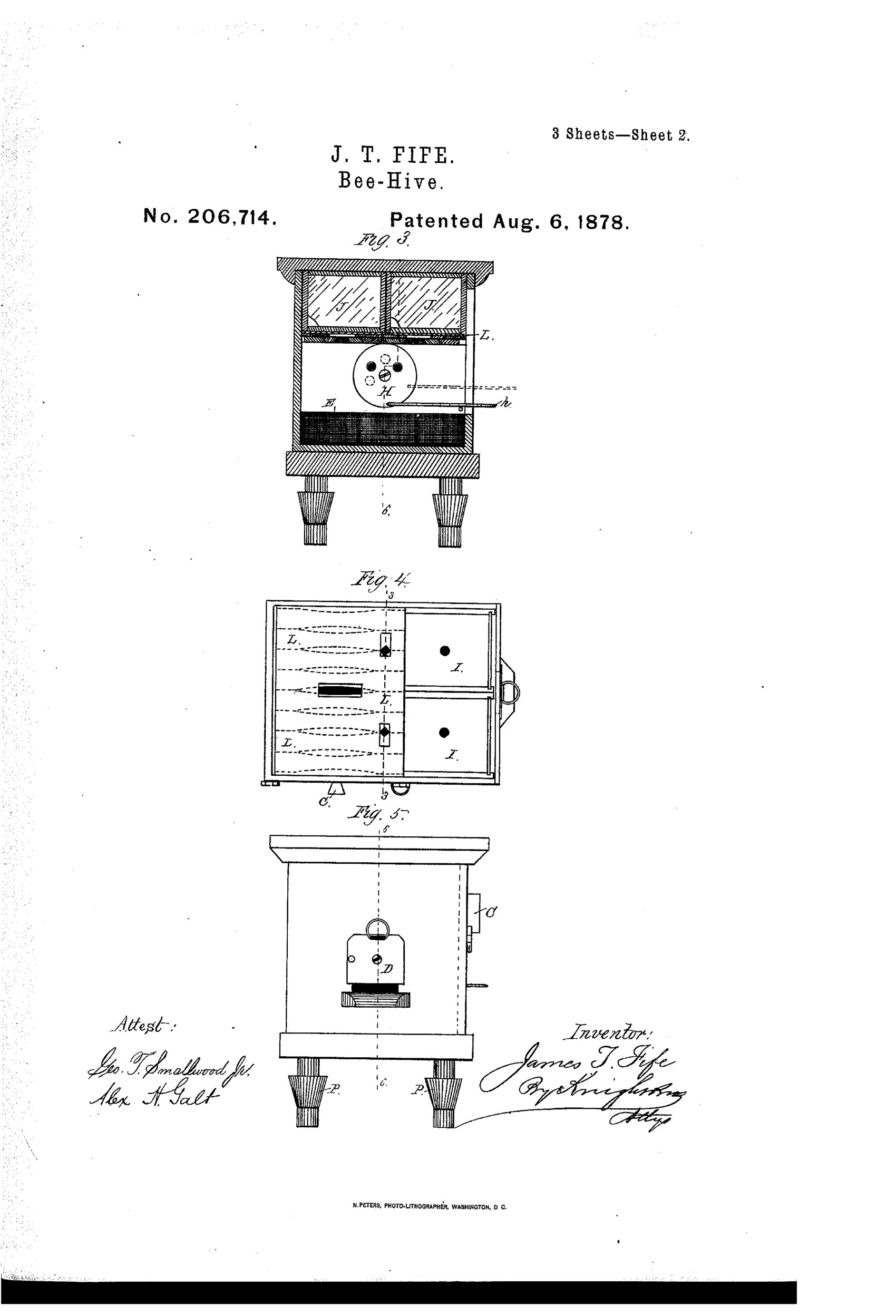
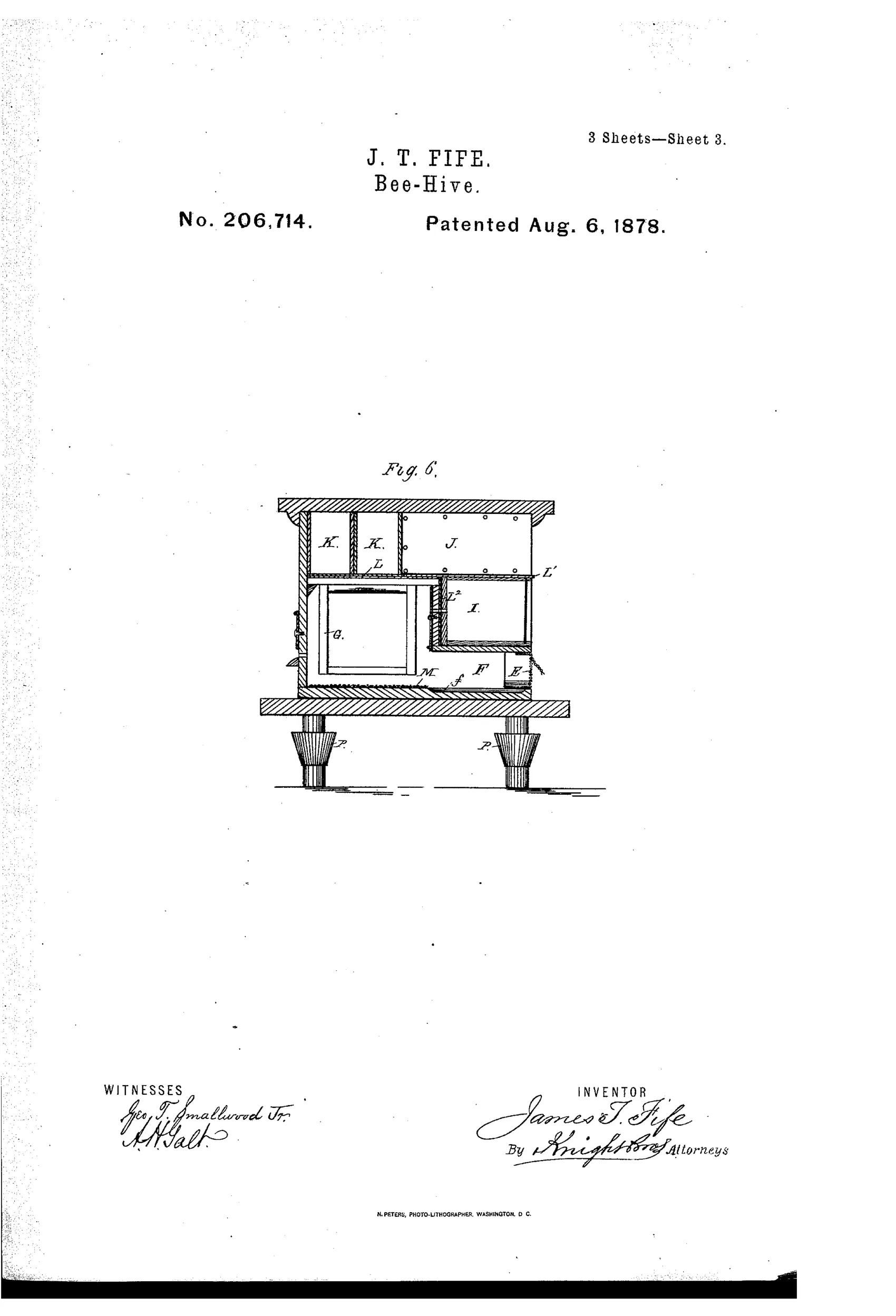
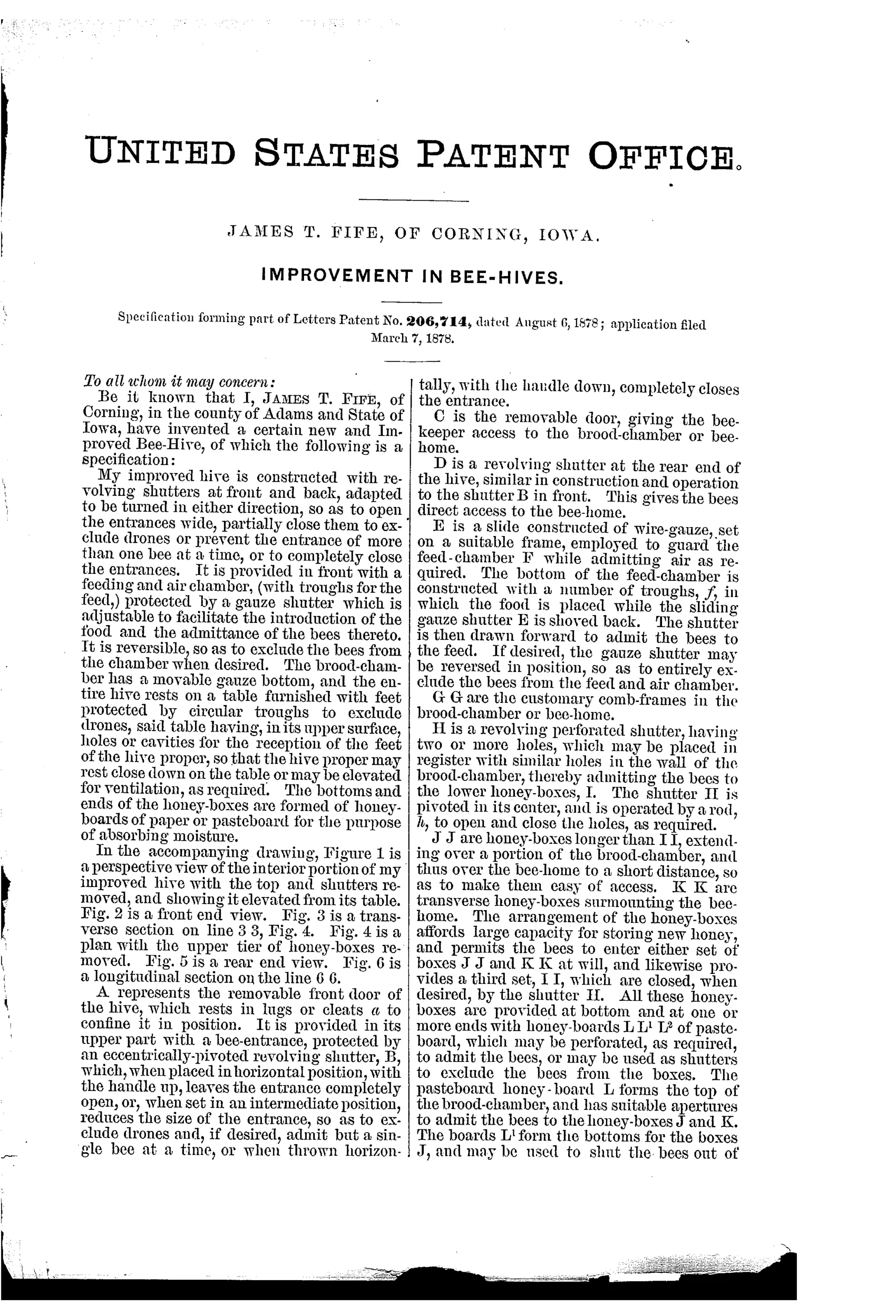
An improved wooden bee-hive with rotating entrance shutters
⬡ How it works
The hive uses eccentrically-pivoted revolving rectangular doors at front and back that can be turned to open entrances fully, partially close them to exclude drones, or shut them entirely. A feed and air chamber at the front holds troughs of food behind a reversible wire-gauze shutter that can be shoved back to admit bees or reversed to exclude them. The brood-chamber has a sliding wire-gauze floor for ventilation and sits on small feet that either rest on a table or fit into cavities for full contact, with the whole hive-table's legs surrounded by cups of tar or lye to block crawling insects. Honey-boxes I, J, and K are arranged around and above the brood-chamber and are fitted with perforated pasteboard honey-boards that can be opened or closed via a rotating shutter H to control bee access.
⬡ What was claimed
“1. The combination of the brood-chamber G, the honey-boxes I I, arranged at the side of said brood-chamber, and the upper honey-boxes, J J, surrounding the boxes I I and extending over a portion of the brood-chamber, as shown and described.”
In plain English: The invention claims the arrangement of a central brood-chamber with side honey-boxes and upper honey-boxes that wrap around the side boxes and extend partly over the brood-chamber.
⬡ In the inventor’s words
“P P are circular cups surrounding the feet of the hive-table, to be filled with coal-tar, concentrated lye, or any other material which will prevent insects or vermin climbing from the ground to the hive.”— James T. Fife, from the specification
Paper patent — likely never produced
The wraparound honey-box carpentry and multiple bespoke shutters would have been costly to produce just as standardized Langstroth equipment was taking over, and no manufactured example or trade listing is known to me.
⬡ Commentary
James Fife of Corning, Iowa, packed this hive with an answer to nearly every complaint a beekeeper of 1878 could voice. Ants crawling up the legs? Circular cups around the table feet, filled with coal tar or concentrated lye. Drones getting in? Eccentrically pivoted revolving shutters at front and back that open fully, partially, or not at all depending on how you turn them. Ventilation? A sliding wire-gauze floor under the brood chamber. Feeding? A dedicated front chamber with troughs behind a reversible gauze shutter.
The drawing rewards a close look. Fig. 1 shows the hive perched on stubby feet above a slotted table — the whole hive rides on a separate insect-proof platform, which is really two inventions in one. The claimed novelty, though, is the honey-box arrangement: side boxes flanking the brood chamber, with upper boxes wrapping around them and overhanging the brood nest, all governed by perforated pasteboard honey-boards and a rotating shutter. That's a lot of joinery where a Langstroth super would do.
This is the classic post-Langstroth 'complete system' hive — earnest, over-featured, and swimming against the tide. By 1878 the industry was consolidating around simple, interchangeable boxes precisely because equipment like this couldn't be mass-produced cheaply or worked quickly. The tar-cup ant moat, at least, is a genuinely sound idea that beekeepers still improvise today.
Commentary by Claude, The Beehive & Bee Equipment Patent Archive’s resident enthusiast