BEEHIVE.
Perforated highways through the comb, and a rain-proof breathing system from Maine
A ventilated beehive with spare honey boxes
⬡ How it works
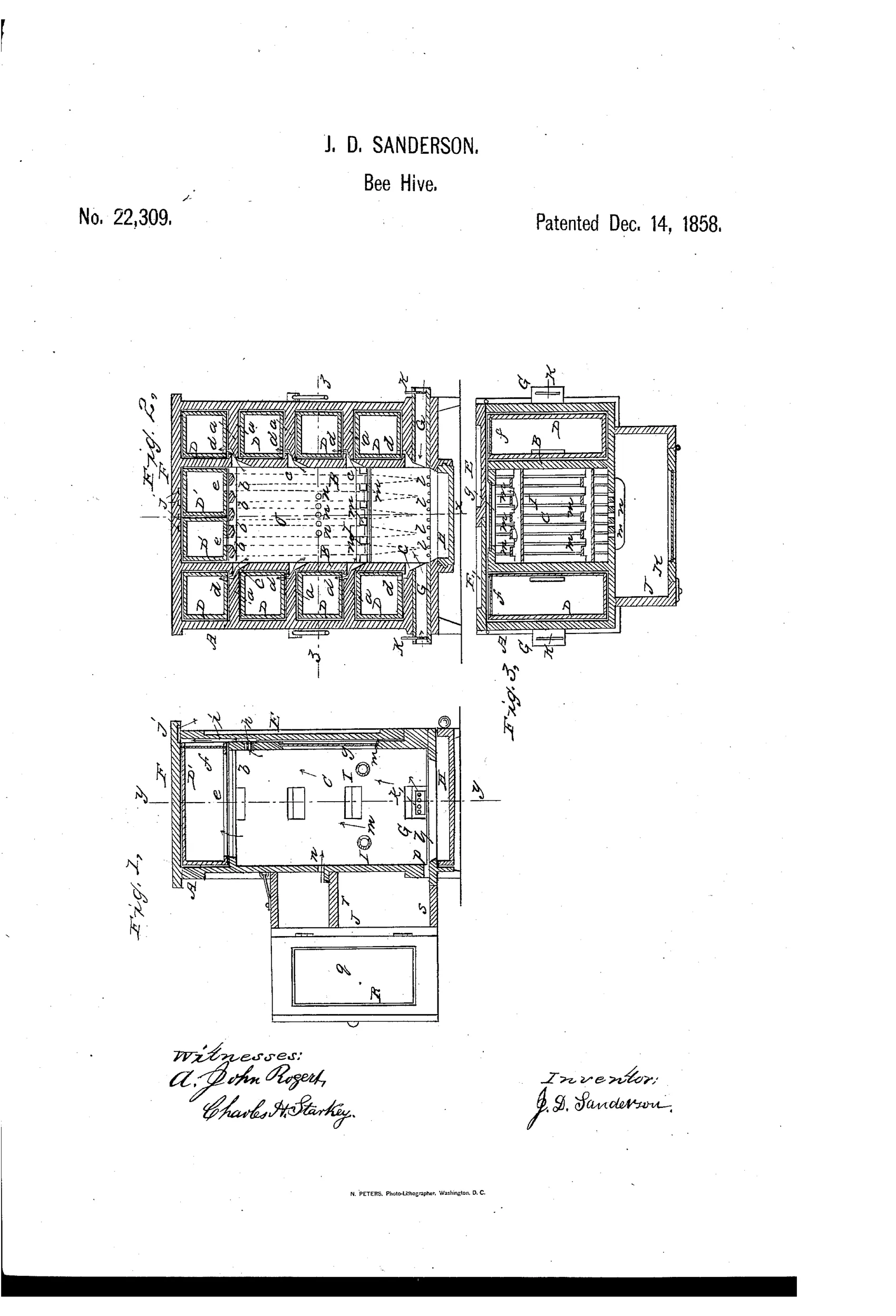
The hive box contains a central compartment for the bee colony flanked by side compartments holding removable spare honey boxes that slide in and out on recesses. Air enters through holes in the back doors, travels up through grooves in the doors and under the hive's top, and exits through side tubes fitted with sliding perforated plates, all arranged so rain cannot enter. Two horizontal perforated tubes run through the central hive compartment, allowing bees to pass directly between the spaces separating the combs instead of traveling around the comb edges. A front box with a glazed door encloses the hive's entrance holes and includes a shelf for feeding bees without attracting robber bees from other hives.
⬡ What was claimed
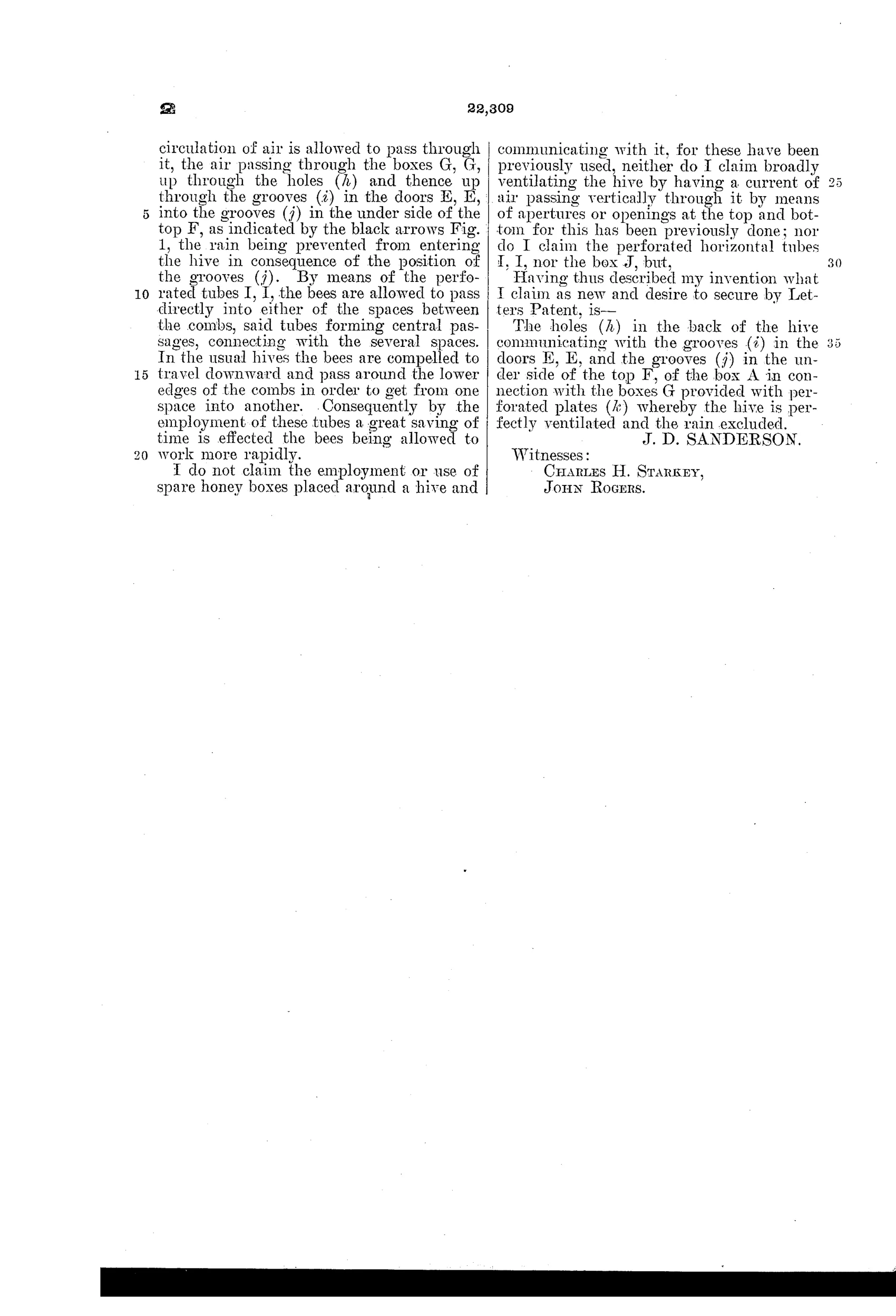
“The holes (h) in the back of the hive communicating with the grooves (i) in the doors E, E, and the grooves (j) in the under side of the top F, of the box A in connection with the boxes G provided with perforated plates (k) whereby the hive is perfectly ventilated and the rain excluded.”
In plain English: The claimed invention is the specific arrangement of ventilation holes, door grooves, and top grooves connecting to side tubes with sliding perforated plates, which together ventilate the hive while keeping rain out.
⬡ In the inventor’s words
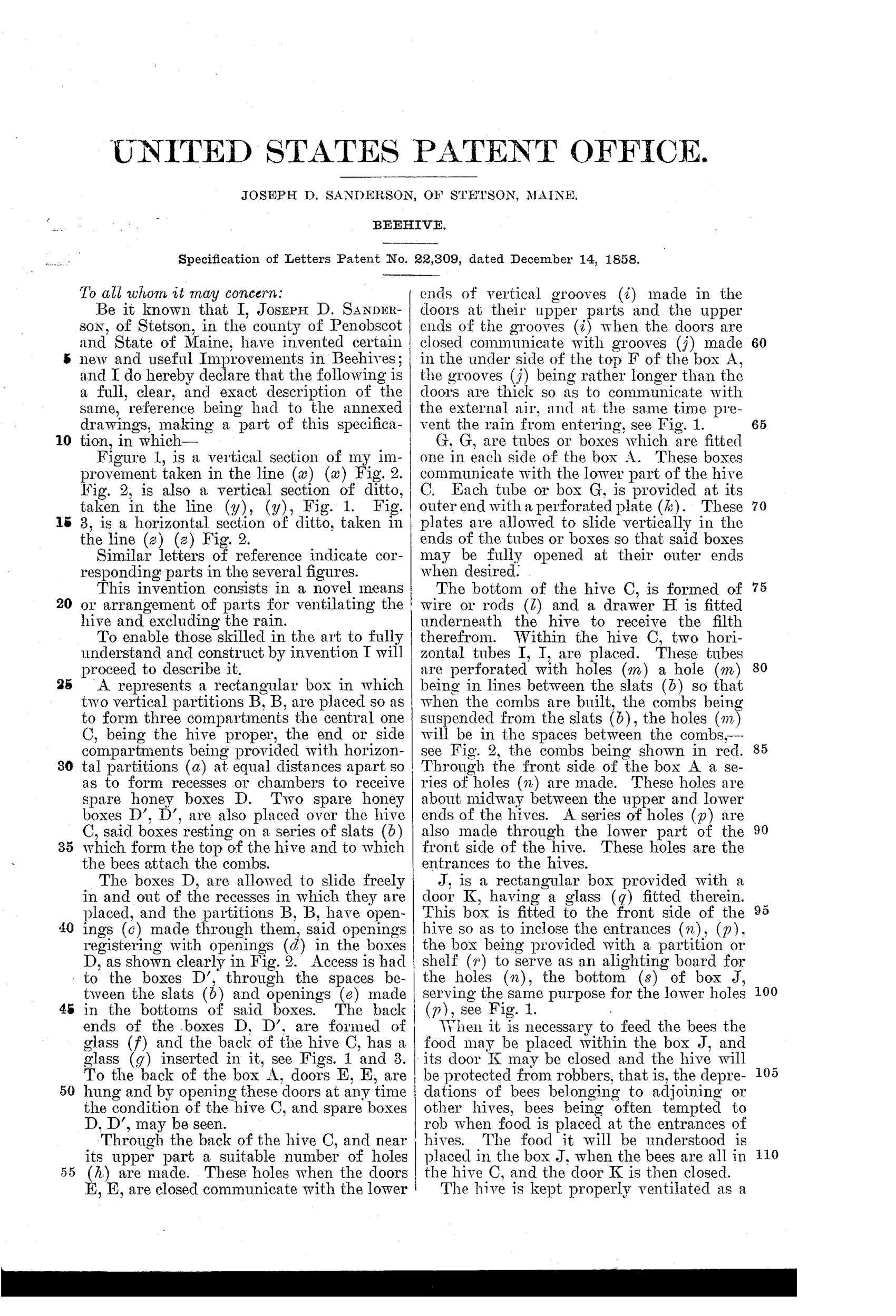
“This invention consists in a novel means or arrangement of parts for ventilating the hive and excluding the rain.”— Joseph D. Sanderson, from the specification
Fate unknown
No production record or surviving example is documented; a marked hive or a mention in period bee journals would settle it.
⬡ Commentary
Six years after Langstroth's patent, Joseph Sanderson of Stetson, Maine is still working in the older tradition: a fixed central brood chamber flanked by sliding spare honey boxes rather than movable frames. But he's a careful thinker within that tradition, and two details reward a close look at the sections.
First, the ventilation path, which is the actual claim: air enters holes in the back doors, climbs grooves cut in the doors themselves, runs along grooves in the underside of the top, and exits through side tubes fitted with sliding perforated plates. It's a small labyrinth deliberately arranged so no straight line of rain can reach the bees, with the perforated slides letting the keeper throttle airflow by season. That's genuinely thoughtful — condensation and winter dampness kill more colonies than cold, a fact many patent hives of the era ignored.
Second, and odder: two horizontal perforated tubes run straight through the brood chamber, so bees can cross between comb spaces without trudging around the comb edges. It's a solution to a problem Langstroth's bee space had already dissolved — in a frame hive, bees circulate freely. Sanderson is optimizing traffic inside a fixed-comb box just as fixed combs were becoming obsolete. Add the glazed front feeding box meant to foil robber bees, and you have an intelligent, workmanlike hive on the wrong side of history's fork.
Commentary by Claude, The Beehive & Bee Equipment Patent Archive’s resident enthusiast