IMPROVEMENT IN BEE-HIVES
An A-frame hive with triangular frames — Langstroth geometry bent into a steeple
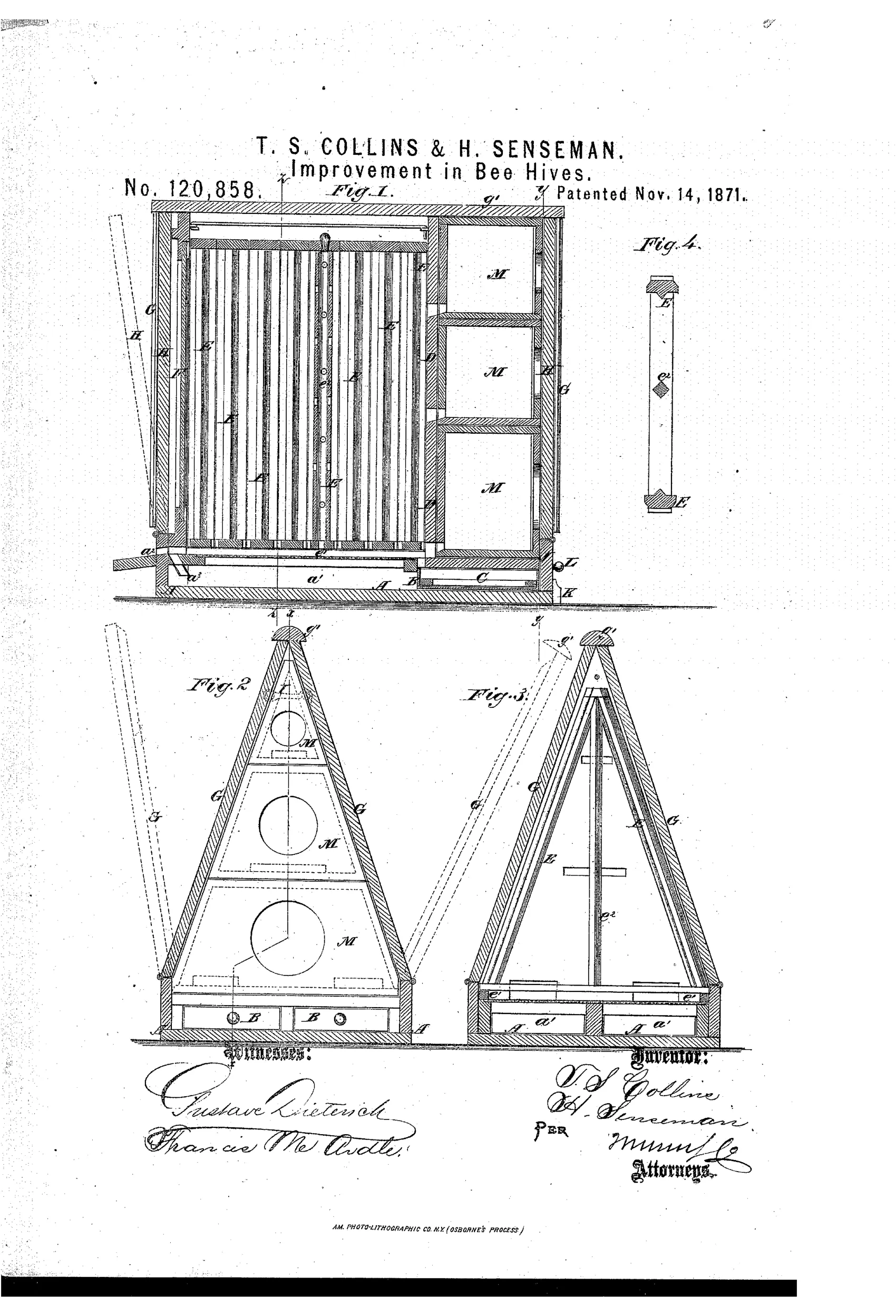
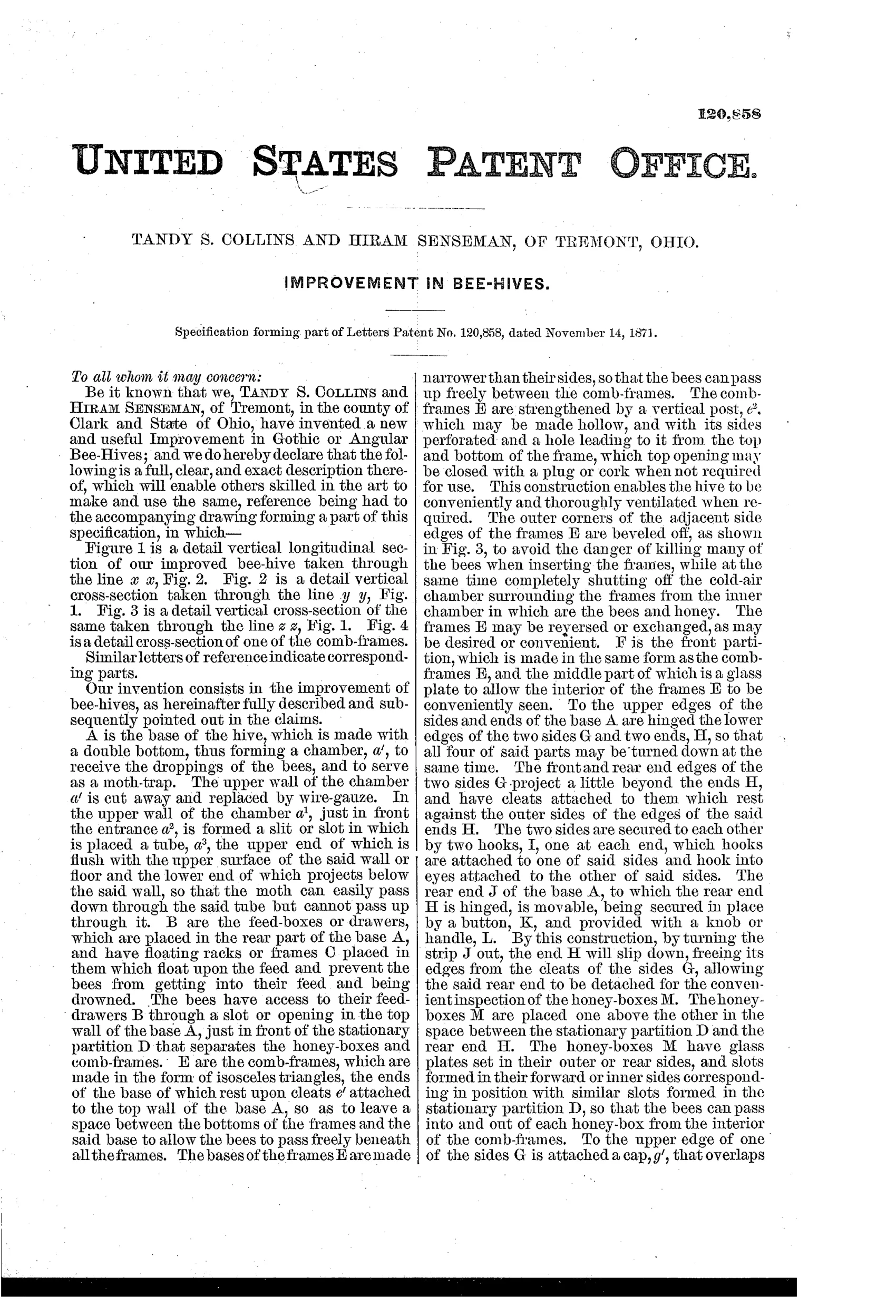
Gothic-style angular bee-hive with triangular comb-frames
⬡ How it works
The hive has a double-bottom base forming a moth-trap chamber, with hinged rectangular sides G and triangular ends H that fold together at an angle on top for weatherproofing. Triangular comb-frames E rest on cleats above the base, spaced narrower than their sides to let bees pass freely beneath and between them, each strengthened by a hollow, perforated central post e2 for ventilation. Honey-boxes M sit stacked behind a stationary partition D, accessible to bees through matching slots, while feed-drawers B with floating racks C sit in the rear of the base. A removable rear end J and hinged end H allow the whole hive to be opened for inspecting the honey-boxes.
⬡ What was claimed
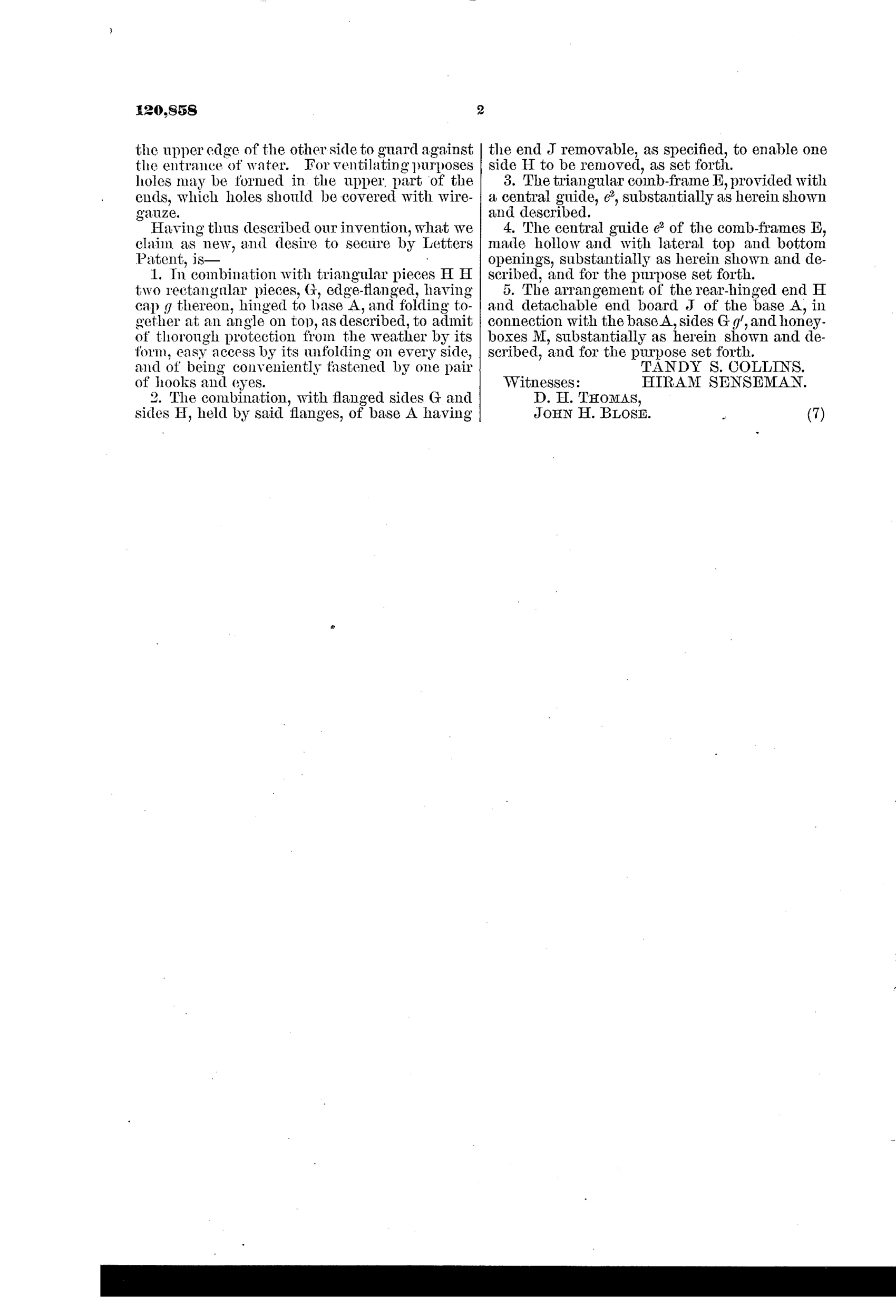
“In combination with triangular pieces H H two rectangular pieces, G, edge-flanged, having cap g thereon, hinged to base A, and folding together at an angle on top, as described, to admit of thorough protection from the weather by its form, easy access by its unfolding on every side, and of being conveniently fastened by one pair of hooks and eyes.”
In plain English: The hive's two flanged rectangular side panels and triangular end panels hinge to the base and fold together into a peaked roof shape, giving weatherproofing and easy all-around access while fastened by a single pair of hooks.
⬡ In the inventor’s words
“The outer corners of the adjacent side edges of the frames E are beveled off, as shown in Fig. 3, to avoid the danger of killing many of the bees when inserting the frames, while at the same time completely shutting off the cold-air chamber surrounding the frames from the inner chamber in which are the bees and honey.”— Tandy S. Collins and Hiram Senseman, from the specification
Fate unknown
No manufactured example or trade listing is documented; a surviving A-frame hive or an ad in the period bee journals would settle it.
⬡ Commentary
Nineteen years after Langstroth, Collins and Senseman accepted the movable frame but rejected the box. Their hive is a full A-frame — Figs. 2 and 3 show it plainly — with comb frames that are themselves triangles, hanging inside a peaked shell whose sides hinge down from the base. The pitch is the whole pitch: a steep roof sheds weather by shape alone, and the folding panels mean you can open the hive on every side with, as the claim proudly notes, one pair of hooks and eyes.
The frame detail is more thoughtful than the silhouette suggests. Each triangular frame carries a hollow, perforated central post for ventilation (Fig. 4), and the outer corners are beveled so you don't crush bees when sliding a frame back in — a small kindness that shows these men actually handled bees. There's also the obligatory 1870s moth-trap chamber in the double bottom, plus feed drawers with floating racks so bees don't drown in syrup.
The fatal flaw is the one Langstroth's rectangle quietly solved: triangular frames can't interchange, can't be extracted in a centrifugal machine, and give bees an awkward comb shape they'll want to bridge at the apex. The honey-boxes stacked behind a partition (Fig. 1) are a decent section-honey arrangement, but the industry was already converging on square boxes in square supers. A charming dead end, well engineered within its own wrong premise.
Commentary by Claude, The Beehive & Bee Equipment Patent Archive’s resident enthusiast