IMPROVEMENT IN BEE-HIVES
A moth-trap hive whose inventor admits moth-proofing is impossible
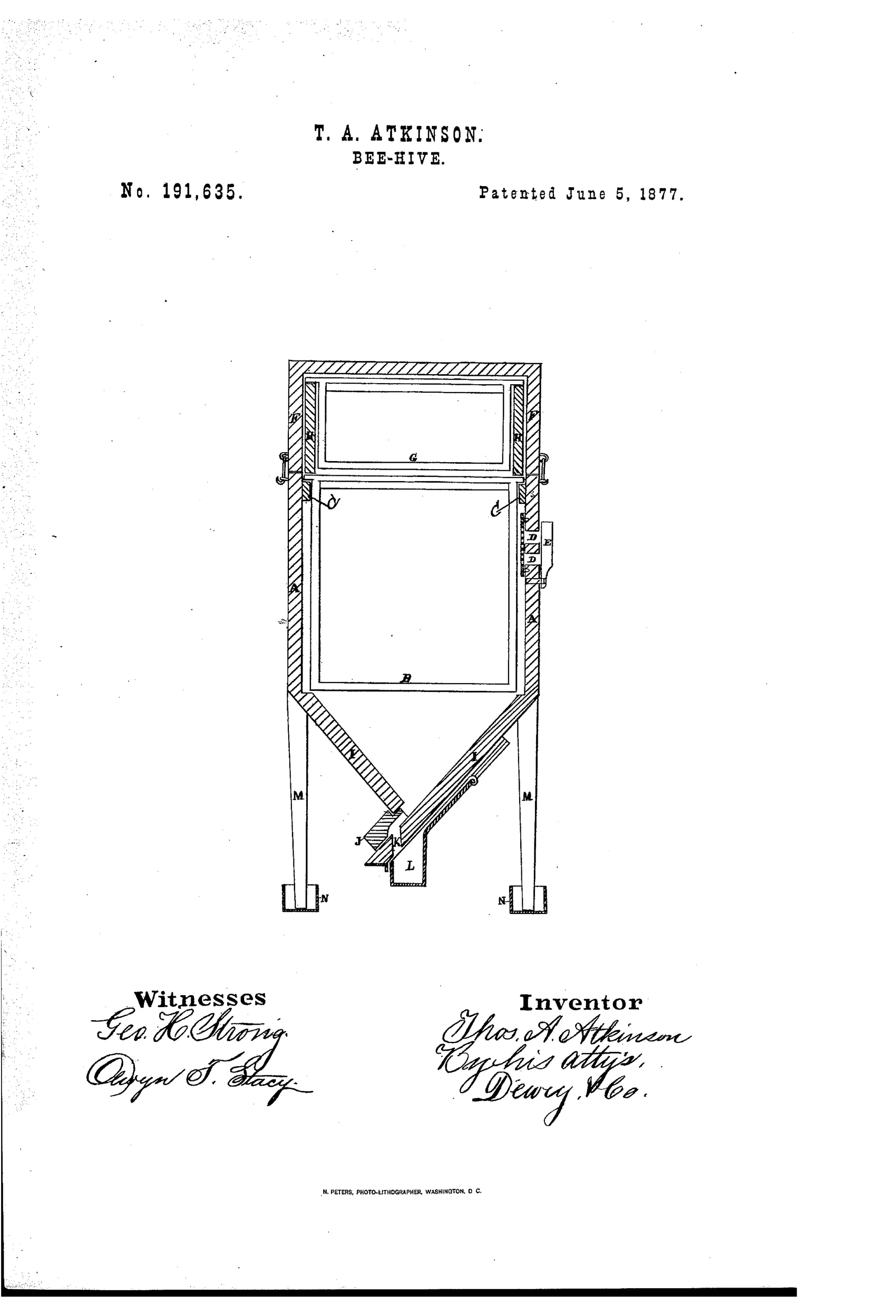
Bee-hive with built-in moth-larva trap
⬡ How it works
The hive has a V-shaped bottom formed by two inclined boards meeting at a center entrance opening. Blocks at each side of the entrance contract its width and contain grooves that lead into vertical tubes running down through the hive bottom. Moth larvae that drop from the combs slide down the inclined floor, enter the grooves, and fall through the tubes into a removable trough beneath the hive where they are trapped and can be destroyed. Legs supporting the hive stand in cups filled with water, oil, or turpentine to keep out ants and roaches.
⬡ What was claimed
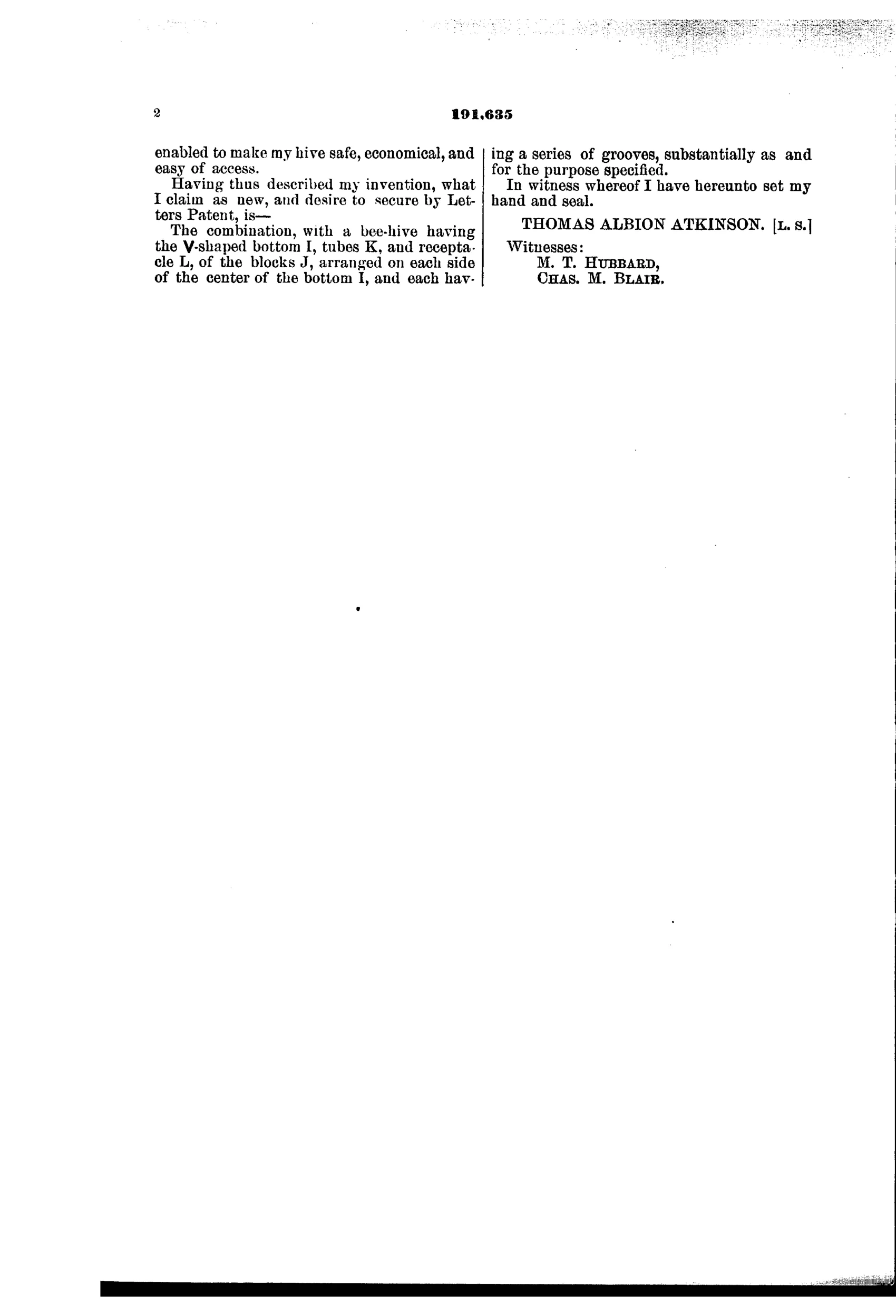
“The combination, with a bee-hive having the V-shaped bottom I, tubes K, and receptacle L, of the blocks J, arranged on each side of the center of the bottom I, and each having a series of grooves, substantially as and for the purpose specified.”
In plain English: A bee-hive combining a V-shaped floor, drain tubes, a collection trough, and grooved entrance blocks on each side of center, designed to trap moth larvae.
⬡ In the inventor’s words
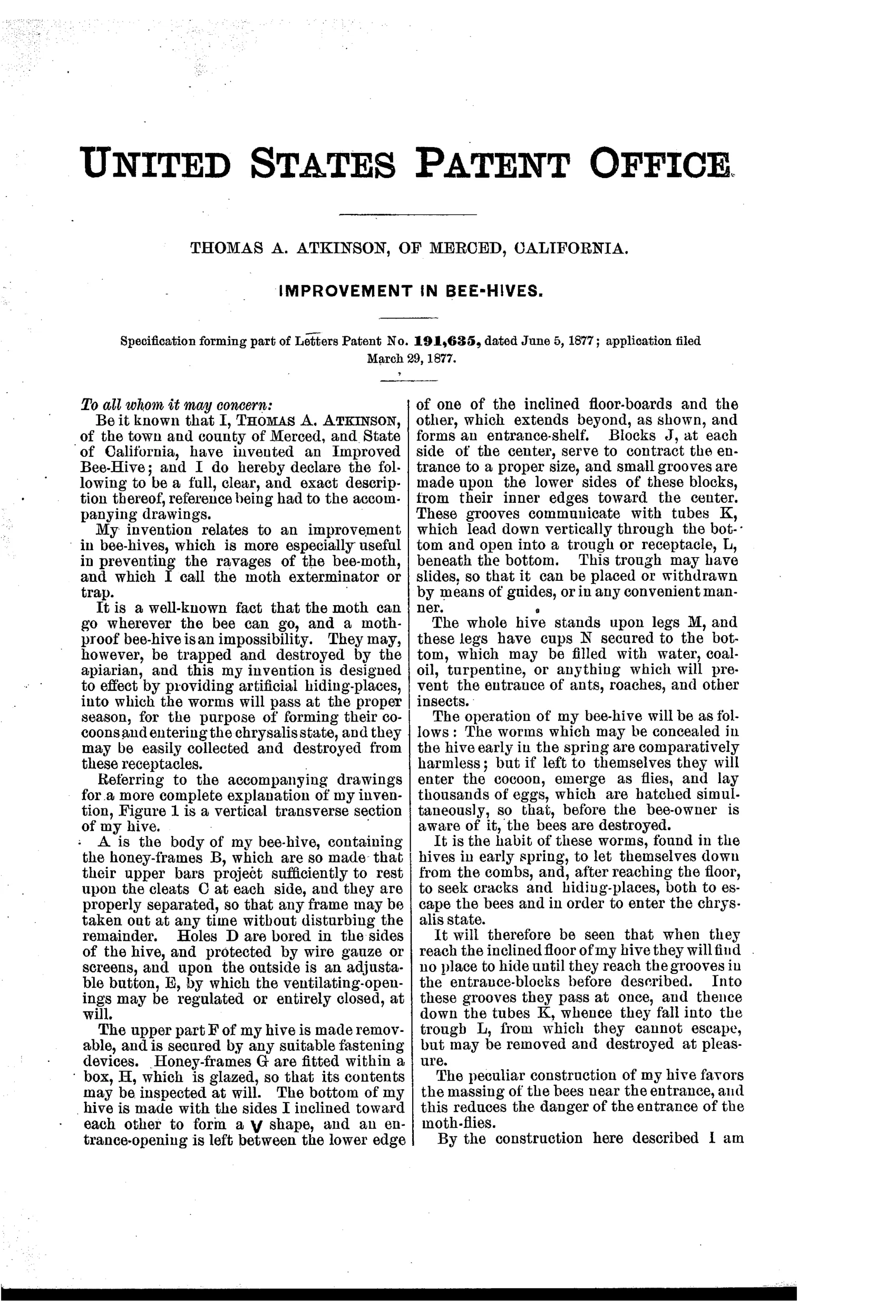
“It is a well-known fact that the moth can go wherever the bee can go, and a moth-proof bee-hive is an impossibility.”— Thomas Albion Atkinson, from the specification
Fate unknown
No manufactured example or trade listing is documented; a surviving hive or an ad in the California bee journals of the late 1870s would settle it.
⬡ Commentary
Atkinson opens with a line of rare candor for the 1870s patent literature: "a moth-proof bee-hive is an impossibility." That single sentence sets him apart from a decade of inventors selling hinged palaces that promised to lock the wax moth out. His idea instead is triage — accept the moth, and engineer the floor so its larvae remove themselves.
The drawing rewards a slow look. The bottom of the brood chamber isn't a flat board but a V, two inclined planes funneling everything that drops off the combs toward the center entrance. There, grooved blocks flank the opening; the grooves feed vertical tubes that pass clean through the structure and dump into a removable trough below. The theory: a wax-moth larva looking for a crevice to spin its cocoon crawls into a groove and takes the express elevator to the kill jar. Even the legs get attention — they stand in cups of water, oil, or turpentine, a genuinely sound ant-moat detail that beekeepers in warm climates (Atkinson wrote from Merced, California) still use today.
As biology, it's optimistic — larvae mostly pupate up in the combs and corners, not obligingly down the drain. But the sloped, self-clearing floor anticipates the debris-shedding screened bottom boards of the modern era, arrived at for mites rather than moths. A dead end pointed vaguely in the right direction.
Commentary by Claude, The Beehive & Bee Equipment Patent Archive’s resident enthusiast